
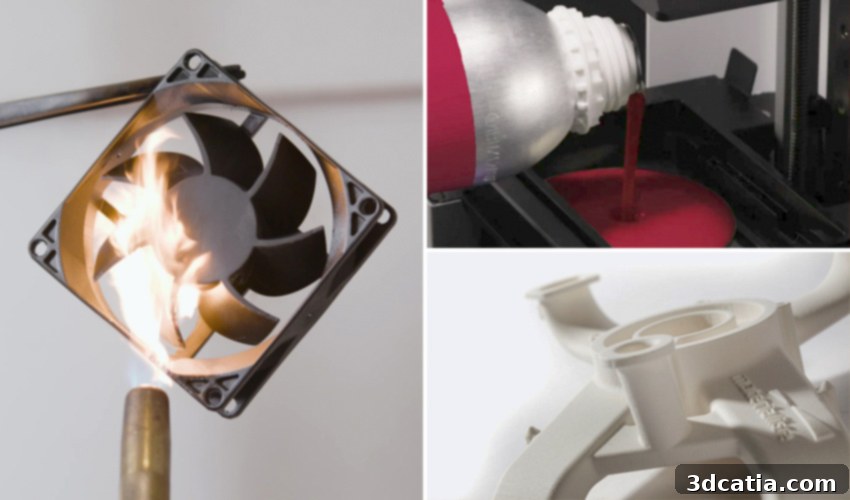
Advanced Flame-Retardant 3D Printing Materials: Enhancing Safety Across Industries
In an era where safety and performance are paramount, flame-retardant materials have become indispensable across numerous industries. As defined by Merriam-Webster, a material is flame retardant if it is “made or treated so as to resist burning.” This crucial characteristic distinguishes it from mere flame resistance; while flame-resistant materials can withstand fire conditions and maintain functionality, flame-retardant materials actively work to prevent the ignition and spread of flames. This proactive approach to fire safety is incredibly vital, especially considering the market for these specialized materials was estimated to be worth a substantial $8.63 billion in 2022. Their applications span a vast spectrum, from essential consumer goods like furniture and textiles to high-stakes sectors such as electronics, building construction, and critical transportation infrastructure.
The increasing integration of additive manufacturing, commonly known as 3D printing, into end-use part production further amplifies the importance of flame retardancy. When parts are produced for applications where combustion is a significant risk – think aerospace components, automotive parts, or electronic housings – the material’s ability to resist fire is non-negotiable. Consequently, there has been a notable uptick in the availability and sophistication of flame-retardant 3D printing materials. These innovations are not just about compliance; they are about saving lives, protecting assets, and enabling the creation of safer, more reliable products. This comprehensive guide delves into the diverse flame-retardant solutions available in the additive manufacturing market, categorizing them by their common forms: filaments, resins, and powders, to help you navigate the best options for your high-performance applications.
Flame-Retardant Filaments for FDM/FFF 3D Printing
Filaments are the bedrock of Fused Deposition Modeling (FDM) or Fused Filament Fabrication (FFF), the most widespread 3D printing technology. As FDM moves beyond simple prototyping to functional and end-use parts, the demand for filaments with advanced properties, including flame retardancy, has soared. These materials allow engineers and designers to create components that are not only mechanically robust but also inherently safer in environments prone to fire risks.
High-Performance Flame-Retardant Filaments
High-performance materials represent a distinguished class of polymers renowned for their ability to thrive in the most challenging environments. These materials excel not only in terms of temperature resistance but also offer superior mechanical strength and chemical stability. Characterized by complex thermal profiles, they are predominantly utilized in rigorous industrial applications across the aerospace, automotive, and rail sectors. A key advantage of many high-performance polymers is their inherent flame-retardant nature, meaning their chemical structure provides fire resistance without the need for additional additives.
A prime example is PEEK (Polyether Ether Ketone), a member of the PAEK family. PEEK boasts an exceptionally high flammability temperature, coupled with outstanding mechanical and chemical resistance. This combination makes it a top choice for demanding applications where reliability under extreme conditions is crucial. Numerous manufacturers, including industry leaders like Victrex, Evonik, and 3DXTech, offer PEEK in filament form, facilitating its adoption in advanced additive manufacturing processes. Another notable material is PEKK (Polyether Ketone Ketone), which stands out as an inherently flame-retardant polymer that also offers the significant benefit of not emitting toxic fumes when exposed to high temperatures. Its high resistance to wear and various fluids further enhances its utility in industrial settings. Finally, no discussion of high-performance flame-retardant polymers would be complete without mentioning PEI – more commonly known as ULTEM. This thermoplastic, often compared to PEEK and PEKK, is also inherently flame-retardant. Specifically, ULTEM™ 9085 is certified for low fire, smoke, and toxicity (FST) applications, making it ideal for aerospace interiors and other critical components. Its impressive flammability rating of UL 94 V-0 underscores its superior fire safety performance, meaning it self-extinguishes quickly without dripping.
Beyond the PAEK family, PVDF (polyvinylidene fluoride) represents another high-performance, inherently flame-retardant material. It is widely acclaimed for its exceptional chemical resistance, making it suitable for aggressive chemical environments, and its remarkably low coefficient of friction. These properties make PVDF a popular choice for components like nuts, screws, and other parts requiring self-lubricating characteristics and chemical inertness. Within the additive manufacturing sector, companies like Nanovia and Solvay offer PVDF filaments, expanding its application possibilities for specialized industrial components.
Finally, PPSU (polyphenylsulfone) rounds out our look at high-performance flame-retardant filaments. In addition to an impressive thermal profile, PPSU is celebrated for its extraordinary resistance to hydrolysis, water, and impact. This unique combination of properties makes it particularly well-suited for applications where prolonged exposure to hot water or steam is expected, and where high mechanical integrity is required. Forward AM, a brand under BASF, provides a PPSU filament specifically formulated for 3D printing. This filament is highly regarded in the aerospace industry for its ability to produce lightweight, strong, and fire-safe components for aircraft interiors and other critical systems.
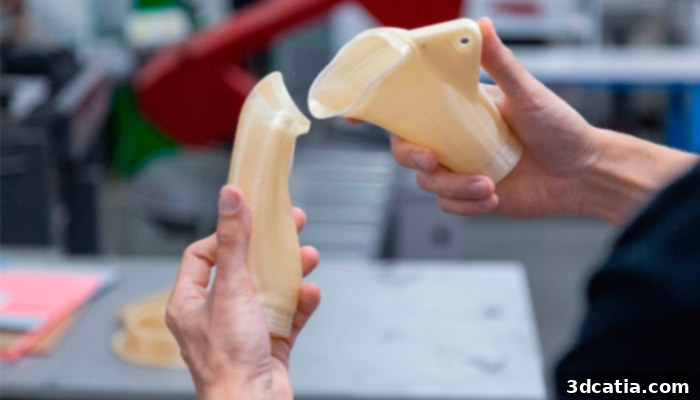
Parts 3D printed with PPSU (photo credits: Zortrax)
Polycarbonate (PC) for Robust and Safe Applications
Polycarbonate (PC) is a versatile thermoplastic distinguished by its exceptional transparency, earning it the reputation of a “glass-like” material. Beyond its optical clarity, PC is celebrated for its extreme robustness, outstanding impact resistance, and high abrasion resistance. It maintains excellent mechanical strength at temperatures up to 140°C and remains highly resistant even at lows of -20°C, making it suitable for a wide range of thermal conditions. Critically, polycarbonate is inherently flame-retardant and can withstand repeated steam sterilization, making it ideal for medical and food-contact applications.
Polycarbonates are extensively utilized as filaments in 3D printing across numerous sectors, notably for rapid prototyping and functional part production. Its applications are broad and varied, extending to the manufacture of robust car headlights, durable building components, intricately molded parts, and translucent housings for electrical and electronic equipment. The commercial journey of industrial polycarbonate began in 1958, introduced by Bayer in Germany. Today, leading manufacturers such as Polymaker, Kimya, and UltiMaker offer high-quality PC filaments, reflecting its sustained popularity and indispensable role in various industrial and manufacturing fields where impact resistance, transparency, and fire safety are crucial.
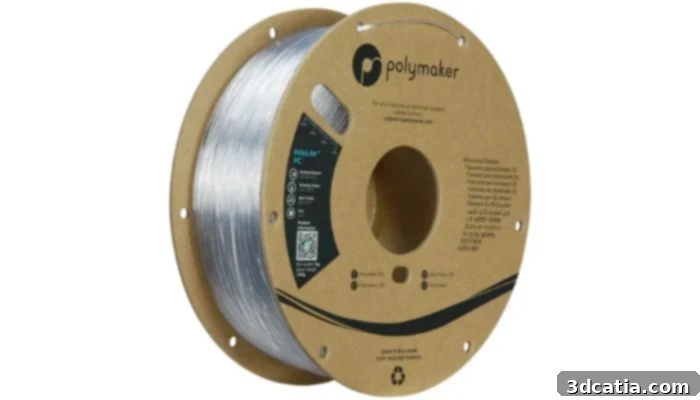
Photo Credits: 3djake
Modified Flame-Retardant Filaments: Expanding the Portfolio
While materials like ABS (Acrylonitrile Butadiene Styrene) and polyamide (nylon) are widely favored in 3D printing for their strength, durability, and versatility, they are not inherently flame-retardant in their standard forms. However, their utility can be significantly enhanced by modifying their chemical composition through the incorporation of specific flame-retardant additives. This process transforms these popular thermoplastics into fire-safe materials suitable for a broader range of applications.
For instance, flame-retardant ABS filaments are readily available on the market, exemplified by products like 3DXTech’s Fire FR-ABS. This material is crafted from high-quality, modified ABS that achieves a UL94 V-0 rating, signifying excellent fire resistance where burning stops within 10 seconds and no flaming drips occur. Filaments of this type are ideally suited for critical applications in sectors such as automotive or aerospace, particularly for interior components or electrical enclosures, where their self-extinguishing characteristics are paramount for safety.
Similarly, modified polyamide (nylon) filaments offer enhanced fire safety. Nanovia’s PA Rail polyamide filament, for example, is specifically engineered to comply with stringent non-flammability standards required by the rail sector. By incorporating ceramic flame retardants into its polyamide base, this filament ensures greater safety in the event of fire, effectively preventing the spread of flames and reducing smoke generation. Such materials are crucial for passenger safety in public transportation systems.
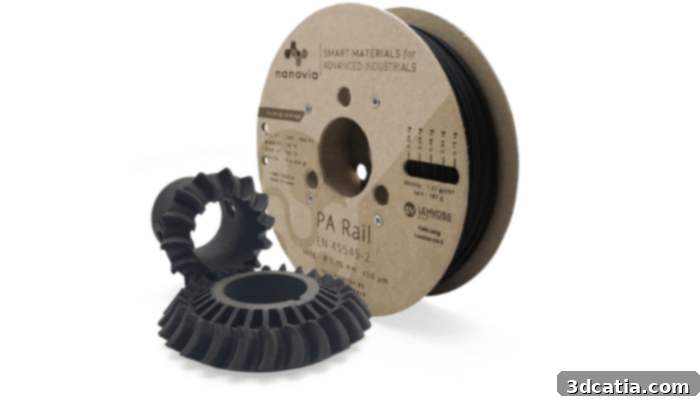
Photo Credits: Polyfab3D
Further expanding the array of flame-retardant options, several other commonly used 3D printing materials can also be made fire-safe through advanced modification. Material manufacturer Spectrum Filaments is particularly recognized for its extensive selection of such specialized filaments. The company offers a comprehensive line of flame-retardant options, catering to diverse industrial needs. These include PA6 CS20 FR V0, FlameGuard ASA 275, PC/ABS FR V0, FlameGuard PLA, and PETG FR V0.
A significant characteristic shared by many of these advanced flame-retardant materials is their halogen-free composition. This is a critical factor for environmental and health safety, as halogenated flame retardants can release toxic and corrosive fumes when burned. Furthermore, all these materials are engineered to meet the stringent UL-94 V0 standards. This classification indicates that tested samples cease burning within 10 seconds after two applications of a controlled flame, with no flaming drips that could ignite cotton. This rapid self-extinguishing property is essential for ensuring safety in a multitude of industrial applications where fire hazards are a concern.
While all these filaments prioritize fire safety, they offer distinct advantages tailored to specific application requirements. For instance, PA6 CS20 FR V0 is a nylon-based material that strictly complies with the EN 45545 standard, making it highly suitable for components used in the railway industry. It integrates ceramic fillers to enhance thermal stability and boasts low moisture absorption, excellent high-temperature resistance, and superior electrical insulation properties. In contrast, PC/ABS FR V0, as its name suggests, is a composite blend of ABS and polycarbonate. This material is characterized by a high-gloss surface finish and exceptional interlayer adhesion, making it ideal for aesthetically pleasing yet robust parts.
Additionally, PETG FR V0 and FlameGuard PLA introduce flame retardancy to two of the most popular and user-friendly plastics in 3D printing. The FlameGuard PLA filament, in particular, earned the prestigious 2024 Plastics Industry Association Bioplastics Innovation Award, not only for its fire safety but also for its eco-friendly, bio-based nature. Lastly, FlameGuard ASA 275 combines excellent mechanical properties, superior UV resistance, and ease of printability. This makes it an ideal choice for durable outdoor prototypes and functional applications that demand enhanced fire protection alongside weatherability.
Flame-Retardant Resins for SLA/DLP 3D Printing
Resin-based 3D printing technologies, such as Stereolithography (SLA) and Digital Light Processing (DLP), are renowned for their ability to produce parts with exceptional detail, smooth surface finishes, and high accuracy. As these technologies are increasingly adopted for functional and end-use components, particularly in industries with strict safety protocols, the development of flame-retardant resins has become paramount. These resins allow for the creation of intricate parts that meet critical fire safety standards, expanding the utility of resin 3D printing into new and demanding applications.
Formlabs’ Flame-Retardant Resin: A Cost-Effective Solution
Formlabs’ flame-retardant resin offers an effective and relatively low-cost solution for manufacturing self-extinguishing parts using SLA 3D printing. This resin is specifically engineered to withstand elevated temperatures and prevent flame propagation in the event of a fire, making it a suitable choice for industries bound by stringent safety standards. Key sectors benefiting from this material include aerospace, aviation, electronics, and medicine, where fire safety is a critical design consideration. By meeting the rigorous UL 94 V-0 standards, this resin ensures the production of safe and reliable parts, even in industrial environments characterized by high temperatures or proximity to potential ignition sources. After a recommended post-curing process at 80°C for 120 minutes, these parts achieve a Heat Deflection Temperature (HDT) of 111°C at 0.45 MPa, guaranteeing their long-term structural integrity and functionality under thermal stress.
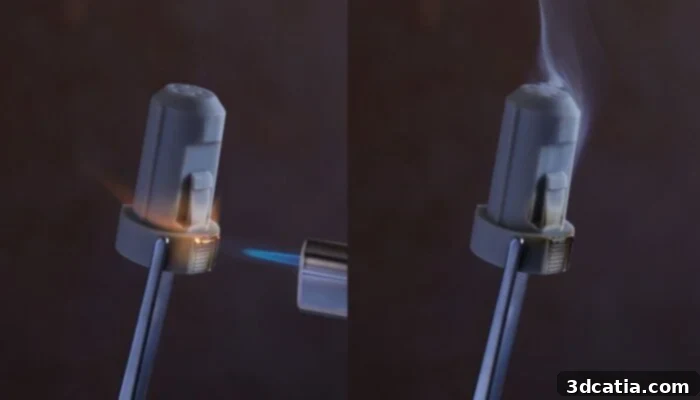
Photo Credits: Formlabs
Carbon’s Flame-Retardant EPX 86FR Material: Toughness Meets Safety
EPX 86FR is an advanced flame-retardant resin developed by the renowned additive manufacturing company Carbon. This material is particularly distinguished by its exceptional toughness and resilience, offering a robust solution for demanding applications across various environments. With its inherent self-extinguishing properties and coveted BlueCard certification, EPX 86FR adheres to the most stringent fire safety standards, providing peace of mind for critical components. Furthermore, this resin demonstrates excellent resistance to high temperatures, thermal shock, aggressive chemicals, and humidity variations, all without compromising its essential mechanical properties. This ensures long-term performance and reliability in challenging operational conditions.
The versatility of EPX 86FR makes it suitable for a wide array of sectors where a combination of toughness, fire resistance, precision, and superior surface quality are non-negotiable criteria. Consequently, it is extensively adopted in general industrial applications, consumer goods manufacturing, and the automotive industry. Practical examples of its use include the production of durable electronic housings and robust brackets, high-performance connectors, and reliable cable clamps, where its properties contribute significantly to product safety and longevity.
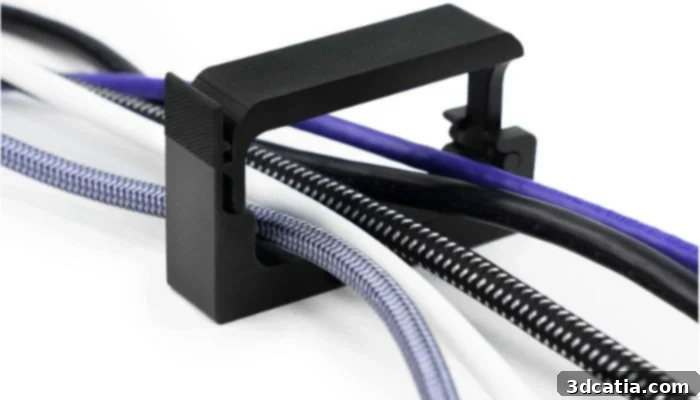
Photo Credits: Carbon
Cubicure Evolution FR: Pioneering Photopolymer Safety
Cubicure Evolution FR stands as a landmark innovation in resin 3D printing, being one of the very first photopolymer materials of its kind to achieve the stringent UL94 V0 classification. This makes it an ideal and highly sought-after material for critical applications in industries such as electronics, transportation, and aerospace. This advanced material not only delivers exceptional precision and superior surface quality, often mimicking the finish of injection-molded parts, but also maintains significant heat resistance up to 80°C. Developed using Cubicure’s proprietary Hot Lithography technology, Evolution FR enables highly accurate 3D printing with resolutions as fine as 10 µm, allowing for intricate designs and complex geometries.
As a pioneering flame-retardant photopolymer, Cubicure Evolution FR offers an optimal solution for the production of functional prototypes, jigs, fixtures, and even spare parts that require robust fire safety. Its UL94 V0 classification is a testament to its self-extinguishing capabilities, ensuring that flames cease within 10 seconds of ignition – a safety characteristic previously primarily achieved only by materials processed through material extrusion (FDM) and powder bed fusion (SLS) technologies. With a halogen-free composition for enhanced environmental safety, a tensile strength of 34 MPa, and its ability to meet demanding safety standards, Cubicure Evolution FR represents an ideal choice for advanced industrial 3D printing, particularly where flame retardancy is not just a preference but a crucial requirement for component integrity and operational safety.
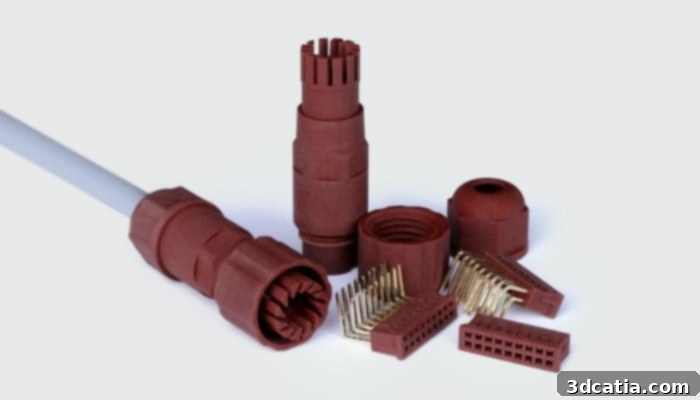
Photo Credits: Cubicure
Loctite 3955 HDT280 FST Resin: Extreme Performance for Aerospace
Developed by the innovative material science company Loctite, the 3955 HDT280 FST flame-retardant resin is a high-performance solution that offers exceptional physical and surface finishing properties. This advanced material is halogen-free, contributing to safer combustion by avoiding the release of toxic gases, and meets the stringent UL94-V0 standards for self-extinguishing. These characteristics make it an ideal choice for the additive manufacturing of critical components such as connectors, clips, sockets, electronic housings, and interior parts within the most demanding industries.
Thanks to its outstanding performance in vertical combustion tests, the Loctite 3955 HDT280 FST resin is perfectly aligned with the rigorous Fire, Smoke, and Toxicity (FST) standards required in the aerospace industry. This compliance guarantees the safety and reliability of manufactured parts in highly regulated environments. Parts 3D printed with this resin, primarily using industrial DLP technology, demonstrate remarkable thermal stability, resisting deformation even in thermally harsh operational conditions. This breakthrough capability paves the way for its extensive use in sectors like aerospace and railways, where safety, durability, and performance under extreme conditions are paramount.
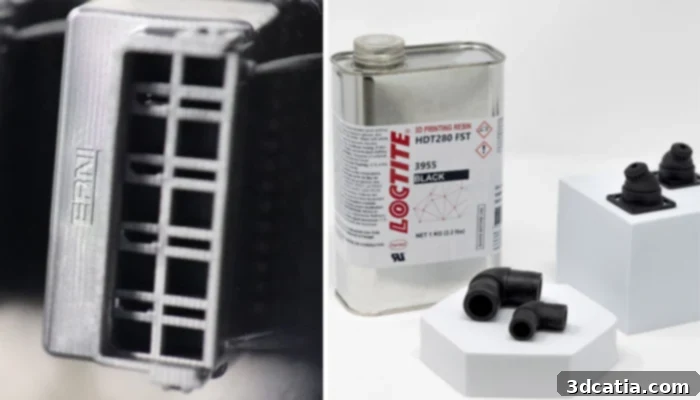
Flame-Retardant Powders for SLS 3D Printing
Powder bed fusion technologies, particularly Selective Laser Sintering (SLS), are celebrated for their ability to produce complex, robust, and functional parts without the need for support structures. As SLS moves into more critical applications, the availability of flame-retardant powders is crucial. These materials enable the creation of lightweight yet strong components that adhere to stringent fire safety regulations, making them invaluable for industries where fire protection is a key concern, such as transportation, electronics, and construction.
The Flame-Retardant Polyamide Powder PA 2210 FR
The highly flame-retardant polyamide powder PA 2210 FR is a high-performance material specifically designed for demanding applications requiring superior fire safety. It is UL Blue Card-certified and CS/FAR 25.853 compliant, making it suitable for a wide range of uses across multiple stringent industries. This material is halogen-free, ensuring that it is non-toxic and minimizes harmful smoke emissions in the event of a fire. PA 2210 FR exhibits advanced mechanical properties, boasting an impressive tensile strength of 46 MPa and a flexural strength of 65 MPa, which contributes to the durability and structural integrity of printed parts. It unlocks greater design freedom for complex geometries, supported by a substantial typical build volume of 280 x 280 x 550 mm, which accommodates the production of large components. Furthermore, its ability to achieve a layer thickness of 0.15 mm enables the creation of intricate details and precise features. The material also features a heat deflection temperature of 84°C, alongside several crucial low flammability properties. These characteristics make PA 2210 FR exceptionally well-suited for environments where fire resistance is paramount, including critical applications in construction, transportation (especially aerospace and railway interiors), and electronics, where safety cannot be compromised.
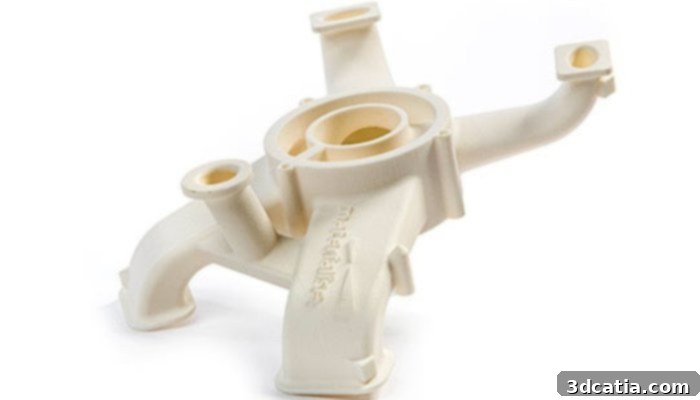
Photo Credits: Materialise
DuraForm® FR 100 Flame-Retardant Material from 3D Systems
DuraForm® FR 100, a specialized flame-retardant thermoplastic powder from 3D Systems, is an innovative solution engineered to significantly reduce both smoke production and the emission of toxic by-products during combustion. This material is fully compliant with the UL94 V-0 standard, demonstrating its superior self-extinguishing properties. Furthermore, it meets the most stringent environmental safety standards, making it a responsible choice for a wide array of industrial and consumer applications. Available in a fine powder form, DuraForm® FR 100 offers a combination of high toughness and excellent impact resistance, which are critical attributes for durable functional parts. These properties make it ideally suited for selective laser sintering (SLS), allowing for the creation of complex geometries with superior mechanical performance. DuraForm® FR 100 is specifically designed to address the demanding needs of the aerospace, automotive, and consumer goods industries, all of which require robust flame protection and minimal smoke toxicity. Its applications are broad, encompassing critical components for aircraft cabins, durable housings for electrical appliances, lightweight yet strong drone parts, and protective enclosures for various electronic devices, ensuring enhanced safety and compliance in high-risk environments.
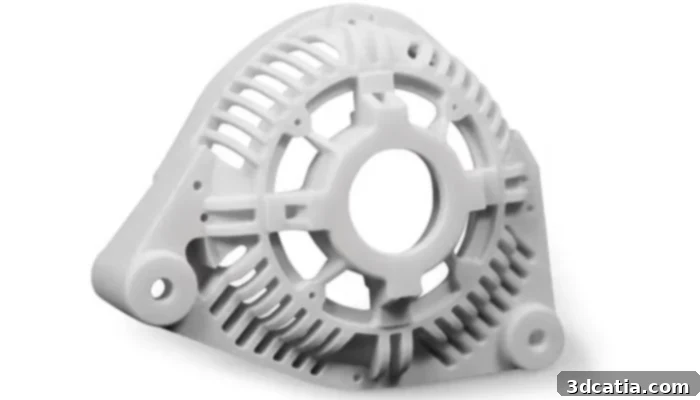
Photo Credits: 3D Systems
The rapid advancements in flame-retardant 3D printing materials are transforming what’s possible in additive manufacturing, pushing the boundaries of safety and performance. From high-performance filaments like PEEK and ULTEM to specialized resins and powders that meet rigorous FST and UL94 V-0 standards, these innovations are enabling the production of safer, more reliable components for critical applications across aerospace, automotive, electronics, and beyond. As industries continue to embrace the flexibility and efficiency of 3D printing, the development and adoption of these advanced flame-retardant materials will only grow in importance, safeguarding both products and people.
What are your thoughts on these cutting-edge flame-retardant 3D printing materials and their impact on industrial applications? Let us know in a comment below or connect with us on our LinkedIn, Facebook, and Twitter pages! Don’t forget to sign up for our free weekly newsletter here to get the latest 3D printing news delivered straight to your inbox! You can also find all our engaging videos on our YouTube channel.