
3D Printed Robotic Jellyfish: Revolutionizing Coral Reef Monitoring and Marine Conservation
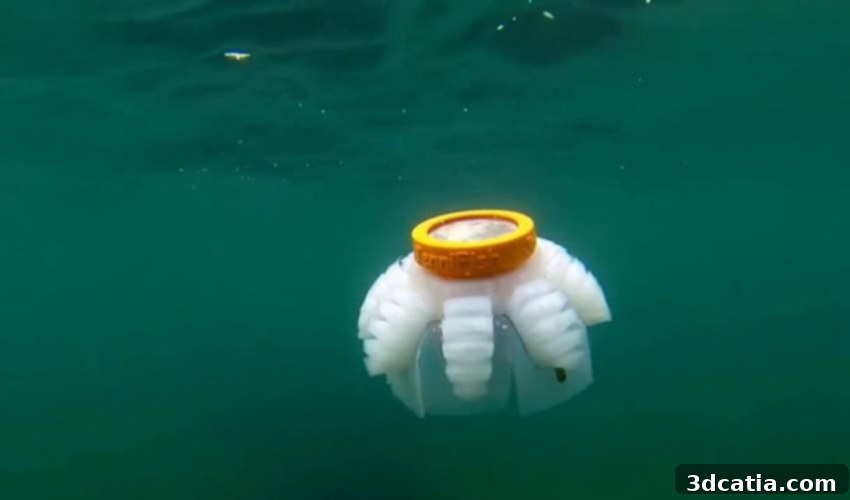
The health of our planet’s oceans is a pressing global concern. With each passing day, more and more marine species face existential threats from human-induced pollution, habitat destruction, and the escalating impacts of climate change. The urgency to devise effective solutions for safeguarding these vital marine ecosystems has never been greater. Amidst this critical challenge, innovative technologies are emerging as powerful allies. One such groundbreaking approach involves the integration of 3D printing, a technology already demonstrating its potential in efforts to recreate damaged coral reefs. Building upon this foundation, a pioneering project developed by the University of Florida Atlantic in collaboration with the United States Naval Research Bureau is advancing a similar goal. Their remarkable creation: 3D printed robotic jellyfish, affectionately termed “Jellybots,” designed with the ambitious mission of autonomously monitoring and protecting our planet’s endangered coral reefs.
Jellybots: The Next Generation of Marine Guardians
The Jellybots represent a significant leap forward in biomimetic robotics. Meticulously modeled after their biological counterparts, these robotic marvels are engineered to navigate the intricate and often perilous underwater environments where coral reefs thrive. Their soft, flexible structure allows them to effortlessly maneuver through incredibly narrow spaces, a critical advantage that minimizes the risk of collision or damage to the delicate reef structures they are tasked with observing. In essence, these Jellybots are poised to become the silent, watchful guardians of our oceans, providing invaluable data without causing further disturbance to sensitive habitats.
Dr. Erik Engeberg of the University of Florida Atlantic, a leading figure in this innovative research, eloquently explains the rationale behind this approach: “Studying and monitoring fragile environments, such as coral reefs, has always been challenging for marine researchers. Traditional robotic platforms often struggle with the delicate nature of these ecosystems or are simply too rigid to access critical areas. Soft robots, on the other hand, possess immense potential to overcome these limitations.” Dr. Engeberg emphasizes the growing popularity of bio-inspired robotics, particularly those that emulate the forms and movements of fish and other marine animals, within the scientific community. Such advancements are exemplified by projects involving 3D printed robotic animals, explicitly designed to seamlessly integrate into and study the natural animal world without detection or disruption.
Biomimicry in Motion: Why Jellyfish Inspire Robotic Design
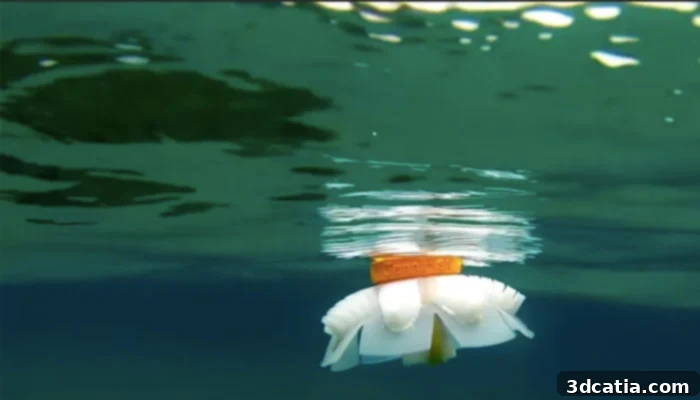
The choice of the jellyfish as the primary inspiration for these advanced robots was not arbitrary. Researchers meticulously studied the unique hydrodynamic capabilities of real jellyfish, identifying them as extraordinarily efficient swimmers. This natural efficiency provided a compelling blueprint for the creation of the 3D printed robot. Dr. Engeberg elaborates on this fascinating aspect, stating, “Their remarkable propulsive performance is a direct result of their unique body shape, which masterfully leverages a sophisticated combination of vortex generation, precise jet propulsion, rhythmic rowing motions, and suction-based locomotion. This complex interplay of forces allows them to move with unparalleled grace and power through aquatic environments.” This intricate design philosophy echoes other pioneering efforts in bio-inspired robotics, such as the Octobot, a soft robot inspired by the octopus, which was developed to further our understanding and study of complex aquatic environments.
The ability of jellyfish to navigate diverse aquatic terrains, from open waters to tight crevices, makes them ideal models for robots designed for reef exploration. Their fluid, pulsation-driven movement minimizes turbulence, ensuring that the Jellybots can observe delicate marine life without causing undue stress or damage. This inherent gentleness is paramount when operating in fragile ecosystems like coral reefs, which are home to a myriad of sensitive organisms. Furthermore, the absence of rigid propellers or external moving parts found in conventional underwater vehicles significantly reduces the risk of entanglement or accidental harm to the environment or its inhabitants. This biomimetic approach ensures that the Jellybots are not merely observers but also respectful participants within the marine world.
The Engineering Behind the Movement: How Robotic Jellyfish Operate
At the heart of the Jellybots’ remarkable mobility lies an ingeniously designed hydraulic tentacle system, meticulously engineered to mimic the natural movements of jellyfish. This system is driven by a series of precisely controlled impeller pumps. These specialized pumps leverage centrifugal force to efficiently push fluid outward, initiating the robot’s propulsion. Each Jellybot is equipped with eight flexible silicone hydraulic tentacles, which are integral to its locomotion. The surrounding water in which these robots operate serves a dual purpose: it is drawn in to inflate their tentacles, thereby enabling them to generate movement and swim.
The mechanics of propulsion are fascinatingly simple yet highly effective. When the impeller pumps are actively operating, water is drawn into the tentacles, causing them to expand and generate thrust. Conversely, by strategically turning off these pumps, the tentacles become pliable and contract, expelling the water outwards. This cyclical process of inflation and deflation, driven by the hydraulic system, allows for incredibly smooth and controlled ascent and descent, precisely replicating the undulating, graceful movement characteristic of natural jellyfish. This soft robotics approach not only provides exceptional maneuverability but also ensures that the robots can interact with their environment with minimal impact, a crucial factor when studying delicate ecosystems. The precision with which these movements can be controlled enables the Jellybots to hover, change direction, and even remain stationary for extended periods, facilitating detailed observation and data collection.
Rigorous Testing and Promising Outcomes
To optimize the performance and adaptability of these innovative robots, the research team embarked on a comprehensive testing phase. This involved the creation of five distinct robotic jellyfish prototypes, each manufactured with varying levels of silicone hardness. The purpose of these variations was to systematically evaluate how different material properties influenced the propulsive effects and overall maneuverability of the robots. By experimenting with a spectrum of material rigidities, the scientists were able to fine-tune the design for optimal efficiency and resilience in underwater conditions.
A pivotal aspect of the testing focused on the Jellybots’ ability to navigate through confined and challenging spaces. To simulate the intricate structures of a coral reef, researchers employed plexiglass plates with precisely cut circular holes of varying diameters. The robots were then tasked with traversing these openings, pushing the boundaries of their design capabilities. Dr. Engeberg proudly reported on the success of these trials, concluding, “We found the robots were able to consistently swim through openings that were significantly narrower than the nominal diameter of the robot itself.” This remarkable finding underscores the inherent advantage of soft robotics and biomimicry, demonstrating the Jellybots’ capacity to access critical, hard-to-reach areas within complex marine environments without risking damage to either the robot or the delicate reef structures. This proven ability to squeeze through tight spots is a game-changer for detailed reef mapping and monitoring, allowing for unprecedented access to secluded nooks and crannies that are vital for many reef inhabitants.
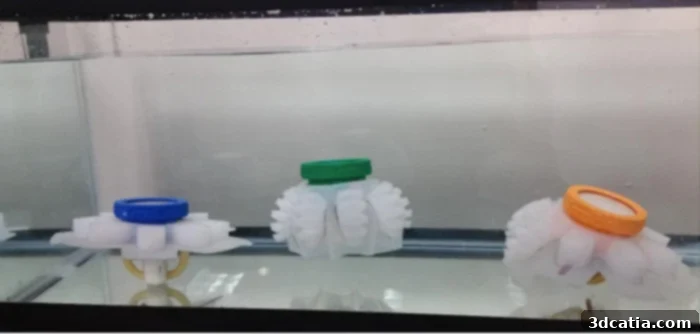
Several robotic jellyfish models were 3D printed for testing and refinement.
The Horizon: Integrating Sensors, AI, and Autonomous Navigation
The current success of the Jellybots is merely the beginning of their journey. The research team is now focused on the ambitious next phase: integrating a sophisticated array of environmental sensors and developing advanced control and navigation algorithms. The vision is to equip these robots with the ability to collect a wealth of crucial data, including sonar readings for detailed topographical mapping, temperature fluctuations, pH levels indicative of ocean acidification, salinity, oxygen saturation, and even chemical compositions that could alert researchers to pollution sources. By combining these diverse data streams, Jellybots will be able to paint a comprehensive picture of the reef’s health.
A key objective is the development of intelligent algorithms that will enable the Jellybots to operate with increasing autonomy. This includes the capacity to quickly detect obstacles and determine safe navigation paths in real-time. Imagine a swarm of Jellybots autonomously patrolling a vast coral reef system, identifying areas of bleaching, detecting invasive species, or locating marine debris, all while transmitting critical information back to researchers on the surface. These robots could be programmed to identify anomalies, such as changes in coral coloration or unusual fish behavior, and then prioritize these areas for closer inspection. The integration of artificial intelligence and machine learning will allow the Jellybots to learn from their environment, adapt to dynamic conditions, and optimize their data collection strategies, effectively becoming self-improving underwater research platforms. This level of autonomous monitoring promises to revolutionize how we understand and respond to threats facing our precious marine ecosystems, offering a scalable and sustainable solution for global ocean health assessment.
For a glimpse into the graceful movements and innovative engineering of these robotic jellyfish, be sure to watch the captivating video below. Further in-depth information on the foundational research can be accessed HERE, providing a deeper dive into the scientific principles guiding this remarkable project.
The Broader Impact: 3D Printing and the Future of Ocean Conservation
The Jellybot project is more than just an innovative robotic development; it stands as a shining example of how additive manufacturing, or 3D printing, is poised to transform the field of marine conservation. The ability to rapidly prototype, customize, and iterate designs for underwater applications offers unparalleled advantages. Researchers can swiftly test new configurations, adapt to specific environmental challenges, and produce complex geometries that would be difficult or impossible with traditional manufacturing methods. This flexibility accelerates the research and development cycle, bringing critical solutions to environmental problems much faster.
Beyond robotic jellyfish, 3D printing is making waves in various other aspects of ocean preservation. It’s being used to create incredibly intricate and biologically accurate artificial coral reefs, providing new substrates for coral growth and habitat for marine life in degraded areas. Scientists are also leveraging this technology to produce custom prosthetics for injured marine animals, enabling them to regain mobility and survive in the wild. Furthermore, 3D printing facilitates the creation of specialized research tools and sensors tailored for unique underwater studies, allowing for more precise data collection and analysis. The precision, cost-effectiveness for small batches, and material versatility of 3D printing make it an indispensable tool for environmental scientists and conservationists worldwide, offering hope for a more sustainable future for our oceans.
As we look towards the future, the challenges facing our oceans remain formidable. However, the ingenuity demonstrated by projects like the Jellybots, fueled by advancements in 3D printing and soft robotics, offers a beacon of hope. These innovations represent a powerful combination of human creativity and technological prowess, working in harmony with nature to address some of the most critical environmental issues of our time. The journey of the Jellybots, from concept to deployment, underscores a growing commitment to leveraging cutting-edge science for the betterment of our planet’s invaluable marine ecosystems.
What are your thoughts on these remarkable 3D printed robots and their potential to safeguard our oceans? We invite you to share your perspectives in the comments section below or engage with us on our Facebook and Twitter pages! Don’t miss out on the latest advancements in additive manufacturing – be sure to sign up for our free weekly Newsletter to receive all the breaking news in 3D printing delivered directly to your inbox!