
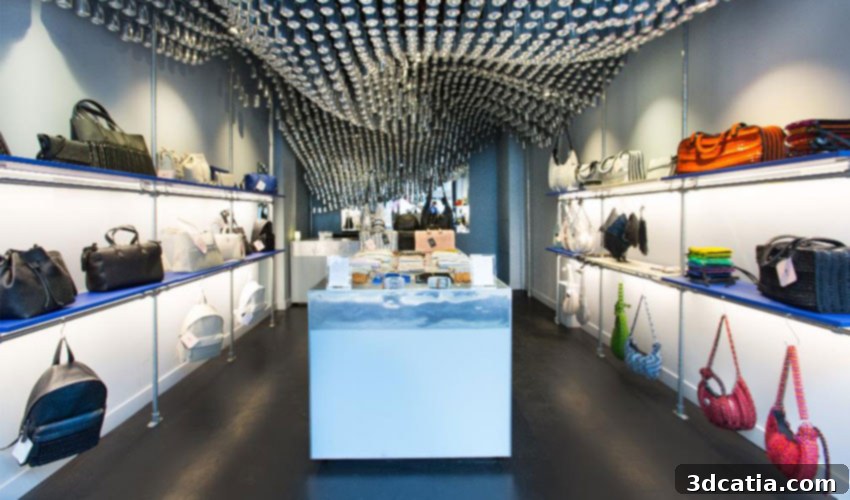
Bottletop London: Pioneering Sustainable Fashion with a Revolutionary 3D Printed Store on Regent Street
A visit to Regent Street in London has become an even more compelling experience, not just for its renowned picturesque scenery, vibrant fashion boutiques, and exquisite art installations that grace the heart of the city. There’s a new, groundbreaking reason to explore this iconic destination: the unveiling of Bottletop’s revolutionary 3D printed store. This isn’t merely a retail space; it’s a testament to innovation and sustainability, featuring an awe-inspiring interior meticulously 3D printed from an astonishing 60,000 recycled plastic bottles and 5,000 recycled cans. This pioneering establishment stands as a vibrant beacon for eco-conscious design and the transformative power of additive manufacturing in the luxury fashion sector, inviting visitors to witness the future of retail firsthand.
Bottletop, a brand synonymous with ethical luxury, has forged a distinctive path in the fashion industry. Their journey began with a notable collaboration with the esteemed leather goods firm, Mulberry, where they honed their expertise in crafting high-quality accessories. However, it was their visionary pivot towards truly sustainable materials that truly set them apart. The brand specializes in manufacturing exquisite handbags, not from conventional materials, but ingeniously from bobbin tabs – an unconventional yet remarkably durable and ethically sourced material. This commitment to sustainability has reached new heights with their Regent Street store, a physical manifestation of their core values. The entire interior, or at least its foundational elements, consists of 3D printed parts meticulously engineered from recycled plastic bottles, demonstrating a powerful commitment to circular economy principles. As an added layer of technological transparency, Bottletop proudly displays a KUKA 3D printer within the store, positioned alongside their covetable keychains and jewelry bags. This not only showcases the advanced manufacturing process but also serves as an educational exhibit, demystifying the technology behind their eco-friendly endeavors for curious shoppers.
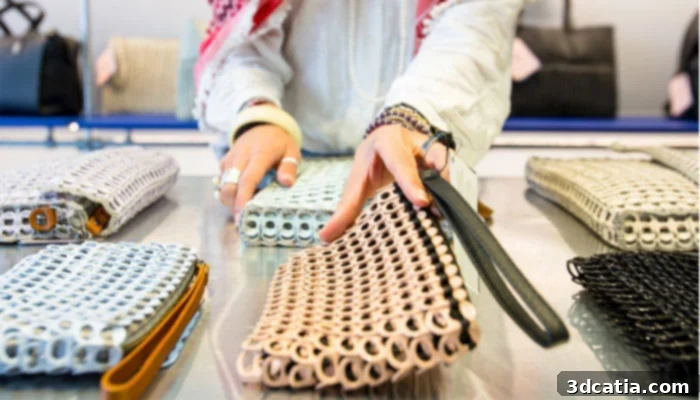
Some of Bottletop’s products showcased amidst the innovative store design.
The 3D Printed Store: A Closer Look at Innovation and Design
While the existing Bottletop store already captivates visitors with its innovative design and sustainable narrative, it is far from its final form. This dynamic retail space is conceived as a living entity, with numerous additional upgrades and evolutionary phases meticulously planned for its future. Oliver Wayman, co-founder of Bottletop, articulates this ambitious vision, stating, “The store will change over time and become a real recycled paradise.” This commitment to continuous evolution underscores Bottletop’s dedication to pushing the boundaries of sustainable retail, ensuring the space remains a cutting-edge example of eco-friendly innovation. Wayman also emphasizes the educational imperative behind their venture: “There are not many people who are familiar with 3D printing or robotics. If we can show how these technologies can be used to reduce waste in the construction and fashion sectors, then this is a very convincing argument.” This highlights the store’s dual purpose – not just a place for commerce, but also a public exhibition demonstrating the practical applications and environmental benefits of advanced manufacturing techniques. The planned upgrades are particularly exciting; they include covering the store’s interior walls with elaborately designed 3D printed panels. These panels are intended to transcend mere aesthetics, offering customers a more novel, immersive, and tactile shopping experience that directly communicates the brand’s commitment to innovative material use and waste reduction.
The architectural and engineering prowess behind Bottletop’s pioneering store is a story of collaborative innovation. Krause Architects, renowned for their forward-thinking designs, meticulously crafted the main store’s interior, envisioning a space that is both visually stunning and deeply rooted in sustainability. Their design philosophy seamlessly integrates the recycled materials and 3D printing technology into a cohesive and inspiring aesthetic. Bringing this vision to life required robust and precise manufacturing capabilities. This crucial task was undertaken by Al Build, leveraging their advanced KUKA 3D printers. These industrial-grade machines are not your average desktop printers; they are powerful robotic systems specifically engineered for large-scale additive manufacturing. They demonstrated their incredible capacity by creating the majority of the store’s intricate structures, meticulously extruding the recycled filament layer by layer. The precision and scale of these machines are truly remarkable, capable of producing structures up to an impressive 3.2 x 2.4 x 2.8 metres. This capability allows for the creation of substantial, load-bearing elements as well as intricate design features, showcasing the versatility and industrial viability of large-scale 3D printing using reclaimed materials. The combination of visionary architecture and cutting-edge robotics has resulted in a retail environment that is not only unique but also a powerful statement on the future of sustainable construction and design.
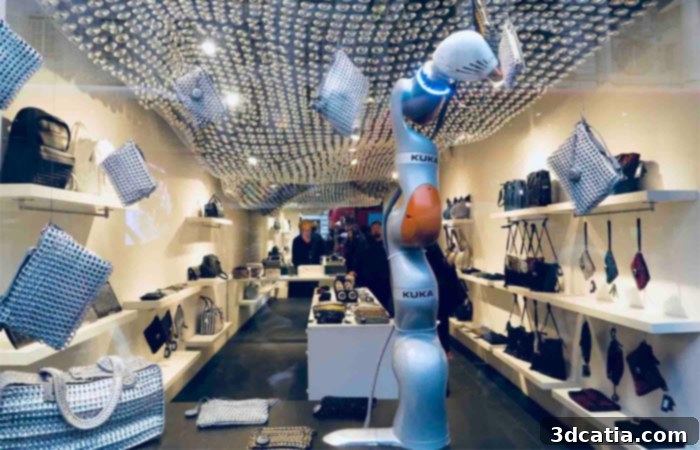
KUKA 3D printers at work, transforming recycled materials into the unique structures of the Bottletop store.
Sustainability at the Core: 3D Printing and the Environment
Delving deeper into the environmental philosophy underpinning the Bottletop store, Oliver Wayman eloquently expands on its transformative potential. “For the first time, our visitors will see how this technology can be used sustainably while shopping,” he explains. This statement highlights the immersive educational experience offered by the store, allowing consumers to directly witness the tangible benefits of incorporating advanced technology into eco-friendly practices. Wayman further expresses the deep satisfaction derived from this endeavor: “It is very satisfying for us to know that our customers can witness the transformation of the store, from a sleek exhibition space to an ‘upcycled’ ecosystem.” This ‘upcycled ecosystem’ concept signifies a retail environment that is not static but continually evolves, incorporating new recycled elements and demonstrating an ongoing commitment to circularity. A prime example of this innovative design is the planned ceiling installation: “On the ceiling, we will find our metal canopy with thousands of cans embedded in a 3D printed lattice structure suspended from the ceiling.” This intricate feature not only adds to the aesthetic appeal but also serves as a powerful visual representation of waste transformed into art and utility, literally elevating recycled materials to a place of prominence.
The Bottletop project transcends a mere retail concept; it is a profound initiative poised to significantly elevate public awareness regarding 3D printing and its vast environmental opportunities. By seamlessly integrating the cutting-edge capabilities of 3D printing with the critical imperative of recycling, Bottletop vividly demonstrates that a commercial store can be simultaneously fun, exquisitely fashionable, and profoundly environmental. This pioneering approach offers a tangible solution to the pervasive issue of plastic waste, transforming what was once considered refuse into valuable building blocks for innovative design. The ability of 3D printing to utilize recycled plastics, such as those from countless bottles, means fewer virgin resources are consumed, and existing waste streams are diverted from landfills and oceans. This aligns perfectly with the principles of a circular economy, where materials are kept in use for as long as possible, minimizing environmental impact. Furthermore, the localized nature of additive manufacturing can reduce transportation emissions associated with traditional global supply chains. Bottletop’s store serves as a living, breathing case study, illustrating how technology can be a powerful ally in the fight for a more sustainable future, challenging conventional notions of material value and product lifecycle.
The implications of Bottletop’s model extend beyond its immediate retail presence, offering a compelling blueprint for the broader fashion and construction industries. It encourages designers and manufacturers to rethink their material choices and production processes, fostering a shift towards more responsible practices. By showcasing the beauty and functionality of upcycled materials, Bottletop actively combats the stigma often associated with recycled products, proving that sustainable can also be luxurious and desirable. This immersive retail experience educates consumers not just on the origins of the brand’s products but also on the potential of sustainable technology. It invites engagement, prompting conversations about environmental responsibility and the role of innovation in creating a better world. In essence, Bottletop is not just selling handbags; it’s selling a vision for a more sustainable, technologically advanced, and aesthetically pleasing future, where waste is redefined as a valuable resource and retail spaces become dynamic showcases of environmental stewardship.
Did you find this exploration of Bottletop’s groundbreaking 3D printed store captivating and inspiring? We would love to hear your thoughts and perspectives! Please share your comments below or engage with us on our vibrant Facebook page and engaging Twitter feed! For those eager to stay abreast of the latest advancements and breaking news in the dynamic world of 3D printing, we invite you to sign up for our free weekly Newsletter. Receive all the essential updates and insightful analyses, delivered straight to your inbox, ensuring you never miss a beat in this rapidly evolving industry.