
Exploring the Future of Additive Manufacturing: Top 5 3D Printing Innovations This Week
This week, we delve into the dynamic world of 3D printing and additive manufacturing, showcasing five groundbreaking videos that highlight the technology’s diverse applications and profound impact across various sectors. From bolstering industrial capabilities and pioneering new material applications to inspiring creative projects and addressing critical healthcare needs, these stories underscore the transformative potential of additive manufacturing. We’ll explore how industry leaders like Matsuura are expanding their facilities, how 3M is innovating with materials like 3D printed PTFE, and how design companies like DyeMansion are bringing artistic visions to life. Furthermore, we’ll see how open-source communities are empowering creators with projects like Dora Goodman Cameras, and how the US Army is leveraging additive manufacturing to overcome supply chain challenges in medical product development. Prepare to be inspired by the latest advancements and real-world successes in the 3D printing landscape. Join us as we unpack these fascinating developments and celebrate the spirit of innovation that drives the additive manufacturing industry forward.
1. Matsuura Additive Manufacturing Facility: A Beacon of UK Industrial Growth
Despite the global economic uncertainties brought about by the recent pandemic, 2020 marked a period of significant growth and success for Matsuura. This leading company is now at the forefront of efforts to revitalize the UK economy, particularly by strengthening the nation’s manufacturing industry through advanced technological integration. Central to this mission is Matsuura’s state-of-the-art additive manufacturing facility located in Leicestershire. This facility is a testament to their commitment to innovation, housing a comprehensive suite of HP Multi-Jet Fusion printers, which are renowned for their speed, quality, and versatility in producing high-performance functional parts. Beyond its own production capabilities, Matsuura also serves as a key reseller for DyeMansion’s sophisticated post-processing products. This partnership ensures that customers not only have access to cutting-edge printing technology but also to the essential finishing solutions required to achieve production-ready parts with superior surface aesthetics and mechanical properties. MTD, a prominent industry publication, recently sat down with Joseph Bellis, an Additive Manufacturing Sales Manager at Matsuura, to discuss the company’s remarkable achievements and strategic vision for the future. Bellis highlighted Matsuura’s dedication to providing end-to-end solutions, from design to finished product, enabling businesses to leverage the full potential of additive manufacturing for rapid prototyping, customized production, and supply chain optimization. Their success story serves as an inspiring example of resilience and foresight in the face of global challenges, positioning Matsuura as a pivotal player in the ongoing evolution of the manufacturing sector. The facility’s robust capabilities and strategic partnerships underscore its role as a critical hub for additive manufacturing excellence, driving innovation and supporting economic regeneration across the UK and beyond.
2. Revolutionizing Material Science: 3D Printing with Pure PTFE by 3M
Polytetrafluoroethylene, universally recognized as PTFE and commonly known by its brand name Teflon, is a synthetic fluoropolymer of tetrafluoroethylene. Its exceptional properties have long made it invaluable in a myriad of applications, especially where material purity, chemical inertness, and high-temperature stability are paramount. Recognizing the immense potential of this material for demanding industrial applications and extreme environments, 3M embarked on an ambitious journey to achieve 3D printing with pure PTFE. This endeavor represents a significant leap forward in material science and additive manufacturing. 3M’s decision to integrate additive manufacturing with PTFE was driven by the technology’s unparalleled ability to offer both high performance and extraordinary design freedom. Traditional manufacturing methods for PTFE often impose limitations on part complexity and geometric intricacy, making the creation of highly customized or internal channel designs challenging, if not impossible. By adopting 3D printing, 3M has unlocked the capability to produce parts with almost universal chemical resistance and remarkable thermal stability, precisely tailored to meet specific application requirements. This pioneering approach allows for the creation of intricate components that can withstand corrosive chemicals, extreme temperatures, and harsh mechanical stresses, opening up new opportunities in industries such as aerospace, chemical processing, medical devices, and electronics. The video featured below provides an in-depth explanation of 3M’s industry-first technology, detailing the innovative processes involved and illustrating how this breakthrough can empower engineers and designers to explore previously unattainable solutions across a diverse range of applications. It highlights how the convergence of advanced materials and additive manufacturing is pushing the boundaries of what’s possible, enabling the development of next-generation products that perform reliably in the most challenging conditions. This technological advancement not only enhances product capabilities but also streamlines design iterations and accelerates time-to-market for complex components.
3. DyeMansion’s Artistic Flair: Chess Pieces in Pantone Colors of the Year 2021
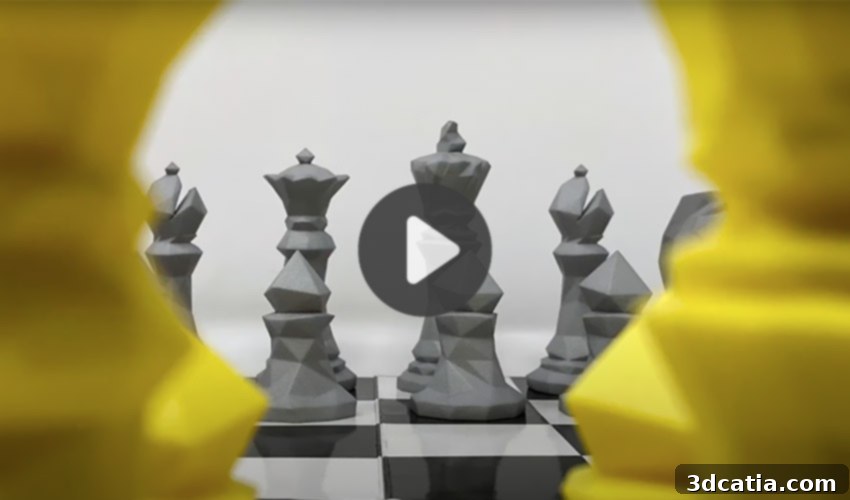
In a captivating fusion of popular culture, design aesthetics, and advanced manufacturing, the German company DyeMansion has unveiled an exquisite set of 3D printed chess pieces. These pieces are not just any replicas; they are a homage to the iconic chess sets featured in the highly acclaimed Netflix series, “The Queen’s Gambit,” imbued with the official Pantone Colors of the Year for 2021. The choice of PANTONE 17-5104 Ultimate Gray and PANTONE 13-0647 Illuminating for these pieces is particularly symbolic. Ultimate Gray conveys feelings of composure, steadiness, and resilience, while Illuminating, a bright and cheerful yellow, evokes hope, sunshine, and positive energy. Together, these two independent colors represent a message of strength and hopefulness that is both enduring and uplifting, capturing the spirit of a world emerging from challenging times. DyeMansion, renowned for its expertise in post-processing solutions for 3D printed parts, expertly demonstrates how additive manufacturing can transcend mere functionality to achieve remarkable artistic and aesthetic quality. By leveraging their advanced finishing technologies, DyeMansion transformed raw 3D printed parts into polished, vibrant chess pieces that perfectly embody the chosen Pantone shades. “The Queen’s Gambit,” a series that captivated audiences worldwide, depicted the strategic brilliance and intense drama of chess, where a “Queen’s Gambit” opening involves the sacrifice of a pawn (or several pawns) to gain a tactical advantage or strategic position. This project by DyeMansion not only celebrates the cultural impact of the show but also showcases the incredible versatility of 3D printing in producing detailed, high-quality consumer goods with precise color matching. It highlights how additive manufacturing can bridge the gap between digital design and physical reality, allowing for the creation of unique, personalized, and visually stunning objects that resonate with contemporary trends and cultural phenomena. You can admire the exquisite craftsmanship and vibrant colors of these pieces firsthand in the video below, a true testament to the power of 3D printing in art and design.
4. Empowering Creators: Assembling the Goodman Zone Open-Source 3D Printed Camera
Dora Goodman Cameras, a visionary company based in Budapest, Hungary, stands at the intersection of traditional photography and cutting-edge 3D printing technology. Specializing in open-source 3D printed analog cameras, Dora Goodman has revolutionized how enthusiasts and professionals interact with their photographic tools. Their philosophy centers on community, customization, and sustainable creation, providing an innovative alternative to mass-produced cameras. A cornerstone of their approach is the GoodLAB, a free, accessible online platform that hosts open-source 3D files for their camera designs. This unique initiative empowers a global community of makers, designers, and photographers to download, print, and assemble their own cameras. More importantly, the GoodLAB fosters a collaborative environment where members can actively contribute to the continuous improvement and evolution of each camera design, sharing modifications, enhancements, and innovative ideas. This open-source model democratizes camera production, making high-quality, customizable analog photography accessible to a broader audience. Understanding that not everyone has access to a 3D printer, Dora Goodman Cameras also thoughtfully offers pre-printed DIY kits. These kits provide all the necessary 3D printed components and other parts for assembly, allowing customers without personal 3D printing capabilities to still participate in the joy of building their own camera. This commitment to accessibility ensures that the creative and educational benefits of the GoodLAB extend to everyone. The tutorial video presented here is an invaluable resource, meticulously guiding viewers through the process of assembling their very own camera made from these precision 3D printed parts. It highlights the simplicity and satisfaction of constructing a functional device from digital designs, showcasing how additive manufacturing can put the power of creation directly into the hands of individuals. This project exemplifies how open-source principles, combined with 3D printing, can foster innovation, community engagement, and a deeper connection to the tools we use in our creative pursuits, ultimately reshaping the landscape of photography and personal manufacturing.
5. US Army’s Strategic Response: Additive Manufacturing Combats COVID-19 Shortages
The COVID-19 pandemic exposed critical vulnerabilities in global supply chains, particularly concerning essential medical products and devices. In response to these unprecedented challenges, the US Army Medical Material Development Activity (USAMMDA), a vital division of the Department of Defense dedicated to medical product development, dramatically accelerated its efforts to leverage additive manufacturing. USAMMDA’s core mission is to protect and preserve the lives of soldiers by developing innovative medical solutions, and the crisis underscored the urgent need for agile and resilient manufacturing capabilities. Facing severe shortages of critical medical supplies, ventilators, and personal protective equipment, the USAMMDA turned to the inherent flexibility and speed of additive manufacturing. This technology proved instrumental in developing and rapidly producing a variety of essential items that were in critically short supply due to the COVID-19 crisis. While 3D printing cannot directly manufacture drugs or vaccines, it played a crucial role in creating prototypes for medical devices, manufacturing components for existing equipment, designing and producing innovative diagnostic tools, and fabricating personal protective gear such as face shields and mask components. The ability to iterate designs quickly, produce on-demand, and localize manufacturing capabilities became a strategic advantage in mitigating supply chain disruptions. The video below provides an insightful account of how the USAMMDA employed additive manufacturing to address these immediate and pressing needs. It showcases their innovative approaches to designing and producing emergency medical products, highlighting specific examples of how 3D printed solutions were rapidly deployed to support both military personnel and, by extension, the broader public health efforts. This initiative not only demonstrated the strategic importance of additive manufacturing in crisis response but also solidified its role as a key component of national security and preparedness strategies. By embracing this technology, the US Army proved its capability to adapt quickly, innovate under pressure, and ensure the availability of life-saving medical products when traditional supply routes faltered. This proactive and inventive use of 3D printing stands as a powerful testament to its potential in future emergency scenarios and its enduring impact on global health resilience.
As we conclude our journey through this week’s most compelling 3D printing narratives, we hope you’ve gained a deeper appreciation for the boundless possibilities of additive manufacturing. These five videos collectively paint a vivid picture of an industry that is not only innovating at an incredible pace but also making tangible impacts on industries, art, community engagement, and even global health crises. From Matsuura’s robust industrial facilities driving economic regeneration to 3M’s pioneering work with advanced materials like PTFE, the scope of 3D printing continues to expand. DyeMansion’s artistic endeavor with Pantone-colored chess pieces reminds us of the aesthetic potential, while Dora Goodman Cameras showcases the power of open-source collaboration in empowering individual creators. Finally, the US Army’s strategic deployment of additive manufacturing during the COVID-19 pandemic underscores its critical role in resilience and rapid response. Each story is a testament to the ingenuity and problem-solving capabilities inherent in this transformative technology. Which of these groundbreaking applications captured your imagination the most? We invite you to share your thoughts and favorites with us in the comments section below, or engage with our vibrant community on our Facebook and Twitter pages. Your feedback fuels our passion for uncovering the latest and greatest in 3D printing! For those eager to explore even more fascinating content, don’t forget to visit our extensive collection of 3D printing videos on our dedicated Youtube channel. And to ensure you never miss out on the cutting-edge developments and crucial news from the additive manufacturing world, be sure to sign up for our free weekly Newsletter. Delivered straight to your inbox, it’s your definitive source for staying updated on all the latest trends, breakthroughs, and impactful stories in the 3D industry. Join us in embracing the future of manufacturing, one print at a time!