
Revolutionizing Cultural Heritage: How 3D Technologies Preserve, Restore, and Enhance Accessibility
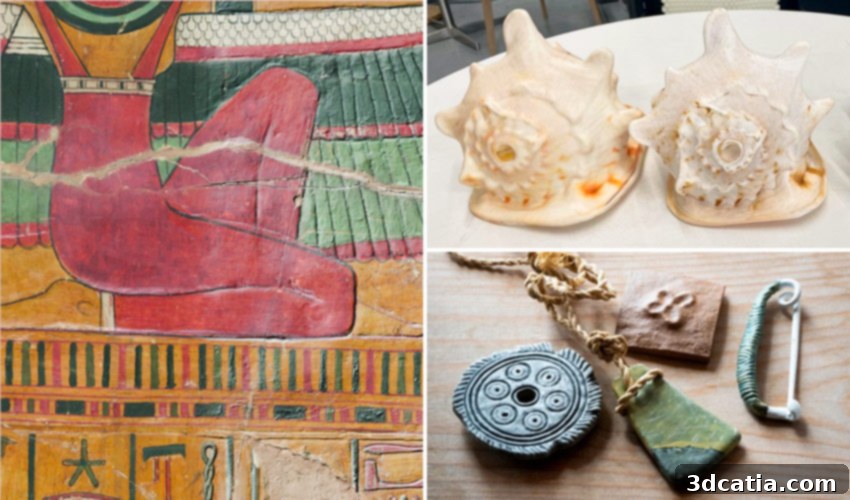
Cultural heritage, as profoundly defined by UNESCO, encompasses an invaluable array of artifacts, monuments, sites, and museums. These treasures hold immense significance, whether symbolic, artistic, aesthetic, or social, serving as the very foundations that define our identity as cultures and societies. The imperative to preserve these irreplaceable elements is therefore paramount. However, the ravages of time, relentless inclement weather, acts of vandalism, and other unforeseen catastrophes constantly threaten their existence, making preservation efforts increasingly challenging. Fortunately, a transformative solution has emerged: advanced 3D technologies. Indeed, 3D scanning and 3D printing have long been recognized for their potential in this domain. Pioneering initiatives like Scan the World and Twin It! exemplify this commitment, dedicated to digitally capturing significant heritage objects and sites to establish a shared global data space for cultural preservation. In this comprehensive exploration, we delve into some of the most compelling and innovative applications of 3D technologies from around the globe, demonstrating their extraordinary capacity not only to safeguard cultural heritage but also to significantly broaden its accessibility to a wider, more diverse audience.
Preserving the Iconic Moai Statues of Easter Island Through Digital Archiving
The monumental Moai statues of Rapa Nui, famously known as the Easter Island heads, have captivated global imagination for centuries, inspiring countless stories, films, and television shows. These enigmatic figures are central to understanding the ancient Rapa Nui civilization. Yet, in October 2022, a devastating fire swept across 100 hectares of the archaeological site, causing what locals deemed irreparable damage to many of these revered statues. This tragedy underscored the urgent need for robust digital preservation strategies. In response, Scan the World, a groundbreaking project by MyMiniFactory, intensified its efforts. As the world’s largest ecosystem for sharing digital, 3D scanned cultural artifacts, Scan the World issued a global call to action, urging users to redouble their efforts in scanning and 3D printing these vital objects to safeguard global heritage. Beyond advocating for community involvement, the project also made existing digital files accessible, empowering individuals worldwide to 3D print their own replicas of the Moai. This initiative beautifully transformed a moment of profound loss into an inspiring demonstration of hope and collective digital preservation, ensuring that even damaged artifacts can live on in digital and physical forms for future generations.
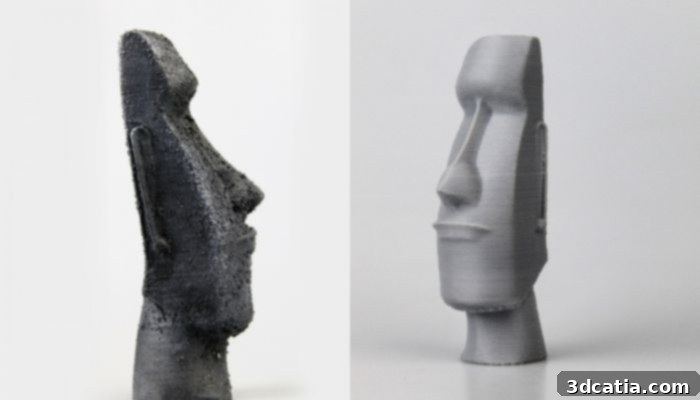
A digitalized representation (left) and how it would look printed (right) of a Moai statue (image credits: Scan the World)
Recreating Indigenous Māori Instruments with Precision 3D Printing
3D printing offers an exceptional solution for creating robust replicas of fragile and invaluable cultural pieces, such as the traditional Māori instruments. The Māori, indigenous Polynesian people of mainland New Zealand, possess instruments that carry profound cultural and spiritual significance, often used in ceremonies and storytelling. These original instruments are frequently old, delicate, and irreplaceable, making their handling and widespread exhibition challenging. To address this, Professor Olaf Diegel of the University of Auckland, in close collaboration with the Māori community, embarked on a project to faithfully recreate these instruments using 3D printing. Focusing on the pūtātara (a conch shell trumpet) and a pūkāea (a long trumpet traditionally carved from wood), Diegel utilized advanced CT scans to meticulously capture their internal geometries. This intricate data was then used to form highly accurate 3D models, ensuring that the replicas could precisely reproduce the unique sounds of the original instruments. These 3D printed replicas are not intended to replace the sacred original instruments but rather to serve as invaluable educational tools. They allow a broader audience, including students and the general public, to interact with and learn about Māori musical heritage without risking damage to the fragile originals, thus playing a vital role in cultural preservation and education. Discover more about this fascinating project in the video below:
Ensuring the Longevity of Vedic Wisdom: 3D Printing Ancient Scriptures
Since its establishment in 2006 by Dr. P.R. Mukund, the Bengaluru-based Tara Prakashana nonprofit trust has undertaken the critical mission of safeguarding over 3,300 ancient palm leaf manuscripts. These invaluable documents predominantly concern centuries-old Vedic literature and teachings, which form one of the major foundational influences of early Hinduism. The trust is dedicated to preserving and disseminating the profound knowledge contained within these fragile ancient Vedic sources. Recognizing the vulnerability of these delicate palm leaf manuscripts to environmental degradation and physical damage, Tara Prakashana opened India’s first 3D printing laboratory specifically for manuscript preservation in 2024. Their ambitious inaugural project involves 3D printing the world’s oldest known copy of the Bhagavad Gita, a pivotal Hindu scripture. Utilizing an FDM (Fused Deposition Modeling) 3D printer, the dedicated team is meticulously recreating the scripture using durable plastic filament. This innovative approach ensures that the sacred text will be preserved in an enduring, accessible format for countless generations to come, providing a robust safeguard against the loss of this vital cultural and spiritual heritage.
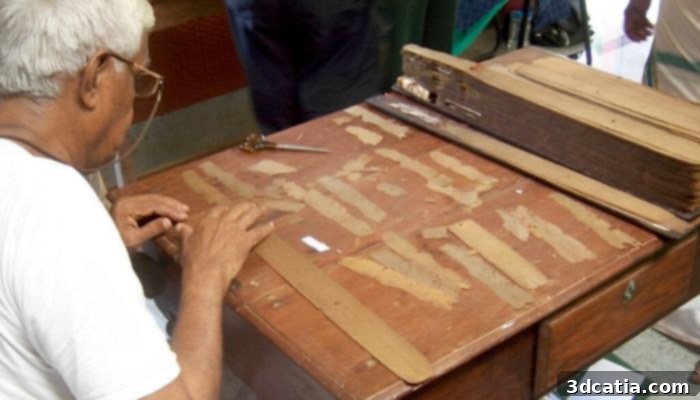
Palm-leaf manuscripts. (Image credits: Tara Prakashana)
Modernizing Traditional Architecture: 3D Printing in Chinese House Renovation
In a remarkable blend of tradition and innovation, professors at the University of Hong Kong undertook a pioneering project to renovate an old wooden house in China by seamlessly integrating 3D printed walls. This initiative, aptly named “Traditional House of the Future,” represents a thoughtful fusion of traditional architecture with cutting-edge modern technology. Its primary goal was to revitalize rural landscapes and adapt existing structures to meet the evolving needs of the community. As part of a government initiative in Nanlong village, the team meticulously scanned and then carefully disassembled the original timber structure. Following this, they expanded the dwelling’s footprint with custom-designed 3D printed walls. These innovative additions facilitated the creation of new, highly functional spaces, including an inviting entrance courtyard, a modern kitchen, and improved bathrooms, significantly enhancing the flexibility and livability of the traditional dwelling. Once the 3D printed walls were in place, the original architectural elements, such as the intricate timber frame and the classic tile roof, were thoughtfully reintegrated. This project serves as a compelling testament to how 3D printing can not only aid in the preservation of architectural heritage but also introduce sustainable, adaptive, and efficient construction solutions, allowing ancient structures to serve contemporary purposes.
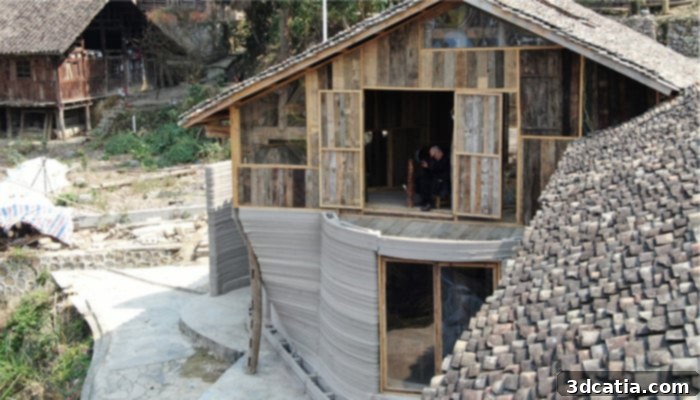
Image Credits: Lidia Ratoi/John Lin
Digital Resurrection: The Reconstruction of Palmyra’s Temple of Bel
The ancient Temple of Bel in Palmyra, a magnificent testament to Roman and Near Eastern architecture, suffered an unimaginable fate in 2015 when it was deliberately destroyed during the Syrian civil war. This tragic loss of an irreplaceable cultural landmark spurred researchers at the University of California, San Diego, to embark on an ambitious project: its digital recreation. Leveraging over 1,000 photographs meticulously taken before the temple’s destruction, the team employed advanced 3D modeling techniques to generate an extraordinarily high-resolution, photorealistic digital model. This digital twin meticulously preserves every architectural and artistic detail of the temple, including the intricate artwork and ancient inscriptions that once adorned its surfaces. The comprehensive digital reconstruction of the temple using these cutting-edge techniques was an unprecedented undertaking, requiring a full year of dedicated effort. Today, this detailed model stands as a powerful reference, becoming an integral part of the university’s repository. It serves as a vital tool for heritage preservation specialists, historians, and archaeologists, not only for research and education but also as a crucial guide for any potential future physical reconstruction efforts, ensuring that the memory and form of this lost wonder endure.
Precision Restoration: The Fontana di Melograno Project
Another exemplary project showcasing the power of 3D technologies in cultural heritage restoration is the work undertaken by the DITAG Department of the Polytechnic University of Turin. For this initiative, DITAG strategically adopted Creaform’s Handyscan 3D scanner to significantly enhance the documentation and restoration processes for cultural monuments. While DITAG had previously utilized LIDAR (Light Detection and Ranging) remote sensing technology, they recognized its limitations for capturing finer details, as LIDAR is inherently better suited for broad-area mapping. Consequently, the integration of Creaform’s Handyscan 3D scanner became indispensable. This advanced tool provides exceptional accuracy, down to 0.05 mm, combined with remarkable portability and user-friendliness. The Handyscan 3D scanner itself comprises two cameras, four LEDs strategically mounted around each camera, a red cross laser module, and retro-reflective adhesive targets, enabling precise data capture. DITAG employed this sophisticated scanner to meticulously document the Fontana di Melograno, located within the medieval Valentino Fortress in Turin, as part of its comprehensive restoration. This particular fountain is a 19th-century replica of the original 16th-century Fontana di Melograno, which resides in the castle of Issogne in the Aosta Valley. Crafted by the esteemed blacksmith Cesare Bianchi of Orta, this replica was prominently displayed at the 1911 Historical-Archaeological and Artistic Exhibition in Rome. For its restoration, scholars leveraged the 3D Handyscan to capture the intricate interior surfaces with unparalleled detail, while simultaneously using the LIDAR system to map the larger, less intricate areas. This synergistic combination of two distinct 3D technologies yielded an accurate, multi-resolution digital representation, a crucial factor in ensuring the success and fidelity of the restoration project.
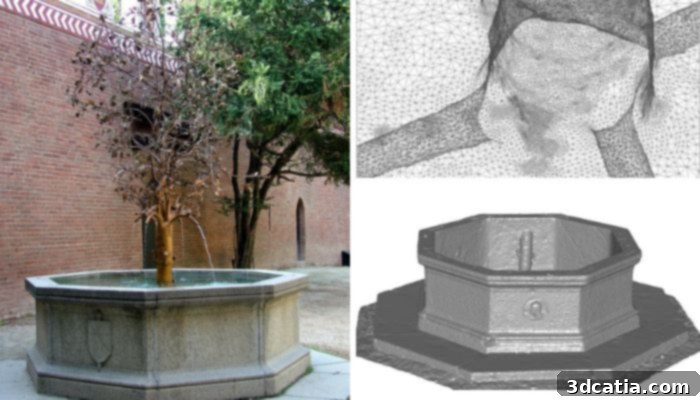
On the left is a photo of the Fontana di Melograno; on the right are digital surveys obtained with Creaform’s 3D Handyscan. (Image credits: left MuseoTorino, right Creaform)
Unveiling the Past: 3D Reconstruction of the Tomb of Seti I with LiDAR and Advanced Scanning
In 2001, Factum Arte embarked on an ambitious and extraordinarily detailed documentation project for the Tomb of Seti I in Egypt’s Valley of the Kings. The overarching goal was to create a high-precision replica of this invaluable archaeological site, ensuring its preservation for eternity. For this monumental task, the FARO Focus 3Dx230 scanner was utilized to meticulously measure the tomb’s complex architectural structure and the intricate spatial relationships within it. This powerful LiDAR scanner captured the entire geometry of the tomb from an impressive 70 different positions, achieving an average measurement point distance of a mere 1.5 to 3 mm. While LiDAR technology proved excellent for generating accurate spatial data and overall structural forms, it was recognized that it could not capture the extremely fine surface details and intricate textures in the ultra-high resolution required for a true replica.
To overcome this limitation, the Factum Foundation developed the pioneering Lucida 3D Scanner. This specialized device is exceptionally suited for capturing bas-reliefs, painted walls, and delicate carvings, capable of acquiring up to an astonishing 100 million points per square meter. This unparalleled resolution ensures that even the most minute details, such as hairline cracks, individual brushstrokes, and subtle surface variations, become visible and digitally recorded. The extensive laser scan data captured by the FARO scanner was then meticulously registered in Faro Scene to generate a comprehensive E57 point cloud. Concurrently, the thousands of accompanying photographs were carefully optimized in Lightroom to enhance exposure, clarity, and color accuracy. All this diverse data was subsequently imported into RealityCapture for advanced processing. A methodical, step-by-step reconstruction was then performed: images were segmented by room, individually aligned, and exported as distinct components. Finally, all components were precisely registered and merged, with the highly accurate laser scan data serving as the definitive spatial reference. This multi-technological approach created an unparalleled digital twin, capturing both the macro-geometry and micro-surface details of the tomb with breathtaking fidelity.
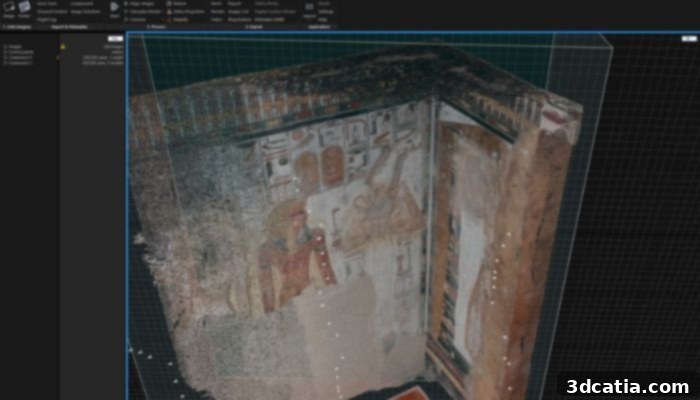
A point cloud of laser scans and photos merged in RealityCapture. (Image credits: Factum Foundation
Modifié)
Comprehensive Digital Documentation of UNESCO World Heritage Site Polonnaruwa
The UNESCO World Heritage Site of Polonnaruwa in Sri Lanka holds the evocative ruins of an ancient garden city, meticulously created by King Parakramabahu I in the 12th century. This sprawling site represents a crucial chapter in Sri Lankan history and architecture. In March 2019, a dedicated team undertook an intensive eight-day field campaign with the critical objective of comprehensively documenting this significant cultural heritage site. The primary aim was to establish a detailed digital record of the ruins, providing invaluable data for future restoration and conservation efforts. The documentation methodology was built upon a robust network of digital models encompassing sixteen distinct structures, all captured through a combination of precision laser scanning and high-resolution photography. From these intricate 3D scans, precise floor plans, sections, and elevations were derived, offering a complete and accurate picture of the archaeological site. A major advantage of this photogrammetry-based approach is its non-contact recording method, which is exceptionally important when surveying fragile cultural monuments to avoid any physical disturbance. Furthermore, the team intelligently combined drone photography, terrestrial photography, and laser scanning to generate highly detailed models, rich in both geometric precision and accurate color representation. Software like RealityCapture proved to be an indispensable asset, offering the capability to efficiently combine vast amounts of photographic and laser scan data into coherent, high-fidelity 3D models. This holistic approach ensures an enduring digital legacy for Polonnaruwa, facilitating both ongoing research and future safeguarding initiatives.
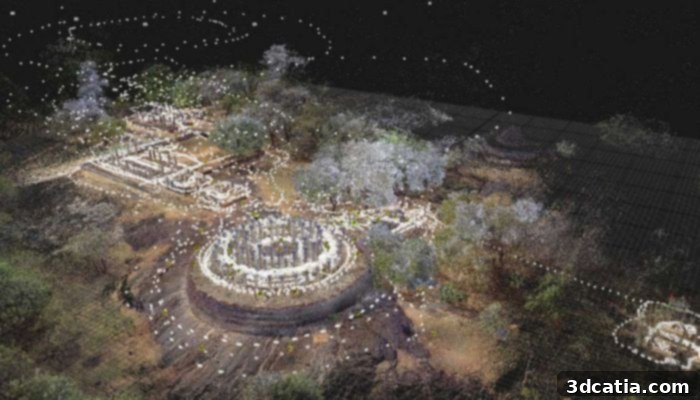
A screenshot from RealityCapture. (Image credits: RealityCapture)
Capturing History in Motion: Making Historical Films with 3D Scanners in Iraq
It is an unfortunate reality that conflicts and wars invariably inflict a heavy toll on heritage and culture, often leading to irreversible destruction. Iraq, a nation profoundly rich in history as a significant part of Mesopotamia, the very cradle of civilization, has tragically experienced immense cultural devastation. A few years ago, filmmaker Ivan Erhel initiated a poignant film project aimed at documenting the surviving cultural riches of this region. The film tells the compelling story of a man dedicated to preserving what remains of Iraq’s heritage through the innovative application of 3D digitization. To achieve this ambitious goal, several advanced Artec3D solutions were deployed to meticulously scan various elements across the country, ranging from small, delicate objects to towering walls spanning several meters. Ivan Erhel eloquently explains the deeper motivation behind his work: “At several points throughout history, Baghdad has been at the top of the world. Perhaps now we can reunite the country a little bit, and also remind the world what we all owe to Mesopotamia – because 90% of our culture originates from here, we owe them everything.” This project powerfully demonstrates how 3D scanning can serve as a critical tool for digital preservation in high-risk environments, ensuring that cultural narratives and artifacts, even if physically threatened, can be archived and shared globally through engaging cinematic experiences, reminding the world of their universal importance.
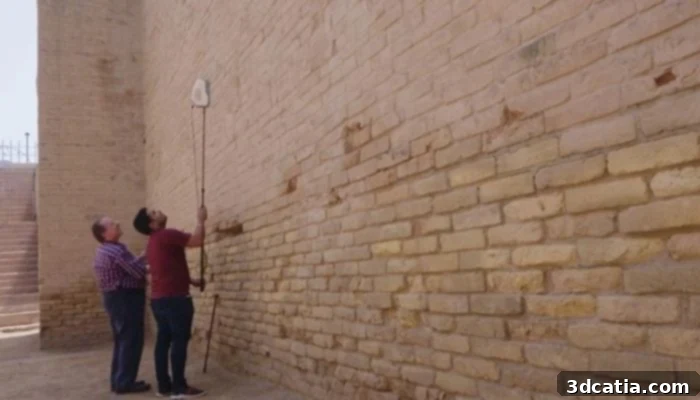
The team used the Artec Eva scanner to digitize the walls (image credits: Ivan Erhel).
Mapping the Unique Hukuru Miskiy in Malé, Maldives, for UNESCO Listing
The Malé Hukuru Miskiy, eloquently translated as “The Friday Mosque,” stands as one of the most historically significant sites in the Maldives, prominently located in its capital, Malé. This architectural marvel is currently included in UNESCO’s provisional list of World Heritage Sites, a testament to its exceptional cultural value. Constructed in 1658 during the illustrious reign of Sultan Ibrahim Iskandar, the complex encompasses the main mosque structure, an adjacent 17th-century cemetery, and a distinctive minaret. It holds the unique distinction of being the largest building globally constructed almost entirely from coral stone, showcasing an extraordinary indigenous building tradition. For the Hukuru Miskiy to achieve official UNESCO World Heritage status, detailed documentation of the mosque complex and comprehensive conservation and renovation plans are essential. Recognizing a significant gap in existing drawings or historical construction documents, the Maldives Heritage Department commissioned Water Solutions Pvt Ltd, a company specializing in environmental mapping and consulting, to undertake a meticulous 3D mapping of the entire site.
Water Solutions deployed an advanced suite of surveying instruments, including the Leica BLK360 laser scanner, the Leica Viva TS16 total station, and the Leica GS18 T GNSS RTK rover. Despite the inherent difficulties posed by the mosque’s confined spaces and intricate architectural details, these cutting-edge instruments enabled the scholars to comprehensively capture the entire archaeological site in a remarkably short span of just a few days. The resulting highly accurate digital twin of the complex will be instrumental in preserving its unique coral architecture and will provide an indispensable foundation for all future restoration work. Crucially, the detailed data collected will directly inform the rehabilitation of the mosque’s roof and will serve as the primary technical basis for its official application to the prestigious UNESCO World Heritage list, ensuring its rightful place among the world’s most cherished cultural sites.
Broadening Horizons: Increasing Cultural Heritage Accessibility with 3D Printing
Beyond preservation and restoration, additive manufacturing plays a pivotal role in enhancing the accessibility of cultural heritage, particularly exemplified by the innovative work of Italy-based Hi.Stories. This pioneering company’s mission is centered on augmenting cultural heritage through the strategic application of 3D technologies, leveraging their immense potential to create engaging and interactive pieces for cultural institutions. In particular, Hi.Stories utilizes 3D printing to develop tactile pathways and replicas specifically designed for the visually impaired, thereby significantly improving museum accessibility and inclusivity. This means visitors who cannot see original artifacts can still experience their form and texture through touch. Furthermore, the company 3D prints highly accurate replicas of artifacts for a variety of educational purposes. These duplicates are especially valuable when original artifacts are either too fragile to be handled, are on temporary loan to other institutions, or simply need to be kept behind protective barriers. By providing high-quality, durable 3D printed copies, cultural institutions can allow the public to interact directly with historical objects, fostering deeper engagement and a more immersive learning experience without any risk to the precious originals. This approach truly democratizes access to cultural knowledge and artistic appreciation.
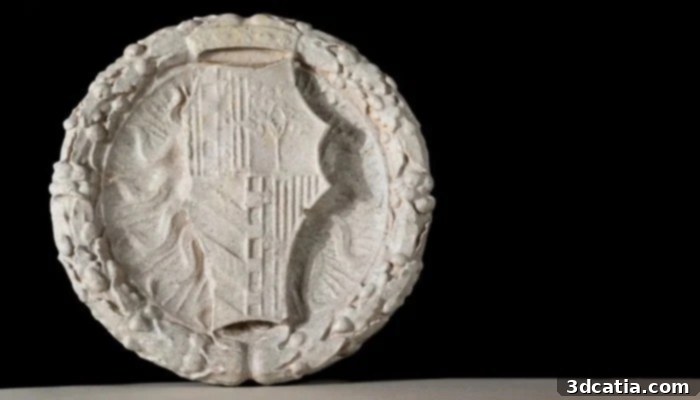
3D printing of an ancient coat of arms (image credits: Hi.Stories)
Harmonizing Past and Present: 3D Printed Paganini Violin for Modern Cultural Mediation
To commemorate the prestigious 70th anniversary of the Premio Paganini in 2023, the organizing committee devised a remarkably innovative marketing and cultural strategy. Premio Paganini entered into a unique collaboration with the renowned Italian 3D printing company 3DiTALY from Rome to create a 3D printed replica of “Il Cannone,” the legendary violin owned by the celebrated composer and “devil’s violinist” Niccolò Paganini. The original masterpiece, crafted by the esteemed violin maker Guarneri, is a priceless artifact housed at the Palazzo Tursi in Genoa. Through meticulous 3D scanning, every intricate detail of the original instrument was captured with astonishing precision. This digital data then allowed for the 1:1 reproduction using 3D printing. 3DiTALY employed the SLA (Stereolithography) process and white resin to achieve the high level of detail required. A particular challenge during this process was managing the numerous intricate details and the necessary support structures, which had to be carefully and expertly removed after the printing was complete. Once the 3D printed violin emerged from the printer, it was carefully fitted with vibrant red nylon strings, giving it a striking and contemporary appearance.
For Marco Bucci, the Mayor of Genoa, this 3D-printed violin transcends a mere intelligent marketing initiative; it represents a forward-thinking approach to cultural education and engagement. The replica is specifically designed to spark interest in music history and to inject a fresh, dynamic energy into Paganini’s venerable, and perhaps perceived as dusty, image. Mayor Bucci enthusiastically stated, “This is a great promotional initiative for the Premio Paganini, which will also be popular with young people. The 3D ‘Cannone’ is an extra opportunity provided by new technologies, and it can be brought to schools and all over the city to recount Paganini in an unconventional way.” This project perfectly illustrates how 3D technologies can bridge historical artistry with modern accessibility, making cultural icons tangible and engaging for new generations, thus revitalizing their relevance in contemporary society.
The applications of 3D technologies in cultural heritage are truly boundless, offering innovative solutions for preservation, restoration, research, and dramatically increasing accessibility worldwide. From safeguarding ancient statues and manuscripts to digitally resurrecting lost temples and creating interactive museum experiences, 3D scanning and printing are rewriting the future of how we interact with our past. Which of these groundbreaking uses of 3D technologies for cultural heritage resonated with you the most? We invite you to share your thoughts and comments below or engage with us on our LinkedIn, Facebook, and Twitter pages! Don’t miss out on the latest advancements in additive manufacturing – be sure to sign up for our free weekly Newsletter here, delivering the freshest 3D printing news directly to your inbox! You can also explore all our insightful videos on our dedicated YouTube channel.