
Aspect Biosystems: Pioneering 3D Bioprinting for Immuno-Oncology and Personalized Medicine Breakthroughs
Aspect Biosystems, a groundbreaking Canadian specialist in 3D bioprinting, has consistently positioned itself at the forefront of medical innovation. Our journey with Aspect Biosystems began in 2017, when we featured them as our esteemed startup of the month, recognizing their revolutionary approach to creating customized human tissues. This advanced capability holds immense promise for a myriad of critical applications, including accelerating drug development, pioneering regenerative medicine solutions, and fostering a deeper understanding of complex human diseases. Central to Aspect Biosystems’ ambitious vision for the future of healthcare is a transformative paradigm shift: a world where pharmaceutical drugs are rigorously developed without the ethical concerns and limitations of animal testing, where clinicians can precisely predict a patient’s individual response to a specific medication before it is prescribed, and where failing organs are not simply harvested but custom-created on demand through sophisticated bioprinting techniques.
In a significant move that underscores their commitment to advancing therapeutic solutions for the medical sector, Aspect Biosystems recently announced a landmark new partnership. This pivotal collaboration unites them with two global biopharmaceutical giants, Merck and GSK, as well as the world-renowned McGill University. The strategic objective of this powerful alliance is to dramatically accelerate the development of innovative immuno-oncology therapeutics. By harnessing Aspect Biosystems’ unique and highly advanced bioprinting technology, the partners aim to engineer intricate 3D human tissues. These physiologically relevant tissue models will serve as critical platforms for screening and developing treatments specifically designed for some of the most challenging and difficult-to-treat cancers, thereby paving the way for more targeted, effective, and personalized cancer therapies.

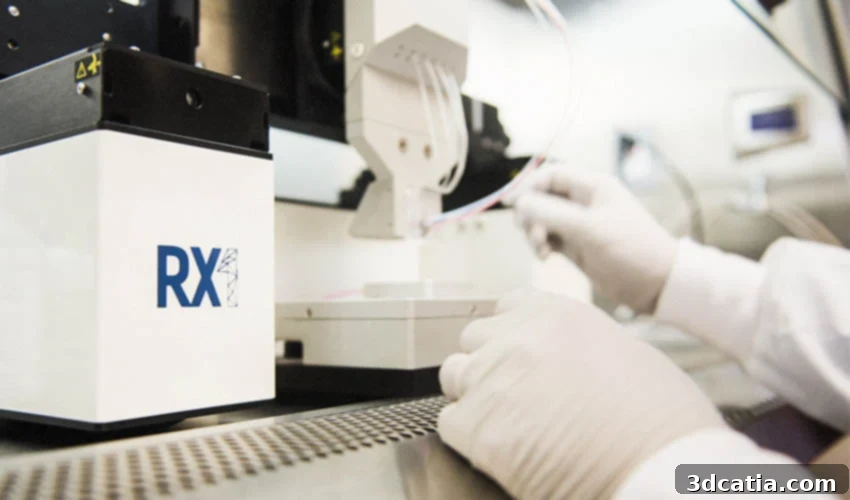
The Lab-on-a-Printer™ technology from Aspect Biosystems was developed to biofabricate complex, functional 3D tissue. Cell-containing bioinks flow through a microfluidic printhead | Credits: Aspect Biosystems
The Lab-on-a-Printer™ Advantage: Engineering Physiologically Relevant Human Tissues
At the very core of Aspect Biosystems’ transformative capabilities is its proprietary Lab-on-a-Printer™ technology. This state-of-the-art platform represents a paradigm shift in tissue engineering, specifically designed to biofabricate complex, functional 3D human tissues with unparalleled precision and biological fidelity. Unlike traditional 2D cell cultures, which often fail to recapitulate the intricate environment of living organisms, or even simpler 3D models, Aspect’s technology utilizes specialized cell-containing bioinks. These bioinks are meticulously extruded through an advanced microfluidic printhead, allowing for the precise deposition of various cell types and extracellular matrix components in predefined, architecturally sound arrangements. This intricate control enables the creation of tissue models that faithfully mimic the complex microenvironment found within native human tissues and organs, including their cellular architecture, signaling pathways, and biomechanical properties.
The ability to construct these physiologically relevant models is indispensable for advancing medical research. They offer a far more accurate representation of how human tissues behave, interact, and respond to various stimuli, including the progression of diseases and the introduction of therapeutic agents. Tamer Mohamed, Chief Executive Officer at Aspect Biosystems, expressed profound excitement regarding this significant new collaboration. “We are thrilled to partner with global biopharmaceutical leaders, GSK and Merck, as well as world-class groups at McGill and the Canadian Cancer Society that are dedicated to finding cures for cancer,” he stated. Mohamed further underscored the strategic importance and synergistic nature of this alliance, adding, “This public-private partnership is a great example of combining state-of-the-art technology and science with world-class expertise and resources to accelerate discovery and development of new therapies for patients.” His remarks highlight the collective power of merging innovative technological platforms with deep scientific knowledge and substantial financial and human resources to effectively tackle the complex global challenge of cancer.
A Multi-Million Dollar Investment Driving Immuno-Oncology Innovation
This potent partnership is more than just a strategic alliance; it represents a substantial financial commitment towards medical innovation, with the project valued at an impressive $2.2 million. This significant funding is generously backed by two leading organizations dedicated to health and research: CQDM, a biopharmaceutical research consortium focused on accelerating drug discovery, and the Canadian Cancer Society, a prominent national charity relentlessly dedicated to eradicating cancer. Their joint investment unequivocally demonstrates a profound belief in the transformative potential of Aspect Biosystems’ technology to revolutionize both cancer research and clinical treatment strategies. The initial phase of this ambitious project involves an intensive collaboration between Aspect Biosystems and the esteemed Goodman Cancer Research Centre at McGill University, working in tandem with the McGill University Health Centre. Together, they are undertaking a critical endeavor: to precisely reproduce complex tumors using living cells meticulously obtained from breast cancer patients. This crucial step is designed to create highly personalized and accurate models of patient-specific cancers, moving significantly beyond generalized research models towards truly individualized insights.
Specifically, the project leverages Aspect’s sophisticated microfluidic 3D bioprinting platform to generate these highly relevant 3D tissue models. These advanced models are uniquely powerful because they incorporate cells directly derived from individual patients, ensuring that the recreated tumors meticulously mimic the authentic biological characteristics, genetic profiles, and complex cellular interactions of the original human disease. The primary and immediate application of these patient-derived tumor models is to rigorously assess the effectiveness of various anti-cancer drugs. By testing potential therapies on these realistic, patient-specific models, researchers can acquire invaluable, predictive insights into how different drugs interact with the unique biology of an individual patient’s tumor. This allows for a much more accurate prediction of a patient’s likely response to a particular treatment, marking a monumental leap towards truly personalized cancer medicine. Such capabilities enable the formulation of more informed and effective treatment strategies, precisely tailored to individual patients, thereby minimizing detrimental trial-and-error approaches and profoundly improving patient outcomes and quality of life.

The microfluidic printhead | Credits: Aspect Biosystems
Unlocking the Secrets of the Tumor Microenvironment for Novel Therapies
The inherent complexity of cancer extends far beyond just the malignant tumor cells themselves; it involves a dynamic and intricate ecosystem known as the tumor microenvironment (TME). This TME is a complex mélange of various non-cancerous cell types, intricate extracellular matrix components, and a plethora of signaling molecules that collectively exert a profound influence on tumor initiation, growth, progression, metastasis, and crucially, its response to therapeutic interventions. Traditional cancer models frequently fall short in adequately capturing this multi-faceted complexity, leading to significant limitations in the drug discovery process and often contributing to the high failure rate of new cancer drugs in clinical trials. Dr. Morag Park, the distinguished Director of the Goodman Cancer Research Centre at McGill University, eloquently articulated the palpable excitement surrounding this innovative collaborative approach. “We are excited to work with Aspect’s innovative team to combine our bio-bank of patient-matched tumor-associated cells with Aspect’s microfluidic 3D bioprinting technology to create programmable 3D tumor models,” she observed. This strategic amalgamation of McGill’s extensive and valuable bio-bank of patient-derived cells with Aspect’s cutting-edge bioprinting capabilities holds the promise of yielding incredibly sophisticated, authentic, and highly representative tumor models.
Dr. Park further elaborated on the critical scientific challenge that this groundbreaking partnership is specifically designed to address: “Solid tumor growth is regulated by complex interactions of tumor cells with the tumor microenvironment. This collaboration seeks to create a powerful new platform for studying these critical interactions in a human-relevant environment and, ultimately, accelerate the discovery and development of novel cancer immunotherapies.” By meticulously and accurately recreating the TME within these 3D bioprinted models, researchers gain an unprecedented ability to observe, measure, and analyze in minute detail how tumor cells interact with their surrounding biological environment, how the body’s immune cells respond to the cancerous threat, and how these complex interactions collectively impact therapeutic efficacy. This dramatically deeper level of understanding is absolutely vital for developing truly effective immunotherapies, which aim to harness and re-engage the body’s own powerful immune system to recognize and fight cancer. The capability to model these intricate interactions within a physiologically relevant human context offers a significantly enhanced predictive power compared to existing, less sophisticated models, thereby dramatically fast-tracking the identification and validation of new therapeutic targets and promising drug candidates, bringing hope for millions affected by cancer.
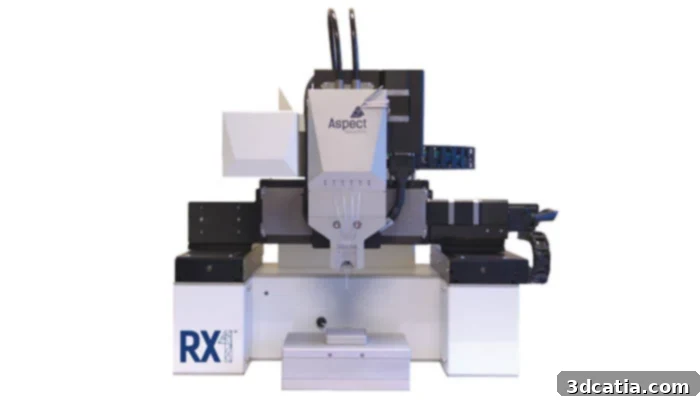
Aspect Biosystems’ bioprinting solution | Credits: Aspect Biosystems
A Model for Modern R&D and Patient-Centric Innovation in Canada
The profound significance of this collaboration extends far beyond its immediate scientific and technological merits. Anna Van Acker, President and Managing Director at Merck Canada Inc., eloquently highlighted the broader, systemic implications of such pioneering alliances. “We believe that collaboration between public sector, academia, patients, NGOs, industry and government will lead to innovations that improve patient outcomes and today’s announcement is yet another example of the modern R&D model we are pursuing in Canada,” she affirmed. Her powerful statement underscores a crucial and ongoing shift in the paradigm of medical research and development, emphasizing the indispensable necessity of a multi-stakeholder, integrated approach. This collaborative model ensures that a rich tapestry of diverse perspectives, specialized expertise, and essential resources are brought to bear on the most complex and pressing health challenges, thereby fostering an environment where truly transformative breakthroughs are not only possible but also directly and efficiently translate into tangible, life-changing benefits for patients.
This partnership epitomizes the very essence of the future of biomedical innovation, illustrating how cutting-edge technologies like 3D bioprinting seamlessly intersect with robust pharmaceutical development and world-class academic research to comprehensively address critical unmet medical needs. The immediate and focused attention on immuno-oncology, particularly for cancers that have historically proven difficult to treat, holds immense promise for developing therapies that are not only more effective but also less toxic and highly personalized to each patient. Looking beyond the immediate scope of cancer, the foundational bioprinting technology developed by Aspect Biosystems has far-reaching and profound implications for the entire medical field. One can envision a future where regenerative medicine routinely and reliably produces fully functional tissues and organs for transplantation, effectively eliminating agonizing organ donor waiting lists and saving countless lives. Envision drug development pipelines that are significantly faster, more cost-effective, and ethically superior due to the drastic reduction or complete elimination of animal testing. Furthermore, personalized medicine could ascend to unprecedented heights, with treatments precisely tailored to an individual’s unique genetic makeup and specific disease profile, dramatically improving success rates, minimizing debilitating adverse effects, and revolutionizing patient care globally.
The collaborative synergy between Aspect Biosystems, Merck, GSK, and McGill University, buttressed by the crucial support of CQDM and the Canadian Cancer Society, stands as a radiant beacon of progress in the global scientific community. It powerfully demonstrates how focused, interdisciplinary partnerships, driven by both relentless technological innovation and a profound understanding of biological complexity, can dramatically accelerate the arduous journey from nascent scientific discovery to tangible patient benefit. This ambitious initiative is not merely about printing cells in a lab; it is fundamentally about printing a future where chronic diseases are better understood, where treatments are more precise and impactful, and where the overall quality of human life is profoundly and sustainably enhanced through the transformative power of advanced bioprinting and collaborative, cutting-edge research. As this vital project progresses, the invaluable insights gleaned from these sophisticated 3D tumor models will undoubtedly contribute significantly to the ongoing global fight against cancer and inspire a new wave of further advancements across the entire spectrum of medical science and biotechnology.
For more detailed information about this exciting and impactful partnership, please visit Aspect Biosystems’ official announcement HERE.
*Cover photo credits: Aspect Biosystems
What are your thoughts on this transformative project and the burgeoning future of 3D bioprinting in medicine? We sincerely encourage you to share your valuable insights and comments below, or feel free to engage with us on our Facebook and Twitter pages! And to ensure you never miss out on the very latest advancements, groundbreaking news, and essential updates from the dynamic world of 3D printing, remember to sign up for our completely free weekly Newsletter, delivered directly to your inbox!