
The Final Frontier of Fabrication: Exploring Zero-Gravity 3D Printing in Space
Since the dawn of space exploration, humanity’s innate curiosity about the cosmos has served as an unparalleled catalyst for innovation and technological advancement. Esteemed institutions like NASA and pioneering private enterprises such as SpaceX and Relativity Space have consistently pushed the boundaries of our cosmic understanding, leading ambitious missions that redefine what’s possible beyond Earth. At the forefront of this relentless pursuit is zero-gravity 3D printing, a revolutionary technology poised to transform not only terrestrial manufacturing but also redefine the operational paradigms within the demanding environment of space. This cutting-edge approach promises to unlock unprecedented capabilities for sustaining long-duration missions, enabling on-demand repairs, and facilitating future off-world settlements, thereby dramatically reducing the logistical and financial burdens associated with space travel.
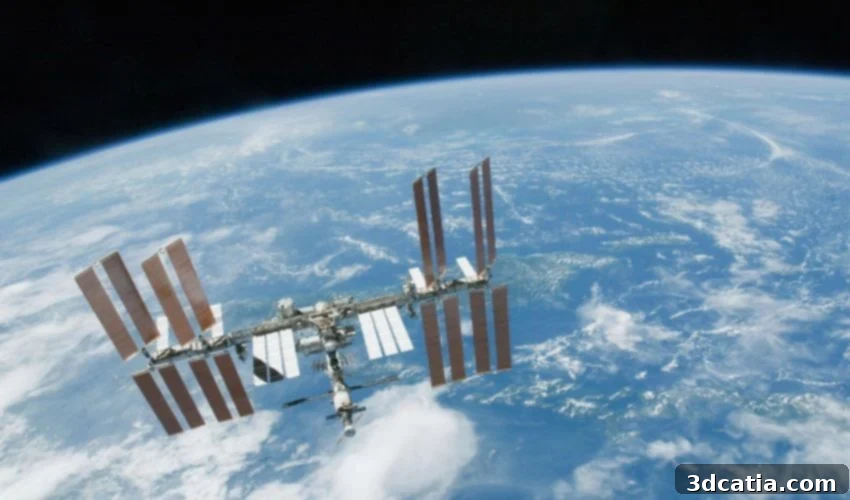
Zero-gravity, often referred to as microgravity, 3D printing signifies the process of additive manufacturing conducted in the unique environment of space, where gravitational effects are significantly reduced or virtually absent. This groundbreaking methodology, once a theoretical concept before the inaugural 3D printer was deployed to the International Space Station (ISS) in 2014, empowers astronauts and engineers to fabricate essential tools, critical spare parts, and even complex structural components directly in orbit. The ability to produce these items in space dramatically mitigates the perennial challenge of requiring frequent, costly, and logistically intricate resupply missions from Earth. Unlike conventional 3D printing methods, which inherently depend on gravity to properly orient and hold materials in place during the layering process, zero-gravity 3D printing necessitates bespoke adaptations and innovative engineering solutions to conquer the inherent challenges of a weightless environment, ensuring material adhesion, precise deposition, and structural integrity without gravitational assistance.
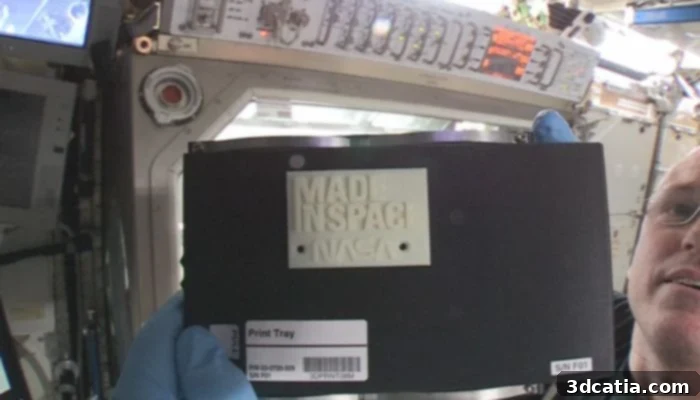
The first-ever part 3D printed in space (photo credits: NASA)
As the capabilities of 3D printing in space continue their rapid evolution, this methodology is increasingly recognized as an indispensable solution for supporting ambitious, long-duration space missions. The conventional practice of transporting every conceivable spare part and tool for all potential contingencies from Earth is not only economically prohibitive but logistically impractical. Zero-gravity additive manufacturing offers a paradigm shift, enabling dynamic adaptation and problem-solving in real-time. But how exactly does this intricate process unfold in such an extraordinary environment? And what significant challenges must the scientific and engineering communities still overcome to fully realize the vast potential of zero-gravity 3D printing? We delve deeper into these critical questions, exploring the operational mechanics, current obstacles, and immense promise of this transformative technology.
The Genesis and Evolution of Zero-Gravity 3D Printing
To truly grasp the significance and complexity of zero-gravity 3D printing, it is crucial to understand its foundational history and the incremental steps that have led to its current state. The pioneering journey of additive manufacturing in space commenced with a series of diligent experiments spearheaded by NASA and its collaborative commercial partners, all focused on meticulously assessing and validating the practical role of 3D printing beyond Earth’s atmosphere. A monumental milestone was achieved in 2014 when Made In Space, a company at the forefront of in-space manufacturing, successfully installed and meticulously operated the very first 3D printer aboard the International Space Station (ISS). This pioneering printer leveraged fused filament fabrication (FFF) technology, a relatively straightforward yet effective method, to produce a diverse array of essential tools and various small parts, proving the viability of in-space manufacturing.
Since that initial breakthrough, the field has witnessed a torrent of rapid advancements and groundbreaking achievements. These include the sophisticated development of metal 3D printing capabilities by esteemed organizations such as the European Space Agency (ESA) and extensive research into the complex realm of bioprinting in zero gravity, which holds the promise of fabricating biological tissues and organs. The current year alone has been particularly fruitful, marking several significant milestones. Notable achievements include UC Berkeley’s SpaceCAL 3D printer successfully demonstrating its ability to print precision plastic parts while in orbit, showcasing enhanced reliability and material handling. Furthermore, the European Space Agency (ESA) made history by successfully completing the first-ever metal 3D printing experiments aboard the International Space Station. These triumphs signify a critical leap forward, proving that more robust and functional materials can be fabricated in microgravity, thereby expanding the potential applications exponentially and paving the way for more sophisticated in-space manufacturing capabilities. These ongoing developments underscore a relentless drive towards self-sufficiency in space, transforming science fiction into tangible reality.
Navigating the Unique Challenges of Zero-Gravity 3D Printing
While zero-gravity 3D printing has made considerable strides and continues to advance at an impressive pace, it is crucial to acknowledge that significant obstacles and engineering complexities persist. The absence of gravity profoundly impacts various facets of the 3D printing process in ways that demand innovative solutions. On Earth, gravity plays a fundamental and often unnoticed role, assisting in the precise layering process by keeping molten or extruded materials firmly in place, ensuring consistent adhesion and structural integrity. In the microgravity environment of space, however, this natural aid is absent. Consequently, materials must be meticulously controlled and precisely manipulated to prevent them from floating away erratically, deforming unintentionally, or failing to adhere correctly to previous layers. This necessitates a profound understanding of material properties, alongside sophisticated printer mechanics and software algorithms, to guarantee that each successive layer bonds flawlessly without any gravitational assistance.
Beyond material stability, several other critical engineering challenges present themselves. Foremost among these is the effective management of heat dissipation. In a vacuum, heat cannot be dissipated through convection as it would on Earth, requiring specialized cooling systems. Facilitating consistent and reliable extrusion from the printer nozzle becomes another complex task, as molten plastics or metals can behave unpredictably in microgravity, forming bubbles or exhibiting unusual flow patterns due to surface tension effects rather than gravitational pull. The unpredictable behavior of liquids and molten materials in this weightless environment demands bespoke hardware, sophisticated software adaptations, and the development of unique material formulations specifically engineered to perform optimally under space conditions. All these specialized requirements invariably lead to increased research, development, and manufacturing costs, presenting a considerable economic hurdle to widespread adoption.
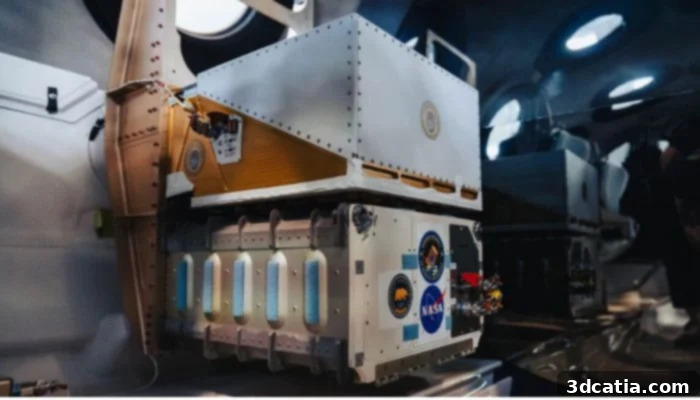
The SpaceCAL Microgravity 3D printer. (Photo Credits: Virgin Galactic)
Additional hurdles to widespread implementation include maintaining stringent quality control and ensuring consistency in the manufactured parts. Guaranteeing the structural integrity, dimensional accuracy, and mechanical performance of 3D printed components in space is exceptionally challenging, especially given that these parts must adhere to rigorous safety and functionality standards for critical spacecraft use. Any deviation could have catastrophic consequences. Resource management also emerges as a paramount concern, given the inherently limited supplies of raw materials and energy available on space missions. Every gram of feedstock and every watt of power must be utilized with maximum efficiency. Furthermore, the 3D printers themselves must be engineered with extraordinary resilience to withstand the extremely harsh conditions of space. This includes exposure to intense radiation, radical temperature extremes, and the unforgiving vacuum environment. These sophisticated machines must operate flawlessly and reliably over extended periods without the possibility of immediate maintenance or complex repairs. Such robustness requires heavy consideration of transport logistics; since every kilogram launched into space incurs substantial costs, the printers must be lightweight yet incredibly durable. Extensive testing and continuous adaptation within the microgravity environment are therefore not merely beneficial but absolutely essential to rapidly advance and perfect this technology, ensuring its readiness for future deep-space endeavors.
Transformative Applications and Far-Reaching Benefits
Despite the substantial technical and logistical hurdles, the transformative potential of zero-gravity 3D printing for both advanced space exploration and future human habitation beyond Earth is immense, which is why it remains a focal point of intense research and development globally. One of its most significant and immediately impactful applications is the unprecedented ability to manufacture critical tools, essential spare parts, and even complex structural components directly in orbit. This innovative capability directly addresses the longstanding challenge of transporting every single item needed from Earth, a process that is both prohibitively costly and exceptionally time-consuming. For instance, if a vital tool or a crucial component of a life-support system malfunctions aboard the International Space Station, astronauts can swiftly print a precise replacement on-demand. This ensures mission continuity, minimizes downtime, and, most importantly, eliminates the perilous wait for the next resupply mission, which could be months away. This profound benefit extends to virtually all critical spacecraft components, allowing for immediate repairs and proactive maintenance, thereby significantly enhancing the overall safety, resilience, and operational efficiency of space missions.
Moreover, the integration of 3D printing in space opens up various groundbreaking avenues for medical applications tailored specifically for the unique challenges faced by astronauts. Personnel on long-duration missions are exposed to distinctive health challenges, including bone density loss, muscle atrophy, and the potential for acute injuries. Having the capability to print customized medical devices, pharmaceutical delivery systems, and vital supplies on-site could be genuinely life-saving. For example, personalized splints for fractures, custom-fitted casts for injuries, and even specialized surgical instruments can be produced precisely when and where they are needed. Additionally, extensive research is actively underway into the exciting and challenging feasibility of food 3D printing in space, which could provide fresh, nutritionally optimized meals, significantly improving crew morale and health on extended journeys.
Beyond the immediate operational and medical needs of astronauts, this technology holds the key to paving the way for the ambitious future construction of sophisticated space habitats and permanent outposts. By strategically utilizing locally sourced materials, such as lunar regolith (moon dust) on the Moon or Martian regolith on Mars, advanced 3D printing techniques could enable the autonomous construction of various robust structures, ranging from basic shelters to complex pressurized living modules and radiation shields. This revolutionary approach would dramatically reduce humanity’s dependency on Earth for construction materials, a logistical bottleneck that has historically limited the scope of deep-space endeavors. Thus, zero-gravity 3D printing is not merely an incremental improvement; it is a fundamental enabler for establishing a more sustainable, self-sufficient, and ultimately, a long-term human presence across the solar system, transforming our species into a truly multi-planetary one.
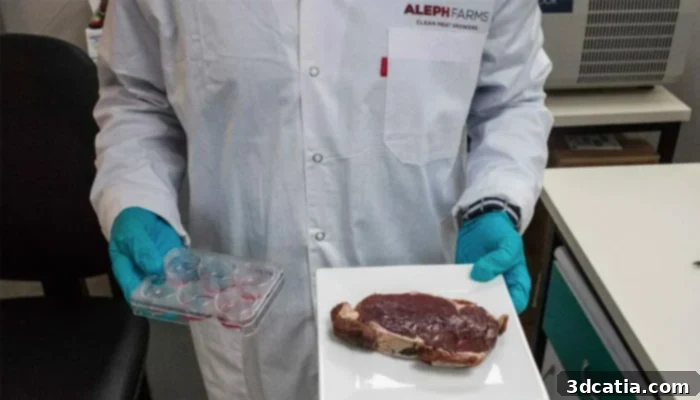
Aleph Farms, which announced in 2019 its project to 3D print meat on board the International Space Station. (Photo Credits: Aleph Farms)
The profound benefits of zero-gravity 3D printing are not exclusively confined to the cosmic realm; they extend significantly to Earth as well. The rigorous research, innovative development, and groundbreaking technological solutions engineered for space applications frequently yield invaluable spin-off advancements that find practical and impactful applications on our home planet. Innovations in manufacturing techniques, advanced material science, and robust process controls developed under the extreme constraints of space can directly translate to and profoundly enhance industrial processes on Earth. This leads to the creation of more efficient, cost-effective, and resilient production methods across various sectors. Furthermore, the invaluable experience gained from designing and operating manufacturing systems in such unforgiving environments cultivates improved resilience, adaptability, and reliability in terrestrial industries. Sectors such as automotive, aerospace, and medical device manufacturing can leverage these insights to produce more durable, precise, and high-performing products. Consequently, zero-gravity 3D printing transcends its immediate role in supporting the future of space exploration; it actively drives progress, fosters innovation, and generates tangible economic and technological benefits right here on Earth, exemplifying how pushing the boundaries in one domain can profoundly impact many others.
The Visionary Future of 3D Printing in Space
Looking ahead, the trajectory of zero-gravity 3D printing points towards an exciting and rapidly evolving future. Future advancements are highly likely to concentrate on dramatically expanding the diverse range of materials that can be precisely printed in space. This includes the development and qualification of high-performance metals, advanced ceramics, and multi-functional composite materials, which will enable the creation of even more complex, durable, and structurally integrated components and equipment. As the underlying technology continues to mature and evolve at an accelerated pace, we can realistically anticipate the groundbreaking development of significantly larger-scale printers and autonomous robotic fabrication systems. These advanced systems will be capable of fabricating entire spacecraft modules, large-scale scientific instruments, and even substantial portions of future space stations or lunar bases directly in space. This monumental capability would profoundly reduce, and eventually minimize, the current heavy reliance on expensive and logistically cumbersome Earth-based launches, thereby expanding mission durations almost indefinitely and facilitating truly transformative deep-space endeavors. While some might contend that zero-gravity 3D printing is still in its nascent stages, making such bold predictions seem premature, the undeniable potential for this technology to fundamentally revolutionize space exploration, reshape humanity’s presence beyond Earth, and drive unparalleled innovation is unequivocally vast and truly transformative.
What are your thoughts on the incredible potential of zero-gravity 3D printing and its role in shaping the future of space exploration? Share your insights in a comment below or connect with us on our LinkedIn, Facebook, and Twitter pages! Don’t forget to sign up for our free weekly newsletter here for the very latest 3D printing news and innovations delivered straight to your inbox! You can also find all our compelling videos and interviews on our dedicated YouTube channel.