

Revolutionizing Manufacturing: Replacing Metal Parts with High-Performance Polymers via Advanced Additive Manufacturing
In the realm of traditional manufacturing, metals have long been celebrated for their unparalleled attributes, including exceptional strength, inherent corrosion resistance, and remarkable durability. These fundamental properties have solidified metal’s position as a cornerstone material across countless industries. However, a significant paradigm shift is underway, propelled by the remarkable advancements in additive manufacturing (AM). This innovative approach, particularly when utilizing high-performance polymers (HPPs), has opened up an astonishing new capability: the direct replacement of conventional metal components with their high-performance polymer counterparts. This technological evolution is not merely confined to general applications; it is now making critical inroads into safety-critical sectors such as automotive, railway, and especially aerospace, where component integrity and reliability are paramount.
The pressing questions then become: What compelling advantages do high-performance polymers offer over traditional metals in these demanding scenarios? And, perhaps even more critically, what specialized tools, technologies, and expertise are essential to ensure that this transition from metal to polymer is executed not only efficiently but also with unwavering safety and performance assurance? Omni3D, a distinguished leader renowned for its cutting-edge industrial-grade 3D printers, has emerged at the forefront of this transformative field. The company is actively pioneering and demonstrating the practical feasibility of substituting metal components with advanced high-performance polymers across a diverse range of industrial sectors, illustrating a clear path forward for widespread adoption. We delve into how this revolutionary shift is being achieved.
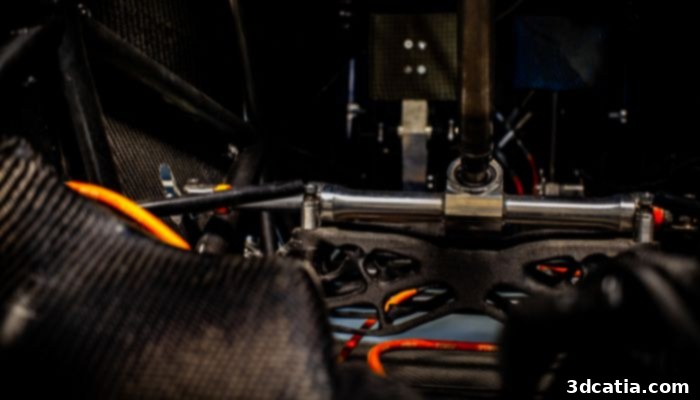
A polymer gear mount made using Omni3D’s large-format 3D printing
The Unparalleled Benefits of High-Performance Polymers Over Traditional Metals
Before exploring the advantages, it’s crucial to understand what distinguishes high-performance polymers. These advanced thermoplastics are engineered to possess extraordinary properties that far exceed those of standard plastics. Key characteristics include superior corrosion resistance, an exceptional strength-to-weight ratio, remarkable durability, outstanding thermal stability, excellent creep resistance, and robust chemical resistance. The specific combination and intensity of these properties can vary significantly depending on the material formulation. In the context of additive manufacturing, some of the most widely adopted and highly effective high-performance polymers include PEEK (Polyether Ether Ketone), PEKK (Polyether Ketone Ketone), and ULTEM (a brand of PEI – Polyetherimide). Each of these materials offers distinct advantages, catering to a broad spectrum of demanding applications.
Significant Weight Reduction and Enhanced Performance
One of the most compelling benefits of replacing metal with high-performance polymers is the ability to achieve substantial weight reduction. While metals are undeniably strong and durable, their inherent density contributes significantly to the overall weight of components. High-performance polymers, by contrast, are considerably lighter, yet their advanced material properties allow them to deliver comparable, if not superior, performance characteristics in many applications. This “lightweighting” capability is absolutely critical for industries such as aerospace, automotive, and railway transportation. In these sectors, every kilogram saved translates directly into tangible operational advantages: improved fuel efficiency, increased payload capacity, extended range, and a significant reduction in environmental impact due to lower energy consumption.
Unlocking Design Freedom and Supply Chain Optimization
The advantages of high-performance polymers are further amplified when combined with the capabilities of additive manufacturing. AM transcends the traditional manufacturing constraints, enabling the creation of geometrically complex parts that would be impossible or prohibitively expensive to produce using conventional methods. This unprecedented design freedom allows engineers to innovate without legacy limitations, leading to highly optimized component designs. For instance, topology optimization techniques can be employed to create even lighter parts that maintain or exceed the required mechanical properties, placing material only where it is functionally necessary. This results in components that are not only lighter but also inherently more efficient in their material usage.
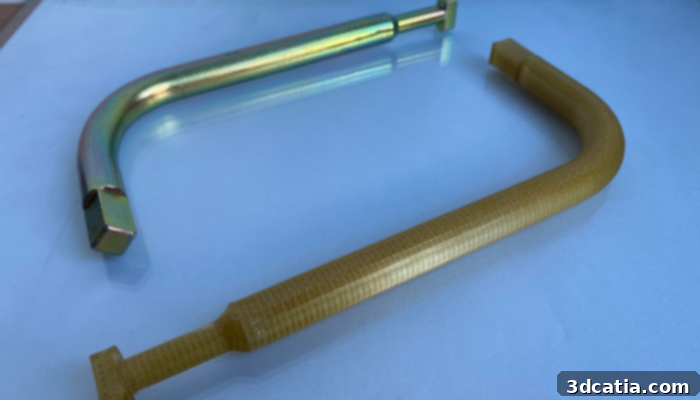
A metal vehicle manhole key (top) that Omni3D replaced with a high-performance polymer version (bottom)
Beyond design, additive manufacturing is a recognized game-changer for improving supply chain resilience. The ability to produce parts on-demand dramatically reduces lead times, inventory requirements, and the risk of obsolescence. This is particularly valuable for replacing broken or discontinued metal components, where traditional sourcing can involve lengthy delays and high costs. By leveraging high-performance polymers with additive manufacturing, production becomes significantly more rapid, minimizing downtime and ensuring operational continuity, especially for critical infrastructure and machinery.
Essential Equipment for Industrial High-Performance Polymer 3D Printing
Despite the myriad benefits, it’s important to acknowledge that high-performance polymers cannot be universally adopted for every 3D printed part without the right infrastructure. The successful utilization of these advanced thermoplastics necessitates more than just any additive manufacturing solution. Truly unlocking the potential of these materials and meeting the demands of large-scale, industrial production requires specialized, industrial-grade 3D printing equipment.
Material Compatibility and Precision Thermal Control
One of the foremost requirements for printing with high-performance polymers is absolute material compatibility, primarily driven by precise thermal management. These materials typically have very high melting temperatures and specific thermal profiles for optimal processing. A 3D printer must be equipped with a heated build chamber and an extruder capable of reaching and consistently maintaining the elevated temperatures required for these polymers. Furthermore, precise temperature control and uniform heating throughout the build volume are critically important for successful prints. Inconsistent temperatures or the presence of “cold spots” can lead to warping, delamination, and compromised mechanical properties, rendering the printed part unusable for its intended application.
Key Features of Advanced Industrial 3D Printers
Beyond thermal control, other ideal qualities for industrial high-performance polymer 3D printers include a large build volume, enabling the production of bigger and more complex components. Advanced control systems and precision mechanisms are vital for ensuring accuracy, repeatability, and consistent part quality, especially in demanding industrial environments. The capacity for continuous operation with minimal downtime is also a non-negotiable feature for manufacturing settings. Moreover, open material systems are highly advantageous. They provide users with the flexibility to experiment with a wide array of filaments and materials from various suppliers, which is crucial for optimizing specific part properties and exploring innovative applications beyond standard offerings.
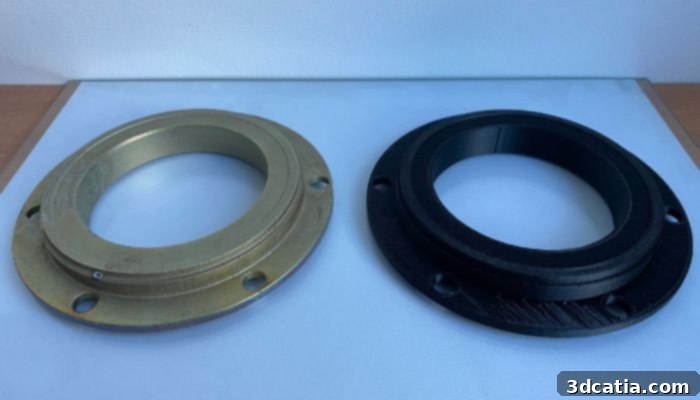
A metal wheel bearing (right) and the high-performance polymer version made by Omni3D for NATO vehicles
Omni3D exemplifies the providers of such suitable equipment, positioning itself as a leader in industrial 3D printing. The company’s large-format printers are meticulously engineered with advanced heated chambers, specifically designed for ultra-precise temperature control and regulation throughout the entire build volume. This ensures consistent temperature distribution, effectively preventing localized cold spots and promoting optimal material crystallization. The result is superior part integrity, minimized warping, and a significant reduction in other common printing defects, leading to robust and reliable components.
These sophisticated thermal management capabilities mean Omni3D printers are perfectly suited to handle the exacting thermal requirements of challenging materials like PEEK, PEKK, and ULTEM. Furthermore, their integrated closed-loop control systems guarantee that accurate temperature settings are maintained steadfastly, even during extended print jobs that can last for many hours or days. These features collectively make Omni3D’s solutions ideal for consistently printing high-performance polymers, even as the industry continues to address and overcome remaining challenges in advanced material processing.
Real-World Impact: Case Studies in Metal Replacement
When the right materials are paired with advanced equipment and expert knowledge, the potential for creating incredible parts with high-performance polymers becomes evident. Omni3D has demonstrated this transformative capability through several compelling examples across diverse industries.
Defense Sector: Empowering NATO’s Fleet Maintenance
In a pivotal application within the defense sector, Omni3D’s large-format 3D printing with high-performance polymers provided critical support for NATO in maintaining its fleet of BMP-1 infantry fighting vehicles. These tanks are vital assets for NATO military forces, yet they present significant logistical challenges. Procuring replacement parts for these aging vehicles is often both time-consuming and exorbitantly expensive, with long lead times that can severely jeopardize operational readiness during crucial missions. Omni3D showcased a groundbreaking solution: the ability for NATO to produce high-strength, fully functional parts for these tanks directly on-site. By integrating this capability with a digital library of BMP-1 component designs, NATO military forces could bypass traditional supply chain delays, ensuring continuous vehicle operation with minimal downtime. This strategic shift to additive manufacturing resulted in a significant improvement in fleet maintenance efficiency and readiness for NATO.
Railway Sector: Enhancing Durability for Luk-Plast
Another compelling instance of metal-to-polymer replacement using Omni3D’s solutions comes from Luk-Plast, a company facing a persistent problem with brass vacuum pump rotors. These rotors were subjected to exceptionally harsh operating conditions, including constant exposure to aggressive chemicals, water, and gases. Compounded by high-speed operation and continuous duty cycles that introduced considerable mechanical stress, the brass rotors frequently wore out, necessitating frequent replacements and leading to increased downtime. These inefficiencies had a direct impact on the reliability and performance of critical railway systems.
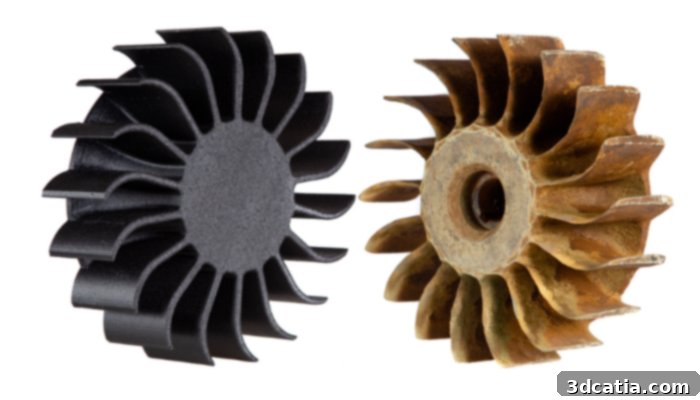
The brass (right) and high-performance polymer (left) vacuum pump rotors
Omni3D once again provided a robust solution using polymer parts. Specifically, the Omni Pro 3D printer, combined with advanced CF PA-12 (carbon fiber reinforced Nylon 12) material, was utilized to create highly durable rotors capable of withstanding these extreme environmental and mechanical stresses. Luk-Plast reported that the precise temperature control within the Omni Pro’s heated chamber was instrumental in allowing the 3D printed components to retain their exceptional strength and stability, even when confronted with aggressive chemicals and high mechanical loads. Ultimately, the 3D printed polymer rotor demonstrated a significantly improved lifespan, drastically reducing maintenance intervals and minimizing costly operational downtime, thereby enhancing the overall efficiency of the railway systems.
Automotive Sector: Lightweighting for PRz Racing Team
In the demanding automotive sector, Omni3D collaborated with the PRz Racing Team to replace several critical metal components, including an intake manifold, gear mount, and joint cover, using 3D printing technologies. The materials chosen were CF PA-12 and TPU-93A (a flexible thermoplastic polyurethane). The resulting polymer parts were remarkably lightweight, exceptionally durable, and highly heat-resistant, perfectly suited for the rigorous conditions of racing. Embracing additive manufacturing enabled unparalleled design flexibility and rapid, cost-effective production cycles. Notably, the intake manifold’s weight was reduced by an impressive 1.5 kg compared to its aluminum equivalent, directly contributing to enhanced vehicle performance and fuel efficiency for the racing team.
These compelling examples, among many others, unequivocally demonstrate the immense potential realized when advanced engineering and high-performance polymers are strategically employed to replace traditional metals, especially when integrated with the power of additive manufacturing. While the progress is substantial, the journey towards fully optimizing this transformative technology continues, with ample room for further innovation and refinement.
Paving the Way for Future Advancements in Polymer 3D Printing
While materials and machinery are undeniably crucial, another factor of critical importance when working with high-performance polymers for metal replacement is the often-overlooked human element. Currently, a significant challenge lies in the fact that many engineers and technicians are not yet fully equipped with the specialized knowledge and skills required to effectively leverage additive manufacturing for industrial applications, particularly when transitioning from metal to high-performance polymer parts. This represents a crucial area where industry leaders like Omni3D have a vital role to play, bridging the knowledge gap and fostering expertise.
Cultivating Essential Skills for Polymer AM Success
Engineers working with high-performance polymers in an AM context must cultivate proficiency across a diverse array of technical areas. These competencies include: the ability to rigorously evaluate part designs for optimal printability and structural integrity; expertise in utilizing 3D scanning and reverse engineering techniques to digitize existing components; mastery in creating CAD designs that are specifically optimized for the nuances of additive manufacturing processes (e.g., considering anisotropic properties, support structures); the discerning capability to select the most appropriate material based on the specific performance requirements of the part and the chosen AM process; skill in fine-tuning print parameters to achieve desired mechanical properties and surface finish; and a comprehensive understanding of necessary post-processing techniques (e.g., annealing, surface finishing). All these elements are fundamental to truly harnessing the capabilities of these technologies and maximizing their inherent benefits.
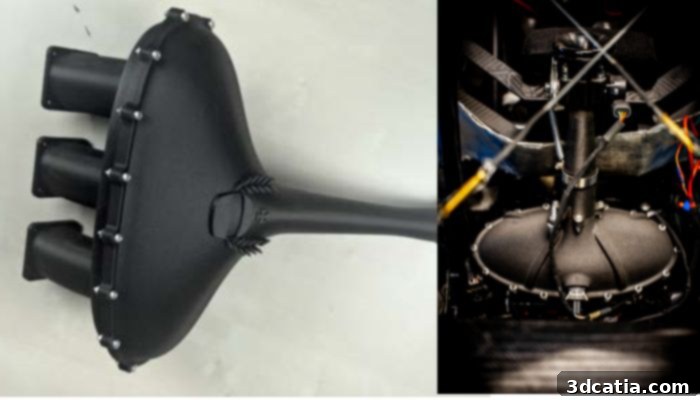
An Intake Manifold made for PRz Racing using Omni3D’s solutions and CF PA-12
The Importance of Open Systems, Education, and Support
How can this critical expertise be cultivated and disseminated more broadly? One effective approach is to ensure that additive manufacturing systems remain open. Omni3D, for example, has consistently championed the importance of open systems to “future-proof” equipment utilized for replacing metal parts with 3D printed substitutes. Open-source platforms and software play a crucial role in increasing adoption rates, as they empower technical teams to experiment with and test AM technologies at their own pace, fostering innovation and knowledge acquisition.
An equally vital aspect is placing a higher priority on comprehensive education and ongoing support. Omni3D has steadfastly committed itself to both of these pillars in recent years. Through a combination of hands-on workshops, accessible online resources for self-paced learning, dedicated technical support channels for troubleshooting issues, and even customizable training programs tailored to specific organizational needs, the company aims to empower organizations to fully leverage the vast potential of additive manufacturing in industrial settings. This commitment extends beyond merely selling machines; it’s about building a knowledgeable and skilled workforce.
This dual focus on education and unwavering support stands as one of the most significant driving factors that will accelerate the transition from metals to high-performance polymers, even for the most safety-critical components. When this human element of expertise is effectively combined with the superior properties of advanced materials and the capabilities of appropriate industrial-grade equipment, it becomes genuinely possible to maximize the utility of additive manufacturing and truly drive innovation across industries. To delve deeper into how Omni3D is facilitating this transformation, you can download their informative free whitepaper HERE.
What are your thoughts on the increasing trend of replacing metals with high-performance polymers? Can you identify other industries where this transformative shift is gaining momentum? Share your insights and comments below, or connect with us on our Facebook and Twitter pages! Don’t forget to subscribe to our free weekly Newsletter to receive all the latest news and developments in 3D printing delivered directly to your inbox!