
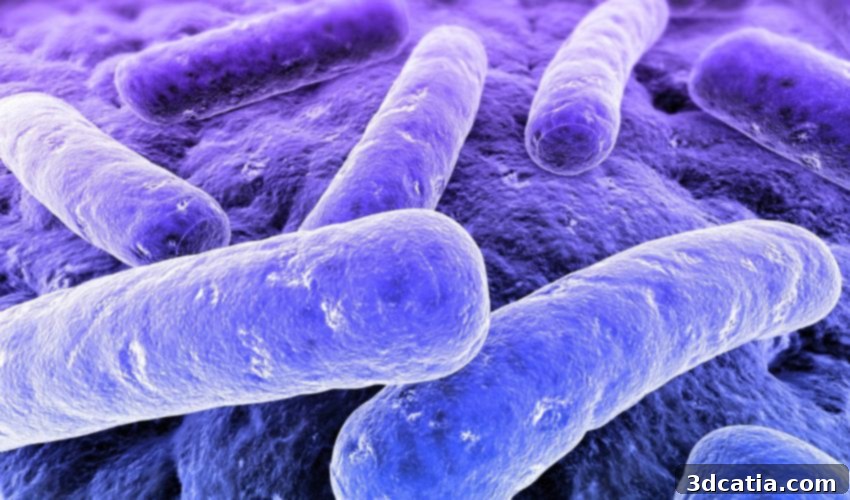
3D Printing Unlocks New Strategies for Biofilm Research and Combating Antibiotic-Resistant Bacteria
The ongoing global health challenges, exacerbated by events like the COVID-19 pandemic, have brought into sharp focus the pervasive threat posed by harmful microorganisms. From hospital surfaces to industrial equipment, and even within the human body, bacteria and other microbes are constantly seeking environments to proliferate. Among the most formidable of these microbial communities are biofilms – complex, self-produced matrices that allow bacteria to adhere to surfaces and thrive. These slimy, resistant structures are notoriously difficult to eliminate, often defying conventional disinfectants and even potent antibiotics. Biofilms are not merely a nuisance; they are a significant public health concern, contributing to a vast array of persistent and potentially life-threatening bacterial infections. Understanding and effectively combating these resilient microbial strongholds is paramount.
In a groundbreaking endeavor to tackle this critical issue, a dedicated team of researchers at Montana State University (MSU) in the U.S. has harnessed the power of additive manufacturing, more commonly known as 3D printing. Their innovative approach aims to revolutionize biofilm bacteria research by developing sophisticated tools that can precisely replicate these intricate microbial communities in a controlled laboratory setting. For the past two years, researchers Dr. Zimlich and Dr. Thornton, affiliated with MSU’s esteemed Center for Biofilm Technology, have meticulously worked on engineering a cutting-edge 3D printing device specifically designed for this purpose. Their relentless efforts are now yielding promising results, paving the way for unprecedented insights into biofilm behavior and vulnerability.
After countless iterations, rigorous testing, and continuous refinement, Zimlich and Thornton have achieved a significant milestone. Their innovative research object, crafted through their specialized 3D printing technology, represents a profound leap forward. This device creates a precise grid where individual bacteria are strategically embedded within a hydrogel – a transparent, gelatinous, pudding-like substance. This meticulous arrangement allows researchers an unparalleled level of control, enabling them to precisely position and encapsulate bacterial cells exactly where they are required for targeted study. This capability is critical for unraveling the complex mechanisms behind bacterial attachment, growth, and resistance within a biofilm matrix.
The technical process behind this breakthrough is as ingenious as it is effective. It begins with imaging the target microbes suspended within the hydrogel. Subsequently, a focused laser is employed to selectively solidify specific areas of the hydrogel, effectively trapping and arranging the bacteria in a predefined, three-dimensional structure. This method allows for the creation of what the researchers term an “imperfect biofilm” – a controlled, reproducible model that closely mimics natural biofilm formation but with the added advantage of experimental precision. While the initial phase of their research has focused on utilizing a single strain of bacteria, the potential for expansion is immense. By introducing multiple strains and species of bacteria, Zimlich and Thornton envision constructing increasingly complex and realistic biofilm models, thereby opening up new avenues for understanding synergistic interactions and diverse microbial communities.
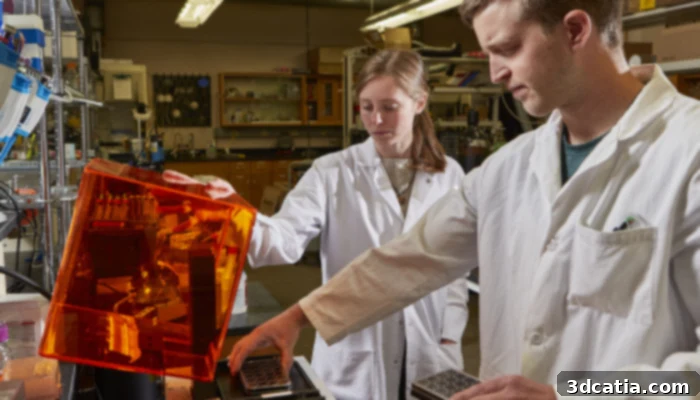
Zimlich and Thornton conduct their research (photo credits: MSU).
The Silent Threat: Why Biofilms Are So Difficult to Combat
To truly appreciate the significance of MSU’s 3D printing innovation, it’s essential to understand the inherent challenges posed by biofilms. Unlike free-floating, planktonic bacteria, biofilms encapsulate themselves in an extracellular polymeric substance (EPS) – a self-produced matrix composed of polysaccharides, proteins, and DNA. This protective shield acts as a physical barrier, effectively preventing antimicrobial agents from reaching the bacterial cells within. Furthermore, bacteria within a biofilm exhibit altered gene expression, often entering a dormant or ‘persister’ state, which renders them metabolically inactive and therefore largely immune to antibiotics that typically target active cellular processes. This resilience makes biofilm-related infections incredibly difficult to treat, often requiring higher doses or prolonged courses of antibiotics, or even surgical intervention to remove contaminated medical devices.
The prevalence of biofilms extends far beyond clinical settings. They are responsible for significant problems in various industries, including agriculture, water treatment, and manufacturing, leading to equipment corrosion, product contamination, and reduced efficiency. In medicine, biofilms are implicated in over 80% of chronic microbial infections, including those associated with medical implants such as catheters, prosthetics, and pacemakers. These infections can lead to serious complications, increased healthcare costs, and, tragically, patient mortality. The ability to precisely model these structures in a laboratory could accelerate the discovery of novel treatments that disrupt biofilm formation, penetrate their protective matrix, or reawaken dormant cells, making them susceptible to existing therapies.
A Microscopic Metropolis: Understanding Biofilm Complexity
Dr. Zimlich eloquently likens a biofilm to a miniature forest or a bustling metropolis, given the astonishing diversity and intricate interactions among the lifeforms within it. He emphasizes that even what appears to be the simplest biofilm system is, in reality, a highly complex and dynamic community of species. This inherent complexity underscores the difficulty in developing effective countermeasures against these pervasive microbes, especially those that have evolved formidable resistance to antibiotics – a growing global health crisis. The researchers feel a profound responsibility to address this challenge, recognizing that conventional antibiotic strategies often fall short against biofilm-dwelling pathogens.
The reason for this therapeutic failure lies deep within the biofilm’s structure. As Zimlich explains, cells situated at the lower levels of the biofilm often become encapsulated and deprived of oxygen. This hypoxic environment triggers a remarkable survival mechanism: the bacteria enter a dormant or quiescent state. In this low-metabolic condition, many antibiotics, which typically target active cellular processes like replication or protein synthesis, become largely ineffective. Dr. Phil Stewart, another distinguished researcher at MSU, corroborates this, highlighting that bacteria within biofilms undergo profound biological and physiological changes, rendering them remarkably resilient. He stresses the urgent need for new drug development that can penetrate the biofilm matrix and effectively target all physiological states of bacteria within these protective structures.
Despite the daunting nature of this challenge, Zimlich remains remarkably optimistic about the future of biofilm treatment. He offers a compelling alternative perspective, suggesting that the battle against pathogenic bacteria might be won by shifting focus. Instead of solely relying on harsh chemical products that often fail to permeate or fully eradicate biofilms, he proposes a strategy centered on “altering the interactive biofilm environment.” This innovative concept suggests exploring interventions that disrupt the biofilm’s formation, interfere with bacterial communication (quorum sensing), or break down the protective EPS matrix, thereby making the embedded bacteria vulnerable to existing or new antimicrobial agents. This paradigm shift could lead to more sustainable and effective long-term solutions.
Precision Engineering: The Role of 3D Printing in Advancing Biofilm Science
The realization of novel, biofilm-specific treatments hinges critically on the ability to conduct extensive, precise tests within highly controlled laboratory environments. This is precisely where Zimlich and Thornton’s 3D printing tool emerges as a game-changer. By providing a platform to construct reproducible, customizable biofilm models, it allows researchers to systematically investigate different antimicrobial strategies, test new compounds, and observe the dynamics of biofilm development under varied conditions. Dr. Zimlich confidently states, “We think it’s possible to construct analogs of how these pathogenic biofilms form naturally.” This capability to mimic natural biofilm growth with unprecedented control is invaluable for accelerating scientific discovery and therapeutic development.
The implications of this research extend far beyond academic circles. The MSU team, actively collaborating with approximately 30 partners, has highlighted in their official press release the broad potential appeal of their findings. Major corporations and government agencies alike recognize the significant impact of biofilms. Companies such as Procter & Gamble, a leader in consumer goods and hygiene, could leverage this technology to develop more effective sanitization and cleaning products. 3M, known for its innovations in materials science and medical technologies, might find applications in developing biofilm-resistant surfaces for medical devices or industrial equipment. Even NASA, with its critical need for sterile environments in space travel and long-duration missions, could benefit from a deeper understanding of microbial adhesion and control in closed systems. This widespread interest underscores the universal challenge posed by biofilms and the transformative potential of MSU’s 3D printing breakthrough. More information on the project can be found HERE.
Looking Ahead: Future Prospects and Collaborative Innovations
The research at Montana State University marks a pivotal moment in the fight against antibiotic-resistant infections and biofilm-related challenges across various sectors. The ability to precisely engineer and study biofilms in a controlled, reproducible manner promises to unlock new avenues for scientific inquiry. Future work will likely involve expanding the complexity of the 3D-printed biofilms by incorporating a wider array of bacterial species, fungal elements, and even host immune cells to create even more realistic models. Furthermore, researchers will explore how different environmental stressors, nutrient availability, and therapeutic interventions influence biofilm architecture and resistance mechanisms. This precision modeling will not only accelerate the screening of new antimicrobial agents but also facilitate the development of innovative strategies to prevent biofilm formation in the first place, offering a proactive approach to a persistent problem.
The collaborative spirit driving this project, evident in the 30 partnerships mentioned, is crucial for its long-term success and widespread adoption. By fostering interdisciplinary cooperation between microbiologists, engineers, material scientists, and pharmaceutical developers, MSU’s initiative is poised to translate fundamental scientific insights into tangible solutions. The potential to reduce hospital-acquired infections, extend the lifespan of industrial equipment, and enhance public health through advanced sanitation methods is immense. This pioneering application of 3D printing underscores additive manufacturing’s growing role not just in industrial production, but as a vital tool in biological and medical research, pushing the boundaries of what is possible in the quest for a healthier, safer world.
Join the Conversation: Your Thoughts on 3D Printing and Biofilm Combat
What are your thoughts on the groundbreaking work being done at Montana State University? Do you believe that advanced 3D printing technologies, with their capacity for precise microbial replication, will fundamentally alter our approach to combating resilient bacterial biofilms and the escalating challenge of antibiotic resistance? We invite you to share your perspectives and engage in the discussion. Your insights are valuable to us and our community.
Connect with us and let us know your opinions by leaving a comment below. You can also join the conversation and stay updated on the latest innovations in 3D printing and related scientific advancements by following us on our social media channels: LinkedIn, Facebook, and Twitter. For a curated weekly digest of the most important 3D printing news, delivered directly to your inbox, don’t forget to sign up for our free Newsletter here. Additionally, explore our extensive library of videos showcasing the dynamic world of additive manufacturing on our YouTube channel. We look forward to hearing from you!