
Revolutionizing Healthcare: Cellule’s Vision for Personalized Medicine through 3D Printing and Advanced Design
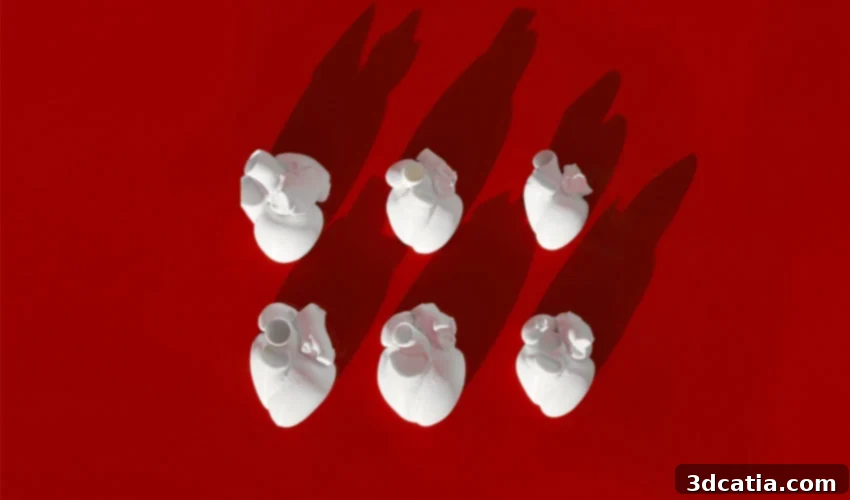
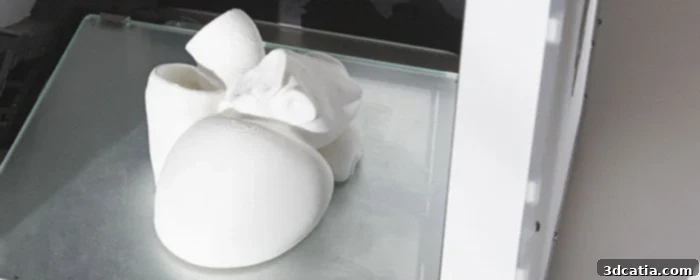
In an era where healthcare increasingly seeks to move beyond one-size-fits-all solutions, innovative design studios like Cellule are leading the charge towards a truly personalized medical experience. Based in the UK, Cellule leverages cutting-edge technologies to gain a profound understanding of the healthcare industry, enabling them to develop bespoke care systems meticulously tailored to each patient’s unique reality. At the heart of their ground-breaking work is 3D printing technology, particularly Fused Deposition Modeling (FDM), which they skillfully employ to design incredibly realistic and distinctive heart models. Cellule’s overarching mission is to empower physicians and scientists with advanced tools, fostering a deeper comprehension of complex cardiac surgery and illuminating the intricate evolution of the human heart from infancy through to adulthood. To delve deeper into their transformative approach to additive manufacturing and their forward-thinking vision for the market, we had the privilege of speaking with Cellule’s visionary founder, Salomé Bazin.
Unveiling Cellule: A Fusion of Design, Science, and Health Innovation
Cellule stands as an innovative design studio nestled in the vibrant East London creative scene, specializing in pioneering advancements across the fields of science and health. The studio embraces a fundamentally conceptual approach to design, with a core focus on actively shaping the future of healthcare delivery. Our guiding vision, as articulated by Salomé Bazin, is to seamlessly integrate the transformative power of design – encompassing products, services, and graphics – with rigorous scientific research and state-of-the-art technologies. This powerful combination allows us to offer superior health products and services that are not merely effective but are precisely targeted and intrinsically personalized for each individual patient. This patient-centric philosophy ensures that every solution developed by Cellule resonates with the specific needs and biological nuances of the person it is intended to serve, marking a significant departure from conventional, generalized healthcare models. The goal is to create a healthcare ecosystem where design thinking enhances scientific breakthroughs, leading to more empathetic and effective interventions.
Pioneering Personalization: How Cellule Harnesses Advanced Technologies
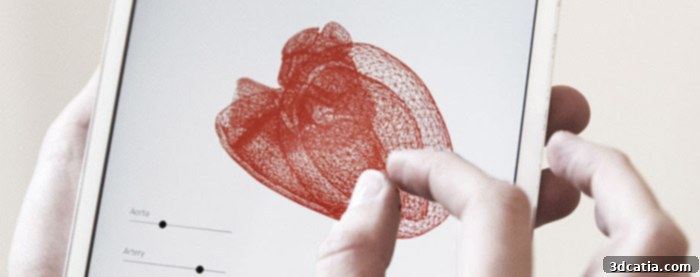
At Cellule, the integration of new technologies is not just an operational facet but a foundational principle driving their innovation. Through sophisticated web modeling techniques, the studio can meticulously visualize the unique anatomy of each individual, a crucial step in their personalized approach. We firmly believe that the synergistic application of digital imagery, advanced 3D modeling, and precise 3D printing holds immense potential for revolutionizing customized healthcare solutions. These emerging technologies open up extraordinary opportunities, allowing patients to feel more deeply connected and integrated into their own healthcare journeys. By providing tangible, personalized representations of their anatomy or medical devices, Cellule empowers patients with a greater sense of understanding and agency over their treatment paths.
From a design perspective, the ability of 3D printing to recreate human organ shapes with unparalleled realism, often surpassing the detail provided by traditional medical scanners, is truly captivating. This advanced capability grants Cellule the power to craft designs that are not only more precise but also exquisitely tailored to individual anatomies. For example, in a compelling previous collaboration with Disrupt Disability, Cellule successfully created a custom wheelchair featuring a 3D-printed seat. This seat was meticulously engineered to conform perfectly to the patient’s body and their specific spinal injury, demonstrating a level of comfort, support, and therapeutic benefit that would be impossible to achieve with mass-produced alternatives. This project exemplifies how additive manufacturing can transcend generic solutions, offering truly patient-specific devices that enhance quality of life and clinical outcomes. The precision offered by 3D printing allows for iterative design and refinement, ensuring the final product is optimally suited for its user.

Big Heart Data: Charting the Future of Cardiac Surgery and Personalized Treatment
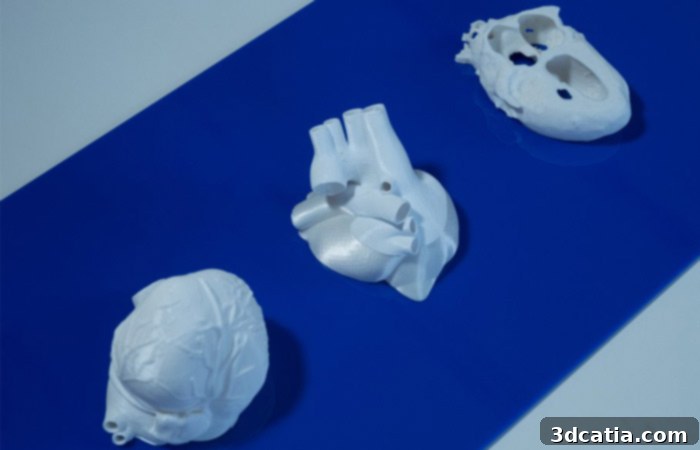
One of Cellule’s most ambitious undertakings is the “Big Heart Data” project, a pioneering initiative that deeply investigates the transformative role of 3D printing and parametric modeling in the intricate field of heart surgery. Beyond its immediate application, the project comprehensively explores the technology’s profound potential to establish a robust system of customizable treatments, each meticulously tailored to the unique physiological requirements of every individual patient. This visionary approach seeks to move beyond conventional surgical planning, offering unprecedented precision and personalization.
Leveraging the innovative technologies and methodologies championed by Cellule, a dedicated team of doctors and scientists has successfully developed sophisticated algorithms and advanced IT models. These powerful tools enable them to accurately predict and visually track the complex development of a human heart, spanning the entire lifespan from birth right through to old age. This ground-breaking research, heavily supported by computational power, provides clinicians with an unparalleled ability to offer the most accurate and individualized diagnostics to their patients. By understanding the predicted trajectory of a heart’s development, medical professionals can intervene proactively, plan surgeries with greater foresight, and anticipate potential complications far in advance, ultimately improving patient outcomes and quality of life.
The “Big Heart Data” project is poised for a significant public unveiling next February at the prestigious Science Gallery of London. This exhibition aims to serve as a vital platform for encouraging broader public understanding and engagement with the critical concept that each person necessitates a specific and highly customized diagnostic pathway. The primary objective is to ignite a widespread discussion concerning what is not only preferable but also realistically achievable for the future evolution of health services and surgical practices. By bringing this advanced research into the public domain, Cellule and its partners hope to foster a collective conversation about the ethical, practical, and societal implications of truly personalized medicine, shaping policy and public perception alike. This project underscores the urgent need to move away from standardized care models towards bespoke solutions that respect individual biological variations.
Materials and Methods: The Power of FDM and Bio-Sourced PLA
For the “Big Heart Data” project and many of their patient-centric models, Cellule has strategically focused on office-sized Fused Deposition Modeling (FDM) 3D printing. The choice of FDM is deliberate, primarily owing to its exceptional accessibility, portability, and cost-efficiency. These factors are crucial for Cellule’s overarching goal of fostering direct engagement with both patients and the wider public. Imagine the impact of organizing a tour with this compact system across the UK, allowing individuals to physically interact with and understand the intricacies of their own or generalized cardiac anatomy. The heart models themselves are printed using bio-sourced PLA (Polylactic Acid), an environmentally conscious material that aligns with Cellule’s commitment to sustainable and responsible innovation, while also offering the necessary material properties for realistic anatomical representation.
The sophisticated 3D modeling technology underpinning Cellule’s work is the product of continuous, cutting-edge research conducted by scientists at the Welcome Centre for Biomedical Engineering. This renowned institution specializes in cardiology IT modeling, providing the crucial scientific backbone for Cellule’s designs. The 3D models utilized are meticulously derived from anonymous patient data, ensuring ethical compliance while providing a rich and diverse dataset for accurate anatomical representation. This collaboration exemplifies the powerful synergy between advanced academic research and innovative design application.
Furthermore, Cellule has forged a strategic partnership with Batchworks, an innovative startup that has developed an optimized FDM process. Batchworks’ advancements significantly simplify FDM printing in terms of both quality and speed, transforming it into a more viable and scalable production method for localized manufacturing across the UK. This collaboration is instrumental in realizing Cellule’s vision of efficient, high-quality, and accessible personalized healthcare products, demonstrating their commitment to fostering a robust local additive manufacturing ecosystem.
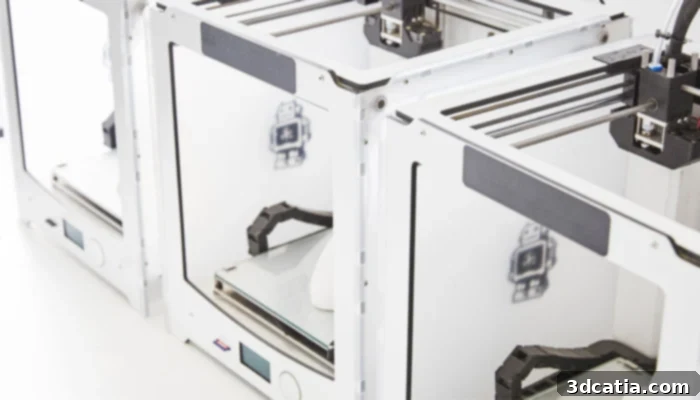
Cellule uses 3D FDM printers for versatile and accessible medical modeling.
The Future Landscape: Additive Manufacturing in Design and Medicine
The impact of additive manufacturing on the design sector is already profoundly evident, and Cellule is at the forefront of this transformation. 3D printing fundamentally alters traditional manufacturing paradigms, enabling the efficient production of small, customized series of products rather than large, generic batches. This paradigm shift empowers us to offer on-demand products, each uniquely crafted to meet the precise specifications of an individual patient or physician. This level of customization was previously unimaginable, offering unparalleled flexibility and relevance in design. Moreover, Cellule strongly advocates for 3D printing as a powerful catalyst for encouraging and revitalizing local production, reducing reliance on distant supply chains and fostering community-based manufacturing hubs. This not only bolsters local economies but also enhances responsiveness and sustainability.
In the critical medical field, the direct and seamless transfer of data from a medical scan to a 3D printer represents a monumental leap forward. This capability facilitates the creation of highly customized treatments and products that are perfectly adapted to each patient’s distinct anatomy. From surgical guides and prosthetic limbs to realistic organ models for pre-surgical planning, 3D printing is revolutionizing patient care. It allows surgeons to rehearse complex procedures on exact replicas of a patient’s anatomy, reducing risks and improving outcomes. It also enables the development of implants and devices that fit perfectly, enhancing comfort and functionality for the patient. The personalization offered by additive manufacturing in medicine promises a future where treatments are as unique as the individuals they serve, leading to more effective, safer, and patient-friendly healthcare solutions.
A Human-Centric Future: Empowering Patients Through Technology
At the core of Cellule’s philosophy, and a message Salomé Bazin passionately emphasizes, is the unwavering commitment to “keep humans at the centre!” We are profoundly excited and inspired by the vast opportunities that advanced technologies, particularly 3D printing, are able to offer individuals. These innovations empower people to become actively involved and engaged with their own health journeys, fostering a sense of ownership and understanding that was previously often lacking. Patients are increasingly able to seek and receive treatments that are not just effective, but specifically tailored to their unique biological makeup and personal circumstances. This human-centric approach ensures that technology serves to enhance, rather than replace, the vital connection between patients and their healthcare providers, paving the way for a more empathetic, effective, and truly personalized healthcare future.
For more detailed information on Cellule’s pioneering work and their inspiring vision, please visit their official website HERE.
What are your thoughts on Cellule’s innovative approach to personalized medicine and their use of 3D printing? We invite you to share your insights in a comment below or join the conversation on our Facebook and Twitter pages! Don’t miss out on the latest advancements and news in 3D printing – subscribe to our free weekly Newsletter, delivered straight to your inbox!