

Unlocking Culinary Innovation: An Interview with Elena Smirnova of 3D Treats on the Future of Food 3D Printing
Food 3D printing is rapidly transforming the culinary landscape, pushing the boundaries of what’s possible in kitchens worldwide. This advanced manufacturing method involves meticulously extruding edible materials and building them up layer by layer, allowing for unparalleled precision and intricate designs that were once unimaginable. While the technology is still evolving, it has already spurred the development of numerous innovative solutions, with chocolate 3D printers being among the most well-known and commercially accessible. As a result, a growing number of creative individuals and entrepreneurs are embracing food 3D printing as a powerful tool to bring their unique culinary visions to life. Among these pioneers is Elena Smirnova, the visionary behind 3D Treats, a remarkable culinary project that merges technology with gastronomy. We had the distinct pleasure of speaking with Elena to delve deeper into her journey, her innovative use of 3D printing in her business, and her insights into the exciting future of this groundbreaking technology.
3DN: Could you introduce yourself and 3D Treats, and tell us a bit about your journey into this fascinating field?

Elena Smirnova
My name is Elena Smirnova, and I am the proud founder of 3D Treats. Beyond my entrepreneurial endeavors, I am also a dedicated mother of three. My entry into the world of 3D printing, especially food 3D printing, was entirely unexpected. For my entire professional career, I had immersed myself in the dynamic field of marketing, never once imagining a path that would lead me into the intricacies of the food industry. However, one day, I stumbled upon the concept of 3D printing food, and I was instantly captivated. The sheer idea that virtually any edible substance could be precisely shaped and created through additive manufacturing ignited an irresistible curiosity within me. I simply couldn’t resist the urge to explore this revolutionary technology firsthand.
After some initial research into the various food 3D printers available on the market, I soon found myself the owner of a brand-new machine. My ambitious plan was to establish a unique dessert catering business, leveraging this cutting-edge technology to offer truly bespoke and visually stunning edible creations. Little did I know, the initial weeks of this venture would prove to be an enormous challenge, almost a nightmare.
The printer, a sophisticated piece of machinery, often seemed to have a mind of its own, refusing to execute my designs as intended. Templates I meticulously prepared frequently failed, leading to frustration and wasted materials. The learning curve was steep, as I had to quickly master a plethora of new software programs – from CAD design tools to slicing applications – many of which I had never even heard of before. Moreover, developing recipes suitable for 3D printing proved to be a significant hurdle. Unlike traditional baking, food 3D printing demands specific material viscosities, setting times, and structural integrity to ensure successful layering and final product stability. If you’ve ever attempted to print food with today’s technology, you undoubtedly understand the complexities and frustrations I faced during that initial period.
However, I am happy to report that the technology is making incredible strides every single day. What was once a daunting task is becoming increasingly user-friendly, and I firmly believe that soon, even children will be able to operate these machines with ease. It required considerable time, persistent effort, and a great deal of experimentation for me to uncover all the specific tricks and techniques necessary to achieve consistent, high-quality printing results that I could confidently present to my discerning customers. Now, I operate in absolute harmony with my 3D printer; it has become an indispensable extension of my creative process. This journey of overcoming challenges and perfecting my craft is precisely how 3D Treats came into existence, offering unique, custom-designed edible art to a growing clientele.
3DN: What are the existing food 3D printing technologies, and what are their primary applications and limitations today?
Currently, the vast majority of food 3D printers operate on principles similar to Fused Deposition Modeling (FDM) in plastic printing. They are primarily limited to extruding and pressing pureed, prepared food ingredients into specific, pre-designed shapes. This means that materials like chocolate, various pastes (e.g., potato, cream cheese), gels, doughs, and even some pureed fruits and vegetables are excellent candidates for this method. The printer precisely deposits these viscous materials layer by layer, building up intricate structures. While this allows for incredible decorative potential and complex geometries, there aren’t yet many machines that possess the integrated capability to completely cook or cool the food in place as it’s being printed. This absence of real-time temperature control during the printing process poses several significant limitations.
Imagine attempting to print a delicate pattern or a complex figure from a soft cookie dough. The inherent softness and pliability of the dough mean it simply won’t be able to hold its shape as subsequent layers are added, leading to collapse or distortion. The structural integrity of the material is paramount. On the other hand, for ingredients that can rapidly solidify or maintain their form, 3D printing truly liberates chefs, enabling them to craft exquisite shapes and elaborate decorations for their dishes that would be impossible with traditional methods. Chocolate 3D printing serves as a perfect example of how specific material properties can be harnessed effectively. It ultimately only works under precisely controlled temperature conditions; the chocolate must be melted enough to be extruded smoothly, but then cool and harden fast enough to adequately support the subsequent layers being deposited on top. Achieving this delicate balance of temperature and viscosity is crucial for successful chocolate printing, showcasing a sophisticated interplay between material science and additive manufacturing. Other emerging technologies are exploring binder jetting for sugar or even laser sintering for certain powders, but extrusion remains dominant for now.
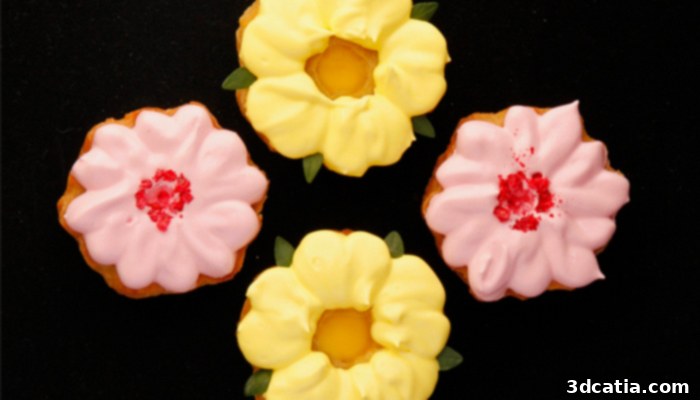
Photo Credits: 3D Treats
3DN: What significant advantages does food 3D printing offer over traditional cooking and preparation methods, and what are the primary limitations hindering its widespread adoption?
The advantages offered by food 3D printing are truly indisputable and incredibly compelling for the culinary world. First and foremost, this method provides cooks and chefs with virtually unlimited possibilities for customization and unparalleled creative freedom. Unlike conventional molds or hand-sculpting, 3D printing allows for the creation of incredibly intricate geometries, personalized messages, and complex architectural designs in food, tailored precisely to individual specifications. Imagine personalized birthday cakes with hyper-realistic figures, or delicate, edible sculptures that serve as stunning garnishes; the artistic potential is boundless. This level of precision also opens doors for dietary modifications, enabling the creation of food with customized textures for individuals with dysphagia or precisely portioned meals for specific nutritional needs. Furthermore, it offers a significant practical benefit in the kitchen: it saves an immense amount of physical storage space. All the models and designs are stored digitally on a computer, eliminating the need for vast collections of physical molds, cutters, and specialized tools that clutter kitchens and take up valuable real estate.
However, despite these compelling benefits, there are still some significant barriers preventing the mass adoption of food 3D printing. I’d identify two major limitations: the speed of the printing process and the inherent complexity of the modeling and design phase. Currently, the layer-by-layer deposition of material means that printing even a moderately sized dessert can take a considerable amount of time – far longer than traditional baking, piping, or decorating methods. This slow pace is a critical bottleneck, especially in commercial kitchens where efficiency and rapid turnaround are paramount. Neither professional chefs, who operate under intense time pressure, nor home cooks, who seek convenience, can afford to spend extensive hours mastering the intricate software needed to design a product from scratch, or waiting for a print to complete.
To be completely fair, some printer manufacturers have developed their own design platforms and libraries with pre-made models, aiming to simplify the user experience. Yet, at the moment, these services generally do not possess a sufficiently diverse or extensive portfolio of designs and models to satisfy the wide-ranging creative demands of users. This often leaves the user in a situation where they must either adapt limited existing designs or, more frequently, invest the time and effort into creating custom designs themselves from the ground up. This need for specialized design skills and the time investment required for both design and printing remain significant hurdles for broader adoption, underscoring the ongoing need for more intuitive software, faster printing mechanisms, and a richer library of ready-to-print culinary designs.
3DN: How do you envision the future of 3D printing in the food sector?
I truly see the future of 3D printing in the food sector in the brightest possible colors. I am absolutely confident that very soon, the entire process of 3D printing food will evolve to become incredibly easy, profoundly fun, and remarkably fast. We’re already witnessing significant progress, especially with certain materials. Take chocolate, for instance: the experience is rapidly approaching a point of effortless enjoyment. Users simply load the chocolate into the designated tray, perhaps select a design, and then they can sit back and truly enjoy the show. The printer handles all the complex variables, including cooling the chocolate to precisely the right temperature, ensuring perfect solidification and structural integrity with each layer. This level of automation and reliability is precisely where the entire field is headed.
My vision for the near future extends beyond just chocolate. Imagine a scenario where it will be enough to simply introduce natural, raw products directly from the grocery store into a sophisticated 3D food printer. This smart appliance would then process these ingredients and, through its advanced capabilities, produce a personalized cake or any other custom-designed dish, perfectly tailored to your preferences. This future isn’t just about intricate designs; it’s about unparalleled convenience, dietary customization, and reducing food waste. We’re moving towards intelligent systems that can potentially scan ingredients, suggest recipes, and even adapt designs based on the available materials, creating truly on-demand, personalized culinary experiences. This technology holds immense promise for home kitchens, gourmet restaurants, specialized dietary needs, and even far-flung applications like space travel, fundamentally changing how we prepare, consume, and interact with our food.
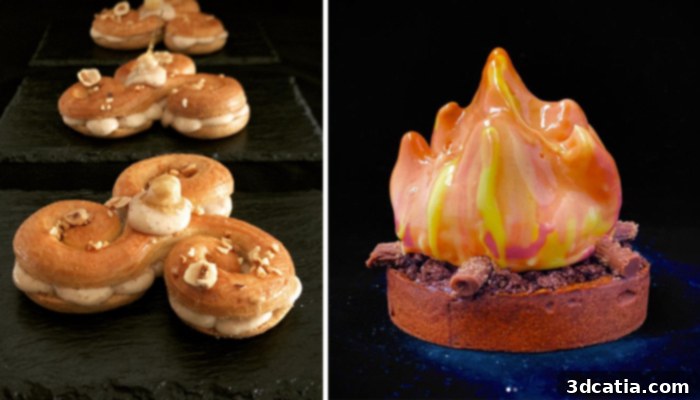
Photo Credits: 3D Treats
3DN: Do you have any final words of encouragement or advice for our readers interested in exploring food 3D printing?
Absolutely! If you’ve been contemplating diving into the exciting world of food 3D printing, my strongest advice is: don’t hesitate. Give it a try! It is an incredibly rewarding experience, offering both great fun and immense satisfaction as you watch your culinary creations take shape layer by layer. The entry barrier is also becoming increasingly lower. Today, there are many affordable add-ons and conversion kits available for conventional 3D printers that can effectively transform them into capable food printers, making the technology far more accessible than ever before. This means you don’t necessarily need to invest in a specialized, high-end food printer right away to experiment and explore its potential.
My initial journey had its challenges, as I mentioned, particularly in finding suitable recipes and mastering the design software. However, there’s a growing community of enthusiasts and experts, myself included, who are passionate about this field. If you ever find yourself needing assistance with developing unique recipes tailored for 3D printing, or if you’re looking for tips and tricks on modeling and design, I would be absolutely delighted to help guide you. Connecting with others who share this passion can make the learning process much smoother and more enjoyable. You can easily reach out to me and the 3D Treats community via my Instagram account, where I share many of my creations and insights: @treats3D. Alternatively, you can visit the official 3D Treats website to learn more about our innovative work and offerings. Embrace the technology, unleash your creativity, and prepare to be amazed by what you can achieve!
What are your thoughts on 3D Treats and the burgeoning field of food 3D printing? We’d love to hear your perspective! Please share your insights in a comment below or join the conversation on our LinkedIn,Facebook, andTwitter pages! Don’t forget to sign up for our free weeklyNewsletter here, ensuring you get the latest 3D printing news delivered straight to your inbox! You can also find all our compelling videos on ourYouTube channel, showcasing incredible innovations in the additive manufacturing space.
*Cover Photo Credits: 3D Treats