
Eggcellent Innovation: 3D Printing Sustainable Construction Materials from Eggshells
The world of 3D printing is continuously evolving, revealing an astonishing array of novel and sustainable materials that push the boundaries of design and engineering. From mycelium-based biocomposites to bacterial-grown structures, researchers and innovators are constantly seeking eco-friendly alternatives to traditional manufacturing. In this exciting landscape, an unexpected material has emerged with significant potential: eggshells. This innovative project, originating from Mexico, spotlights the incredible possibilities hidden within everyday food waste. A visionary design studio named Manufactura successfully developed a robust paste derived from recycled eggshells, which was then used to construct a wall, layer by layer, through additive manufacturing. This groundbreaking initiative, aptly dubbed the “Eggshell Project,” aims not only to valorize our vast quantities of food waste but also to provide a viable, environmentally conscious alternative to cement – a material notorious for its substantial ecological footprint in the construction industry.
Mexico stands as one of the world’s leading consumers of eggs, a staple food that remains an incredibly affordable and popular source of protein for its citizens. The sheer volume of egg consumption translates directly into an equally massive amount of eggshell waste. In 2021, the National Poultry Producers Association reported an astounding annual per capita egg consumption of approximately 409 eggs in Mexico. To put this into perspective, in the USA during 2022, the figure hovered around 277.5 eggs per person. This stark difference highlights the unique challenge and opportunity presented by eggshell waste in Mexico. The observant teams at Manufactura studio recognized this accumulating waste, which traditionally ended up in landfills contributing to environmental pollution, as a valuable, untapped resource. Their foresight laid the foundation for a project that would transform a common discarded item into a building block for the future, embracing principles of circular economy and sustainable innovation.
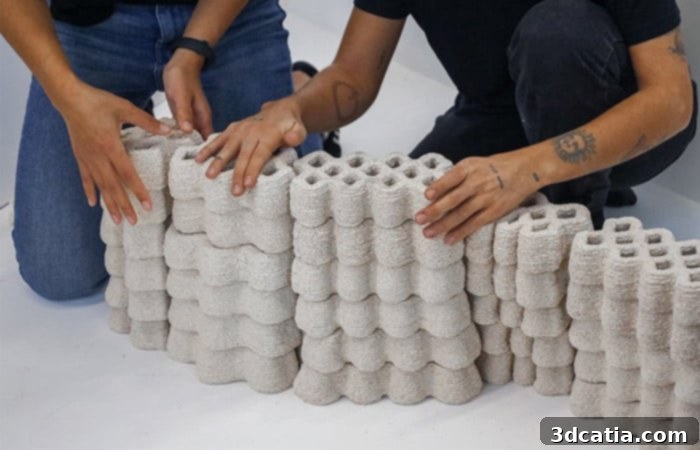
The wall was 3D printed using eggshells (photo credits: Arturo Arrieta)
The Eggshell Project: Revolutionizing Construction with 3D Printed Biocomposites
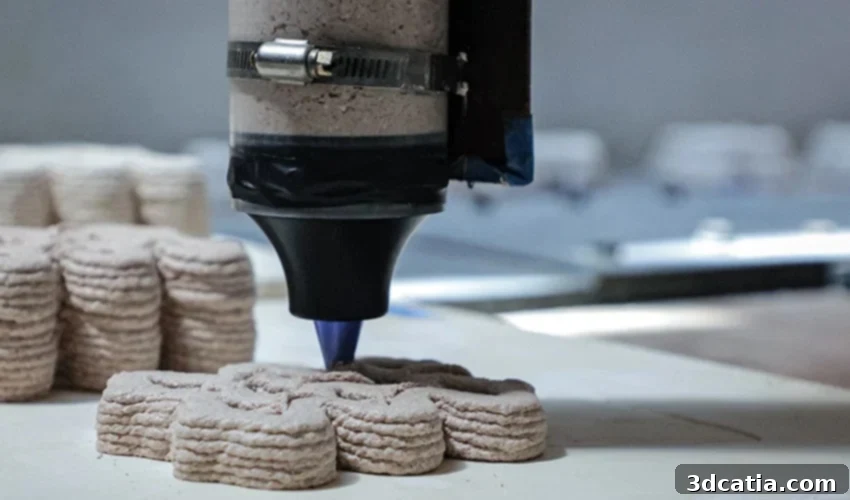
The methodology employed by Manufactura for the Eggshell Project is a testament to resourceful and innovative thinking. The process began with the local harvesting of eggshells, collected over a two-month period from various restaurants across Mexico City. This local sourcing strategy not only minimized transportation costs and emissions but also directly addressed a prevalent waste stream within the urban environment. Once collected, the shells underwent a meticulous cleaning process to remove any organic residue, followed by blending to reduce their size and create a more uniform consistency. The resulting material was then passed through a sieve to ensure fine particle size, crucial for achieving a smooth and printable paste. This careful preparation ensures the structural integrity and aesthetic quality of the final product.
The prepared eggshell powder was then expertly mixed with specific aggregates and bio-binders. The selection of these additional components was critical; the aggregates provided bulk and strength, while the bio-binders were chosen for their ability to naturally bond the eggshell particles together, forming a coherent, extrudable paste. A key innovation of this material formulation is that it does not require a cooking or firing step, which is common in traditional ceramic or concrete production. Eliminating this energy-intensive phase significantly reduces the project’s carbon footprint and overall energy consumption, making the process inherently more sustainable. This ready-to-extrude paste was then fed into a specialized 3D printing system. An advanced extruder, precisely controlled by a robotic arm from KUKA, deposited the material layer by layer. This robotic setup allowed for exceptional precision, repeatability, and the design freedom to create complex geometries. The machine was programmed to design and fabricate distinct brick components, enabling a modular approach to construction.
The project culminated in the creation of a remarkable architectural installation. In total, 105 unique 3D printed blocks were designed, fabricated, and meticulously assembled according to their specific shapes to construct a fully functional wall. The modular nature of 3D printing allowed for an intricate interlocking design, potentially enhancing the structural stability without excessive reliance on traditional mortar. Beyond the primary wall structure, the team also showcased the artistic potential of this new material by designing a more intricate, sculptural column, composed of 26 individually 3D printed pieces. This demonstrates the versatility of eggshell biocomposites, proving their utility for both utilitarian construction and aesthetic architectural elements. The ability to customize each block’s geometry offers unprecedented design flexibility, a significant advantage over conventional pre-fabricated building materials.
The results achieved by Manufactura are nothing short of impressive, particularly concerning the mechanical strength of the eggshell-based bricks. Initial assessments suggest that these innovative bricks possess remarkable durability, effectively fulfilling their primary objective to serve as a robust alternative to traditionally used concrete. This success is pivotal, as it indicates a genuine potential for this new eggshell biocomposite to replace less eco-friendly construction materials, specifically cement, whose production is a major contributor to global carbon dioxide emissions. While the immediate strength is promising, the long-term sustainability and performance of this eggshell material over time, particularly under various environmental conditions, will be a critical area for ongoing research and testing. Factors such as moisture resistance, weathering, and load-bearing capacity will determine its broader applicability in diverse construction scenarios. The team behind the Eggshell Project confidently concludes that their process offers multiple advantages: “Our process allows less waste production, geometrical freedom, precision, and repeatability.” These benefits underscore the project’s alignment with modern sustainable practices and the increasing demand for customizable, efficient manufacturing methods.

The different 3D printed blocks (photo credits: Arturo Arrieta)
The potential for the Eggshell Project to be replicated and adapted in other regions of the world is immense. Given the global nature of egg consumption and the universal challenge of food waste, this innovation could spark similar initiatives in countries grappling with similar waste management issues. Such replication would not only provide localized solutions for sustainable construction but also foster a global network of circular economy practices. This project beautifully illustrates how 3D printing technologies are instrumental in supporting circular economy policies, transforming what was once considered waste into valuable resources. By valorizing food by-products like eggshells, we can significantly reduce landfill burden, decrease reliance on virgin materials, and mitigate the environmental impact of traditional industries. The integration of design, waste management, and advanced manufacturing technologies points towards a future where sustainable building materials are not an exception but the norm. Manufactura’s pioneering work opens doors for exploring other organic waste streams – such as coffee grounds, fruit peels, or agricultural residues – for similar additive manufacturing applications, paving the way for a truly resource-efficient future. If you are interested in delving deeper into the innovative aspects of this project and seeing more of their work, you can visit the Instagram page of the Mexican studio HERE.
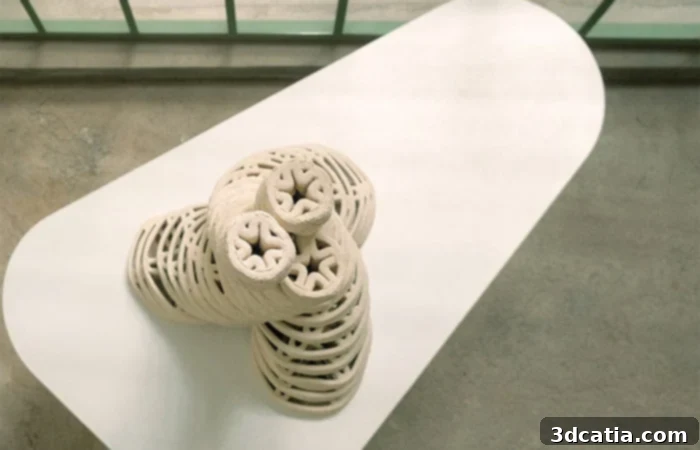
Crédits photo : Enrique Aguilar
What are your thoughts on utilizing food waste, such as eggshells, for advanced applications like 3D printing in construction? Do you foresee this becoming a widespread practice, and what other waste materials do you think hold similar potential? We invite you to share your insights and comments below, or engage with us on our LinkedIn, Facebook, and Twitter pages! For the very latest updates and breaking news in the exciting world of additive manufacturing, don’t forget to sign up for our free weekly Newsletter here, delivered straight to your inbox! Additionally, you can explore all our engaging videos and exclusive content on our YouTube channel, offering a visual journey into the forefront of 3D printing innovation.
*Cover Photo Credits: Zara Arroyo