
Rains and Zellerfeld Revolutionize Footwear with 3D Printed ‘Puffer Boot’ at Paris Fashion Week
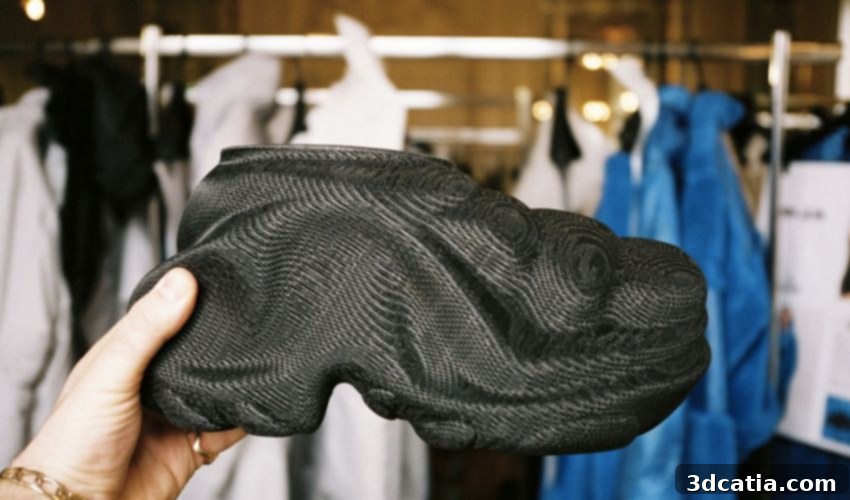
The recent Paris Fashion Week Men’s Haute Couture collection (A/W 2023) once again served as a global stage for innovative design and boundary-pushing fashion. Amidst a stunning array of eclectic creations from renowned houses like Dior, Comme des Garçons, and Kenzo, as well as a vibrant showcase from smaller, unorthodox firms, one collaboration particularly stood out. On Thursday, January 19th, Danish outerwear brand Rains unveiled a groundbreaking piece developed in partnership with the German shoe firm Zellerfeld: the ‘Puffer Boot.’ This extraordinary 3D printed shoe instantly garnered attention for its unconventional appearance, most notably its striking instep, which features an astonishing 90% empty space, redefining traditional footwear aesthetics and manufacturing possibilities.
Rains has long been celebrated for its distinctive collection of quirky, easy-wear staples. The brand masterfully combines practical, waterproof clothing with unique high-fashion looks that seamlessly transition from the urban landscape to the runway. Their collections consistently reflect a philosophy that embraces individuality, functionality, and a refined sense of style. The inspiration behind their latest AW23 collection eloquently captures this ethos: “For AW23, Rains shields the hero. Owners of spaces void of green screens – the universe deep within. The unsung ones behind masks of everyday life. Harnessing power to stand in authenticity. For self. For all.” This profound vision clearly resonates with the collaborative effort to create the 3D printed ‘Puffer Boot.’ For Rains, this innovative footwear isn’t just an accessory; it’s a statement piece that celebrates individuality and unique self-expression, made possible by a technology capable of producing truly distinctive products tailored to this empowering message. The collaboration highlights how cutting-edge manufacturing can align with a brand’s core values, creating pieces that are both technologically advanced and deeply symbolic.
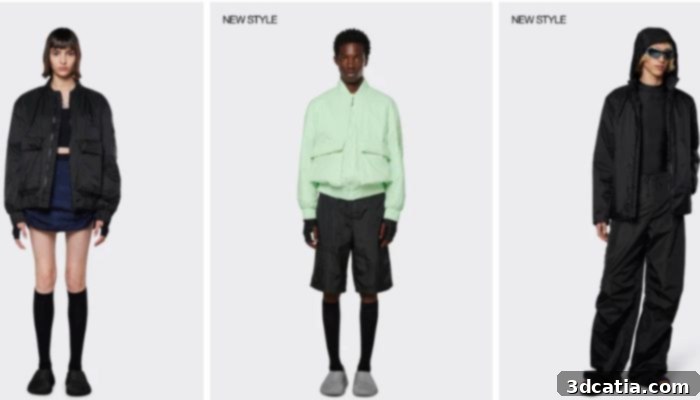
Rains offers unique yet wearable pieces for men and women. (Photo credit: Rains)
The ‘Puffer Boot’: A Glimpse into the Future of Footwear Design
The ‘Puffer Boot’ is more than just a shoe; it’s a testament to the transformative power of additive manufacturing in fashion. Zellerfeld, a pioneer in 3D printed footwear, brings its unparalleled expertise to this partnership, enabling Rains to explore designs previously deemed impossible. The silhouette of the Puffer Boot is boldly unconventional, challenging every expectation of traditional shoe construction. The distinctive 90% empty space within the instep is a direct result of 3D printing’s capabilities, allowing for complex geometries and void structures that dramatically reduce material usage while potentially enhancing breathability and lightness. This design choice not only makes a striking visual statement but also demonstrates a futuristic approach to both form and function.
While the ‘Puffer Boot’ is not yet available for commercial sale, and both Zellerfeld and Rains have kept detailed information regarding its specific design and manufacturing process under wraps, the implications are vast. Zellerfeld has confidently stated that this silhouette is poised to “inspire more printed shoe designs to go the oversized route in the future.” This prediction suggests a burgeoning trend towards exaggerated forms and innovative structures in footwear, propelled by the design freedom offered by 3D printing. Zellerfeld’s reputation for innovation is further solidified by its impressive and diverse clientele, which spans from celebrated NBA and Hollywood stars to, notably, Elon Musk’s youngest child – a clear indicator of the firm’s appeal to those at the forefront of technology and pop culture. This collaboration positions the ‘Puffer Boot’ not just as a fashion statement, but as a significant step forward in how shoes are conceived, designed, and produced, pushing the boundaries of what is aesthetically and technologically feasible.
The Transformative Power of 3D Printing in Fashion
The application of 3D printing in the fashion industry is rapidly expanding, primarily due to its unparalleled ability to create unique and unorthodox designs. This additive manufacturing method allows designers to transcend the limitations of traditional production techniques, offering a way to imbue a piece with a distinguishing feature and a unique selling point simply through its innovative manufacturing process. From intricate lace-like structures to solid, architectural forms, 3D printing empowers creators to produce complex geometries and internal structures that were once impossible or prohibitively expensive to achieve. Furthermore, the technology significantly shortens prototyping timelines, enabling designers to rapidly iterate on concepts and bring visionary ideas to life with unprecedented speed and precision. This iterative capability is crucial for fashion, where trends evolve quickly and rapid concept-to-market development is highly valued.
Beyond Aesthetics: Sustainability and Customization
Beyond its aesthetic advantages, 3D printing offers substantial benefits for sustainability within the fashion sector. By building objects layer by layer, the additive process minimizes material waste, a stark contrast to subtractive manufacturing methods (like cutting patterns from fabric) that generate significant scraps. This reduction in waste directly addresses one of fashion’s most pressing environmental concerns. Moreover, 3D printing facilitates on-demand production, which can drastically reduce overproduction – another major contributor to waste and landfill burden. Imagine a future where garments and accessories are only printed once an order is placed, or even custom-fit to an individual’s exact body measurements, thereby diminishing inventory, returns, and unsold stock.
The material landscape for 3D printing in fashion is also evolving rapidly. While early applications often relied on rigid plastics, advancements in polymer science are continuously introducing more flexible, durable, and even bio-based filaments. These innovative materials are crucial for creating wearable items that offer comfort, breathability, and drape comparable to traditional textiles. The ‘Puffer Boot’ itself, with its intelligent use of negative space, subtly underscores this material efficiency and the potential for creating functional, lightweight designs without compromising on structural integrity or visual impact. The ability to customize materials at a micro-level also opens doors for creating items with varied textures, stiffnesses, and properties within a single print.
Pioneering Examples and Overcoming Challenges
The integration of 3D printing into haute couture and avant-garde fashion has already yielded spectacular results. For example, Dutch designer Anouk Wipprecht, celebrated for her tech-infused garments, recently produced stunning 3D printed dresses inspired by technology, which captivated audiences during their debut at a high-profile New York gastronomy event. Similarly, Miss Universe Singapore, the country’s pageant winner, recently made headlines by wearing a striking 3D printed outfit that served as a beautiful and intricate homage to her homeland, showcasing the technology’s potential for cultural expression on a global stage. These examples highlight the technology’s capacity for creating show-stopping, custom pieces that are both innovative and deeply personal.
Despite these exciting developments and the clear potential of 3D printing, its widespread adoption for mass production of conventional clothing remains a challenge. A primary hurdle lies in the materials currently utilized. While plastics and specialized polymers are excellent for structural and artistic pieces, they often differ significantly in feel, drape, and breathability from traditional clothing materials like silk, cotton, or polyester. Consumers are accustomed to the comfort and familiarity of conventional textiles, and the tactile experience of 3D printed garments needs further development to achieve broad acceptance. Furthermore, the speed and cost-efficiency of 3D printing, while improving, are not yet optimized for the high-volume demands of global mass apparel production. However, ongoing research into new printable materials, faster printing technologies, and scalable production methods indicates that these challenges are being actively addressed, paving the way for a more integrated future.
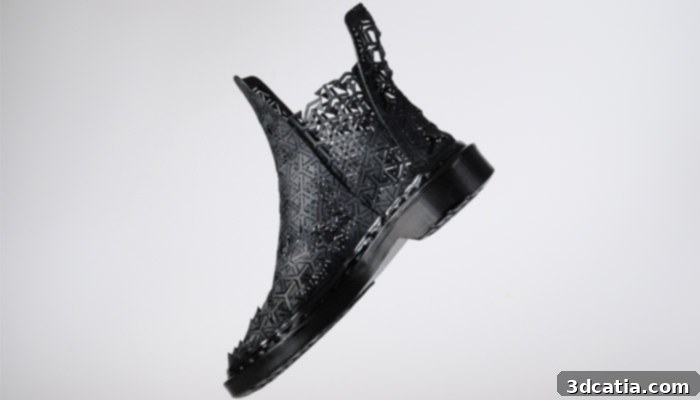
3D printing can make quirky shoe prototypes like this one. (Photo credit: WertelOberfell)
The Future is Printed: A Vision for Personalized Fashion
The collaboration between Rains and Zellerfeld on the ‘Puffer Boot’ is a compelling indicator of the future trajectory of footwear and fashion technology. It embodies a growing trend towards the convergence of digital design, advanced manufacturing, and personal expression. As 3D printing technology continues its rapid evolution, we can anticipate a future where customized footwear becomes not just a luxury, but a common standard. Imagine shoes precisely tailored to your foot’s unique biomechanics for unparalleled comfort and performance, optimized for specific activities, or adorned with intricate, bespoke patterns that are truly one-of-a-kind. This paradigm shift will empower consumers with an unprecedented level of personalization and choice, moving away from mass-produced uniformity towards individualized style.
Such advancements will also push designers to think beyond conventional manufacturing constraints, fostering a new era of creativity and innovation. The “oversized route” predicted by Zellerfeld for future printed shoe designs is likely just one facet of a much broader revolution. As designers continue to explore the full spectrum of possibilities unlocked by additive manufacturing, we can expect to see even more radical forms, textures, and functional enhancements. The journey from runway sensation to everyday commercial availability for 3D printed footwear is still unfolding, but groundbreaking collaborations like the Rains x Zellerfeld ‘Puffer Boot’ are undeniably accelerating this transition, promising a future where fashion is more innovative, sustainable, and intimately personal than ever before.
What are your thoughts on this revolutionary 3D printed shoe? Let us know in a comment below or connect with us on our LinkedIn, Facebook, and Twitter pages! Don’t forget to sign up for our free weekly Newsletter here to get the latest 3D printing news delivered straight to your inbox. You can also find all our compelling videos on our YouTube channel.