
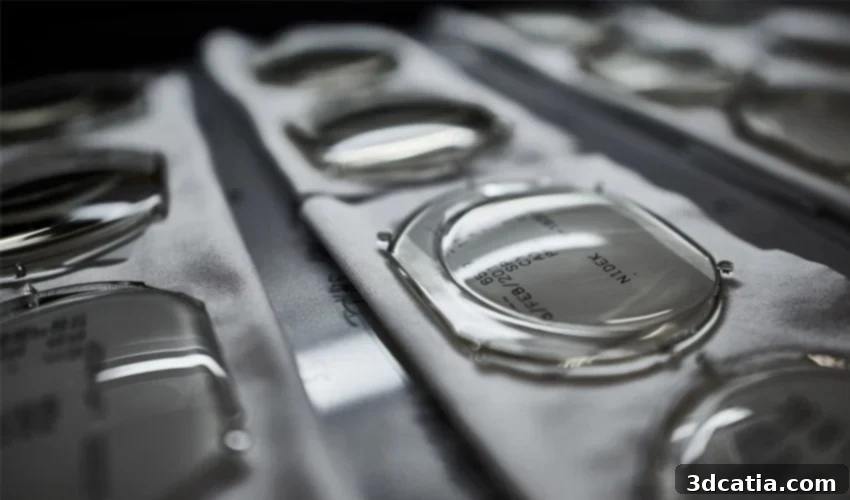
Meta’s Game-Changing Acquisition: How Luxexcel’s 3D Printed Lenses are Powering the Future of Smart Glasses and the Metaverse
In a move that sends ripples across the tech and additive manufacturing industries, Meta, the parent company behind global giants Facebook, WhatsApp, and Instagram, recently confirmed the acquisition of Luxexcel. This Belgian-Dutch firm specializes in the groundbreaking manufacturing of 3D printed lenses, a technology poised to revolutionize the smart glasses market. Luxexcel had already garnered significant financial backing, raising several million euros to advance and commercialize its unique ophthalmic lenses, which are meticulously crafted using state-of-the-art additive manufacturing processes. While the acquisition was handled with a degree of discretion, its strategic importance for both Meta’s ambitious metaverse vision and the broader 3D printing sector cannot be overstated. This development serves as yet another compelling indicator that major corporations are increasingly recognizing and investing in the transformative potential of 3D technologies. Through this acquisition, Meta not only secures a pivotal foothold in the rapidly evolving 3D printing landscape but also unequivocally signals its intent to dramatically accelerate and enhance its smart glasses offerings, directly leveraging Luxexcel’s unparalleled expertise in advanced optical solutions.
The year 2022 was notably characterized by a surge of consolidations within various industries, and the 3D printing sector was no exception. We witnessed numerous strategic partnerships, mergers, and acquisitions among established 3D printing players, but the trend extended far beyond internal market realignments. Increasingly, companies from outside the traditional additive manufacturing sphere began to acquire leaders in the field. A prime example of this significant shift was Nikon’s acquisition of SLM Solutions, underscoring a growing recognition of 3D printing’s cross-industry relevance. Meta’s announcement last week, confirming its acquisition of Luxexcel, powerfully reaffirms this identified and accelerating trend. This raises a crucial question that echoes throughout the tech world: why would a behemoth like Meta, primarily known for social media and virtual reality, develop such a keen interest in a specialized manufacturer of 3D printed lenses? The answer lies at the intersection of advanced optics, miniature electronics, and Meta’s ambitious vision for a truly immersive and accessible metaverse, where lightweight, powerful augmented reality glasses are not just a dream, but an imminent reality.
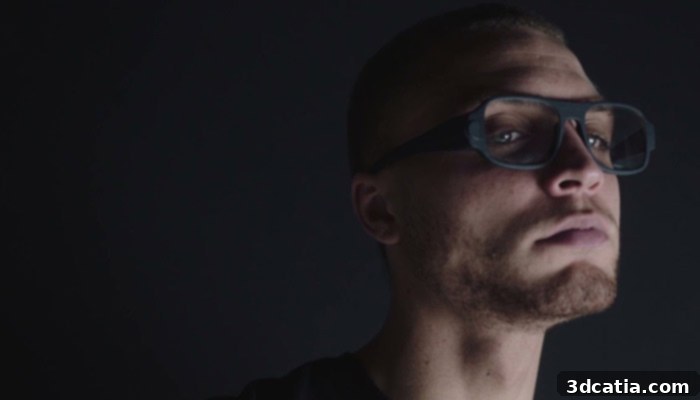
Photo Credits: Luxexcel
Deepening the Vision: Meta’s Strategic Acquisition of Luxexcel and the Aria Project Legacy
It’s important to acknowledge that the collaboration between Luxexcel and Meta is far from a new development; the two companies have a well-established history, having previously worked together on the ambitious Aria Project. This pioneering research initiative involved sophisticated smart glasses designed to capture video and audio from the wearer’s perspective, while simultaneously tracking their real-time vision and location information. Built upon advanced augmented reality principles, the Aria Project benefited immensely from Luxexcel’s profound know-how in the realm of ophthalmic lenses, which was put directly at the service of the American tech giant. The recent announcement marks Meta taking an even more significant step forward by fully acquiring the Belgian-Dutch company. While the exact financial amount of the acquisition was not publicly revealed, suggesting a strategic silence perhaps to avoid market speculation or competitive insights, the move solidifies a long-term commitment and integration of Luxexcel’s capabilities into Meta’s core product development strategy. This transformation from a collaborative partnership to a full acquisition underscores the critical value Meta places on Luxexcel’s unique technology and expertise.
The Innovative Core: Luxexcel’s VisionPlatform™ and the Future of Immersive Displays
With this acquisition, Meta effectively integrates Luxexcel’s proprietary 3D printing technology and its advanced VisionPlatform™ system directly into its research and development ecosystem. At the heart of this innovation is a unique 3D printer that utilizes material jetting to fabricate custom lenses with unparalleled precision. This process involves the photopolymerization of precisely deposited drops of resin on a printing plate, layer by layer, to create complex optical structures. This specific method allows for the embedding of various elements, such as waveguides, sensors, and potentially even electronic circuits, directly within the lens material during the printing process itself. This capability is truly transformative, as it moves beyond simply correcting vision to creating fully integrated smart optical devices. We can readily imagine how this groundbreaking technology will enable Meta to design and produce significantly more powerful and aesthetically pleasing augmented reality glasses, perfectly suited for the immersive and expansive metaverse envisioned by Mark Zuckerberg. By embedding complex components directly into the lens, Meta can overcome many of the current challenges associated with bulky, multi-component smart glasses, paving the way for lighter, more discreet, and ultimately more user-friendly wearable AR devices.
The immediate benefits of Luxexcel’s technology for Meta are multifaceted. Traditional lens manufacturing struggles with the integration of electronics and digital display technologies into prescription-grade optics. Luxexcel’s additive manufacturing approach solves this by enabling bespoke lens designs that can incorporate corrective prescriptions alongside miniature displays, projectors, and sensors, all within a single, seamless optical element. This means users will no longer need to wear bulky AR devices over their regular corrective glasses, or compromise on their vision correction for an immersive experience. Instead, their prescription will be an intrinsic part of the smart lens, offering optimal clarity and comfort. Furthermore, the precision of material jetting allows for the creation of incredibly intricate optical paths necessary for high-fidelity augmented reality displays, which project digital information directly into the wearer’s field of view without obstructing their perception of the real world. This level of customization and integration is crucial for the widespread adoption of AR glasses, moving them from niche tech gadgets to essential everyday companions for interacting with the metaverse.

Meta and Luxexcel have already worked together on the Aria Project (photo credits: Meta)
Driving the Metaverse Forward: Innovations in Wearable Optics
For now, Meta remains relatively discreet about the specific details and immediate plans following this significant acquisition. A spokesperson offered only a concise statement to the Dutch newspaper De Tijd, commenting, “We’re excited that the Luxexcel team has joined Meta, deepening the existing partnership between the two companies.” This cautious approach is often characteristic of companies developing highly proprietary and potentially disruptive technologies, aimed at minimizing competitive insights and managing market expectations. However, the implications are clear: Meta is making a long-term bet on sophisticated optics as a cornerstone for its metaverse strategy. The vision for the metaverse hinges on seamless, comfortable, and intuitive interactions between users and digital environments, and smart glasses are universally recognized as the ideal interface for such experiences, surpassing the current limitations of bulky VR headsets or smartphones.
The integration of Luxexcel’s 3D printing technology into Meta’s development pipeline has the potential to address some of the most persistent challenges in smart glasses design. Current AR prototypes often struggle with size, weight, battery life, heat dissipation, and the complex challenge of integrating prescription lenses without adding significant bulk. Luxexcel’s ability to embed various components directly into a single, cohesive optical element offers a path toward significantly smaller, lighter, and more energy-efficient devices. This approach facilitates innovative design choices, allowing for thinner frames and a more aesthetically pleasing form factor that resembles conventional eyewear. Such advancements are crucial for achieving mass market appeal and user adoption, moving AR glasses from niche developer tools to ubiquitous consumer products. Furthermore, the additive manufacturing process offers unprecedented levels of personalization, allowing lenses to be tailored not just for optical correction but also for specific display characteristics, field of view requirements, and individual biometric data, ensuring an optimal and highly customized user experience for every single wearer.
We eagerly anticipate the unveiling of Meta’s future projects that leverage this advanced 3D printing technology. The impact could be transformative, not only for the production of smart glasses but for the entire wearable technology landscape. Imagine a future where augmented reality is not a screen you hold, but a seamless extension of your vision, providing contextual information, real-time translations, or interactive gaming elements, all integrated into your everyday eyewear. This acquisition positions Meta to lead the charge in creating truly groundbreaking AR devices that are both powerful and practical, marking a significant leap toward realizing the full potential of the metaverse. As this technology evolves, it will influence materials science, manufacturing workflows, and supply chain logistics across the globe, driving innovation in ways we are only beginning to comprehend. In the meantime, for those interested in a deeper dive into the specific methodologies, you can find more about Luxexcel’s groundbreaking process HERE.
What are your thoughts on this pivotal acquisition announced by Meta? Do you believe Luxexcel’s 3D printed lenses will be the key differentiator for Meta’s smart glasses, or do you foresee other challenges that remain? We invite you to share your insights in a comment below or join the conversation on our Linkedin, Facebook, and Twitter pages! Don’t forget to sign up for our free weekly Newsletter here to receive the latest 3D printing news, insights, and analyses directly to your inbox. You can also explore all our videos and interviews on our dedicated YouTube channel for more in-depth content.
*Cover Photo Credits: Luxexcel