
Revolutionizing Knee Injury Treatment: Advanced 3D Bioprinted Meniscus with Silk Bio-Ink
At the exciting convergence of advanced medical biotechnology and groundbreaking additive manufacturing, a dedicated team of researchers from the Indian Institute of Technology Guwahati and West Bengal University of Animal and Fishery Sciences, Kolkata, has forged a truly innovative path toward transformative knee injury treatment. Their pioneering work meticulously combines the precision of cutting-edge 3D bioprinting technology with a specially formulated, robust silk-based bio-ink. This novel approach promises a significant paradigm shift in how complex knee injuries are not only studied but also effectively treated, offering hope for millions suffering from debilitating knee conditions.
The primary focus of this innovative research lies squarely on the knee meniscus, a critical fibrocartilage structure absolutely vital for maintaining knee joint stability, absorbing shock, and facilitating smooth movement. This crescent-shaped component is notoriously challenging for surgeons to operate on due to its complex anatomy and limited blood supply, and it is frequently prone to tears and injuries that often necessitate invasive surgical procedures for repair. Traditional treatment methods, which typically include open surgery, partial or total meniscectomy (tissue removal), or even allograft transplantation, pose significant challenges. These conventional approaches frequently yield unsatisfactory results, especially in cases of severe tears, degenerative conditions, or chronic issues such as osteoarthritis, which can be exacerbated by meniscal damage. Such hurdles often lead to a cascade of post-operative complications, extended and arduous rehabilitation periods, and a diminished quality of life for patients. The long-term prognosis for many meniscus injuries treated conventionally remains a concern, making the need for advanced regenerative solutions more urgent than ever.

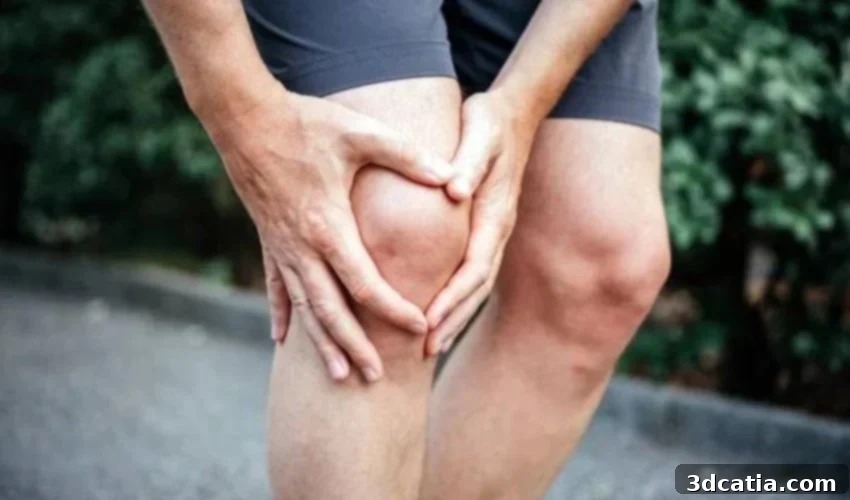
The 3D bioprinted meniscus. (Photo Credits: Biman B Mandal)
The Innovation: A Customized Silk-Based Bio-Ink for Meniscus Regeneration
Addressing these profound clinical challenges, Professor Biman B. Mandal and his dedicated team embarked on a mission to develop and 3D bioprint a highly customized bio-ink, meticulously designed explicitly for knee meniscus tissue engineering. Their unique formulation comprises a sophisticated blend of silk fibroin methacrylate (SFM), gelatin methacrylate (GelMA), and polyethylene glycol dimethacrylate (PEGDMA). This ingenious combination of silk-based materials, deeply inspired by India’s rich and ancient tradition of silk production and textiles, is precisely tailored to significantly improve tissue engineering applications, with a particular focus on robust meniscus regeneration.
The selection of these specific components is critical to the bio-ink’s success. Silk fibroin, derived from silkworm cocoons, is renowned for its exceptional biocompatibility, impressive mechanical strength, and controllable degradation profile, closely mimicking the natural properties of native connective tissues. Gelatin methacrylate, a modified form of collagen, provides excellent cell adhesion properties and biodegradability, fostering a conducive environment for cell growth and tissue formation. Polyethylene glycol dimethacrylate (PEGDMA) offers tunable mechanical properties and helps maintain structural integrity, while also enhancing printability and reducing potential immunogenicity. Together, these materials create a scaffold that is not only mechanically sound but also biologically active, promoting optimal cellular responses crucial for regeneration.
Precision Bioprinting and Stem Cell Integration
A pivotal innovation underpinning this research lies in the bio-ink’s remarkable ability to maintain a stable gel-like consistency throughout the intricate 3D bioprinting process. This characteristic is absolutely essential for ensuring extremely accurate and precise layer-by-layer deposition of the complex knee meniscus structure, allowing for the replication of its native architecture. This level of precision is paramount for creating a functional implant that can withstand the demanding biomechanical environment of the knee joint. Beyond structural fidelity, the researchers ingeniously incorporated stem cells derived from human platelet-rich plasma (PRP) directly into the bio-ink. This strategic inclusion ensures the presence of viable, regenerative cells within the printed scaffold. These progenitor cells are programmed to mature into fibrochondrocytes, which are the primary cell type naturally responsible for the synthesis and maintenance of meniscus tissue. The ability of these stem cells to differentiate and produce the necessary extracellular matrix components is critical for the long-term success of the regenerated tissue, offering a truly biological solution to a mechanical problem.
The integration of patient-specific stem cells from PRP is particularly significant, as it harnesses the body’s natural healing mechanisms. PRP is known for its high concentration of growth factors that stimulate cell proliferation and tissue repair. By leveraging autologous (patient’s own) stem cells, the risk of immune rejection is virtually eliminated, paving the way for personalized regenerative therapies. This approach moves beyond simply replacing damaged tissue; it aims to *rebuild* it using the patient’s own biological resources, promoting a more natural and durable restoration of function. The precise control offered by 3D bioprinting allows for the creation of intricate internal structures within the meniscus scaffold, optimizing conditions for cell colonization, nutrient exchange, and subsequent tissue maturation. This biomimetic design is a critical factor in ensuring that the regenerated meniscus can perform its complex load-bearing and shock-absorbing functions effectively.
Rigorous Testing and Promising Preclinical Outcomes
To ensure that the newly developed bio-ink could robustly handle the significant mechanical strains of daily movement and heavy physiological loads, and crucially, that it would not cause any adverse reactions within the body, Professor Mandal and his team conducted an exhaustive series of thorough tests. These evaluations included sophisticated simulations meticulously mimicking repetitive knee movements, such as walking, running, and bending, designed to assess the bio-ink’s structural integrity and resilience under dynamic stress. Parameters like tensile strength, compressive modulus, and fatigue resistance were carefully measured and compared against those of native meniscus tissue, demonstrating that the bioprinted scaffolds possessed comparable mechanical properties essential for functional integration.
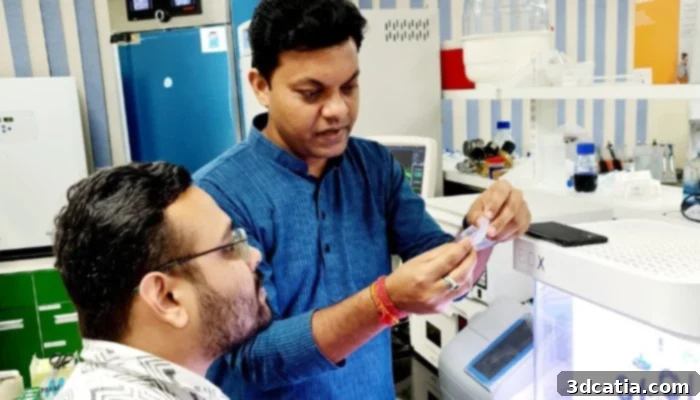
Professor Mandal and Ashutosh Bandyopadhyay. (Photo Credits: Biman B Mandal)
Furthermore, crucial evaluations of the immune response were performed in relevant animal models to ascertain the bio-ink’s biocompatibility. Impressively, the silk-based bio-ink not only consistently withstood the intense mechanical stress but also caused absolutely zero negative immune responses. This critical finding indicates an absence of inflammation, toxicity, or rejection, which are common hurdles in implantable biomaterials. The successful results from these preclinical evaluations are immensely encouraging, paving a clear pathway for further studies and eventual testing on actual human patients. The robust performance in both mechanical and biological assessments underscores the immense potential of this silk-based bio-ink as a safe, effective, and durable solution for meniscus regeneration.
Future Implications and the Vision for Regenerative Medicine
Looking confidently ahead, the dedicated research team harbors strong aspirations that this groundbreaking project will propel them toward a future where their advanced silk-based bio-ink formulation becomes a standard, readily available treatment option for a wide array of knee meniscus injuries. This innovative approach promises to offer a minimally invasive, biologically integrated alternative to conventional, often problematic, surgical interventions. By ingeniously leveraging the precision of 3D printing technology and thoughtfully tapping into the immense regenerative potential inherent in autologous stem cells, they aim to provide patients with a reliable, truly patient-specific solution. This personalized approach not only promotes profound tissue healing and functional restoration but also plays a crucial role in preserving the long-term integrity and function of the knee joint. This could significantly reduce the incidence of secondary complications like post-traumatic osteoarthritis, which often follows traditional meniscus surgeries.
The long-term vision extends beyond simply repairing the meniscus; it aims to completely regenerate a fully functional, living tissue that can integrate seamlessly with the native knee environment. Such an advancement could dramatically shorten recovery times, improve mobility, and significantly enhance the overall quality of life for individuals suffering from knee pain and instability. This research stands as a powerful testament to the transformative power of combining advanced materials science with regenerative medicine, promising a future where damaged joints can be truly restored rather than just managed. The economic benefits could also be substantial, with reduced healthcare costs due to fewer revision surgeries and a quicker return to productive life for patients. This work by Professor Mandal’s team represents a significant stride forward in the quest for effective and lasting solutions in orthopaedic regenerative medicine, particularly for challenging knee conditions.
What are your thoughts on this revolutionary 3D printed meniscus, ingeniously crafted from silk bio-ink? We invite you to share your insights and comments below, or engage with us on our LinkedIn, Facebook, and Twitter pages! Don’t forget to sign up for our free weekly newsletter here for the very latest 3D printing news delivered directly to your inbox! You can also find all our compelling videos on our YouTube channel.