
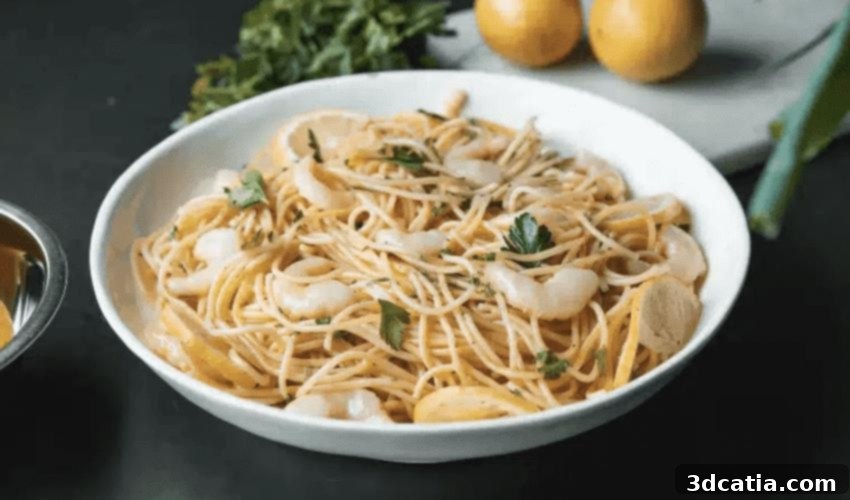
Steakholder Foods Revolutionizes Sustainable Seafood with World’s First 3D-Printed Plant-Based Shrimp
The culinary landscape is undergoing a profound transformation, with 3D printed bacon becoming a supermarket reality last year. This pivotal development signaled that food 3D printing is no longer a futuristic concept but a burgeoning industry ready for mainstream adoption. What was once confined to laboratory curiosities or deemed too intricate for consumer applications has now scaled to an impressive industrial level, promising innovative solutions for global food challenges. This technological leap is largely fueled by a surging global demand for plant-based alternatives to traditional meat and fish, driven by an array of crucial health, ethical, and environmental considerations. In this evolving market, 3D printing technology is increasingly recognized as an optimal and highly efficient solution to meet this growing demand, offering unparalleled precision, customization, and sustainability.
Leading this innovative charge is Steakholder Foods, a company already well-established for its pioneering work in cultured meat and advanced 3D printing technology. They have consistently pushed the boundaries of what’s possible in alternative food production. Building on their foundational expertise, the company has recently achieved another remarkable feat, successfully developing and unveiling the world’s very first plant-based 3D-printed shrimp. This significant announcement comes just days after their impressive achievement of reproducing eel through similar 3D printing methods. Steakholder Foods has not only demonstrated its capacity for innovation but has also successfully tackled the complex task of replicating the distinctive flavor, texture, and overall culinary experience of shrimp – a beloved food staple enjoyed across countless cultures worldwide.
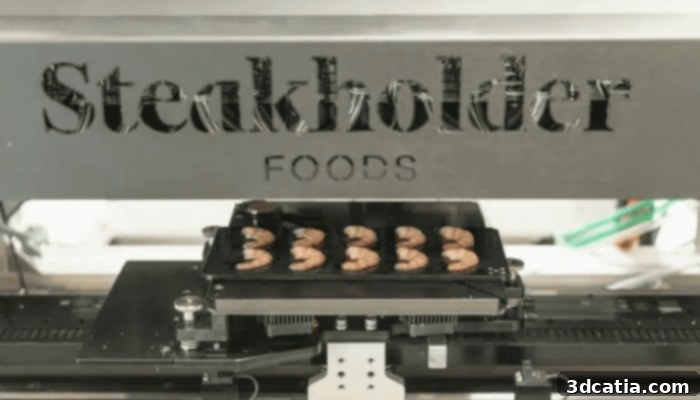
Steakholder Foods presents its groundbreaking plant-based, 3D-printed shrimp.
The strategic decision by Steakholder Foods to venture into the plant-based shrimp sector is underpinned by compelling market dynamics. The global shrimp market alone is estimated to be valued at an impressive $60 billion, showcasing immense profitability and growth potential. With an approximate demand of 7.6 million tons of shrimp harvested annually, the sector consistently demonstrates high consumer interest and market vitality. Furthermore, traditional shrimp commands premium pricing, typically ranging from $20 to $40 per kilo, reflecting its status as a desirable seafood item. Against this backdrop, Steakholder Foods perceives a lucrative opportunity to introduce a more cost-effective, sustainable, and ethically sound alternative. Their 3D-printed plant-based shrimp aims to be competitively priced while addressing the growing concerns around environmental impact, overfishing, and animal welfare associated with conventional shrimp farming. This move not only taps into a significant market but also aligns with the broader movement towards more sustainable and responsible food systems.
The Innovative Technology Behind the World’s First 3D-Printed Plant-Based Shrimp
At the core of this culinary breakthrough is Steakholder Foods’ exclusive DropJet printer, a marvel of engineering specifically designed for the intricate and precise printing of fish and seafood. This advanced bioprinting technology allows the company to meticulously craft complex food structures layer by layer, accurately reproducing the fibrous texture and succulent mouthfeel of authentic shrimp. The process begins with the creation of a specialized shrimp-flavored ink, meticulously developed by Steakholder Foods’ highly skilled food technology team. This innovative ink is formulated from a blend of plant-based proteins and natural flavor compounds, ensuring that the final product not only mimics the appearance but also perfectly captures the distinctive taste and texture of real shrimp. The company’s declaration of success underscores their ability to overcome significant challenges in food replication, setting a new benchmark for the alternative seafood industry.
The development process for these revolutionary plant-based shrimp involves carefully selecting and cultivating specific cells in advanced growth tanks. These cells are nurtured until they reach the optimal stage for transformation into the proprietary “ink” that fuels the DropJet printer. This sophisticated approach allows for precise control over the composition and structure of the final product, ensuring consistency and quality. What makes Steakholder Foods’ offering even more intriguing is its versatility: the 3D-printed shrimp will be available to consumers in two distinct variants. The first is a fully plant-based option, catering to strict vegan and vegetarian diets, and those seeking completely animal-free products. The second is a potentially hybrid offering, which will combine plant-based ingredients with cultured shrimp ink. This hybrid approach represents a fascinating intersection of plant-based innovation and cellular agriculture, providing a unique blend that could appeal to a broader demographic interested in reducing their consumption of conventionally harvested seafood without sacrificing the experience. This dual-option strategy highlights the company’s commitment to catering to diverse consumer preferences and dietary needs.
Arik Kaufman, the visionary CEO of Steakholder Foods, articulated the broader implications of these recent achievements with considerable optimism. He stated:
“By unveiling a second new species of plant-based, 3D-printed seafood this month, we expect to position Steakholder Foods to sell and deliver its first DropJet printer in 2024, offering partners and customers a unique opportunity to benefit from the expanding global seafood market, while making the right kind of impact on the environment.”
Kaufman’s statement not only emphasizes the company’s rapid innovation cycle – introducing two new seafood alternatives in quick succession – but also outlines a clear strategic path for growth. The impending sale and delivery of the DropJet printer in 2024 signal Steakholder Foods’ ambition to become a leading technology provider in the food 3D printing space. This move will empower other food manufacturers and partners to leverage their proprietary technology, accelerating the widespread adoption of sustainable and ethical food production methods. The vision extends beyond simply selling products; it’s about creating an ecosystem where partners can capitalize on the burgeoning market for alternative seafood, contributing positively to environmental sustainability and animal welfare while meeting consumer demand for innovative food solutions.
Addressing Global Challenges: Sustainability and Ethical Eating
The introduction of 3D-printed plant-based shrimp by Steakholder Foods represents a significant stride towards addressing some of the most pressing global challenges in food production. Traditional shrimp farming and wild-capture methods are frequently associated with a myriad of environmental concerns, including habitat destruction, bycatch of non-target species, unsustainable fishing practices, and significant carbon footprints. The reliance on plant-based ingredients for these 3D-printed alternatives drastically reduces the ecological impact, offering a truly sustainable pathway to enjoying seafood flavors without depleting marine ecosystems. Furthermore, the ethical considerations surrounding animal welfare in conventional aquaculture are largely mitigated by plant-based and cultured options, providing a cruelty-free choice for conscious consumers.
Beyond environmental and ethical benefits, food 3D printing technology, particularly as demonstrated by Steakholder Foods, holds immense potential for future food security. It offers the capability to produce food with precise nutritional profiles, customize textures, and even create novel food experiences that are currently unimaginable. This technology could play a crucial role in feeding a growing global population by efficiently converting sustainable inputs into desirable food products, reducing waste, and decentralizing food production. The ability to reproduce complex food items like shrimp and eel showcases the versatility and sophistication of 3D food printing, paving the way for a future where a wider variety of sustainable, delicious, and ethically produced foods are readily available to everyone.
What are your thoughts on Steakholder Foods’ revolutionary 3D-printed plant-based shrimp? Would you be inclined to try this innovative alternative? Share your perspectives and join the conversation in the comments section below or connect with us on our social media platforms. Find us on LinkedIn, Facebook, and Twitter pages! Don’t forget to sign up for our free weekly Newsletter here to receive the latest 3D printing news directly in your inbox. You can also explore all our videos and interviews on our dedicated YouTube channel for more insights into the additive manufacturing world.
*All Photo Credits: Steakholder Foods