
Revolutionizing Weather Monitoring: How 3D Printing Powers Accessible Early Warning Systems for High-Impact Weather
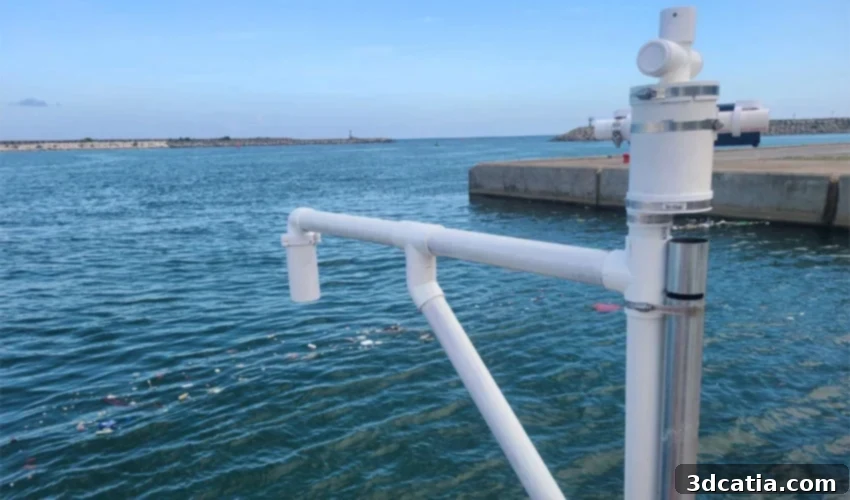
The University Corporation for Atmospheric Research (UCAR) is at the forefront of a groundbreaking initiative, the 3D-PAWS (3D Printed Automatic Weather Station) project. This innovative endeavor harnesses the power of additive manufacturing to design and produce affordable, robust meteorological tools and instruments. The primary objective is to significantly enhance the early detection capabilities for high-impact weather events, which are becoming increasingly frequent and severe due due to global climate change. Through this project, UCAR aims to equip vulnerable communities worldwide with the necessary technology to anticipate and respond to dangerous weather phenomena more effectively. The 3D-PAWS teams have recently unveiled a significant advancement: a uniquely designed conical-shaped ultrasonic sensor, ingeniously protected by a durable 3D printed shell. This cutting-edge sensor is engineered to provide precise measurements of critical environmental parameters, including streamflow rates, snowfall accumulations, and crucial storm surge dynamics. By accurately monitoring these elements, the system offers an invaluable link in the chain of early warning systems, enabling better protection for populations residing in areas prone to hazardous weather and natural disasters, ultimately fostering greater resilience against the unpredictable forces of nature.
The 3D-PAWS project embarked on its mission approximately five years ago, driven by the ambitious goal of democratizing weather data collection. Recognizing the prohibitive costs associated with commercial weather monitoring equipment, the initiative sought to develop a sustainable and accessible alternative. Paul Kucera, one of the project’s visionary leaders, eloquently articulates this core philosophy: “Our goal is to enable our end users to make and sustain their own networks rather than getting commercial sensors, which could cost several thousand dollars.” This statement underscores the project’s commitment to empowering local communities by providing them with the means to independently gather vital meteorological data. A cornerstone of this strategy for drastically lowering the total cost of these essential tools is additive manufacturing, commonly known as 3D printing. This technology allows for the on-demand production of components and even entire instruments, making it possible for individuals, local organizations, and even small communities to fabricate their own weather monitoring equipment. The project initially focused on developing fundamental weather stations designed to collect a wide array of atmospheric data, including humidity levels, precipitation amounts, atmospheric pressure, and air temperature. The success of these initial deployments has been remarkable; 3D-PAWS weather stations have already been successfully installed and are actively collecting data in diverse geographical regions, including Barbados, Kenya, Uganda, and Zambia. These deployments represent a critical step towards building resilient communities that are better informed and prepared to face the challenges posed by extreme weather events.
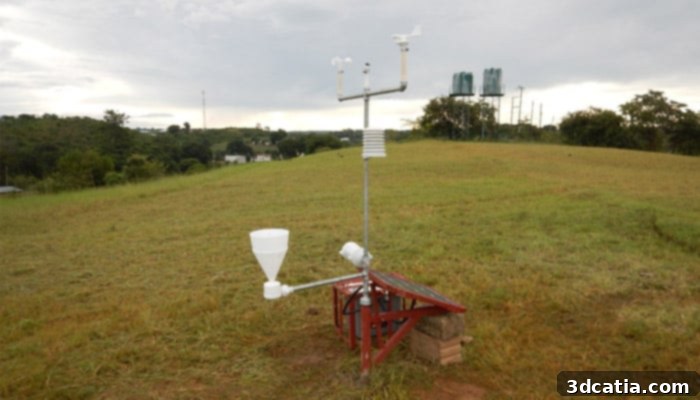
A 3D printed weather station installed in Zambia (photo credits: 3D-PAWS)
Following the significant initial successes with its foundational weather stations, the 3D-PAWS project has strategically pivoted its focus towards an exciting new frontier: remote sensing. This evolution reflects an understanding that comprehensive weather monitoring requires more than just basic atmospheric data; it necessitates the ability to detect and track specific, localized hazards that pose immediate threats to life and infrastructure. The ambitious goal now is to engineer a sophisticated system capable of reliably detecting subtle yet critical changes in streamflow, identifying sudden and dangerous storm surge rises along coastal areas, and accurately measuring snowfall depths in often inaccessible and remote mountain regions. These types of data are crucial for preventing flash floods, managing coastal evacuations, and mitigating avalanche risks. Martin Steinson, a highly skilled mechanical engineer and the visionary designer behind the 3D-PAWS instruments, emphasizes the project’s progress, stating, “We are getting much closer to creating a useful warning system. We will be able to combine weather stations and stream gauges to provide information that can impact people’s daily lives.” This integration of data from various sources is key to developing a holistic and impactful early warning network. It was through this intensified focus on remote sensing and the urgent need for precise water-level monitoring that the advanced ultrasonic sensor was conceived. This sensor is ingeniously protected by a durable 3D printed shell, crafted from an acrylic polymer, which offers both environmental resistance and structural integrity. While the project members have commendably remained tight-lipped regarding the precise details of their printing phase and the proprietary solutions employed, it is understood that their choice of additive manufacturing processes likely allows for rapid prototyping, cost-effective production, and the use of specialized materials optimized for rugged outdoor environments. This discretion suggests a commitment to refining their methodologies to achieve optimal performance and widespread applicability, ensuring these life-saving tools can be deployed effectively even in the most challenging conditions.
Fundamentally, this innovative ultrasonic sensor is poised to dramatically improve our ability to predict critical events such as riverine flooding and the extensive runoff caused by snowmelt, both of which pose significant threats to communities and infrastructure. The sensor operates on a precise scientific principle: it emits sound waves in carefully calibrated pulses. Upon encountering a surface, such as the water level of a river or the top layer of accumulated snow, these sound waves reflect back to the sensor. The system then meticulously measures the exact time interval between the emission of a pulse and the reception of its echo. By analyzing this “time of flight,” the sensor can accurately determine the distance to the surface, thereby calculating minute changes in water height or snow depth. This non-contact measurement method offers significant advantages, including minimal interference with the environment and robust performance across varying conditions. A paramount objective of the 3D-PAWS project has always been to ensure that its final systems are not only highly effective but also exceptionally easy to install, simple to handle, and straightforward to repair. This commitment to user-friendliness is crucial for enabling any remote area, regardless of its technical sophistication, to deploy and maintain its own critical detection system without requiring specialized expertise or costly ongoing support. The effectiveness and resilience of the ultrasonic sensor have already been rigorously validated through several demanding field tests. In one particularly notable instance, a sensor successfully measured an unprecedented record snowfall of 5.4 meters over a mere two-week period. Despite enduring such extreme conditions, the sensor remained fully operational and undamaged, demonstrating its remarkable durability and accuracy. This success story highlights the potential for these 3D-printed instruments to deliver vital data in environments where traditional, expensive equipment might fail or be prohibitively complex to deploy. The insights gathered from such data are indispensable for robust flood forecasting, efficient snowmelt runoff management, and ultimately, the creation of more reliable and localized early warning systems that genuinely protect lives and livelihoods.
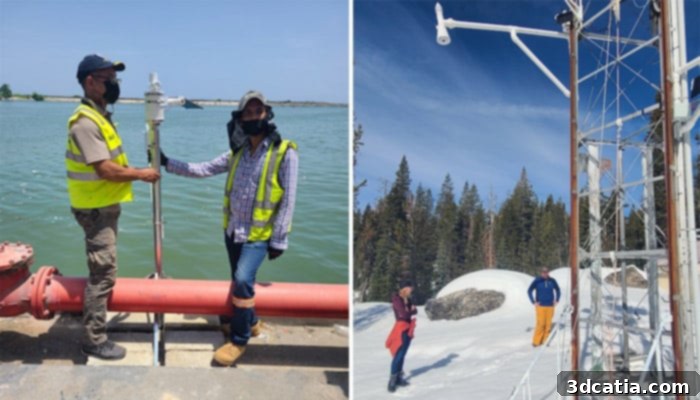
On the left, a sensor installed in the Dominican Republic; on the right, a sensor successfully installed to test its capabilities (photo credits: Paul Kucera)
The successful deployment of these innovative 3D-printed ultrasonic sensors in various challenging environments, including the Dominican Republic, marks a significant milestone for the 3D-PAWS project. These real-world installations not only validate the technology’s effectiveness but also pave the way for broader adoption and impact. The project members, fueled by these achievements, are already looking ahead, envisioning a future where an even wider array of 3D-printed instruments can address critical environmental monitoring needs. A prominent area of interest for future development is the monitoring of air quality. As urbanization accelerates and industrial activities expand, coupled with the increasing frequency of wildfires exacerbated by climate change, air quality has become a pressing global concern. Affordable and easily deployable 3D-printed air quality sensors could provide invaluable data to communities, helping them to better understand pollution levels, identify sources of contaminants, and implement timely interventions to protect public health. This expansion into air quality monitoring exemplifies the adaptable and scalable nature of the 3D-PAWS approach, underscoring its potential to address multiple facets of environmental and climate challenges. The ongoing innovations from UCAR’s 3D-PAWS project represent more than just technological advancements; they embody a profound commitment to fostering global resilience against the growing threats of high-impact weather and environmental degradation. By leveraging the accessibility and versatility of 3D printing, the project is not only creating cutting-edge sensors but also building a sustainable model for community empowerment and localized disaster preparedness. This open-source philosophy ensures that the benefits of atmospheric research are translated into tangible tools that empower individuals and communities to better understand, adapt to, and mitigate the impacts of our changing climate. For those eager to delve deeper into the specifics of this transformative project and its potential to bring affordable 3D-printed stream, snow, and storm surge sensors to remote communities, additional information is available HERE.
We are keen to hear your thoughts on this revolutionary 3D-printed ultrasonic sensor and the broader implications of the 3D-PAWS project for global weather monitoring and climate resilience. Please share your insights and opinions in a comment below, or join the conversation on our LinkedIn, Facebook, and Twitter pages! Don’t forget to sign up for our free weekly Newsletter here to receive the latest 3D printing news straight to your inbox! You can also find all our compelling videos and in-depth content on our YouTube channel, offering a visual journey into the world of additive manufacturing and its impactful applications.