
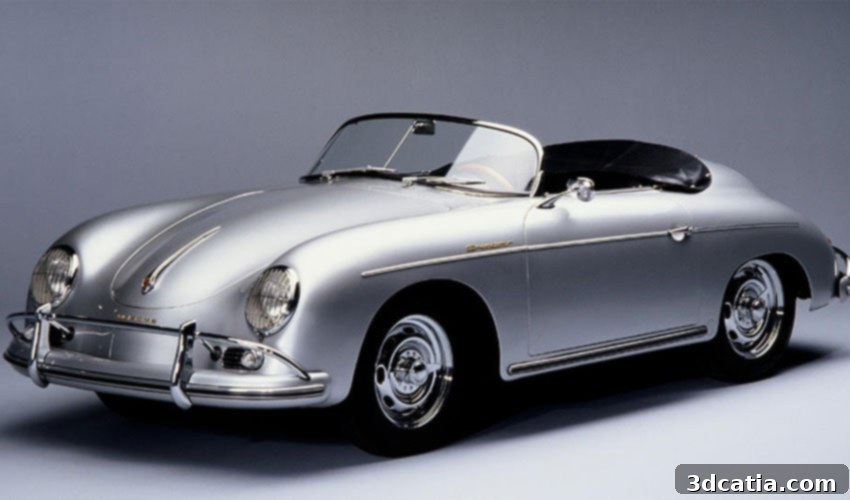
Porsche Pioneers 3D Printing for Classic Car Spare Parts: A New Era of Automotive Restoration
German luxury car manufacturer Porsche has recently announced a significant strategic move: its formal entry into the 3D printing market. This groundbreaking initiative is set to revolutionize the way spare parts are developed and supplied, particularly for their highly cherished classic car collection. The primary objective is to ensure these iconic vehicles remain on the road for much longer, preventing them from succumbing to obsolescence due to a lack of essential components. This forward-thinking approach aligns with broader industry trends, including companies like GRYP, which aims to 3D print all spare parts for classic cars, as previously covered in our interview here, highlighting a growing recognition of additive manufacturing’s potential.
Advanced Additive Manufacturing: The Key to Durable Metal Parts
For many years, the widespread adoption of 3D printing for metal parts faced significant hurdles, primarily due to the nascent stage of the technology. Early methods often struggled to produce components with the requisite strength, durability, and precision demanded by critical automotive applications. However, rapid advancements in additive manufacturing have fundamentally transformed this landscape. Today, technologies like Direct Metal Laser Sintering (DMLS) are capable of creating intricate metal parts with exceptional mechanical properties, rivaling, and in some cases, surpassing traditionally manufactured components. DMLS uses a high-power laser to selectively melt and fuse metallic powders together, layer by layer, building complex geometries with high density and excellent material integrity.
This capability extends beyond metal, as 3D printing plastics has long been a viable option for various non-structural car parts. The combination of robust metal and precise plastic additive manufacturing opens up unprecedented possibilities for the automotive sector. For Porsche, this technological leap holds the potential for substantial cost savings. By embracing on-demand manufacturing, the company can significantly reduce its reliance on extensive physical inventory, a major expense for any manufacturer, especially for classic car parts which often have low demand but high storage costs. Instead of stocking warehouses full of rare components that might only be needed once every few years, Porsche can simply print a part when a customer requires it. This strategy aligns perfectly with recent industry research suggesting that up to 5% of all spare parts could eventually be stored digitally, ready to be 3D printed precisely when and where they are needed, optimizing supply chains and minimizing waste.
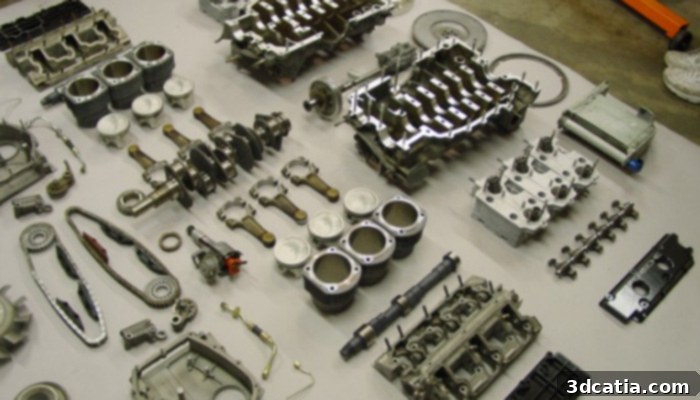
5% of spare parts will soon be digital and 3D printable.
Porsche’s Strategic Move: Joining the Automotive AM Revolution
While Porsche’s announcement marks a significant milestone, they are not the first automotive brand to recognize and leverage the power of 3D printing. The industry has been steadily integrating additive manufacturing into various aspects of design, prototyping, and production for some time. Just a few months prior to Porsche’s announcement, Volkswagen utilized additive manufacturing techniques to restore and preserve components for their classic vehicles, demonstrating the technology’s effectiveness in heritage preservation. Bugatti, another iconic luxury car brand, famously employed 3D printing to create lightweight and incredibly strong titanium brake calipers, pushing the boundaries of performance and design in their high-performance vehicles. Even MINI has embraced customization, offering customers 3D printed customized car parts, allowing owners to personalize their vehicles with unique trim pieces and accessories. These examples underscore the versatility of 3D printing across the automotive spectrum, from restoring vintage models to enhancing the performance of supercars and offering personalized aesthetics.
Beyond these pioneering efforts, other major players in the automotive industry have also been actively exploring and implementing additive manufacturing. Companies like Ford have invested heavily in 3D printing for prototyping, creating design iterations faster and more cost-effectively. BMW has integrated 3D printing into its production lines for specialized tools, jigs, and even end-use parts, especially for low-volume components in their luxury and electric vehicle lines. Mercedes-Benz has explored 3D printing for spare parts for their classic trucks, facing similar challenges to Porsche in maintaining older fleets. These diverse applications illustrate that 3D printing is not just a niche technology but a transformative force reshaping how vehicles are designed, manufactured, and maintained across the global automotive landscape. Porsche’s entry into this domain with a focus on classic car parts further validates the technology’s maturity and its crucial role in future-proofing automotive heritage.
Porsche’s Rigorous Testing: From Prototype to Production
Porsche 3D Printing: testing their spare parts
Porsche’s approach to integrating 3D printed parts is characterized by meticulous testing and validation. The initial phase involved a critical component for a highly coveted collector’s car: a Porsche 959. This legendary vehicle, known for its technological prowess and rarity, served as the perfect testbed. Using DMLS technology, Porsche successfully 3D printed a lever release for the clutch mechanism. This part was then subjected to an array of stringent resistance tests, simulating real-world driving conditions and stress levels far beyond typical use. The results were remarkably positive; the 3D printed component not only met but exceeded the rigorous performance and durability expectations set by Porsche’s engineers, demonstrating the viability and robustness of additive manufacturing for crucial, load-bearing automotive parts.
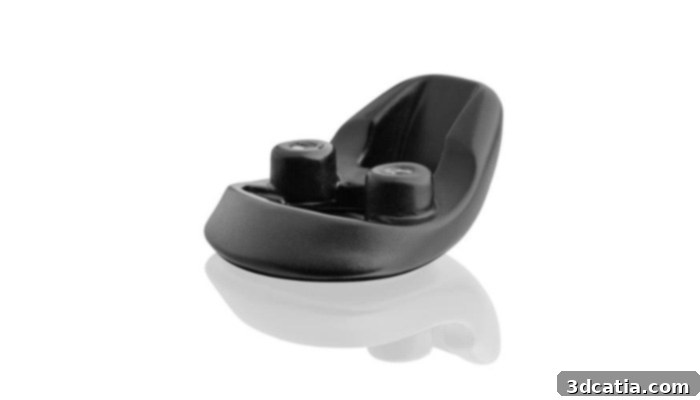
Release lever created by Porsche with additive manufacturing.
Expanding the Digital Library: A Vision for the Future
Following the resounding success of the metal clutch lever, Porsche embarked on the next phase of its ambitious program. The company has now added eight specific plastic parts to its rapidly growing digital spare part library. While these parts are currently undergoing comprehensive testing, it signifies a significant expansion of the types of components considered for additive manufacturing. The testing protocols for these plastic parts are extensive, covering critical parameters such as temperature resistance (crucial for engine bay components or parts exposed to varying climates), fuel resistance (for parts that might come into contact with automotive fluids), and light resistance (to prevent degradation from UV exposure over time). This thorough validation process ensures that every 3D printed part, regardless of material, meets Porsche’s exacting quality and safety standards before being approved for use.
The vision extends far beyond these initial parts. Porsche has concrete plans to add an additional 20 pieces to its digital inventory following the successful completion of the current pilot tests. The ultimate goal is to considerably expand their range of 3D printable spare parts, moving towards a future where a vast array of components for classic models can be produced on demand. This comprehensive strategy is designed not only to preserve the legacy of their iconic vehicles but also to provide unparalleled service to classic car owners worldwide. By investing in this technology, Porsche is ensuring that the cherished engineering and design of the past can continue to be experienced and appreciated for generations to come, preventing the heartbreak of irreplaceable parts.
The Broader Impact: Rescuing Automotive Heritage
This move by Porsche is, without a doubt, a monumental step in the right direction for the entire classic car community. For decades, one of the biggest challenges facing owners of vintage automobiles has been the dwindling supply of original or even aftermarket spare parts. Many magnificent machines have been consigned to scrap heaps or perpetual restoration projects, not due to mechanical failure of major components, but simply because a small, obscure, and irreplaceable part could not be sourced. In 20 years, it’s highly plausible that future generations will look back at this problem with a degree of amusement, wondering how we ever let such beautiful pieces of engineering fall into disrepair for such reasons.
For classic car enthusiasts and collectors, this development brings nothing but good news. The ability to precisely reproduce parts that are no longer manufactured, using modern materials and techniques, means that the engineering marvels of the past can truly be brought back to the present, often performing as good as new, or even better, thanks to advanced materials. This doesn’t just apply to luxury brands like Porsche; the precedent set here is likely to inspire other manufacturers and specialist restorers, democratizing access to crucial components for a wider range of classic vehicles. It fosters a sustainable approach to automotive heritage, ensuring that historical vehicles are not merely museum pieces but living, driving testaments to automotive ingenuity. It champions the preservation of intricate design and mechanical artistry, allowing the stories embedded in these vehicles to continue for many more miles and decades.
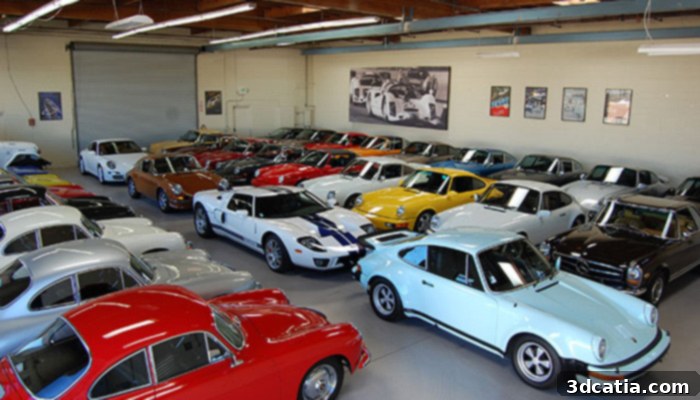
These exciting developments will rescue many classic cars.
Challenges and the Road Ahead
While the promise of 3D printing for classic car parts is immense, the journey is not without its challenges. Ensuring material consistency, validating the performance of 3D printed parts under all conditions (especially for critical components), and establishing a seamless digital supply chain are complex undertakings. The certification process for new materials and manufacturing methods in the automotive industry is rigorously demanding, requiring extensive testing and adherence to strict safety standards. Furthermore, the initial investment in industrial-grade 3D printing equipment, alongside the specialized skills required to operate them and design parts for additive manufacturing, can be significant. However, as the technology matures and becomes more widespread, these hurdles are expected to diminish, making 3D printing an increasingly accessible and cost-effective solution.
Porsche’s proactive engagement in this field is a testament to its forward-thinking philosophy and dedication to its heritage. By embracing additive manufacturing, they are not only solving a critical problem for their classic car owners but also paving the way for broader adoption of these innovative production methods across the entire automotive sector. The long-term implications are profound, promising a future where obsolescence for beloved vehicles becomes a distant memory, replaced by a vibrant ecosystem of digital manufacturing and on-demand parts production.
Join the Conversation
What are your thoughts on Porsche’s initiative to 3D print spare parts for their iconic classic cars? Do you own a classic vehicle and envision a future where sourcing parts is as simple as a digital order? We’d love to hear your perspective! Share your comments below or engage with us on our vibrant Facebook and Twitter pages. Don’t miss out on the latest advancements and news in the world of 3D printing – remember to sign up for our free weekly Newsletter, delivering all the essential updates directly to your inbox!