

Revolutionizing Rail: How 3D Printing is Accelerating Innovation and Efficiency Across the Railway Industry
The railway industry, a cornerstone of global transportation and commerce, is undergoing a profound transformation thanks to the integration of 3D printing technology. Also known as additive manufacturing, this innovative process is not just a trend but a strategic imperative, offering unparalleled advantages to sector players. From speeding up production cycles and significantly reducing manufacturing costs to enabling the creation of complex, customized components, 3D printing is proving to be a highly viable and often superior alternative to traditional manufacturing methods. Whether the need is for intricate armrests, robust seating, critical spare parts, or even large structural elements for trains and infrastructure, additive manufacturing delivers. This article delves into how leading railway companies and ambitious projects are leveraging 3D printing to enhance maintenance, optimize production, and drive the future of sustainable rail transport, showcasing some of the most impactful applications across the globe.
Additive Manufacturing for Enhanced Train Maintenance at SNCF
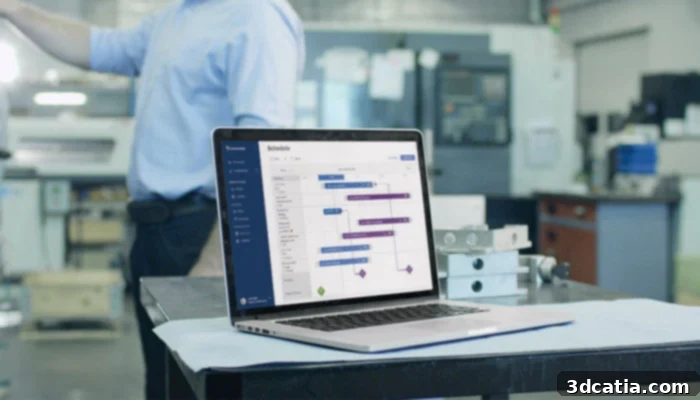
SNCF, the prominent French national railway company, stands as a prime example of a major player embracing additive manufacturing to revolutionize its operations, particularly in the critical area of train maintenance. Facing the constant challenge of ensuring optimal train availability, SNCF recognized the limitations of traditional supply chains for spare parts, which often resulted in lengthy downtimes. By integrating 3D printing into its maintenance protocols, SNCF can now design and produce essential spare parts much more rapidly, drastically reducing repair times and keeping trains operational. Bruno Langlois, Director of Equipment at SNCF, eloquently articulated this strategic shift: “To ensure train availability, SNCF must be able to change a defective component the same day. However, since trains are made up of a large number of parts, we have to manage a large stock. With additive manufacturing, we could reduce it by creating parts as needed.” This foresight led to a significant initiative in 2021, where SNCF announced the integration of 3YOURMIND software. This advanced solution was employed to identify and qualify which of their vast inventory of over 30,000 spare parts could be efficiently 3D printed. Initial findings were impressive: 10.3% of parts were deemed suitable for additive manufacturing, leading to an astonishing 85% reduction in delivery times – statistics that have undoubtedly improved as the technology and its implementation matured. This proactive approach underscores 3D printing’s critical role in mitigating obsolescence risks, streamlining inventory management, and ensuring the uninterrupted service of vital rail networks.
Alstom’s Vision: 3D Printing for Flexible Spare Parts and Reduced Downtime
Alstom, a global leader in the railway sector, has been a vocal proponent of integrating cutting-edge technologies since the unveiling of its “Industry of the Future” program in 2016. Within this visionary framework, additive manufacturing plays a pivotal role, underpinning the group’s firm conviction that 3D technologies add immense value, particularly in enhancing operational flexibility and minimizing costly downtimes. The financial implications of an immobilized train can be substantial, making rapid repair solutions a priority. In a compelling demonstration of this commitment, Alstom presented a practical case study in 2021, focusing on tramways for the Algerian Setif network. Leveraging its specialized 3D printing center, Alstom successfully designed and produced durable drain plugs made of TPU 92A, a highly flexible and resilient material. These plugs were crucial in preventing headlights from breaking due to environmental factors. The efficiency gains were remarkable: a dozen parts were printed within just 48 hours, slashing fixed costs by an impressive 80%. This contrasts sharply with the traditional procurement process, which typically requires a lengthy 45 days to receive replacement parts. Alstom’s application of 3D printing not only illustrates significant cost and time savings but also highlights the ability to create customized solutions with advanced materials that improve component longevity and overall system reliability, contributing to a more robust and responsive global rail infrastructure.
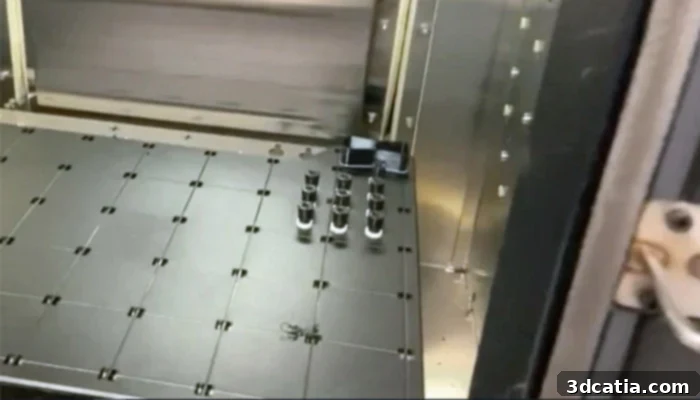
By leveraging 3D printing, Alstom can design faster with a flexible and strong material (photo credits: Alstom)
Polgar Pioneers 3D Printed Seat Prototypes for Rail and Automotive
While primarily known for its contributions to the automotive industry, Polgar has successfully extended its manufacturing expertise to the railway sector, utilizing 3D printing to innovate train components. In a collaborative effort with scanning company Metris 3D, Polgar harnessed the power of Omni3D’s Factory 2.0 industrial 3D printer to produce a prototype train seat. This strategic adoption of additive manufacturing yielded dramatic results, particularly in the realm of prototyping. Polgar reported an astonishing cost reduction of €370,000, representing a remarkable 90 percent saving compared to traditional prototyping methods. Beyond financial benefits, the speed of production was equally transformative. The company was able to complete the complex seat prototype in a mere three weeks, a stark contrast to the 16 weeks typically required by conventional manufacturing. To manage the relatively large dimensions of the seat, the design was intelligently segmented, allowing individual components to be 3D printed separately before being seamlessly assembled. This approach not only optimizes the printing process but also demonstrates the flexibility of additive manufacturing for large-scale parts, proving invaluable for iterative design, material testing, and rapid validation of ergonomic and structural integrity, ultimately accelerating product development cycles in both the automotive and railway industries.
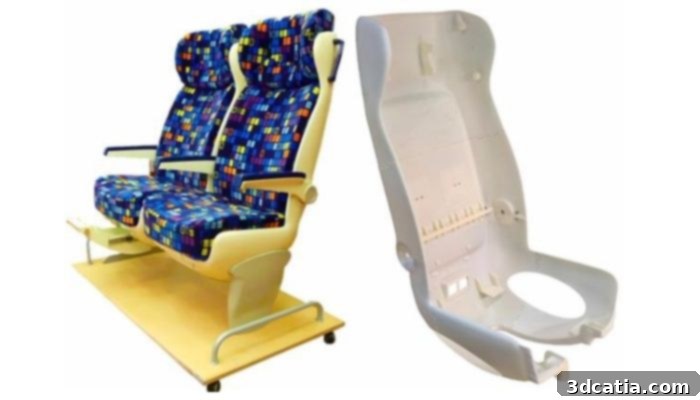
Prototype of the 3D printed seat (photo credits: Polgar)
Renfe Embraces 3D Printing for Agile Spare Parts Production
Renfe, Spain’s leading rail transport company, has established itself as a frontrunner in integrating advanced manufacturing technologies within its manufacturing and maintenance division. Recognizing the immense potential of 3D printing, Renfe has developed a sophisticated pilot center in Madrid dedicated to the development and production of spare parts. This state-of-the-art facility is comprehensively equipped, featuring an area for polymer 3D printing, a specialized section for post-processing, and another dedicated to advanced 3D scanning and reverse engineering solutions. This holistic integration of technologies empowers Renfe to not only create essential spare parts on-demand but also to handle small batch and short series orders with unprecedented agility. The benefits observed since the adoption of these innovative methods are substantial, particularly in terms of significant cost and time savings compared to conventional manufacturing. Renfe’s commitment to these advanced processes is a clear manifestation of its strategic objective to incorporate the most cutting-edge methodologies available in the market. By doing so, Renfe enhances its operational efficiency, reduces dependency on external suppliers, and ensures the long-term viability and modernization of its extensive rail fleet, reinforcing its position as an innovator in the European railway landscape.
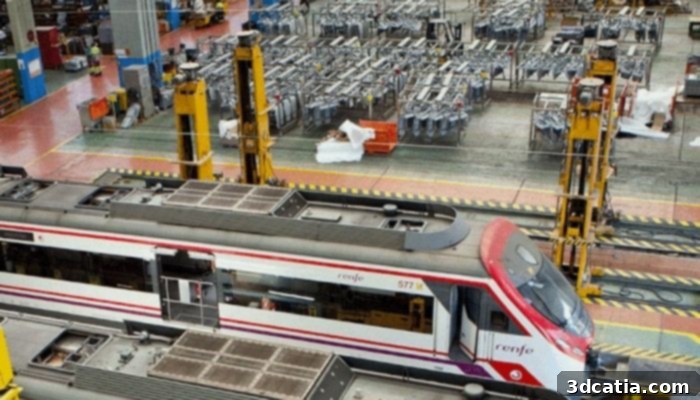
The pilot center located in Madrid (photo credits: Renfe)
The Run2Rail Project: Designing Lighter, Safer, and Quieter Trains with AM
The European Run2Rail project, initiated in 2018 and expertly led by Professor Simon Iwnicki from the Institute of Railways Research (IRR) at the University of Huddersfield, represents a groundbreaking collaborative effort to fundamentally transform train manufacturing processes. At its core, the project seeks to harness the transformative power of 3D printing in conjunction with advanced carbon fiber materials to design and produce trains that are not only lighter but also inherently safer and significantly quieter. By leveraging the unique properties of composite materials and the design freedom offered by additive manufacturing, the project participants are confident in their ability to create parts with highly complex geometries. These components will boast substantially reduced weight while simultaneously offering increased strength and durability. Professor Simon Iwnicki highlights practical applications, explaining that 3D printing is enabling the manufacture of small, yet critical, components such as axle boxes and bearing parts, which are essential for train performance. Bringing together a consortium of no less than 15 European partners, Run2Rail’s ambitious goals extend beyond technical innovation; it also profoundly aims to diminish the ecological footprint of the European railway industry. This includes reducing material waste, improving energy efficiency, and fostering a more sustainable approach to rail transportation through advanced manufacturing techniques.
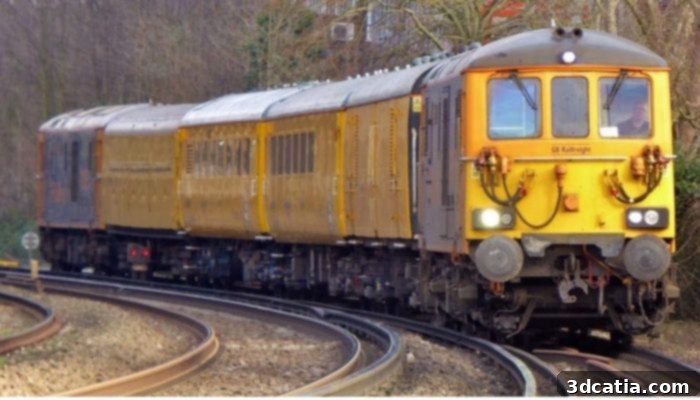
Angel Trains Partners with Stratasys for Next-Generation Train Interiors
Angel Trains, a leading UK-based specialist in train rental and asset management, has forged a strategic partnership with ESG Rail and the additive manufacturing giant Stratasys to redefine the design and production of train interior components. This collaboration is driven by a shared vision to transform the railway industry by offering faster, more efficient, and crucially, more cost-effective manufacturing solutions. The project has already yielded tangible results, with partners successfully designing and 3D printing functional armrests, robust handles, and convenient folding shelves. These components are produced using Stratasys FDM (Fused Deposition Modeling) printers, renowned for their reliability and ability to process high-performance materials. For the materials themselves, Angel Trains has specifically chosen Stratasys’ Antero 800 NA filament. This advanced material, derived from PEKK (Polyetherketoneketone), offers superior properties compared to traditional thermoplastics, including enhanced strength-to-weight ratio, excellent chemical resistance, and critically, outstanding flame, smoke, and toxicity (FST) ratings—essential for railway applications where passenger safety is paramount. This initiative demonstrates how 3D printing can enhance passenger experience through customizable, durable, and quickly deployable interior features, simultaneously optimizing manufacturing processes and reducing lead times for critical railway equipment upgrades and maintenance.
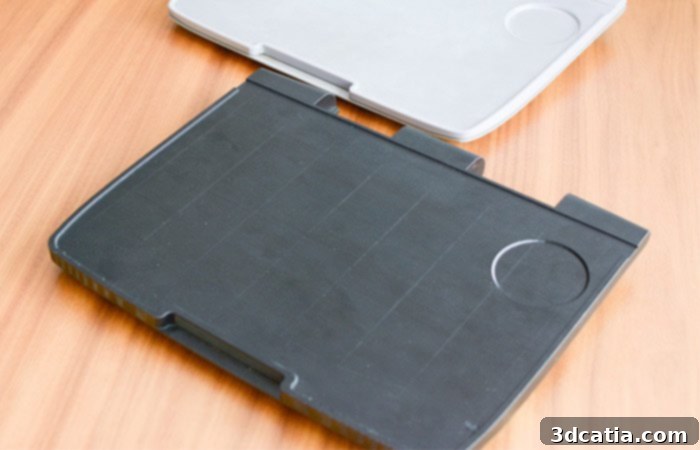
3D printed tablet (photo credits: Angel Trains)
UK’s HS2 High-Speed Rail Network Innovates with Concrete 3D Printing
The High Speed 2 (HS2) project, a monumental undertaking in the United Kingdom since its inception in 2012, is not merely about enhancing the country’s infrastructure but also about establishing a more environmentally conscious option for travelers. With this dual objective, reducing environmental impact and construction costs has been a central driving force behind the project’s execution. To achieve these ambitious goals, SCS JV (Skanska Costain STRABAG Joint Venture), the London tunnels contractor, has strategically turned to concrete 3D printing. This innovative approach, dubbed “Printfrastructure,” combines advanced 3D concrete printing processes with the inclusion of graphene for additional structural strength and durability. SCS JV plans to deploy computer-operated robotic systems to print concrete structures directly on-site. This method offers a multitude of benefits, particularly in sustainability and logistics. By printing structures locally, the project significantly cuts down on carbon emissions associated with the transportation and assembly of pre-fabricated concrete slabs. Furthermore, on-site 3D printing enables work in physically restricted or challenging areas, offering unparalleled flexibility in complex civil engineering projects. HS2’s adoption of concrete 3D printing represents a bold step towards a more efficient, sustainable, and technologically advanced future for large-scale infrastructure development, setting new precedents for railway construction globally.
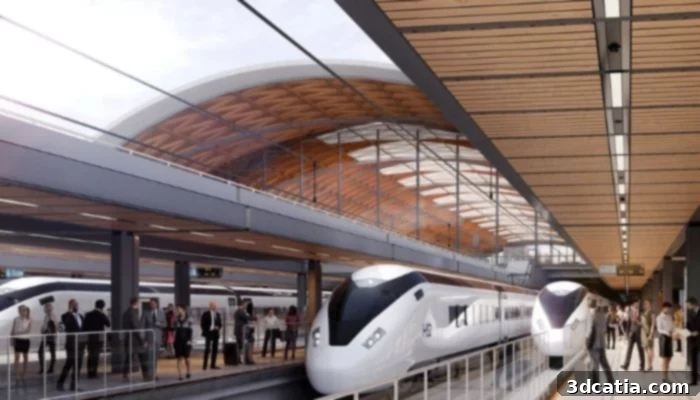
A rendition of what the HS2 could look like once it is completed (photo credits: HS2 Ltd)
Nederlandse Spoorwegen (NS) Embraces 3D Technologies for Train Maintenance
In the Netherlands, the national railway company Nederlandse Spoorwegen (NS) is actively expanding its use of 3D technologies within the railway sector, demonstrating another powerful application of additive manufacturing for crucial train components. NS recently announced the successful 3D printing of 20 distinct parts for its trains, signifying a strategic move towards advanced manufacturing. Their approach is comprehensive, extending beyond mere additive manufacturing to include other vital digital technologies such as 3D scanners and digitization processes. This integrated strategy enables NS to tackle the challenge of reproducing complex and often difficult-to-source parts, such as intricate dashboard frames. By first 3D scanning existing, often aged, models, they can accurately capture original designs, even for components no longer actively manufactured. Subsequently, these digitized designs are used to create new, perfectly fitting components through additive manufacturing. This seamless integration of 3D scanning and printing has brought about remarkable efficiencies for NS, dramatically reducing manufacturing times for replacement parts and streamlining overall maintenance processes. By leveraging these advanced technologies, NS not only ensures the continued operational viability of its diverse train fleet but also establishes a resilient, on-demand supply chain for critical components, enhancing service reliability and reducing long-term operational costs.
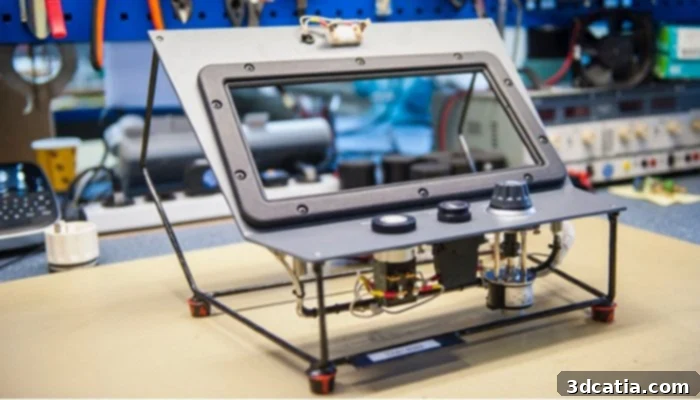
An example of a 3D printed part (photo credits: Nederlandse Spoorwegen)
Bombardier Transportation’s Strategic Partnership with Stratasys for Rail Innovation
Bombardier Transportation, a globally renowned leader in the manufacturing of rail vehicles, has forged a long-standing and impactful partnership with Stratasys, one of the pioneering forces in the 3D printing industry. This strategic collaboration is centered on leveraging Stratasys’ expertise in large-scale additive manufacturing solutions to drive innovation across Bombardier Transportation’s core railway business. Through this partnership, Bombardier Transportation is now able to produce a diverse range of items using 3D printers, including various prototypes for new designs, specialized tools for manufacturing and assembly, and even final, functional parts for both trains and streetcars. The adoption of additive manufacturing brings significant benefits in terms of both cost and time efficiency. For example, the Stratasys F900 3D printer, with its impressive build volume of 914 x 610 x 914 mm, is particularly well-suited for Bombardier Transportation’s needs. This large-format machine enables the efficient 3D printing of substantial components such as air ducts, robust protective housings, and intricate cable trays. Furthermore, 3D printing facilitates the high degree of customization often required for rail parts, allowing for tailor-made solutions that perfectly fit specific operational demands or older vehicle models. This capability significantly reduces lead times for parts, minimizes inventory, and enhances the agility of Bombardier Transportation’s production and maintenance workflows, solidifying its position at the forefront of rail vehicle innovation.
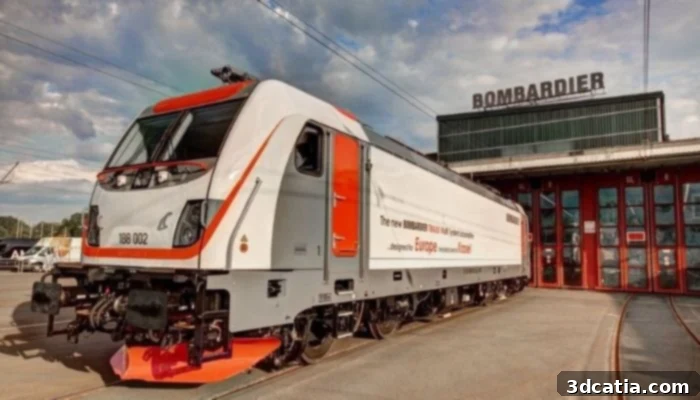
The company is leveraging the synergies of additive manufacturing by using the Stratasys F900 (photo credits: Bombardier Transportation)
Mobility Goes Additive (MGA) Democratizes 3D Printing in Mobility
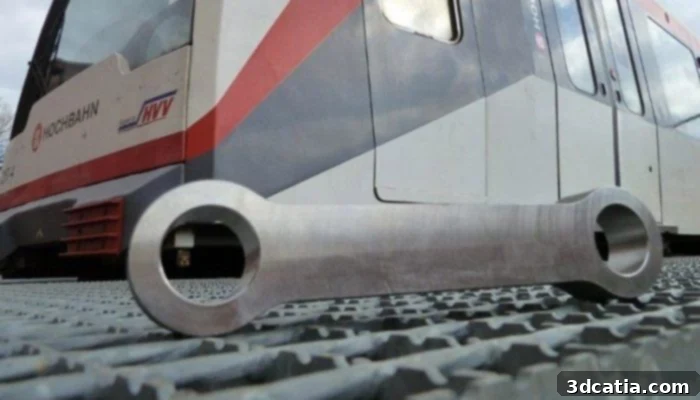
Mobility Goes Additive (MGA), a dynamic Berlin-based network founded in 2017, has a clear and ambitious goal: to democratize the use of 3D printing within the railway sector and the broader mobility industry. MGA acts as a crucial facilitator, connecting industry players, research institutions, and technology providers to accelerate the adoption and standardization of additive manufacturing. Their efforts have already led to remarkable successes, most notably in 2019, when a significant milestone was achieved with the approval of the first safety-relevant 3D-printed component for the railroad sector. This groundbreaking achievement involved a metal brake suspension, which is now fully operational in a Hamburg subway. The approval of such a critical safety part underscores the maturity and reliability that 3D printing can offer when implemented correctly and rigorously tested. This success was made possible through a collaborative synergy involving several key partners: Siemens Mobility, Deutsche Bahn AG, and the Fraunhofer Institute, all working together to push the boundaries of what is achievable with additive manufacturing in rail. Before its final approval, the 3D-printed brake component underwent rigorous quality assurance checks performed by TÜV, an independent German technical inspection association, which it successfully passed. MGA’s pioneering work is not only advancing technology but also building trust and paving the way for wider acceptance and integration of 3D printing into the stringent safety standards of the railway and mobility sectors.
Union Pacific Integrates 3D Printing for Safer and More Efficient Freight Operations
In the United States, where commercial rail transportation predominantly focuses on freight shipments rather than passenger services, railroads play an indispensable and critical role in the nation’s economy. Union Pacific (UP), one of the largest and most extensive freight railroads in North America, operates an impressive fleet of 8,300 locomotives across a vast network of 32,300 miles (51,800 km) spanning 23 states. Recognizing the strategic importance of operational efficiency and safety, Union Pacific began exploring and integrating additive manufacturing as early as 2013. While the company has kept specific details of its 3D printing technologies under wraps, it is widely acknowledged that UP has extensively utilized 3D printing, particularly for rapid prototyping. This application allows engineers to quickly design, test, and iterate on new components, improvements, and specialized tools without the high costs and long lead times associated with traditional manufacturing. By streamlining the prototyping phase, Union Pacific can accelerate the development of solutions that enhance locomotive operations, improve safety features for its massive fleet, and ultimately contribute to more reliable and efficient freight transport across the American continent. The early adoption by such a critical freight carrier highlights 3D printing’s versatile utility, even in sectors with rigorous regulatory and operational demands, underscoring its long-term strategic value for heavy industry.
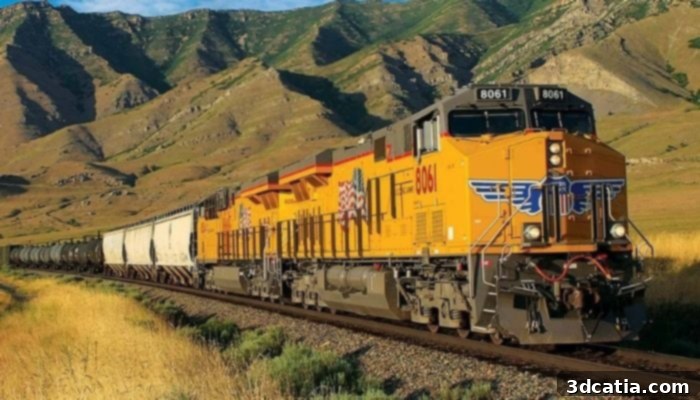
Photo Credits: Union Pacific Railroad Company
CAF Utilizes Additive Manufacturing for Advanced Train Components
CAF Manufacturing, a renowned Spanish company specializing in the production of trains and railway equipment, has seen its subsidiary, RL Components, make significant strides in integrating additive manufacturing into its core operations. A few years ago, RL Components collaborated with the Zaragoza Tramway project to develop the first light rail vehicle that prominently featured a series of 3D-printed front-end components. This pioneering initiative involved the meticulous design and manufacturing of various parts specifically for the CAF Urbos vehicle. A key aspect of this project was the use of advanced polymer 3D printing, with materials carefully selected to comply with the most stringent rail industry regulations, particularly concerning fire and smoke performance. This adherence to rigorous safety standards is crucial for ensuring passenger safety and regulatory compliance. Beyond initial manufacturing, this technology is also proving to be a highly competitive alternative for the supply of spare parts. The ability to produce parts on-demand, with specific material properties, significantly enhances supply chain flexibility and reduces lead times. Furthermore, RL Components showcased its comprehensive capabilities by successfully applying reverse engineering techniques to these spare parts, utilizing advanced 3D scanning. This ensures that even complex, legacy components can be accurately reproduced and integrated, extending the lifespan of existing rail assets and minimizing obsolescence risks.
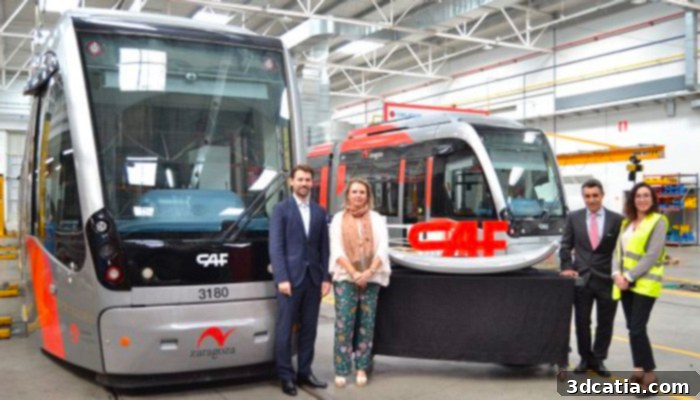
The team behind the project (photo credits: CAF Manufacturing / Zaragoza Tramway)
Siemens Mobility Services Leverages Fortus 450mc for Agile Production
Siemens Mobility Services, a global leader in providing solutions for efficient and sustainable rail transport, has been a steadfast proponent of 3D printing since 2020. From the outset, the company has strategically employed the Fortus 450mc 3D printer, developed by Stratasys, to facilitate innovative manufacturing within the rail industry. The rationale behind Siemens Mobility Services’ investment is unequivocal: additive manufacturing empowers the company to operate with greater agility and efficiency in both the production of critical components and their ongoing maintenance. A significant challenge in the rail sector arises from the fact that certain older train models and their associated spare parts are often no longer produced through conventional means. This can severely complicate repair work, leading to extended downtimes and increased costs. However, 3D printing offers a transformative solution, enabling Siemens Mobility Services to produce the exact parts it needs, ad hoc and in individualized series. This on-demand production capability eliminates the need for large bulk orders and resolves persistent storage problems associated with extensive physical inventories. By embracing this technology, Siemens Mobility Services not only ensures the continued functionality of diverse train fleets but also significantly enhances its responsiveness to maintenance demands, thereby improving operational reliability and optimizing resource allocation within the complex landscape of rail transport.
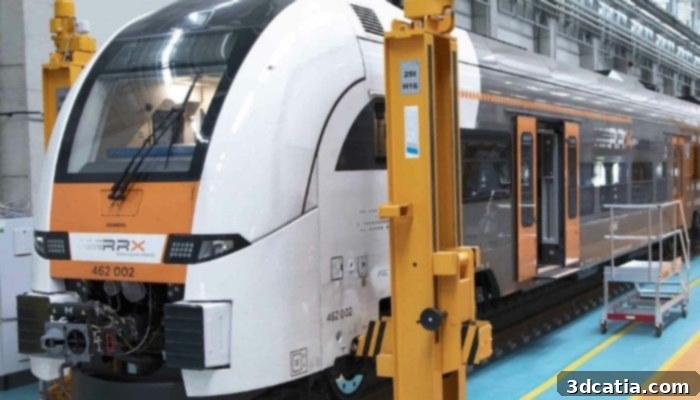
Siemens Mobility Services uses technology from 3D printing company Stratasys (photo credits: Siemens Mobility Services)
Deutsche Bahn Champions Additive Manufacturing for Future-Proof Rail Operations
Deutsche Bahn, Germany’s national railway company and a recognized leader in European rail transport, has consistently demonstrated its commitment to innovation, clearly evidenced by its intensive adoption and strategic use of large-format 3D printers. The German rail giant primarily leverages additive manufacturing to enhance the efficiency and speed of its extensive train maintenance operations. This includes not only producing specialized tools for train repair but also fabricating individual plastic spare parts on-demand. As early as 2021, Deutsche Bahn publicly affirmed its reliance on this key technology, recognizing its capacity to ensure that necessary spare parts are readily available, precisely when and where they are needed. This approach significantly mitigates the impact of global supply chain disruptions and raw material shortages, providing unparalleled resilience. Furthermore, Deutsche Bahn highlights that the integration of additive manufacturing for its rail sector needs is not only faster and more resource-efficient but, in many cases, also more cost-effective than traditional manufacturing methods. By embracing 3D printing, Deutsche Bahn is actively modernizing its maintenance infrastructure, reducing waste, and fostering a more sustainable and economically viable operational model for the future of rail transport in Germany and beyond.
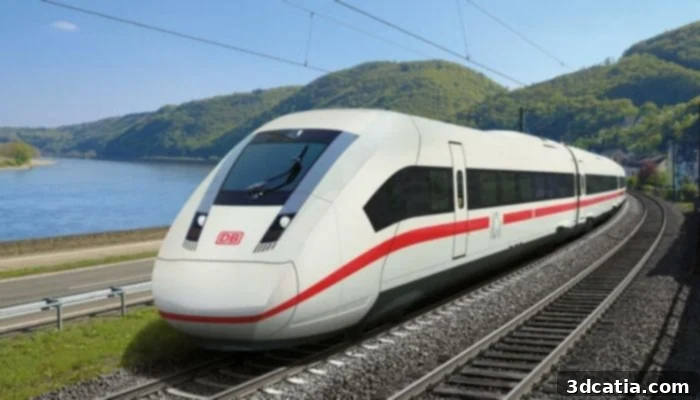
The Deutsche Bahn is known for its innovativeness (photo credits: Deutsche Bahn)
The extensive applications of 3D printing across the railway sector, as demonstrated by these leading companies and pioneering projects, underscore its transformative potential. From accelerating maintenance and mitigating obsolescence to enabling the design of lighter, safer, and more sustainable trains, additive manufacturing is undeniably shaping the future of rail transport. Its ability to deliver cost savings, reduce lead times, and offer unprecedented design freedom makes it an indispensable tool for the industry’s continued evolution. As technology advances further, we can expect even broader integration and more innovative uses of 3D printing in railways worldwide. What are your thoughts on these innovative 3D printing applications in the railway sector? Let us know in a comment below or on our Linkedin, Facebook, and Twitter pages! Don’t forget to sign up for our free weekly Newsletter here, the latest 3D printing news straight to your inbox! You can also find all our videos on our YouTube channel.