

Additive Manufacturing’s Crucial Role: Navigating COVID-19’s Impact and Pioneering Solutions
The global landscape underwent unprecedented shifts in early 2020, profoundly impacting industries worldwide, and the additive manufacturing (AM) sector was no exception. As concerns over the rapid spread of the Coronavirus (COVID-19) escalated, significant events vital to the additive manufacturing community faced difficult decisions regarding their annual gatherings. These postponements served as a clear indicator of the gravity of the situation and the commitment of industry leaders to prioritize public health and safety above all else. The initial waves of the pandemic brought with them uncertainty, but also highlighted the inherent adaptability and resilience of the additive manufacturing ecosystem.
Major Industry Events Postponed: A Precautionary Measure
One of the first major announcements came from the Additive Manufacturing Users Group (AMUG), a pivotal event renowned for bringing together hundreds of additive manufacturing experts and enthusiasts. The AMUG Conference is more than just a trade show; it’s a unique forum for knowledge sharing, technical discussions, and collaborative innovation among a deeply engaged community. Consequently, the decision to postpone the AMUG Conference to 2021 was not made lightly. Carl Dekker, AMUG President, articulated the sentiment behind the move, stating, “This was a very difficult decision, but the Board of Directors agreed that in the best interest of our members and those that support the event we will postpone our annual Conference and Business Meeting.” This decisive action underscored the industry’s responsible approach to the evolving health crisis, setting a precedent for other major events to follow suit.
Shortly after, the additive manufacturing world received another significant announcement: RAPID + TCT, arguably the largest and most influential trade show in the sector, would also be postponed to 2021. Attracting thousands of attendees annually, RAPID + TCT serves as a critical platform for showcasing cutting-edge technologies, fostering business partnerships, and charting the future direction of additive manufacturing. The postponement of such a cornerstone event reverberated throughout the industry, impacting exhibitors, attendees, and partners globally. Duncan Wood, CEO of Rapid News Publications Ltd., acknowledged the challenging circumstances, saying, “In unprecedented and extremely fast-moving circumstances, we actively participated in and supported the difficult decision to postpone this important event. We are all aware that this decision will require industry professionals, exhibitors, partners, and visitors from around the world to reschedule their attendance, which will have an impact on their organizations as it will for SME and Rapid News Group. We are grateful that given the current situation the international community has showed great understanding and supported our collective decision, and we look forward to a successful 2021 event in Chicago.” These postponements, while disruptive, underscored a unified commitment to collective well-being, pushing the industry to find new ways to connect and collaborate.
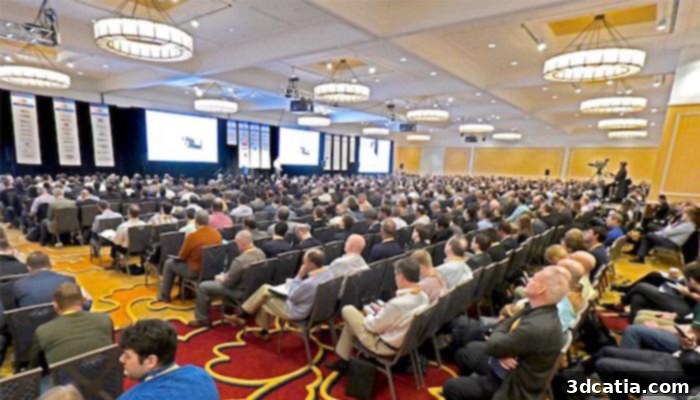
The AMUG conference was postponed to next year due to the Coronavirus
Additive Manufacturing Pivots to Crisis Response: Innovative Solutions Emerge
Amidst the cancellations and postponements, the additive manufacturing community quickly pivoted its focus, leveraging its unique capabilities to address the emerging challenges presented by the pandemic. The agility and flexibility of 3D printing technology, particularly its ability to produce complex parts rapidly and on-demand, proved invaluable in a time of unprecedented supply chain disruptions and urgent medical needs. This period saw a surge in innovation, with companies and individuals alike harnessing additive manufacturing to develop practical solutions designed to contain the virus’s spread and support healthcare workers on the front lines.
Materialise’s Open-Source 3D Printed Door Opener
One of the most widely recognized and impactful innovations came from the Belgium-based 3D printing company, Materialise. Recognizing the potential for door handles to be significant points of contamination—a belief shared by many experts who noted the virus’s ability to survive on surfaces for extended periods—Materialise designed a clever 3D printed door opener. This ingenious device allows individuals to open and close doors using their arm, completely eliminating the need for direct hand contact with potentially infected surfaces. This simple yet highly effective solution immediately gained traction due to its practical application in reducing virus transmission.
What truly amplified the impact of Materialise’s initiative was their decision to make the printable design freely available to the public. By embracing an open-source model, Materialise issued a powerful call to action to the global 3D printing community, encouraging individuals and organizations worldwide to 3D print the door opener and distribute it locally. This approach epitomized the collaborative spirit of the additive manufacturing sector during the crisis. Fried Vancraen, CEO of Materialise, emphasized the power of digital distribution and decentralized manufacturing: “By making the design available digitally, it can be produced on 3D printers everywhere and become available around the world in a matter of hours. In this case, we designed the product in Belgium and people in China, Europe or the U.S. can now 3D print the door opener locally.” This demonstrated how additive manufacturing could facilitate rapid, localized production of essential items, bypassing traditional, often bottlenecked, supply chains.
Community-Driven Mask Production in Italy
In Italy, which faced one of Europe’s most severe initial outbreaks, the urgency for personal protective equipment (PPE) was particularly acute. The dramatic shortage of face masks, coupled with exorbitant prices for those that could be found, spurred a remarkable grassroots effort known as the Pugliese-Sicilian open-source mask project. This initiative was born out of necessity and a deep desire to empower citizens to protect themselves and their communities. A dedicated Italian team established a web platform where users could freely download the digital files required to 3D print masks at home or in local makerspaces.
The team behind this project articulated their vision: “In this scenario we decided to force the system of production and large-scale distribution by creating a completely open-source project that everyone can draw on, improving it, spreading it, finding application even beyond the COVID-19 alarm.” This statement highlights a fundamental shift in thinking—moving away from traditional, centralized production models towards a more distributed, community-driven approach. The open-source nature of the project not only provided immediate relief for the mask shortage but also fostered continuous improvement and adaptation of the designs, showcasing the collective intelligence and problem-solving capabilities of the 3D printing community. These efforts significantly complemented official supply chains, providing crucial support during a critical period.

The 3D printed door opener from Materialise to protect against the Coronavirus
3D Printing Critical ICU Valves: A Lifesaving Intervention
Perhaps one of the most compelling demonstrations of additive manufacturing’s life-saving potential occurred in a hospital in Brescia, Italy. Faced with an acute and critical shortage of Intensive Care Unit (ICU) valves—essential components for respiratory support devices—the hospital found itself in a dire situation. In such high-stakes environments, the ability to find a rapid, reliable solution is paramount. This is precisely where 3D printing technologies proved to be revolutionary.
Responding with incredible speed and ingenuity, a team of Italian researchers and 3D printing experts mobilized. Within an astonishingly short timeframe, 3D printers were brought directly to the hospital. CAD software was utilized to rapidly design the critically needed valves, which were then immediately 3D printed. Massimo Temporelli, the founder of The FabLab in Milan, played a key role in this expedited procedure. He proudly reported that the system, incorporating these rapidly produced 3D printed valves, functioned perfectly. At the time of reporting, ten patients were successfully using these life-saving components. This rapid response not only averted a potential crisis but also highlighted the immense value of additive manufacturing in emergency healthcare scenarios, offering a blueprint for future rapid medical supply chain interventions.
The Enduring Impact and Future of Additive Manufacturing in Crisis
The COVID-19 pandemic served as a crucible, testing the limits of global supply chains and demanding unprecedented levels of innovation. In this challenging environment, additive manufacturing emerged not just as a niche technology, but as a critical tool for rapid response, decentralized production, and localized problem-solving. The examples of event postponements, the Materialise door opener, the Italian open-source masks, and the 3D printed ICU valves collectively paint a picture of an industry that quickly adapted, innovated, and collaborated to make a tangible difference in a time of global crisis. These developments showcased AM’s ability to swiftly transition from conceptual design to functional prototypes and even end-use parts, often bypassing traditional manufacturing lead times and geographic limitations.
The lessons learned during this period are profound. They underscore the importance of resilient, flexible supply chains, the power of open-source collaboration, and the critical role that advanced manufacturing technologies like 3D printing can play in national and global emergencies. As the world continues to navigate complex challenges, the insights gained from additive manufacturing’s response to COVID-19 will undoubtedly shape its future trajectory, cementing its position as an indispensable technology for innovation, crisis mitigation, and sustainable production. The industry’s ability to quickly pivot and deliver impactful solutions under extreme pressure not only saved lives and provided comfort but also solidified its reputation as a vital component of modern industrial capability.
What do you think of these pivotal developments and the future role of additive manufacturing in crisis response? We invite you to share your thoughts and insights in a comment below or join the conversation on our Facebook and Twitter pages! Don’t forget to sign up for our free weekly Newsletter, to receive all the latest news and innovations in 3D printing delivered straight to your inbox!