
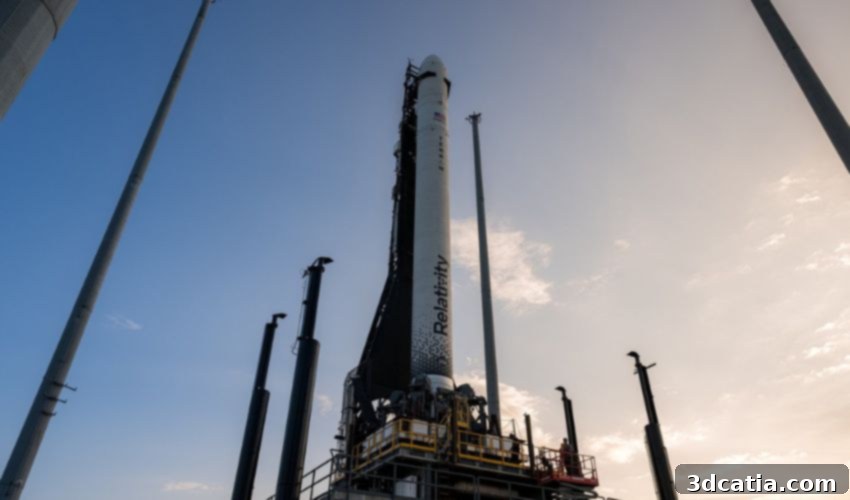
Eric Schmidt Steers Relativity Space Towards a New Frontier in 3D-Printed Reusable Rockets
The aerospace industry is witnessing a seismic shift as Eric Schmidt, the visionary leader credited with transforming Google into a global technology behemoth during his tenure as CEO from 2001 to 2011, takes the reins as Chief Executive Officer of Relativity Space. This landmark announcement, first reported by The New York Times, is further underscored by a significant personal investment from Schmidt into the ambitious reusable rocket startup. His appointment marks a pivotal moment for Relativity Space, signaling a renewed focus on innovation, market acceleration, and global expansion, building upon its pioneering work in advanced manufacturing for space exploration. Schmidt will succeed founder Tim Ellis, who will continue to contribute his expertise as a valued member of the board, ensuring continuity and leveraging his deep understanding of the company’s foundational technology and vision.
Relativity Space, established nine years ago in the vibrant innovation hub of Long Beach, California, has rapidly distinguished itself within the competitive space sector. The company’s unique approach centers on the revolutionary integration of cutting-edge technologies, including industrial-scale 3D printing, sophisticated robotics, and advanced artificial intelligence, all applied to the complex and demanding process of rocket manufacturing. This commitment to additive manufacturing has allowed Relativity Space to push the boundaries of design flexibility, material efficiency, and production speed previously unattainable with conventional methods. In a significant display of its technological prowess, the company made headlines in 2023 with the inaugural launch of Terran 1. While the nearly 85% 3D-printed rocket ultimately did not achieve orbit, the mission served as an invaluable proof-of-concept, demonstrating the viability and potential of large-scale additive manufacturing for aerospace applications. The insights gleaned from Terran 1’s flight have since propelled the company’s relentless focus on the development of its successor, the Terran R, an even more ambitious and fully reusable rocket designed to meet the escalating demands of modern space missions.

Eric Schmidt will be leading Relativity Space (photo credits: L’Express)
Relativity Space’s Evolving Strategy: The Terran R and a Hybrid Manufacturing Future
Following the public demonstration of Terran 1, Relativity Space entered a period of strategic refinement and intense development, maintaining a relatively low profile as it concentrated resources on its next-generation launch vehicle. The industry keenly awaited updates on the Terran R, understanding that significant progress was underway behind the scenes. Just recently, the company broke its silence with a comprehensive press release, providing critical insights into the advancements made on the Terran R program, while openly addressing the remaining technical challenges before its anticipated maiden flight. A particularly noteworthy revelation from this update is a significant evolution in Relativity Space’s manufacturing strategy, reflecting a pragmatic and optimized approach to bring the Terran R to market efficiently and reliably.
In a move designed to significantly accelerate the commercialization timeline of the Terran R and enhance its performance, Relativity Space has strategically embraced a hybrid manufacturing approach. This refined strategy intelligently combines the proven strengths of traditional manufacturing techniques with the innovative advantages of advanced additive manufacturing. Under this new paradigm, the primary structures of the Terran R rocket, which require exceptional strength and reliability, will now be fabricated from high-strength aluminum alloys. These components will be joined using friction stir welding techniques, a solid-state joining process known for producing high-quality, low-distortion welds in aerospace-grade aluminum. Simultaneously, the company remains deeply committed to additive manufacturing for critical, complex components, particularly for its advanced Aeon R engines. These sophisticated engines will continue to leverage the power of powder bed fusion (PBF) and wire arc additive manufacturing (WAAM), processes that excel at creating intricate geometries, reducing part count, and utilizing advanced materials with superior performance characteristics for propulsion systems.
Kevin Wu, Relativity Space’s chief technology officer, elaborated on the strategic rationale behind this pivotal decision. He emphasized that the company’s objective is to optimize both speed to market and the overall performance capabilities of the Terran R rocket. Wu articulated, “We are focused on making a high-performance, scalable, and cost-effective launch vehicle for our customers. To deliver on that mission, we are using both additive and traditional manufacturing methods in-house while strategically outsourcing certain components to trusted vendors. This hybrid approach is the right decision for the early days of the Terran R program, optimizing for speed to market.” This statement underscores a mature understanding of aerospace production, where flexibility and efficiency are paramount. By judiciously selecting the most appropriate manufacturing method for each component, Relativity Space aims to capitalize on the unique benefits of both traditional and additive processes, ensuring robust performance, accelerated development cycles, and competitive pricing for its launch services.
This strategic manufacturing shift represents a significant evolution in Relativity Space’s core philosophy, which initially championed 3D printing as the singular backbone of its entire production strategy. While additive manufacturing remains fundamental to their innovation, the company recognizes that achieving its aggressive goals – attracting substantial investment, meeting a burgeoning demand for launch services, and delivering a highly competitive rocket – requires a flexible and optimized approach. The hybrid model allows Relativity to leverage the best of both worlds, ensuring structural integrity, rapid production, and cost efficiency. Beyond this manufacturing pivot, Relativity has also proudly announced several other critical development milestones. These include the successful completion of the design and rigorous testing phases for the entire primary structure of the Terran R, the thrust structure responsible for channeling engine power, the barrels that form the rocket’s body, the rocket domes, the sophisticated avionics controlling flight, essential fluid systems, comprehensive test systems, and even the launch pad infrastructure itself. These achievements collectively signify that the Terran R program has moved well beyond conceptual design and into advanced readiness for manufacturing and assembly, paving the way for its anticipated debut.
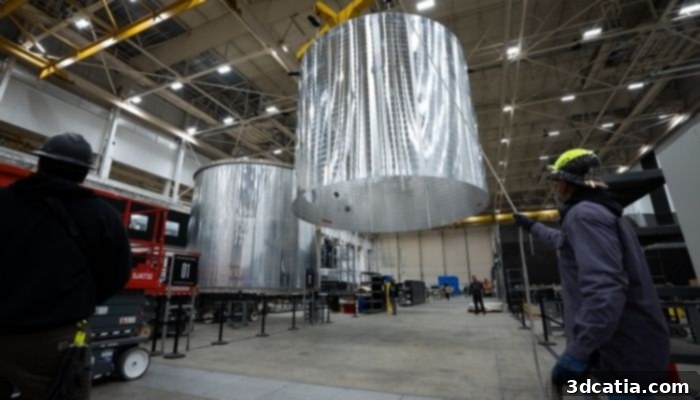
Relativity Space has completed the design phase and revisions and are ready to begin manufacturing the hardware for Terran R (photo credits: Relativity Space)
Eric Schmidt’s Leadership and Relativity’s Bright Future in Space Exploration
The arrival of Eric Schmidt as CEO could not have been timed more perfectly. With an impressive order backlog exceeding $2.9 billion and a rapidly expanding global market hungry for reliable and cost-effective launch solutions, Relativity Space finds itself at a truly pivotal juncture. Schmidt’s extensive experience at Google, where he scaled an innovative startup into a multinational technology powerhouse, offers invaluable strategic guidance. His leadership is expected to bring not only enhanced financial stability through his direct investment and robust fundraising capabilities but also an unparalleled network of contacts within the technology, finance, and government sectors. This global expertise in business expansion and navigating complex markets will be instrumental in positioning Relativity Space as a dominant force in the increasingly competitive aerospace landscape. Schmidt’s reputation for fostering innovation and his deep understanding of scaling disruptive technologies will undoubtedly accelerate Terran R’s development and market penetration.
The highly anticipated inaugural launch of the Terran R is strategically scheduled for the end of 2026, originating from Relativity Space’s state-of-the-art launch pad in Cape Canaveral, Florida. This event is poised to be a landmark occasion, representing a critical milestone not only in the evolution of Relativity Space as a company but also in the broader context of competition within the aerospace sector. A successful launch would validate Relativity’s hybrid manufacturing strategy and its commitment to reusable rocket technology, showcasing its ability to challenge established players. With the dynamic combination of Schmidt’s seasoned leadership, a refined and optimized manufacturing strategy, and a powerful, fully reusable rocket in the Terran R, Relativity Space is exceptionally well-positioned to consolidate its standing as a key player in the exciting new era of space exploration. The company is actively preparing to contend with industry giants such as SpaceX, Rocket Lab, and Blue Origin, each pushing the boundaries of access to space. For more detailed information on their progress and vision, you can explore Relativity Space’s official press releases HERE.
What are your thoughts on Eric Schmidt taking the helm at Relativity Space and the company’s evolving strategy? We invite you to share your insights in a comment below or join the conversation on our LinkedIn, Facebook, and Twitter pages! Don’t miss out on the latest advancements in additive manufacturing and aerospace; sign up for our free weekly Newsletter here, delivering the freshest 3D printing news directly to your inbox. If your interests lie specifically in aerospace and defense news, you can find a dedicated section with comprehensive coverage here.
*Cover Photo Credits: Relativity Space