
ADAM’s Innovation in 3D Printed Bone Implants: Reshaping Regenerative Medicine
Emerging from the innovative ecosystem of Ukraine in 2018, ADAM, a pioneering venture born from the collaboration between 3D printing company Kwambio and WeFund Ventures, is at the forefront of developing on-demand 3D printed bone implants. The genesis of ADAM was driven by an exceptionally ambitious vision: to establish an infrastructure akin to a “car shop,” where any part of the human body could be treated as a replaceable component, readily manufactured and integrated. While this initial, expansive concept laid the groundwork, the ADAM team strategically refined their focus, channeling their expertise and resources specifically into the complex domain of bone implants. This deliberate pivot allowed them to concentrate on developing specialized solutions for musculoskeletal health. Through intensive research and development, ADAM has successfully engineered proprietary 3D printing technology complemented by advanced material composites tailored for these implants. These cutting-edge materials primarily consist of biocompatible polymers and bioceramic compounds, carefully selected for their ability to integrate seamlessly with the human body and promote bone regeneration. A significant milestone in their journey was the successful completion of pre-clinical trials, where the first prototypes of their bone implants demonstrated promising results in wistar rats, marking a crucial step towards human application and validation of their innovative approach.
From Vision to Reality: Pioneering Patient-Specific Bone Implants
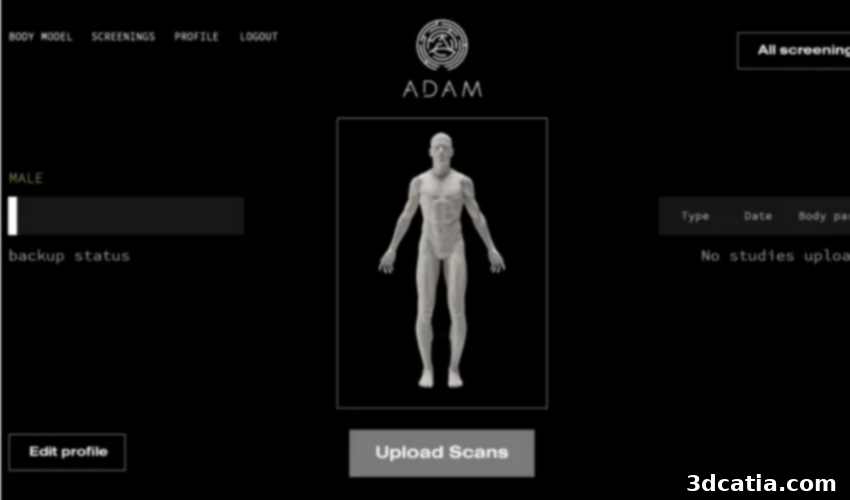
The medical field has long grappled with the challenges of producing highly customized implants efficiently and affordably. Traditional methods often involve lengthy lead times, high costs, and limited customization options, leading to suboptimal patient outcomes. ADAM’s solution directly addresses these critical pain points by leveraging the transformative power of additive manufacturing (AM). Their envisioned system is designed not only to facilitate the precise production of implants but also to fundamentally streamline the entire surgical planning process. This integration of AM is rapidly becoming an indispensable part of a clinician’s routine, enabling the development of patient-specific solutions that are not only rapid and tailor-made but also remarkably cost-effective. ADAM’s digital platform represents a cornerstone of this innovation. Patients can securely upload and store their vital medical imaging data, such as MRI and CAT scans, on this robust and protected online portal. This secure data infrastructure is critical for protecting patient privacy and ensuring data integrity. When a patient requires a bone implant, certified clinicians gain access to this platform, where they can utilize the advanced tools to generate a highly accurate 3D model of the implant. This model is meticulously crafted based directly on the patient’s unique anatomical data, ensuring an unparalleled level of personalization and fit. This bespoke approach minimizes the need for extensive intraoperative adjustments, thereby reducing surgical time, improving patient comfort, and accelerating recovery.
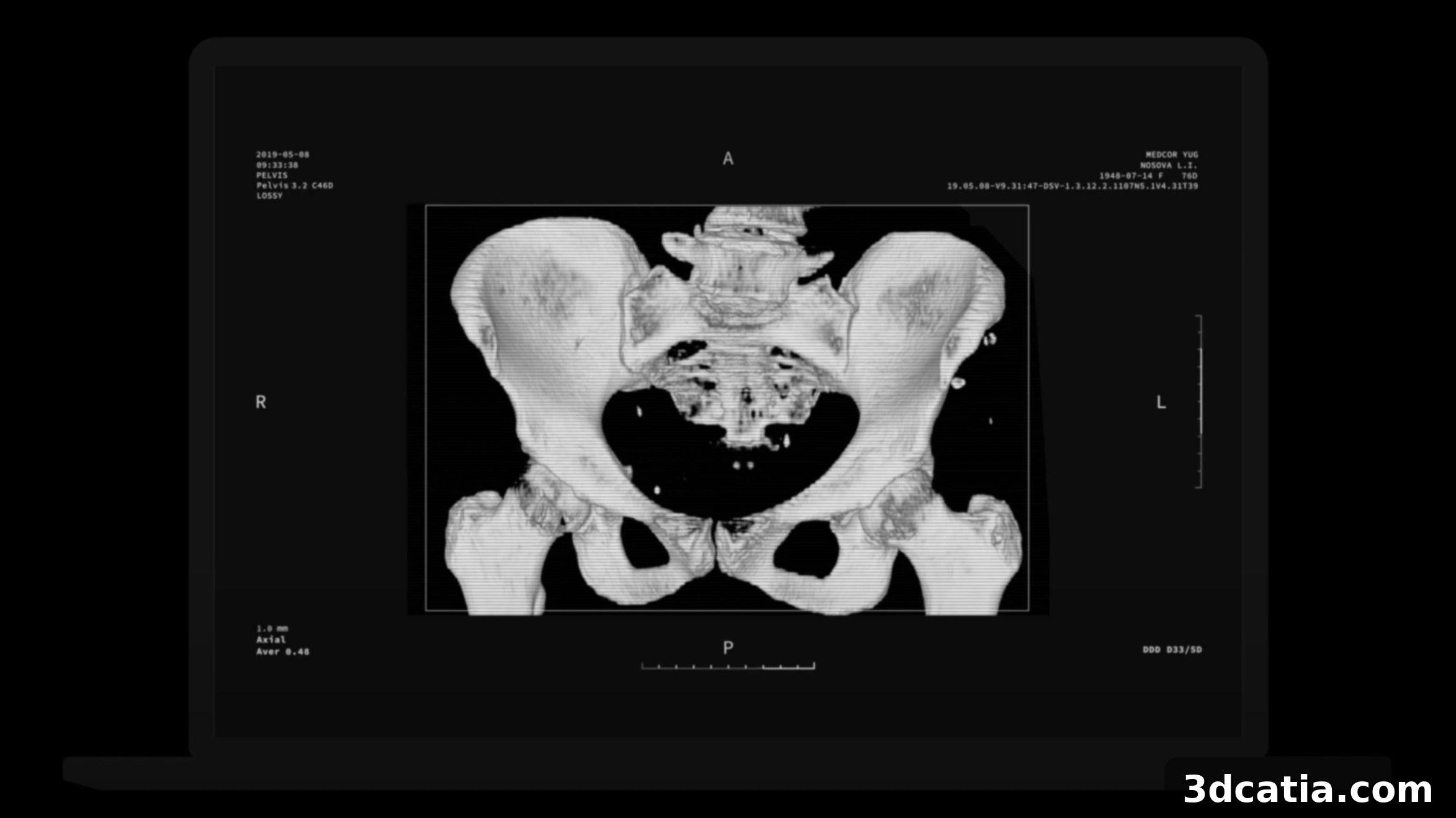
Image taken from Youtube video
Advanced Materials and Rapid, Cost-Effective Production
Once the highly precise 3D model of the patient-specific bone implant is finalized on ADAM’s digital platform, it is immediately ready for production. This pivotal stage utilizes ADAM’s proprietary 3D printers, which are specifically optimized for their unique material composites. The flexibility of ADAM’s operational model allows for production to occur either directly at ADAM’s specialized facilities or, significantly, on-site at partner locations, depending on logistical preference and specific requirements. This adaptable manufacturing approach offers substantial benefits in terms of supply chain efficiency and responsiveness. A defining characteristic of ADAM’s technology is its unprecedented production speed. A custom implant can be printed in approximately 24 hours, a timeline that represents a substantial leap forward when compared to existing, often cumbersome, alternatives in traditional implant manufacturing. Conventional methods for producing custom implants can take weeks or even months, involving multiple design iterations, material procurement, and complex machining processes. ADAM’s rapid turnaround drastically cuts down waiting times for patients, accelerating their journey to recovery and reducing the overall burden on healthcare systems.
Beyond speed, the choice of material composites – primarily biopolymers and bioceramics – offers significant advantages. These materials are not only biocompatible, meaning they are well-tolerated by the human body, but they are also designed to encourage cellular growth and integration with surrounding bone tissue, ultimately leading to a more natural and durable repair. In contrast, traditional implant materials like titanium and PEEK (polyether ether ketone), while highly effective, often present higher manufacturing costs and may not offer the same level of osteointegration. The use of ADAM’s specialized composites thus results in a considerably lower cost of production compared to implants made from titanium or PEEK. This cost-effectiveness is a game-changer for healthcare providers, potentially making high-quality, personalized bone implants more accessible to a broader range of patients. Furthermore, the ability to print implants with intricate internal structures, such as porous scaffolds, fosters better vascularization and bone ingrowth, enhancing the long-term success and functionality of the implant. ADAM’s comprehensive approach, combining rapid production with advanced, cost-effective materials, positions them as a key innovator in the personalized medicine landscape.
Strategic Regulatory Milestones: FDA Q-Submission and 510(k) Eligibility
Bringing a novel medical device to market, particularly one involving advanced materials and 3D printing for human implantation, requires navigating a rigorous regulatory landscape. Recognizing this, the ADAM team has made significant strides in engaging with regulatory bodies. Following the successful outcomes of their pre-clinical trials, ADAM took a crucial step by filing a Q-Submission to the U.S. Food and Drug Administration (FDA). The FDA’s Q-Submission Program is a vital pathway that provides medical device developers with an invaluable opportunity for early collaboration and constructive discussions with the agency regarding their upcoming medical device submissions. This proactive engagement allows companies to gain clarity on regulatory expectations, address potential concerns early in the development cycle, and refine their strategies for eventual market approval. It streamlines the review process and helps prevent costly delays down the line. In their formal response to ADAM’s Q-Submission, the FDA provided critical confirmation: ADAM’s biopolymer and bioceramic bone implants were deemed eligible for the 510(k) pathway. This determination is a major regulatory victory. The 510(k) premarket notification requires device manufacturers to demonstrate that their device is “substantially equivalent” to another legally marketed device in the U.S., known as a “predicate device.” This does not necessarily mean identical, but rather that the new device is as safe and effective as the predicate device, with the same intended use. Achieving 510(k) eligibility significantly de-risks ADAM’s path to market entry, underscoring the potential and safety profile of their innovative 3D printed bone implants and validating their scientific and engineering efforts.
The Horizon of Bioprinting: Expanding ADAM’s Vision Beyond Bone
With the promising progress in regulatory discussions and pre-clinical trials, ADAM is setting a clear and ambitious roadmap for the coming years. The company plans to dedicate 2021 to completing the comprehensive animal studies required by the FDA, a critical phase that will further validate the long-term safety, efficacy, and integration of their bone implants in a living system. Following the successful conclusion of these studies, the next pivotal objective for ADAM is to receive full regulatory clearance for their 3D printed bone implants. This clearance will be the green light for them to transition into the sales stage, with a projected launch in 2022. This anticipated market entry will mark a momentous achievement, bringing their innovative, patient-specific solutions to clinicians and patients who desperately need them.
However, ADAM’s vision extends far beyond merely revolutionizing bone repair. While bone implants represent a foundational and strategically important starting point, they are explicitly framed as just the beginning of a much broader and transformative mission in regenerative medicine. In the years that follow their bone implant launch, ADAM aims to significantly expand its research and development efforts into even more complex and life-altering bio-printed structures. Their ambitious R&D pipeline includes the development of blood vessels, which could revolutionize cardiovascular surgery; heart valves, offering new hope for patients with heart disease; and bronchial implants, potentially transforming the treatment of respiratory conditions. These future endeavors into soft tissue and organ bioprinting highlight ADAM’s long-term commitment to pushing the boundaries of what’s possible with additive manufacturing in healthcare. By systematically building upon their expertise in biomaterials and 3D printing technology, ADAM is poised to become a central figure in the global effort to create a future where custom-engineered biological components can restore function and improve the quality of life for millions worldwide. You can find more information about their ongoing project and platform HERE.
ADAM’s journey from an ambitious concept to a leader in personalized medical device manufacturing exemplifies the profound impact of 3D printing on healthcare. Their commitment to rapid, cost-effective, and patient-specific solutions for bone regeneration, coupled with a visionary roadmap for broader bioprinting applications, holds immense promise for the future of medicine. What are your thoughts on the groundbreaking ADAM project and its potential to revolutionize patient care? We invite you to share your perspectives in a comment below or join the discussion on our Facebook and Twitter pages! For the latest updates and breaking news in 3D printing, sign up for our free weekly Newsletter here, delivered straight to your inbox!