
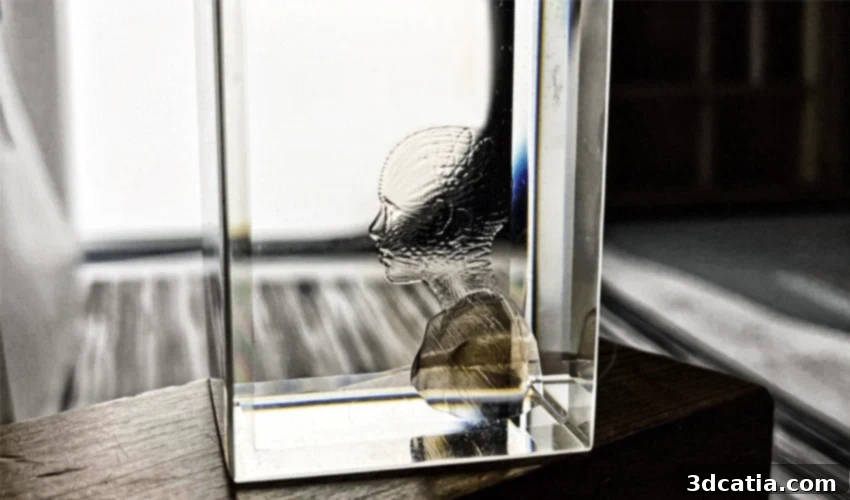
Xolo’s Xolography: Revolutionizing 3D Printing with Volumetric Speed and Advanced Materials
The world of additive manufacturing is constantly evolving, with innovations pushing the boundaries of what’s possible. Among these groundbreaking advancements, xube, a compact 3D printer introduced last December, stands out. This remarkable device is capable of fabricating intricate parts in mere seconds, thanks to its pioneering volumetric printing process. At the heart of this innovation is Xolo, a dynamic young company based in Germany, which is set to redefine the landscape of photopolymerization. Xolo’s approach drastically departs from the conventional layer-by-layer printing methodology, instead employing a sophisticated technique known as xolography. This innovative process utilizes a unique combination of different initiators and two distinct types of light wavelengths to solidify the resin simultaneously throughout the entire volume. The tangible results are nothing short of transformative: a dramatically faster manufacturing workflow, significantly smoother surface finishes that often eliminate the need for post-processing, and an expansive range of new material possibilities. To delve deeper into this exciting technology and the profound benefits it offers, we had the privilege of speaking with one of Xolo’s visionary co-founders, Dirk Radzinski.
The Genesis of Xolo: An Interdisciplinary Journey into 3D Printing Innovation
Dirk Radzinski, one of the co-founders of Xolo, a company that is approximately 18 months old, shares the fascinating origin story. Interestingly, none of the three founders had prior experience within the established 3D printing industry, bringing a fresh, interdisciplinary perspective to the field. Professor Stefan Hecht, from the Chemistry department at Aachen University and Director of the Leibniz Institute for Interactive Materials, is a renowned expert in photoswitches – molecules that can change their properties when exposed to light. Martin Regehly, a physics professor in Brandenburg, brought a wealth of entrepreneurial experience, having founded and served as CEO of greateyes, a scientific camera company. Dirk Radzinski himself is a serial entrepreneur with a track record of founding and successfully exiting deep tech and deep science ventures. United by friendship and a shared ambition to create something impactful, the trio spent several years exploring various ideas. The pivotal moment arrived in the summer of 2017 when they encountered a groundbreaking Nature paper from the Lippert group, which described a novel volumetric display technology. This publication sparked a profoundly simple yet revolutionary idea: instead of merely displaying an image, what if they could cure a photopolymer using a comparable volumetric setup? The crucial missing piece was the specific molecules that could facilitate such a precise reaction. From this realization, the Xolo team embarked on a journey to synthesize these molecules from scratch, ultimately developing an entirely new class of photoswitch-initiator compounds that form the bedrock of xolography.
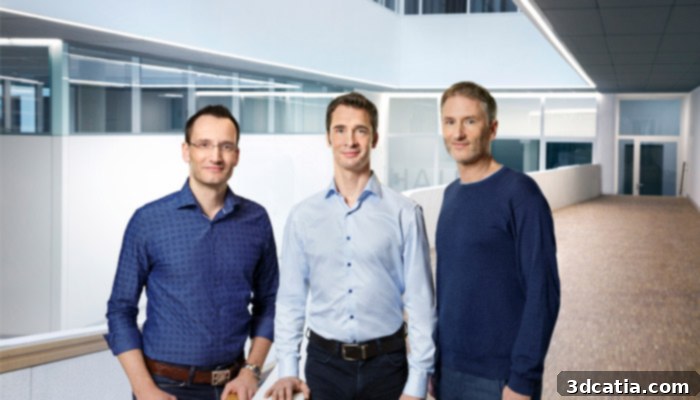
The co-founders of the Xolo startup
Understanding Xolography: How Dual-Color Volumetric Printing Works
Xolography represents a cutting-edge dual-color volumetric 3D printing process. Like traditional stereolithography (SLA), it leverages light to cure a photoresin, transforming it from a liquid to a solid state. However, the mechanism by which curing occurs is fundamentally different and addresses key limitations of conventional resin printing. In standard SLA or DLP (Digital Light Processing) printers, when light is projected into a vat of transparent resin containing initiators, curing typically occurs indiscriminately along the entire path of the light beam. To counteract this undesirable effect and achieve precise layer-by-layer solidification, SLA/DLP printers must incorporate absorbers into their resins. These absorbers limit the depth of light penetration, thereby enabling controlled curing at specific depths. Xolography ingeniously bypasses this limitation by employing a novel type of initiator molecule. This specialized initiator does not activate and begin the polymerization process when exposed to light of a single wavelength. Instead, it critically requires the simultaneous presence and interaction of two distinct wavelengths of light to initiate curing. Specifically, polymerization only takes place precisely wherever blue light and red light intersect and converge upon the initiator at approximately the same time. This exquisite spatial control allows for the solidification of resin within a defined volumetric pixel, or “voxel,” deep within the resin vat, without affecting the resin above or below the focal point. This precise, volumetric activation is what unlocks the unparalleled speed and geometric freedom characteristic of xolography, marking a significant leap forward in additive manufacturing technology.
Material Compatibility: Unlocking New Possibilities with High Viscosity Resins
When it comes to material compatibility, the xube machine, powered by xolography, operates with a broad spectrum of photoresins similar to those used in conventional SLA/DLP printers. However, a key distinction lies in its ability to handle resins at the opposite end of the viscosity spectrum. Traditional SLA/DLP printers are severely constrained by the need for very low viscosity resins. This is a critical requirement because the liquid resin must flow rapidly and consistently into the tiny gap between the build plate and the printing window after each layer is solidified. If the resin is too viscous, this flow becomes sluggish, significantly slowing down the printing process and potentially leading to print failures. Xolography, on the other hand, embraces high-viscosity resins, transforming what was once a limitation into a significant advantage. The use of highly viscous resins in xolography serves several crucial purposes: it effectively prevents printed objects from sinking or deforming within the resin vat during the rapid volumetric curing process, and it entirely eliminates the need for complex and often material-wasting support structures. This capability opens up a vast and exciting new world of materials for 3D printing. We are currently at the cusp of this exploration, where materials previously deemed unsuitable for conventional 3D printing due to their high viscosity – materials not specifically formulated for additive manufacturing – are now becoming viable candidates for xolography. The potential for developing objects with enhanced mechanical properties, such as increased toughness and durability, through the use of longer polymer chains inherent in high-viscosity resins is immense. Xolo anticipates soon demonstrating the striking performance differences and expanded material functionalities that this approach enables, promising a new era of material innovation in additive manufacturing.
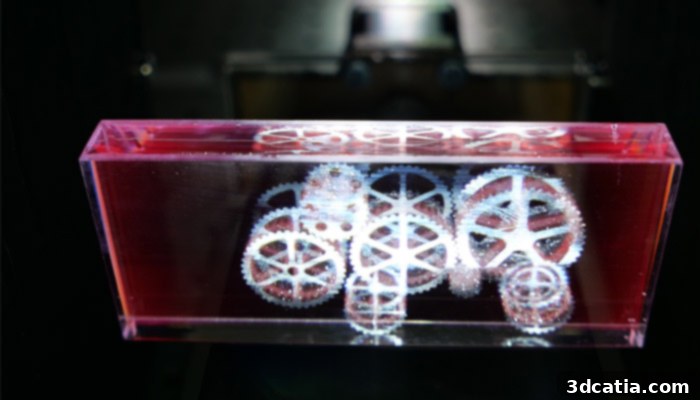
The xube machine uses high viscosity resins, enabling new material possibilities
The Distinct Advantages of Xolo’s Volumetric Printer
Compared to other resin-based printing technologies that rely on light to cure photopolymers, xolography offers three primary and highly distinctive features that set it apart as a game-changer in additive manufacturing:
1. Unprecedented Speed: Xolography is dramatically faster than conventional layer-by-layer methods. The most significant factor contributing to this speed is the complete absence of build plate movement. Unlike SLA or DLP where the build plate must move after each individual layer is cured, xolography solidifies an entire volume simultaneously. Furthermore, polymerization does not need to be completed in stages while waiting for the build plate to reposition for the next layer. This volumetric approach means parts can be printed in seconds or minutes, regardless of their Z-axis height, a stark contrast to the hours or even days required by traditional processes for complex objects.
2. Superior Surface Finish: Another critical advantage of xolography is its ability to produce exceptionally smooth surfaces. By curing objects volumetrically, the technology inherently avoids the “stair-stepping” effect that is characteristic of layer-by-layer printing, even at high resolutions. Our ambitious goal is to print optical-grade components directly, without any need for subsequent polishing or extensive post-processing. This level of surface quality, particularly for components requiring optical clarity or very low surface roughness, is simply not achievable with any existing layer-based additive manufacturing technology today, opening doors for applications in optics, microfluidics, and medical devices.
3. Enhanced Material Properties and Versatility: Xolography unlocks a new realm of material possibilities, particularly through its compatibility with highly viscous resins. As previously noted, using such resins is impractical, if not impossible, in stereolithography due to the stringent flow requirements between the build plate and the printing window. Higher viscosity in resins often correlates with longer polymer chains, which in turn can yield materials with superior mechanical properties, such as increased toughness, elasticity, and overall durability. This means xolography can produce objects that are stronger, more robust, and better suited for demanding manufacturing applications, going beyond the limitations of brittle or less resilient materials typically associated with resin 3D printing.
Beyond these core advantages, xolography offers numerous other benefits that contribute to its disruptive potential. For instance, the ability to address voxels freely within a given volume allows for the creation of incredibly complex internal geometries, including printing “objects within objects” or even entire functional machines composed of multiple interlocked components, all within a single build. This level of design freedom is revolutionary. Furthermore, a significant operational advantage is the elimination of support structures. In conventional resin printing, support structures are essential to hold the object in place and prevent deformation during the printing process. With volumetric printing, the surrounding uncured resin naturally supports the object as it solidifies, simplifying post-processing, reducing material waste, and allowing for designs that would otherwise be impossible due to support removal challenges.
Xolo’s Vision for the Future: From Research to Industrial Application
Looking ahead, Xolo has ambitious and well-defined plans for the future. The year 2021 is dedicated to fostering collaborations with leading research groups across the globe. The company aims to deploy 20 xube printers into the research community, empowering scientists and engineers to explore and realize groundbreaking ideas that are simply not feasible with conventional layer-by-layer printing methods. This period will also be crucial for Xolo to gain extensive knowledge on the process technology side, refining the system and understanding its full potential in diverse applications. As a very young company, Xolo acknowledges that its bandwidth has been limited, meaning there hasn’t been sufficient time to fully explore vital areas such as efficient washing techniques, advanced post-processing workflows, and expanding the diversity of compatible materials. These areas are critical for providing comprehensive solutions to customers, who ultimately seek problem-solving tools, not just raw technology.
A particularly exciting avenue for Xolo is the bioprinting market. Xolography demonstrates exceptional capabilities in printing high-resolution hydrogels – materials highly relevant for biological applications due to their biocompatibility and similarity to natural tissues. This makes xolography an ideal starting point for advanced research in areas like “organ-on-a-chip” systems, tissue engineering, and other innovative applications within the expansive bio-space. Following this period of intensive research and development, Xolo plans to make its strategic entry into specialized industry verticals in 2022, leveraging the insights gained and the refined capabilities of its xolography technology to address specific industrial needs.
A Message to Our Readers: The Future of Instant 3D Printing
Dirk Radzinski shares a final thought for our readers, reflecting on Xolo’s journey since their scientific nature paper was published in Christmas 2020, coinciding with the launch of their new website. Since then, the company has been overwhelmed by thousands of reservations for the xube, their inaugural product. Radzinski humbly admits, “Obviously we did a bad job in saying that this is an experimental printer and it is only meant for research purposes.” He expresses sincere apologies to the many private individuals who likely harbored hopes of finally acquiring a personal 3D printer that could produce objects in minutes rather than hours or days. Despite this slight miscommunication, the enthusiastic response from private customers is incredibly encouraging and serves as a powerful motivator for the Xolo team to accelerate their work, ultimately aiming to bring this transformative technology to a broader consumer market in the future. The sheer volume of interest underscores a clear demand for faster, more efficient, and more capable 3D printing solutions that Xolo is uniquely positioned to deliver.
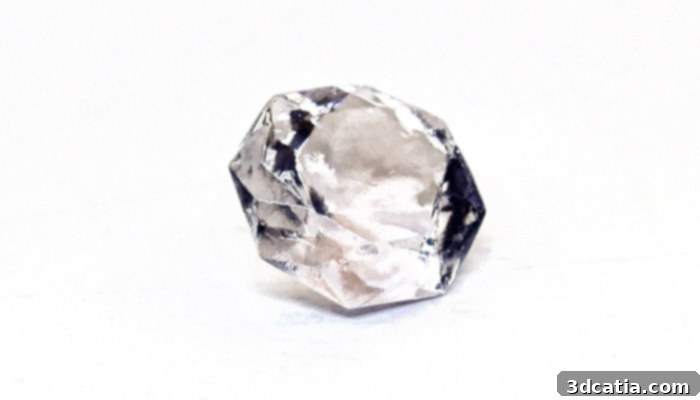
An example of a 3D printed part created on the xube machine
What are your thoughts on Xolo and their revolutionary xolography technology? We invite you to share your insights in a comment below or engage with us on our LinkedIn, Facebook, and Twitter pages! Don’t miss out on the latest advancements in additive manufacturing – sign up for our free weekly Newsletter here, delivering the most current 3D printing news directly to your inbox!