
India’s Additive Manufacturing Boom: Unpacking the Rapid Growth and Future of 3D Printing in the World’s Most Populous Nation
When the conversation turns to countries leading the charge in 3D printing and additive manufacturing, regions like the USA, Western Europe, and China typically dominate the discussion. These established hubs boast the largest installed bases of 3D printers, a significant concentration of manufacturers, and particularly in China’s case, phenomenal growth rates. However, the global landscape of additive manufacturing is rapidly evolving, with new players emerging as significant forces. India, now the world’s most populous nation, is quickly asserting itself as a major region for 3D printing in Asia, demonstrating remarkable potential and rapid expansion that warrants closer examination.
Over the past few years, India has witnessed an impressive acceleration in the adoption and development of additive manufacturing technologies. The sheer volume of innovative projects originating from the country, coupled with the rise of indigenous 3D printer manufacturers, points to a dynamic and maturing ecosystem. But what exactly are the driving forces behind this rapid ascent? How has the use of these advanced technologies permeated various sectors within India? To gain a comprehensive understanding of the current state and future trajectory of India’s 3D printing market, we engaged with leading experts and key stakeholders in the industry.
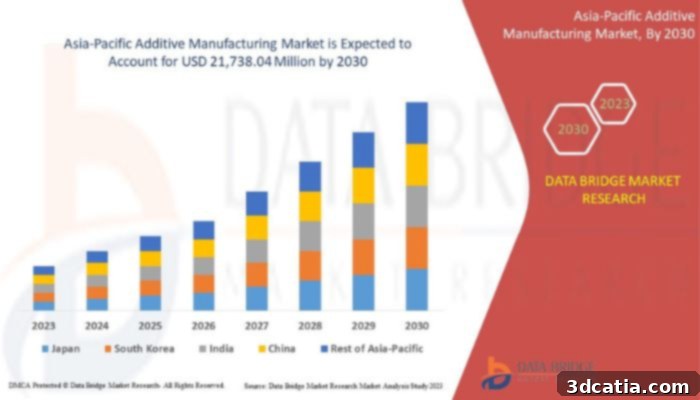
The Asia-Pacific region is experiencing substantial growth in additive manufacturing, largely driven by China. India (highlighted in grey) is also demonstrating impressive growth within this dynamic market (photo credits: Data Bridge Market Research)
The Current State of 3D Printing in India
Market Growth and Statistics
To truly grasp the impact of 3D printing in India, it’s essential to examine the underlying market statistics. A recent study by XResearch on India’s 3D printing market revealed a significant revenue surge to $111.0 million in 2022. This impressive growth is projected to accelerate further, reaching an estimated $705.1 million by 2030, representing a Compound Annual Growth Rate (CAGR) of 20.3%. To put this into perspective, while the U.S. market stood at a substantial $4.46 billion in 2022, its projected growth rate for the same period is 15.7%, according to Spherical Insights. India’s higher growth trajectory underscores its emerging status and immense potential within the global additive manufacturing landscape.
This robust growth trend has been evident for some time. As early as 2021, an EY study highlighted the increasing penetration of 3D printing in India. Mahesh Makhija from EY elaborated on this, stating, “India has seen increasing adoption of 3D printing technologies with growth rates over 30% year-on-year across materials. The industry has evolved from being a prototyping tech to end-use production, with metal AM leading the course.” This shift from mere prototyping to full-scale production, particularly in metal additive manufacturing, signifies a maturation of the market and a deeper integration into industrial processes.
Industry experts echo these sentiments. Kuntesh Radadiya, General Manager at STPL3D, a prominent Indian 3D printer manufacturer and the pioneer behind the country’s first “Made-in-India” SLS 3D printer, observed, “Starting with first-tier cities like Delhi, Mumbai, Bengaluru, Surat, Hyderabad, Coimbatore, and Pune, the demand for 3D printers in India is beginning to pick up.” This indicates a growing awareness and adoption beyond just the major metropolitan areas, spreading to other industrial and technological hubs.
Key Technologies and Industry Segments
Radadiya further elaborated on the diverse demand segments driving this growth. He identified three primary categories of 3D printing solutions attracting buyers: globally renowned 3D printer manufacturers who are establishing authorized resellers and distributors in India; locally manufactured printers, which offer significant cost advantages due to localized component production; and printers imported from countries with lower manufacturing costs, often catering to more budget-conscious segments. He noted, “Each category attracts a distinct set of buyers and sellers. Typically, industries with stringent precision requirements favor printers from the U.S. and Europe, while hobbyists and SMEs gravitate towards affordable alternatives.” This segmentation highlights the broad appeal and versatility of 3D printing across different user groups in India.
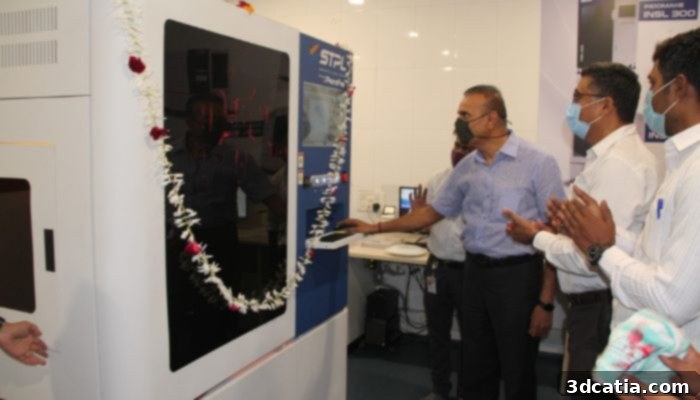
India is seeing a rise in domestic 3D printer manufacturers, including STPL3D (pictured with their industrial SLA solution), which notably introduced India’s first SLS 3D printer (photo credits: STPL3D)
Regarding the types of technologies prevalent in the Indian market, a wide array of 3D printing processes are now available and gaining traction. These include established methods such as extrusion (FDM), vat photopolymerization (SLA/DLP), selective laser sintering (SLS), and selective laser melting (SLM) for metal applications. Metal AM, particularly SLM, has garnered significant attention, exemplified by Wirpro, India’s largest 3D printing service bureau, recently investing in SLM systems. Furthermore, the country has seen the recent development of an Indian EBM (Electron Beam Melting) 3D printer, showcasing a commitment to advanced metal additive manufacturing. While all current AM processes are finding their niche, FDM and SLS remain particularly popular for their versatility and accessibility. India has also rapidly become a hotbed for construction 3D printing, a sector we will delve into later.
Radadiya further elaborated on this technological landscape: “Overall, the AM industry in India is witnessing significant growth, with FDM and SLS being the most popular technologies. The increasing demand for rapid prototyping, customized tools, and unique designs in various sectors is creating a positive outlook for the future of AM in India.” He added, “The rising demand for customization, lightweight components, and complex geometries is further propelling the growth of Metal AM in India.” This indicates a strategic shift towards higher-value applications where additive manufacturing offers distinct advantages over traditional manufacturing methods.
Government Initiatives Driving AM Adoption
Investment in 3D printing technologies in India has been notably robust, with significant backing from the Government of India. In 2022, the government unveiled its ambitious National Strategy on Additive Manufacturing. This strategy is a clear declaration of intent, aiming to position India as a global innovation and research hub for AM. The Ministry of Electronics and Information Technology (MeitY) has set an aggressive target: to increase India’s share in global additive manufacturing to 5% by 2025. To achieve this, the strategy outlines several ambitious goals, including the creation of 50 India-specific technologies for materials, machines, and software; fostering 100 new AM startups; facilitating the development of 500 new products; and generating new job opportunities for skilled workers trained specifically in 3D printing. These government-led initiatives are instrumental in creating a supportive ecosystem for AM growth, encouraging both domestic innovation and international collaboration.
The Pivotal Role of Service Bureaus
Interestingly, 3D printer manufacturers, while crucial, do not constitute the majority of India’s 3D printing business. That distinction belongs to service bureaus, which have emerged as central figures in the country’s AM ecosystem. India boasts a growing number of reputable service providers, including Imaginarium, Rapid 3D, Think3D, Wirpro3D, and Vektor3D Systems, among many others.
These service bureaus play an incredibly vital role in driving the adoption of additive manufacturing across India, a fact acknowledged and supported by the Government of India. Priyesh Mehta, Director of Imaginarium Rapid, emphasized their importance, commenting, “The relevance and importance of 3D printing service bureaus still remains high in India, a country where people would usually prefer to ‘try first and then buy’. Also, the pace at which new 3D printing technologies are introduced for commercial use also makes a compelling case for OEMs and part manufacturers to collaborate with service bureaus.” This “try before you buy” mentality, coupled with the rapid evolution of AM technologies, makes service bureaus indispensable for businesses hesitant to make substantial upfront investments in equipment.
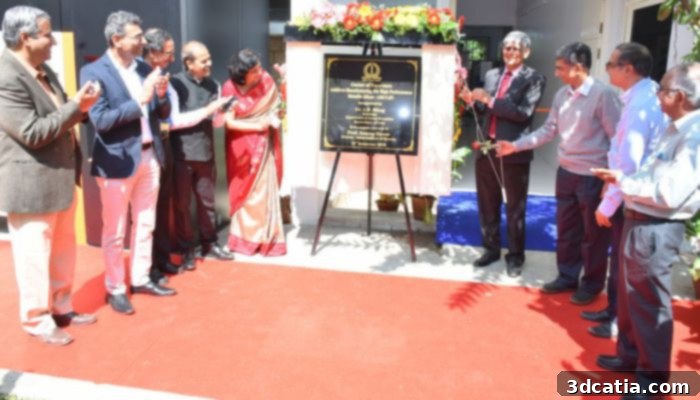
Wirpro collaborated with the Indian Institute of Science (Bengaluru) to establish a new Center of Excellence in India, dedicated to advancing research in next-generation metal AM technologies (photo credits: IISc Bangalore)
Mehta continued, highlighting their strategic value for larger enterprises: “Several OEMs are using the make vs. buy decision-making model and are preferring to use in-house machines for qualification of new use cases and external capacity with service bureaus for production.” This hybrid approach allows OEMs to leverage the specialized expertise and advanced machinery of service bureaus for large-scale production, while maintaining in-house capabilities for R&D and pilot projects.
It comes as no surprise that many of India’s most exciting and widely recognized 3D printing projects have originated from these service bureaus. A prime example is the Guinness World Record-holding diamond ring, meticulously crafted by Imaginarium in 2020. Service bureaus are set to maintain their critical importance in the country’s AM landscape. They currently outnumber direct solution providers and have been instrumental in government-led initiatives, including the development of India’s first metal 3D printer and the establishment of the National Centre for Additive Manufacturing (NCAM) in Hyderabad. Their role as enablers of technology adoption and innovation is undeniable.
Transformative Applications Across India
Revolutionizing Construction with 3D Printing
As 3D printing has gained traction in India, so too have the diversity and complexity of its applications. One of the most visibly impactful sectors has been construction. Over the past few years, India’s construction industry has embraced AM to produce a remarkable array of structures, including a groundbreaking 3D printed post office and impressive multistorey buildings. These projects showcase the technology’s potential to revolutionize how structures are designed and erected.
Professor Manu Santhanam from the Department of Civil Engineering at IIT Madras, an expert in 3D printable concrete, has collaborated extensively with the Indian startup Tvasta and the major construction firm L&T. Discussing current projects, he explained, “Currently, L&T is also involved in the construction of a set of buildings in Chandigarh, as well as villas in Bangalore. Tvasta has also been getting several niche projects, some of them in combination with M/s Godrej Construction, Mumbai. Another start-up, called MICOB, based out of Gandhinagar, has been executing 3D printed buildings for the defense sector.” This demonstrates the broad application of construction 3D printing, from residential and commercial projects to critical defense infrastructure.
The utility of 3D printing in construction mirrors its benefits seen globally: its capacity for creating buildings with intricate geometrical designs and its immense potential to address housing crises. Professor Santhanam elaborated, “Currently, AM in construction is being looked at for the creation of niche facilities, with geometrical designs that are not easy to do with conventional construction. 3D printing applications will continue for special buildings. But after the guidelines for construction are properly established, it is expected that 3D printing will also work its way into mass housing, provided the scale is large enough to achieve the economy.” This visionary outlook suggests that once regulatory frameworks are solidified, 3D printing could become a scalable solution for affordable mass housing.
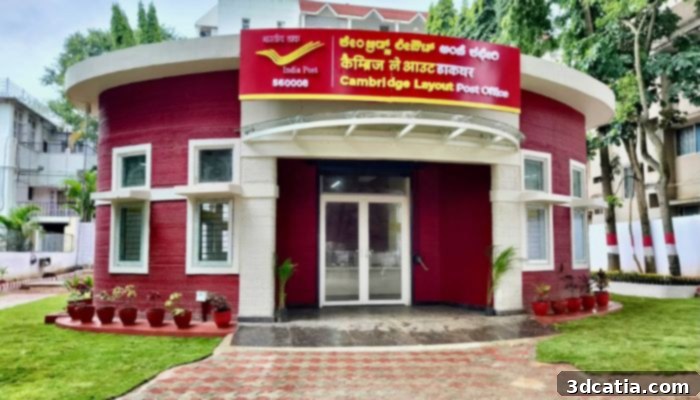
A notable achievement in Indian construction 3D printing is the recently unveiled post office, showcasing innovative structural design (photo credits: L&T)
Despite these advancements, construction 3D printing is still in its early stages of widespread establishment. While a few major players exist, competition remains relatively scarce, with L&T being by far the most prominent in this space. Professor Santhanam highlighted this, observing, “Apart from L&T, no other large building company has entered this domain. On the other hand, after Tvasta and MICOB, several other start-ups including Simpliforge and DeltaSys have come into the 3D printing scene. Overall, 3D printing is still at an early stage, primarily because of the lack of regulatory guidelines – these are being developed currently through the Bureau of Indian Standards.” This challenge concerning regulatory frameworks is a common theme observed in other countries, including the United States, indicating a global need for standardized guidelines to unlock the full potential of construction AM.
Nonetheless, it is undeniable that construction 3D printing has firmly taken root in India, and its future potential is immense. It offers particular advantages for creating customized buildings rapidly and providing essential construction support in difficult-to-access areas or regions with limited resources, including labor scarcity. This sector is highly likely to continue experiencing sharp growth in India, echoing trends seen in places like Dubai, where 3D printing is steadily becoming a mainstream construction method.
Diverse Applications Beyond Construction
While the use of 3D printing in India’s construction industry is impressive, it represents only one facet of its burgeoning applications. In fact, numerous industries are embracing 3D printing as a complementary technology, often integrated with other advanced solutions like AI and machine learning – a synergy recognized and supported by MeitY. This integration signifies a sophisticated approach to manufacturing, where AM enhances existing processes rather than merely replacing them.
Priyesh Mehta further clarified the broader industrial impact, explaining, “3D printing in India has very high growth potential, mainly due to India’s growing manufacturing system led by automotive, space, electric mobility, and drones. The push from prototyping to production is mainly led by original equipment manufacturers and service bureaus to get the maximum value out of key Additive Manufacturing offerings such as design freedom and inventory-less production. The highest number of installed bases of 3D printers would be in research and universities, jewelry, and dental, respectively. We see it evolving steadily in the last three years where core manufacturing industries have identified use cases to complement (and not replace) casting, machining, and forging.” This highlights AM’s role in optimizing production workflows and fostering innovation across a spectrum of industries, moving beyond traditional manufacturing constraints.
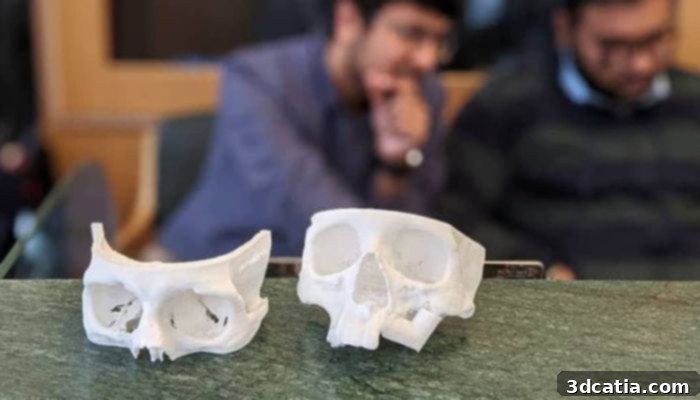
The healthcare sector in India is increasingly adopting 3D printing, exemplified by these anatomical models created at Max Super Speciality Hospital, Saket (photo credits: Materialise)
Kuntesh Radadiya affirmed this, confirming, “Laser Powder Bed Fusion (both metal and polymer) have been favored to qualify and manufacture end-use parts for aerospace, defense, mobility, and energy. The stability and repeatability at scale of these technologies make them a natural choice for OEMs, service bureaus, and even researchers. Key applications which have seen tremendous growth in the last few years have been in: a) Drones (perfect test bed and application for high mix and low to mid volume); b) E-Mobility (faster product development cycles with Additive Manufacturing and AM-led tooling); c) Energy (On-demand spare parts); d) Healthcare (Orthoses & Prosthetics, Implants, and medical devices).” This comprehensive overview underscores the critical role of advanced AM technologies in high-stakes industries where precision, performance, and customization are paramount.
The growing importance of healthcare and dentistry in Indian 3D printing is particularly evident in recent projects. For instance, the Nanavati Max Super Specialty Hospital in Mumbai recently inaugurated a dedicated 3D printing lab. This state-of-the-art facility will primarily focus on facilitating high-precision surgeries, especially in oncology, where customized anatomical models and surgical guides can significantly improve patient outcomes. Furthermore, 3D printing has been instrumental in India for creating bespoke facial implants to treat black fungus (mucormycosis), a debilitating disease that saw a surge in cases during the COVID-19 pandemic. These applications highlight AM’s profound impact on patient-specific solutions and emergency medical interventions.
Addressing Challenges for Sustainable Growth
Despite the rapid advancements and immense potential, the journey for 3D printing in India is not without its obstacles. The government’s announcement of India’s AM strategy candidly acknowledges several key challenges. These include the lack of formal industry standards, a shortage of skilled manpower trained in additive manufacturing technologies, uncertainties within the regulatory and legal frameworks, and the concern that rapidly evolving technology could render current skilled workers obsolete. These issues are not unique to India; they largely mirror the challenges faced by other leading nations in AM adoption, including the USA.
Kuntesh Radadiya concurs with this assessment, particularly emphasizing the scarcity of a skilled workforce proficient in AM technologies. He also points to other significant barriers to adoption, such as the high initial investment costs associated with AM equipment and materials, and the limited availability of standardized materials and design guidelines. These factors can deter smaller businesses and new entrants from fully embracing additive manufacturing, even with its compelling advantages.
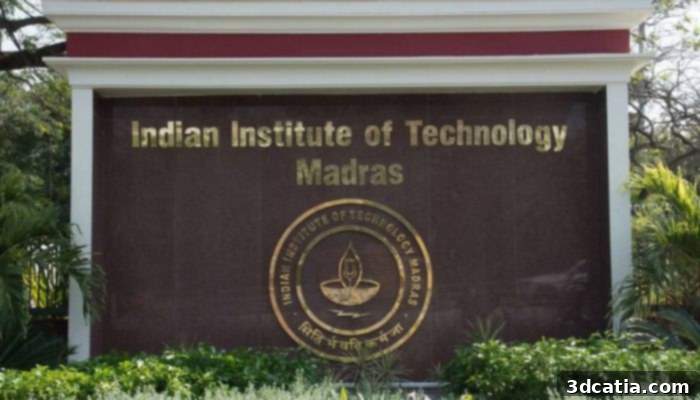
Indian universities, such as IIT Madras, are introducing certifications in additive manufacturing to address the shortage of skilled professionals in the field (photo credits: IIT Madras)
Radadiya specifically highlighted challenges related to SLM 3D printing, commenting, “Overall, SLM metal 3D printing holds immense potential to transform various industries in India. However, addressing the challenges related to cost, skilled workforce, and standardization will be crucial for its widespread adoption and long-term success.” The emphasis on these three pillars – cost, talent, and standards – underlines the fundamental requirements for any advanced manufacturing technology to achieve mainstream industrial integration.
That being said, there is significant optimism that these challenges can be effectively resolved in the coming years, thanks to concerted efforts from both government support and the growing interest from numerous universities across the country. Institutions like IIT Madras, in particular, have emerged as vital hubs for AM learning and research. Not only is IIT Madras a key center for Indian 3D printing construction innovation, but it has also demonstrated considerable progress in medical 3D printing, actively developing curricula and training programs to bridge the skills gap and foster future expertise.
The Bright Future of 3D Printing in India
It is abundantly clear that the landscape for 3D printing in India offers substantial room for continued growth and innovation. If the country maintains its current trajectory, propelled by strong market demand, strategic government support, and academic engagement, India is poised to become an undeniable force in the global additive manufacturing arena in the coming years. The serious interest shown by both the academic sector in advanced research and the government’s strategic initiatives suggests an impending explosion in AM research and diverse applications across various industries.
Priyesh Mehta reinforced this optimistic outlook, concluding, “India is the world’s third-largest startup ecosystem (with 112,718 government-recognized startups across the country). The shift from only importing into India, to making in India, and to now, designing and making in India has picked up steam significantly after COVID-19. Also, government policies like production-linked incentive schemes are encouraging more investments and focus on India’s manufacturing ecosystem. With India’s “Atmanirbhar Mission” (self-reliance for manufacturing), several government agencies are now preferring “Made In India” defense components, which would boost advanced manufacturing investments in India. With these events as the backdrop and the developing geopolitical situations across the world, India stands to benefit, resulting in an increase in manufacturing output.” This comprehensive perspective highlights the confluence of entrepreneurial spirit, supportive government policies, and a strategic geopolitical positioning that favors India’s manufacturing prowess.
Ultimately, one conclusion stands firm: India is unequivocally the country to watch for significant 3D printing growth in the foreseeable future. While the precise evolution of its AM sector remains to be seen, the increasing focus on metal AM adoption, coupled with robust development in dynamic sectors like defense, construction, and healthcare, positions India for a transformative breakthrough well before the decade concludes. The nation’s sheer scale, burgeoning technical talent, and strategic vision are combining to forge a powerful future for additive manufacturing within its borders and on the global stage.
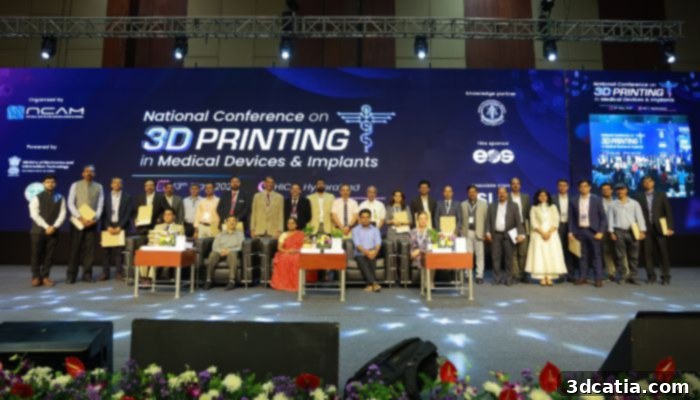
NCAM organizes annual national conferences dedicated to 3D printing, aiming to showcase and advance additive manufacturing across India
What are your thoughts on the current state and future of 3D printing in India? We’d love to hear from you. Let us know in a comment below or connect with us on our LinkedIn, Facebook, and Twitter pages! Don’t forget to sign up for our free weekly newsletter here to get the latest 3D printing news delivered straight to your inbox! You can also find all our videos on our YouTube channel.
*Cover Photo Credits: Imaginarium