

The Dynamic World of 3D Printing: September’s Key Industry Developments and Innovations
As the crisp air of September signals the end of summer, the 3D printing and additive manufacturing market is experiencing a vibrant resurgence. Companies across the globe are gearing up for a bustling period, anticipating significant industry events slated for late 2024 and early 2025. This renewed energy also marks the exciting return of our #3DExpress series, designed to bring you the most compelling and essential news from the week. In this edition, we delve into the notable delisting of Velo3D from the New York Stock Exchange, a challenging but pivotal moment for the company. We then shift our focus to EOS, a pioneer in the industry, and its ambitious plans to significantly boost production capabilities in the USA. Following this, we explore the latest product releases, including two advanced 3D scanners from Artec3D, and an innovative cocoa powder specifically developed for food 3D printing by La Pâtisserie Numérique. Finally, we introduce Xolo’s cutting-edge Xube2 3D printer, promising new frontiers in advanced manufacturing. Join us for an insightful read into the ever-evolving landscape of additive manufacturing!
Velo3D Delisting: Navigating the Complexities of the Public Market for Additive Manufacturing
Despite persistent and commendable efforts over recent months, Velo3D, a prominent manufacturer of metal 3D printers, has officially begun delisting proceedings initiated by the New York Stock Exchange (NYSE). This development marks a significant turn for a company that debuted on the public market with considerable fanfare in 2021. The journey on the stock exchange has proven tumultuous for Velo3D, reflecting broader difficulties experienced by numerous growth-oriented companies, particularly within the nascent and often volatile 3D printing market. The company had received multiple non-compliance notices from the NYSE, signaling concerns about its adherence to listing standards. The ultimate trigger for the delisting was Velo3D’s failure to maintain the NYSE’s continued listing standard, which mandates an average global market capitalization of at least $15,000,000 over a consecutive 30 trading day period. This threshold is crucial for demonstrating a company’s financial health and stability to investors.
The delisting from the NYSE, a premier global stock exchange, carries significant implications. It can affect investor confidence, reduce stock liquidity, and make it more challenging for the company to raise capital in the future. For Velo3D, a company at the forefront of advanced metal additive manufacturing, this transition underscores the inherent financial challenges faced by innovative tech firms operating in specialized markets. However, it’s not all challenging news for the metal 3D printer manufacturer. Amidst these corporate shifts, Velo3D recently announced a significant positive development: the sale of one of its flagship Sapphire 1MZ metal 3D printers to the National Institute for Aviation Research (NIAR). This acquisition by NIAR, a leading institution dedicated to advancing the aerospace sector through cutting-edge research and development, serves as a powerful validation of Velo3D’s technology and its critical role in high-stakes industries. The Sapphire 1MZ is renowned for its ability to produce complex, high-performance metal parts with exceptional precision, making it ideal for aerospace applications where stringent quality and reliability are paramount.
The impact of Velo3D’s delisting on the wider additive manufacturing market remains a subject of close observation. While the move to the over-the-counter (OTC) market, specifically the OTCQX Best Market, will alter its public trading environment, the company’s core technological strengths and strategic partnerships, such as the one with NIAR, continue to underscore its value proposition. The OTCQX Best Market is a top tier for OTC equity securities, offering greater transparency and higher quality standards compared to other OTC markets, which may help mitigate some of the negative perceptions associated with delisting. This period will undoubtedly test Velo3D’s resilience and strategic adaptability, but its continued innovation and significant technological contributions to sectors like aerospace suggest a future where its additive manufacturing solutions remain highly relevant and sought after.

Photo Credits: Velo3D
EOS to Significantly Increase Production of Metal 3D Printers in the USA From 2025
EOS, a global leader in industrial 3D printing solutions, recently made a strategic announcement regarding its manufacturing plans for the upcoming year. Starting in early 2025, the company intends to commence manufacturing one of its most successful and flagship products, the EOS M290 metal system, at its state-of-the-art facility located in Pflugerville, Austin, Texas. This move represents a significant expansion of EOS’s production footprint in North America and underscores its commitment to serving its growing customer base more efficiently.
The EOS M290 is a cornerstone of the company’s metal additive manufacturing portfolio, with an impressive track record of over 2,000 units installed globally. This widely adopted metal solution is critically utilized across diverse and demanding sectors, including medical device manufacturing, aerospace engineering, tooling production, and the energy industry. Its reputation for reliability, precision, and ability to produce complex geometries with high-quality finishes makes it an indispensable tool for advanced manufacturing. By bringing the production of the M290 system to the USA, EOS aims to dramatically facilitate future deliveries and significantly enhance service capabilities for its North American customers. This localized production will lead to reduced lead times, lower shipping costs, and improved supply chain resilience, ultimately providing a more responsive and efficient experience for businesses relying on EOS technology.
The decision to localize M290 production in the US aligns with a broader strategic vision. The metal system will join the successful Integra P450 polymer system, which is already being manufactured in North America, further solidifying EOS’s domestic manufacturing capabilities. Beyond the evident commercial advantages, this move is also heavily influenced by political considerations. As Kent Firestone, Senior Vice President of Operations, EOS North America, elaborated: “EOS has already been in the USA for 14 years. The high demand for our popular EOS M 290 – as well as government policies that encourage the procurement of manufacturing technologies from domestic and US-friendly sources – made the decision to expand production at our growing Texas facility an easy one.” This statement highlights the increasing trend of governments, particularly in the US, promoting domestic manufacturing through various incentives and policies aimed at strengthening local economies, ensuring supply chain security, and fostering technological independence. EOS’s expansion in Texas is a direct response to these market demands and political landscapes, positioning the company to capitalize on the robust growth of additive manufacturing in the region and reinforcing its dedication to its North American clientele.
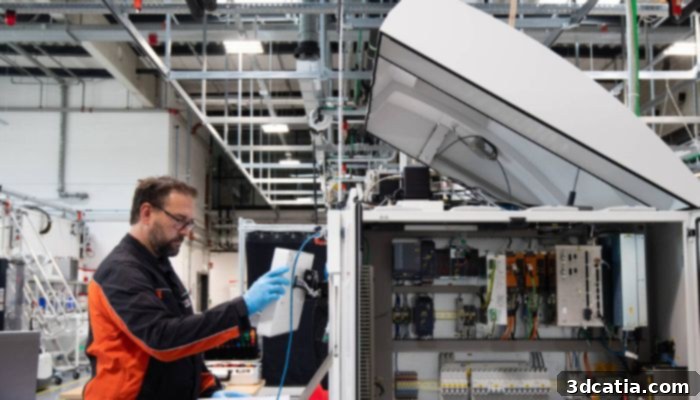
EOS will focus even more strongly on production in the USA from 2025 (photo credits: EOS)
Artec 3D Unveils Next-Generation Scanning Solutions: Artec Point and Artec Spider II
Artec 3D, a renowned manufacturer of professional 3D scanning hardware and software, recently announced the launch of two groundbreaking scanning solutions: the Artec Point and the Artec Spider II. These new additions expand Artec 3D’s diverse portfolio, catering to an even wider range of industrial and professional applications demanding unparalleled precision and efficiency.
The Artec Point introduces a significant innovation for the company as its first target-based 3D laser scanner. This design allows for exceptionally accurate data capture, particularly beneficial for complex objects and large-scale metrology applications. With an impressive accuracy down to 0.02 mm, the Artec Point is engineered to digitize intricate details with remarkable precision, making it an ideal tool for quality control, inspection, reverse engineering, and digital archiving in industries where minute deviations are critical. Designed for portability, it offers flexibility for on-site inspections and diverse working environments. To maximize its utility, the Artec Point provides three distinct scanning modes: a high-speed grid mode for rapid data acquisition, a parallel lasers mode for detailed surface capture, and a single laser mode for highly precise measurement of specific features. This versatility ensures that users can optimize their scanning workflow based on the complexity and requirements of the object.
Alongside the Artec Point, Artec 3D also introduced the second generation of its highly popular Spider 3D scanner, the Artec Spider II. Building upon the legacy of its predecessor, the Artec Spider II has been meticulously redesigned to deliver significantly enhanced performance in both speed and accuracy. The manufacturer proudly states that the new Spider II offers twice the resolution of the original, enabling the capture of even finer textures and geometries, and boasts an astonishing four times the scan speed. This dramatic increase in speed translates directly into higher productivity, allowing users to complete scanning projects in a fraction of the time, thereby streamlining workflows and reducing operational costs. The combination of increased resolution and speed makes the Artec Spider II an invaluable tool for tasks requiring high-definition data capture, such as capturing small, intricate objects for design, medical, and manufacturing purposes. With these two new scanners, Artec 3D emphatically reaffirms its commitment to pushing the boundaries of 3D scanning technology, providing manufacturers and professionals with advanced tools that ensure greater productivity, superior quality, and ultimately, a more accurate representation of the physical world in digital form.
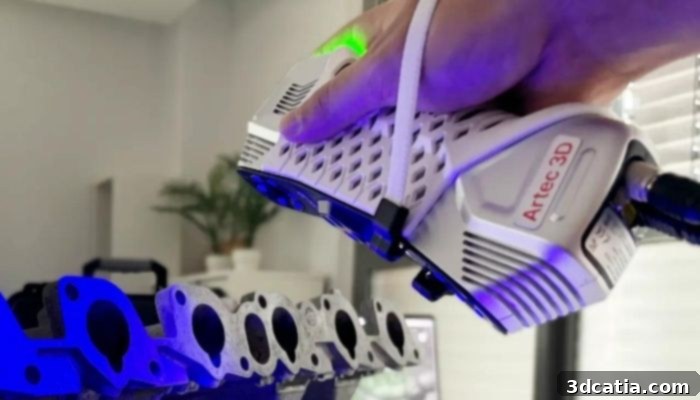
The Artec Point 3D scanner is ideal for metrology (photo credits: Javelin Technologies)
Sweet Innovation: La Pâtisserie Numérique Launches Cocoa Powder for Food 3D Printing
In a delicious advancement for the culinary world, La Pâtisserie Numérique, an innovative French manufacturer specializing in food 3D printers, has recently unveiled a new cocoa powder specifically formulated for additive manufacturing. This exciting launch empowers chefs, confectioners, and culinary artists to explore entirely new dimensions of dessert design, creating tasty, unique, and highly personalized confections with unprecedented precision and creativity.
The newly introduced powder is a thoughtful blend of wheat and cocoa, meticulously crafted from natural ingredients. A key highlight of this formulation is its commitment to health and purity, as it contains no additives or preservatives. This makes it an appealing choice for consumers seeking natural food options and allows chefs to create desserts that are not only visually stunning but also wholesome. The versatility of this cocoa powder opens up a myriad of creative possibilities in the kitchen. It can be effortlessly used to design personalized cookies with intricate patterns, bespoke decorations that add a touch of gourmet elegance to any plate, or innovative, made-to-measure tart bases that offer unique textures and flavors. Imagine creating a dessert centerpiece shaped precisely to a customer’s request, or intricate chocolate lattice work that was previously impossible without tedious handcrafting. The precision offered by 3D printing with this specialized powder allows for designs that push the boundaries of traditional pastry art.
With this strategic product launch, the French start-up significantly expands its portfolio of food-grade 3D printing materials. This move not only enhances the capabilities of their existing food 3D printers but also solidifies La Pâtisserie Numérique’s position as a pioneer in the burgeoning field of food additive manufacturing. The company is actively bridging the gap between cutting-edge technology and gourmet cuisine, offering tools that enable unparalleled customization and innovation in dessert creation. For the culinary industry, this means an exciting future where artistic expression is amplified by digital fabrication, allowing for a level of detail and personalization that will undoubtedly delight diners and inspire a new generation of chefs. In short, this launch by La Pâtisserie Numérique is not just about a new ingredient; it’s about revolutionizing the way we experience and create desserts, and it certainly makes our mouths water with anticipation for the delicious possibilities!

Spiro is a 3D-printed cake model (photo credits: La Pâtisserie Numérique)
Xolo Introduces the Xube2: Advancing Volumetric 3D Printing for Medical Applications
Berlin-based Xolo, a pioneer in the field of volumetric 3D printing, has this week unveiled its latest innovation: the new Xube2 3D printer. This advanced system represents a significant leap forward from its predecessor, symbolizing the ongoing evolution of volumetric 3D printing technology and showcasing the extensive research and development conducted by the company in recent years. Volumetric 3D printing stands apart from traditional layer-by-layer additive manufacturing by curing an entire volume of resin simultaneously, often resulting in significantly faster print times and truly isotropic parts.
The Xube2 is engineered for enhanced precision and greater flexibility, addressing the demanding requirements of high-stakes applications. One of its key features is the ability for rapid changeover from one resin tray to another, which dramatically improves workflow efficiency, especially in environments where multiple materials or print jobs are managed concurrently. Furthermore, the Xube2 offers a flexible printing space, with a maximum print volume of 30 x 50 x 80 mm³. This optimized build volume is particularly suited for producing intricate and highly detailed components. A significant technical improvement in the Xube2 is the introduction of 375 mm and 504 mm luminous layer modules. These advanced modules enable the processing of a wider web of material, expanding the range of compatible resins and allowing for greater versatility in material selection. This is crucial for applications where specific material properties are paramount.
Beyond the hardware advancements, Xolo has also meticulously redesigned and improved the Xube2’s software. This enhanced software suite provides users with greater control and insight over the entire printing process, from design preparation to real-time monitoring. Such granular control is indispensable for ensuring the consistent quality and reliability required in critical sectors. The Xube2 3D printer is primarily intended for specialized use in the medical sector, where its unique capabilities make it an invaluable tool. Potential applications span diverse fields within medicine, including high-precision bioprinting for tissue engineering and regenerative medicine, the fabrication of complex optical components for medical devices, advanced medtech solutions, and highly customized dental applications such such as surgical guides and prosthetics. The combination of speed, precision, material versatility, and superior software control positions the Xube2 as a transformative technology, poised to accelerate innovation and enable new possibilities in personalized healthcare and medical device manufacturing.
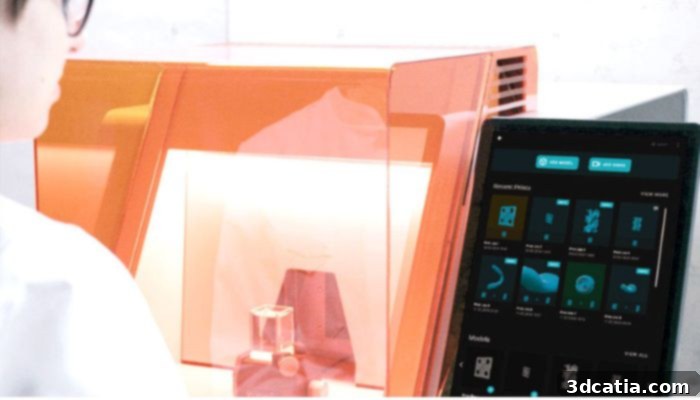
Photo Credits: xolo
What are your thoughts on Velo3D’s delisting from the NYSE and these other exciting developments across the additive manufacturing industry? Let us know your perspective in a comment below or join the conversation on our LinkedIn, Facebook, and Twitter pages! To stay continuously informed about the latest trends, breakthroughs, and news in the dynamic world of 3D printing, don’t forget to sign up for our free weekly newsletter here for direct delivery to your inbox! You can also explore all our in-depth video content and interviews on our dedicated YouTube channel.