
CeramicSpeed and DTI Revolutionize Cycling with Ultra-Light 3D Printed Titanium Pulley
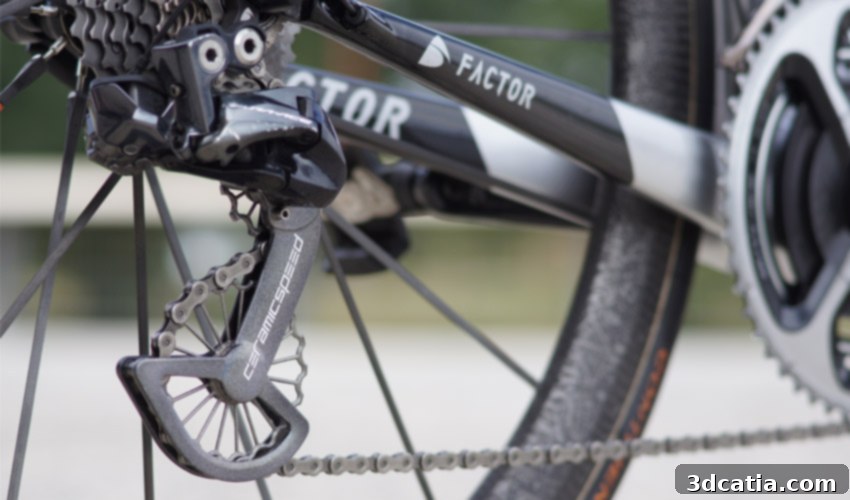
In the demanding world of professional cycling, where every gram and every watt counts, innovation is relentlessly pursued. Leading this charge is the Danish company CeramicSpeed, renowned for its high-performance cycling components, in a groundbreaking collaboration with the Danish Institute of Technology (DTI). Together, they have engineered and successfully produced a state-of-the-art 3D printed titanium pulley, poised to redefine efficiency and durability for elite athletes. This innovative component, critical to a bicycle’s drivetrain, is strategically positioned on the external gears of the gear shift, a location constantly subjected to intense friction and mechanical wear. The transformative potential of this device was put to the ultimate test by several professional riders during the prestigious 2019 Tour de France, where it proved its mettle under the most strenuous racing conditions. Early reports indicate that this advanced 3D printed pulley stands as the lightest ever manufactured globally, representing a significant stride in lightweight component design.
What sets this component apart is its intrinsically complex design, a masterpiece of engineering that would be utterly impossible to achieve through conventional manufacturing methods such as CNC machining or casting. Additive manufacturing, or 3D printing, unlocks an unprecedented level of geometric freedom, allowing for intricate internal structures and optimized external forms that maximize strength while minimizing material usage. Beyond its remarkable lightness, the 3D printed pulley demonstrates superior resistance to wear and fatigue compared to its traditionally manufactured counterparts. This enhanced durability is particularly critical for professional cyclists competing in long-distance races and multi-stage events, where component reliability can be the difference between victory and defeat. The blend of extreme lightness and exceptional resilience makes this CeramicSpeed pulley a game-changer for competitive cycling, pushing the boundaries of what’s achievable in high-performance bike components.
The integration of additive manufacturing into the cycling industry is not a novel concept, yet CeramicSpeed’s application represents a significant leap forward. Over recent years, numerous initiatives have leveraged 3D printing technologies to address various challenges and enhance rider experience. These applications range from creating ergonomically designed and more comfortable seats tailored to individual rider anatomy, to fabricating lighter and more aerodynamic bicycle frames and components, and even developing innovative puncture-proof tire designs. The cycling sector, by its very nature, thrives on innovation, constantly seeking marginal gains that can confer a competitive edge. What better methodology exists for rigorously testing and rapidly iterating new design concepts than the agility and versatility offered by 3D printing? This inherent flexibility was a primary driver behind CeramicSpeed’s decision to embrace additive manufacturing. The company highlighted that 3D printing significantly simplifies the process of testing new ideas and enables exceptionally rapid design iterations, dramatically shortening the product development cycle. As the R&D manager eloquently articulated, “3D printing technology has given us a lot of scope to experiment creatively with design while optimizing a product’s functions.” This philosophy underscores a commitment to pushing technological boundaries for peak athletic performance.
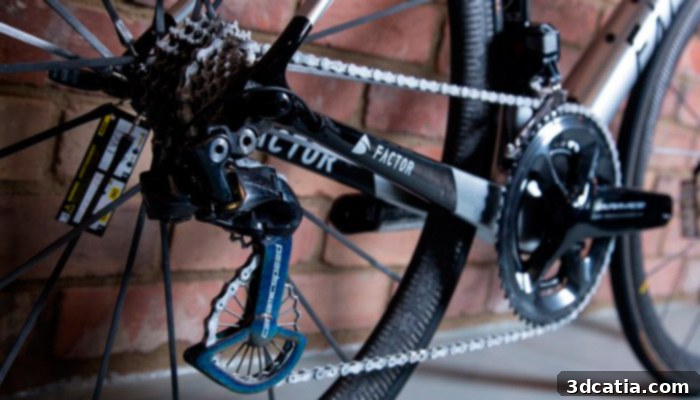
Image via SLM Solutions
For the realization of this advanced titanium pulley, CeramicSpeed strategically opted for Laser Powder Bed Fusion (L-PBF) 3D printing. This sophisticated additive manufacturing technique is particularly suited for creating high-performance metal components with exceptional precision and mechanical properties. To execute their vision, CeramicSpeed partnered with German SLM Solutions, a global leader in industrial metal additive manufacturing solutions. Leveraging an SLM 500 machine, renowned for its ability to produce complex, high-quality metal parts with fine resolution, CeramicSpeed’s engineering teams meticulously designed their 3D printed titanium pulley. The technical specifications are impressive: the pulley boasts a slender diameter of just 2 mm and an incredibly thin wall thickness of only 0.4 mm. These minute dimensions are a testament to the precision capabilities of L-PBF technology and are crucial for achieving the component’s featherlight properties. The culmination of this advanced design and manufacturing process is a final component weighing a mere 8.4 grams. In the context of competitive cycling, where cumulative weight savings across the entire bicycle can dramatically influence performance, especially during challenging ascents or accelerations, an 8.4-gram reduction on a single component represents a significant advantage that can materially impact a cyclist’s speed and endurance over long distances. The choice of titanium as the primary material was also deliberate. Extensive testing conducted by the Danish company conclusively demonstrated that titanium offered superior durability and significantly higher corrosion resistance when compared to conventional aluminum alloys traditionally used in cycling components. This material selection ensures that the pulley maintains its structural integrity and performance characteristics even when exposed to harsh environmental conditions, such as rain, sweat, and road grit, which are commonplace in professional racing.
Beyond the immediate performance gains for cyclists, the overarching objective of this collaboration was to fundamentally rethink and optimize the entire supply chain for both CeramicSpeed and the Danish Institute of Technology. The adoption of additive manufacturing, while offering immense potential, is rarely a straightforward process in its initial stages. It necessitates a significant learning curve and a re-evaluation of established engineering practices. A critical aspect is the principle of Design for Additive Manufacturing (DFAM), which dictates that the pulley’s design must be meticulously adapted to fully exploit the unique capabilities and constraints of 3D printing technology. This involves optimizing part geometry to minimize material usage, enhancing structural integrity through complex internal lattice structures, and integrating features that facilitate the printing process. Furthermore, considerable attention must be dedicated to optimizing printing supports – temporary structures essential for preventing deformation during the L-PBF process – to ensure structural stability while simultaneously allowing for their efficient removal post-printing. Minimizing post-processing steps, which typically include support removal, surface finishing, and heat treatments, is crucial for reducing overall production time and cost. The long-term vision extends beyond prototyping to encompass the serial production of this advanced 3D printed pulley. Achieving high levels of repeatability and reliability in mass production is paramount for a critical cycling component, ensuring that every pulley meets the stringent performance and safety standards demanded by professional athletes. While further details on commercial availability and production scale are pending, the successful development and testing of this component signify a major step towards integrating advanced additive manufacturing into high-performance cycling, paving the way for more widespread adoption of these ultra-efficient components on the bikes of professional riders globally. For those eager to delve deeper into CeramicSpeed’s cycling innovations, more information can be found HERE.
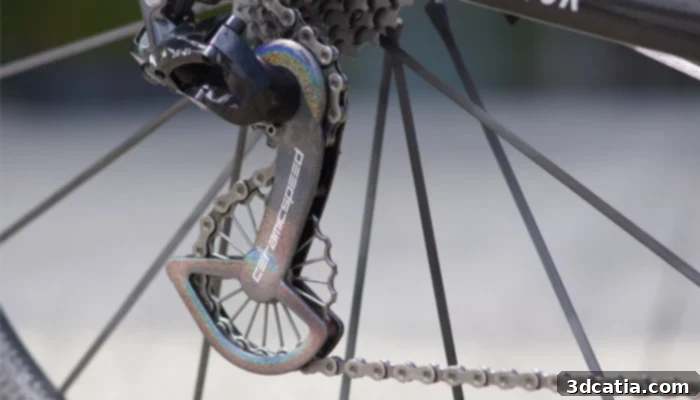
Image via SLM Solutions
The introduction of CeramicSpeed’s 3D printed titanium pulley represents a significant milestone in both additive manufacturing and professional cycling. It exemplifies how cutting-edge technology, combined with meticulous engineering and a deep understanding of athletic demands, can push the boundaries of performance and durability. This innovation not only offers professional cyclists a measurable advantage through reduced weight and enhanced resilience but also underscores the transformative potential of 3D printing to revolutionize component design and production across various industries. As the cycling world continues its relentless pursuit of speed and efficiency, the integration of such advanced manufacturing techniques will undoubtedly lead to even more exciting developments in the future, from custom-fitted components to entirely new bike architectures. We invite you to share your thoughts on this remarkable 3D printed pulley and its implications for the future of cycling. Let us know in a comment below or engage with us on our Facebook and Twitter pages if you found this article insightful! Additionally, make sure you don’t miss out on the latest advancements and news in 3D printing by signing up for our free weekly Newsletter, delivered directly to your inbox!