
Weekly 3D Printing Insights: Top Innovations, Construction Marvels, and Lunar Exploration Unveiled
Welcome back to another exciting Sunday edition, where we bring you the most captivating and impactful developments from the dynamic world of 3D printing and additive manufacturing! This week’s curated collection of top five videos delves deep into the ever-expanding applications of this revolutionary technology, showcasing its reach from industrial giants to ambitious space-faring endeavors. We are thrilled to present the insightful three-part Voices AMplified series, offering unparalleled perspectives from one of the industry’s leading events. Witness the groundbreaking construction of Europe’s largest 3D-printed building taking magnificent shape in Germany, and explore China’s ambitious plans to leverage additive manufacturing for sustainable lunar settlements. Furthermore, we unpack the transformative concept of mass customization, demonstrating how 3D printing is rapidly making personalized products a tangible reality for consumers worldwide. Dive into the videos below to stay abreast of the freshest and most relevant information shaping the future of 3D printing. Happy Sunday, and we sincerely hope you find these updates as fascinating and inspiring as we do!
1. Voices AMplified: Insider Perspectives from RAPID + TCT 2023
The “Voices AMplified” series represents a pioneering three-part collaboration with SME, the primary organizer behind RAPID + TCT 2023. This event stands as North America’s most significant additive manufacturing trade show, captivating the global 3D printing community just a few weeks ago with its scale and innovation. Through this exclusive video series, 3Dnatives provides comprehensive coverage, meticulously exploring the latest trends, groundbreaking innovations, and invaluable impressions directly from the heart of the event. The inaugural episode focuses specifically on the attendees – the lifeblood of any major trade show. We capture their excitement, their key takeaways, and their diverse perspectives on the critical role of additive manufacturing across various industrial sectors. More profoundly, this episode offers a forward-looking glimpse into the future, pondering what the landscape of 3D printing might truly resemble a decade from now, fueled by the insights of those at the forefront of technological adoption and development. The series extends beyond the general attendees, offering unique and crucial perspectives from both the speakers and exhibitors who shaped the discourse and showcased the advancements at RAPID + TCT. Their insights provide a holistic and in-depth view of the industry’s current state, its challenges, and its promising trajectory. Understanding these different viewpoints is absolutely crucial for grasping the full scope of advancements and anticipating future directions within the dynamic field of additive manufacturing. Don’t miss parts two and three, which are readily available on the 3Dnatives YouTube channel, as they delve into the expert opinions of the speakers and the innovative showcases from the exhibitors. These additional episodes complete the narrative, offering a truly amplified voice from the industry’s most influential event.
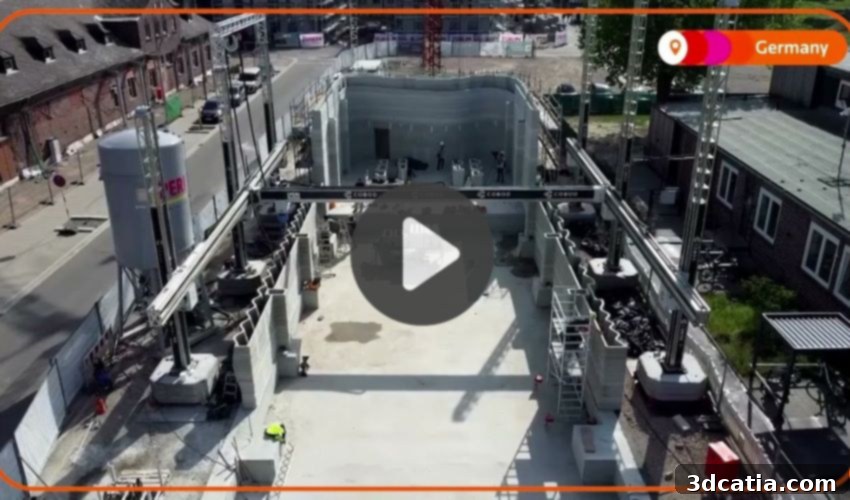
2. Europe’s Largest 3D-Printed Building Under Construction in Germany
In a testament to the transformative power of additive manufacturing in the construction sector, a truly monumental project is currently underway in Heidelberg, Germany. This ambitious endeavor is poised to become “Europe’s largest 3D-printed building,” a significant claim proudly made by its innovative developers. What makes this construction particularly remarkable is the unparalleled efficiency and cutting-edge innovation at its core: the entire process requires the supervision of an astonishingly small team of only two skilled personnel on site. The groundbreaking method involves a sophisticated robotic arm meticulously distributing a layer of specialized cement on top of the previous one, creating a distinctive, almost ‘paperstack-esque’ architectural design that is both functional and aesthetically unique. This advanced level of automation significantly streamlines the building process, drastically reducing both labor requirements and overall construction time, setting a new benchmark for efficiency. Upon its projected completion, this impressive structure will span an imposing 55 meters in length, 11 meters in width, and reach a substantial height of 9 meters. Astoundingly, the entire shell of the building is projected to be constructed from scratch in a mere 140 hours – a feat that would be utterly unimaginable with conventional building techniques and a much larger, traditional workforce. This project vividly demonstrates how 3D printing is fundamentally altering the landscape of the construction industry, unlocking previously deemed impossible opportunities. The ability to rapidly erect large-scale, complex structures with minimal human intervention represents a significant leap forward, promising faster development timelines, substantially lower costs, and enhanced safety on job sites. Once finished, the building is slated to serve as a crucial data center for servers, highlighting the intersection of cutting-edge construction with vital technological infrastructure. This pioneering German project is not merely a building; it is a powerful blueprint for the future of sustainable, efficient, and innovative construction practices worldwide, proving the immense potential of large-scale additive manufacturing.
3. China’s Ambitious Plan: 3D Printing on the Lunar Surface Revealed!
In the challenging and high-stakes realm of lunar exploration, China has consistently demonstrated its prowess with a series of remarkable achievements and encouraging successes. Over the past decades, their space program has executed highly successful sample return missions, deployed an operational rover on the mysterious far side of the moon – a feat no other nation had accomplished – and generally pushed the boundaries of what was once considered impossible in deep space. However, recent groundbreaking revelations indicate that the Chinese space program is poised to elevate its ambitions even further, embarking on a project that promises to make unprecedented history: utilizing advanced 3D printing technology directly on the lunar surface. This audacious plan stems from the inherent and formidable challenges of deep space missions, where every gram of payload launched from Earth is critically expensive and complex to transport. By employing additive manufacturing with in-situ resources – primarily lunar regolith, or moon dust – future lunar missions can construct essential infrastructure such as sustainable habitats, durable landing pads, and crucial radiation shields without needing to transport heavy building materials from Earth. This innovative approach dramatically reduces logistical complexities and astronomical costs, thereby paving the way for more sustainable and ultimately permanent lunar outposts. The video below offers an exclusive and fascinating look into the country’s visionary strategy for this next ambitious lunar project. It highlights the cutting-edge technological innovations, the formidable scientific hurdles that must be overcome, and the grand, long-term vision behind establishing a robust and enduring human presence on our celestial neighbor. This initiative not only signifies a monumental leap in China’s burgeoning space capabilities but also represents a pivotal moment for global space exploration, profoundly showcasing how additive manufacturing is fast becoming an indispensable tool for humanity’s daring expansion beyond Earth’s confines.
4. 10 3D Printing Projects: Rocky Mountain RepRap Festival 2023
The Rocky Mountain RepRap Festival 2023, held in the vibrant city of Loveland, Colorado, distinguished itself as a premier and highly anticipated event dedicated entirely to the thriving and innovative world of 3D printing. As a first-of-its-kind gathering in the region, it provided an invaluable and accessible platform for enthusiasts, independent developers, and industry innovators to showcase some of the newest and most impactful endeavors in additive manufacturing. The festival’s robust and remarkably diverse array of topics highlighted the incredible breadth and depth of community-driven innovation within the 3D printing sphere. Attendees were treated to a captivating series of demonstrations and presentations ranging from advanced cooling solutions, meticulously designed to optimize print quality and accelerate print speed, to revolutionary new 3D printer features that challenge conventional designs. Notable examples included Voron’s innovative belt bed systems, which promise enhanced print adhesion and significantly easier print removal, and Positron’s intriguing upside-down printing techniques, which ingeniously push the boundaries of traditional Fused Deposition Modeling (FDM) methods. These remarkable innovations collectively underscore the immense ingenuity and collaborative spirit fostered within the open-source RepRap community, where shared knowledge and collaborative development accelerate progress at an astonishing pace. The festival wasn’t just about showcasing finished products or prototypes; it was a dynamic hub for knowledge exchange, collaborative problem-solving, and collectively envisioning the next generation of 3D printing technology. Such community-centric events are absolutely crucial for driving widespread adoption and fostering continuous improvement across the industry, as they allow for direct feedback, invaluable hands-on experience, and the sharing of best practices among a passionate and engaged audience. The video below offers a detailed exploration of these exciting projects, thoroughly fleshing out their technical details and demonstrating their real-world implications for hobbyists, educators, and professionals alike, truly capturing the vibrant spirit of innovation that defines the RepRap movement.
5. Unlocking the Potential of Mass Customization with 3D Printing
In today’s rapidly evolving manufacturing landscape, enterprises possess an unprecedented capability to create a vast array of products – from consumer goods and stylish wearables to critical medical devices like prostheses, advanced hearing equipment, and precision dental appliances – all precisely tailored to individual needs and demands. This profound and transformative shift in production is largely powered by a suite of advanced manufacturing techniques, with 3D printing standing prominently at its forefront. The ultimate objective of mass customization is to successfully scale personalized manufacturing, moving far beyond the traditional dichotomy of rigid mass production versus labor-intensive bespoke craftsmanship. It aims to achieve the ‘nirvana’ of producing highly individualized goods with the same efficiency, speed, and cost-effectiveness previously associated only with large-scale mass production. This comprehensive video thoroughly explores the foundational principles of mass customization and, crucially, demonstrates with compelling examples how 3D printing is the indispensable key enabler for this paradigm shift, making personalized production both remarkably fast and affordably accessible to a wider market. Unlike conventional manufacturing methods that often rely on expensive tooling, molds, and long lead times for each design iteration, 3D printing allows for unparalleled design flexibility, true on-demand production, and the intricate personalization of complex geometries without incurring significant additional costs or extensive retooling. This remarkable capability is revolutionizing various sectors: in healthcare, it enables the creation of custom prostheses, tailored hearing equipment, and bespoke dental appliances perfectly fitted to each unique patient, thereby significantly improving comfort, functionality, and overall efficacy. For consumer goods, it means unique footwear, custom-designed phone cases, or personalized jewelry, empowering consumers with choice. The economic and societal impact of this burgeoning trend is profound and far-reaching. It leads to substantially reduced waste through efficient on-demand production, empowers consumers with greater choice and active participation in the product design process, and allows businesses to cater to highly specific niche demands that were previously economically unviable or logistically impossible. By showcasing actual and diverse use cases, the video vividly illustrates how additive manufacturing is not just a technology for rapid prototyping but a powerful and transformative tool for driving a new era of personalized production, fundamentally reshaping how products are designed, manufactured, and ultimately consumed across industries.
We sincerely hope this week’s comprehensive roundup of 3D printing innovations has offered valuable insights into the incredible advancements continually shaping our world. From groundbreaking construction projects in Germany redefining architectural possibilities to visionary plans for lunar colonization utilizing in-situ resources, and the ever-growing possibilities of mass customization transforming consumer goods, additive manufacturing consistently continues to push the boundaries of what’s possible and imaginable. What are your thoughts on Europe’s largest 3D-printed building, or China’s ambitious lunar endeavors? We eagerly invite you to share your comments and engage with us below, or connect with our vibrant community on our LinkedIn, Facebook, and Twitter pages! To ensure you never miss out on the absolute latest 3D printing news, exclusive content, and in-depth analyses, don’t forget to sign up for our completely free weekly Newsletter here, delivered straight to your inbox. Furthermore, all our captivating videos, including this week’s enlightening highlights and many more fascinating explorations, are readily available on our official YouTube channel. Stay connected, stay informed, and keep exploring the boundless future of 3D printing with us!
*Cover photo credits: Reuters