
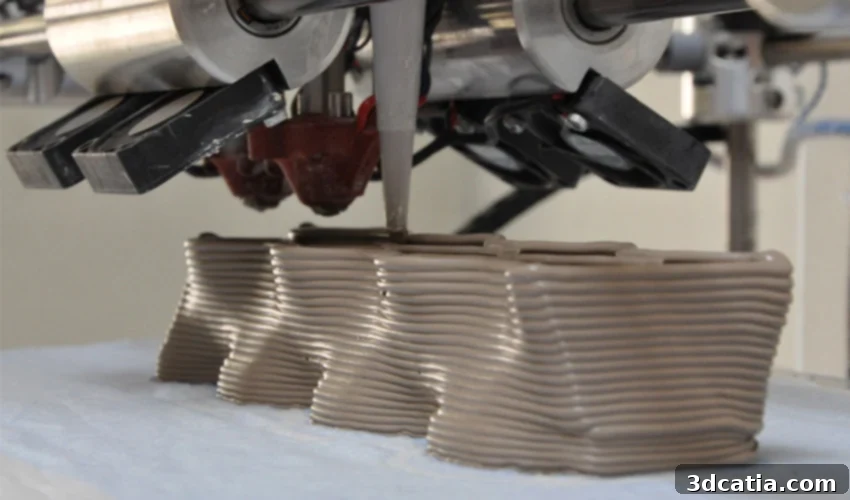
The Future of Manufacturing: Unlocking the Potential of Ceramic 3D Printing
The history of ceramics stretches back to ancient Greece, where these durable materials were initially crafted for practical purposes like creating pots and plates for food storage and preparation. Formed from clay cooked at temperatures up to 500ºC, ceramics have been fundamental to human civilization for millennia. By the 19th century, their exceptional attributes – particularly as thermal and electrical insulators – gained recognition within industrial applications, revolutionizing sectors like motor manufacturing. Given this rich and extensive heritage, the inevitable advent of ceramic 3D printing marks a significant leap forward. Additive manufacturing with ceramic materials offers unprecedented possibilities, enabling the creation of complex geometries and designs with mechanical properties that were previously unattainable through conventional manufacturing techniques.
The future of ceramic 3D printing is exceptionally promising. A recent report from Smartech Publishing highlighted the rapid growth trajectory of this innovative sector, projecting that the ceramic 3D printing industry will generate an astounding $3.6 billion worldwide by 2028. While it may not yet possess the widespread establishment of plastic or even metal additive manufacturing technologies, the market is poised for explosive growth. The report further indicates that ceramic 3D printing is expected to achieve widespread maturity by 2025, cementing its position as a critical manufacturing technique across various industrial landscapes.
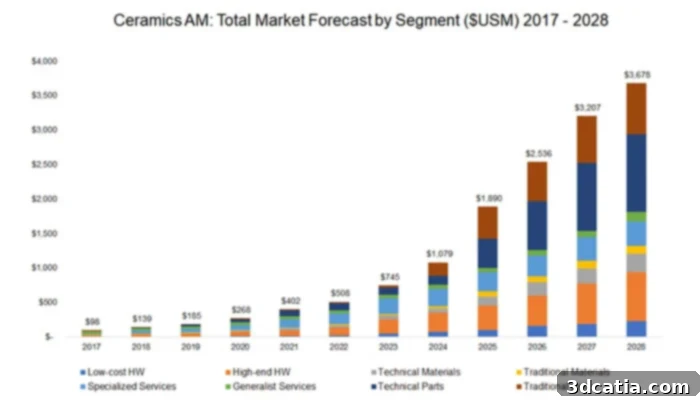
Credits: Smartech Publishing
The Evolution of Ceramic Materials and Additive Manufacturing
Throughout history, clay has remained the most prevalent material for manufacturing ceramic products, primarily due to its natural abundance and ease of accessibility across diverse environments. As material science has advanced, so too have the possibilities for ceramic manufacturing. Today, ceramics are categorized into several distinct types based on their composition and intended application. We commonly encounter **domestic ceramics** in everyday items like crockery, tiles, and sanitary ware. **Structural ceramics**, such as bricks and roof tiles, are fundamental to the construction industry. **Refractory ceramics** are engineered for high-temperature resistance and are widely used in furnace linings and other thermal applications. However, it is the category of **technical ceramics** that truly highlights the revolutionary potential for advanced manufacturing. These sophisticated materials, which do not typically include clay, are prized for their superior mechanical strength, exceptional thermal and chemical resistance, and excellent electrical insulation properties. Their unique attributes make them indispensable in high-performance industries such as automotive, aerospace, medical, and electronics, where conventional materials often fall short.
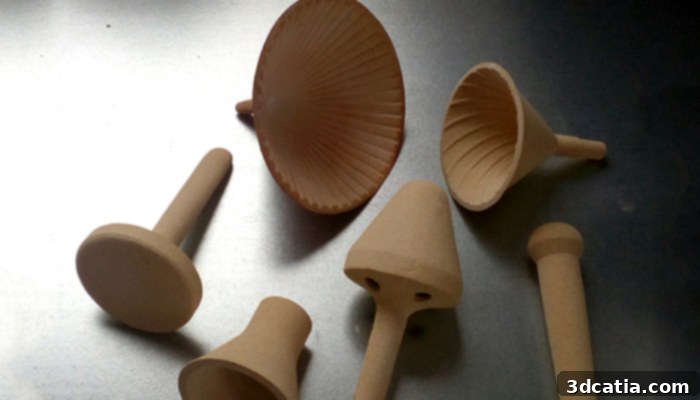
Clay is an ancestral material used for manufacturing | Credits: Cerámicas Baltà
The integration of ceramics with additive manufacturing has given rise to several distinct 3D printing methods, each tailored to specific material properties and application requirements. Among the most recognized techniques for ceramic 3D printing are light-curing technologies such as Stereolithography (SLA) and Digital Light Processing (DLP), Binder Jetting, Liquid Deposition Modeling (LDM), and the more recently developed Nano Particle Jetting (NPJ) pioneered by the Israeli company XJet. These diverse approaches underscore the versatility and expanding capabilities of ceramic additive manufacturing.
Key Ceramic 3D Printing Technologies
Binder Jetting: Specialized for Ceramic Materials
Binder Jetting stands out as one of the pioneering technologies to successfully manufacture parts using ceramic powders. Its origins trace back to the 1990s, emerging from an MIT project that was later acquired by Z Corporation and subsequently by 3D Systems, a major player in the additive manufacturing industry. This technique operates by selectively depositing a liquid binder onto a thin layer of ceramic powder. The binder solidifies, creating a cross-section of the desired part. This process is repeated layer by layer until the object is fully formed within the powder bed. One of the notable advantages of Binder Jetting is its ability to produce full-color models. However, parts fabricated with this method often require significant post-processing, such as sintering, to achieve the necessary mechanical strength and density for demanding industrial applications. Despite initial limitations in strength for certain industrial purposes, continuous advancements in binder formulations and post-processing techniques are expanding its utility.
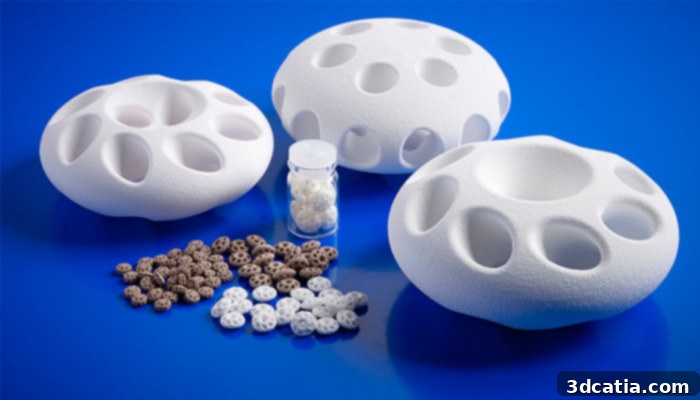
3D printing technology for ceramic materials: Binder Jetting | Credits: Johnson Matthey
Stereolithography and Photopolymerization for Ceramic 3D Printing
Photopolymerization technologies, including Stereolithography (SLA) and Digital Light Processing (DLP), have been foundational to additive manufacturing since its early days. While the initial focus was on polymer resins, it took some years for ceramic-filled photopolymer resins to be successfully integrated. A key pioneer in advancing ceramic additive manufacturing using these methods is the French company 3DCeram. Their journey began in 2005 when Christophe Chaput embarked on research into combining additive manufacturing with ceramics, initially focusing on biomedical applications like skull implants. By 2009, he and Richard Gaignon acquired Cerampilot, rebranding it as 3DCeram, and shifted its business model entirely to 3D printing ceramic parts. Richard Gaignon, CEO of 3DCeram, explained their strategic evolution: “It was in 2005 that Christophe Chaput decided to investigate the possibility of additive manufacturing combined with ceramics. He started printing biomedical parts, skull implants… In 2009, he and I bought the company Cerampilot and decided to change the name to 3DCeram and change its business model, i.e. to manufacture parts only through 3D printing.” From 2014 onwards, 3DCeram further enhanced its capabilities by integrating DLP technology, incorporating UV lasers into its advanced machines. Today, they offer a comprehensive range of ceramic 3D printers, including the C900, a hybrid system capable of printing multiple materials simultaneously, specifically designed for the electronics and energy industries. This year, they launched two additional machines: the C100, dubbed “KISS” (Keep It Smart and Simple) for its user-friendliness, and the C3600, specialized in high-performance technical ceramics.
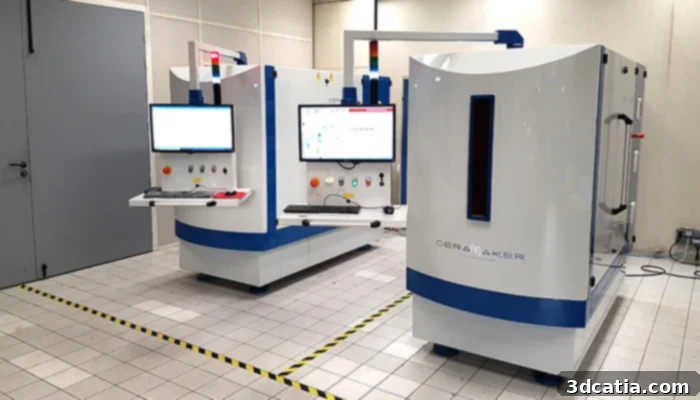
3DCeram’s additive manufacturing solution | Credits: 3DCeram
Beyond 3DCeram’s impressive innovations, other significant players contribute to the photopolymerization ceramic 3D printing landscape. Industry giants like 3D Systems now offer specialized ceramic resins within their extensive material portfolios, broadening access to these advanced capabilities. Similarly, Formlabs, renowned for its accessible desktop SLA 3D printers, has also incorporated ceramic resins into its material offerings, making technical ceramic printing more widely available. The Dutch company ADMATEC further specializes in high-quality technical ceramics, leveraging DLP technology to produce highly precise and functional parts for demanding industrial applications. These developments collectively underscore the growing momentum and accessibility of ceramic photopolymerization.
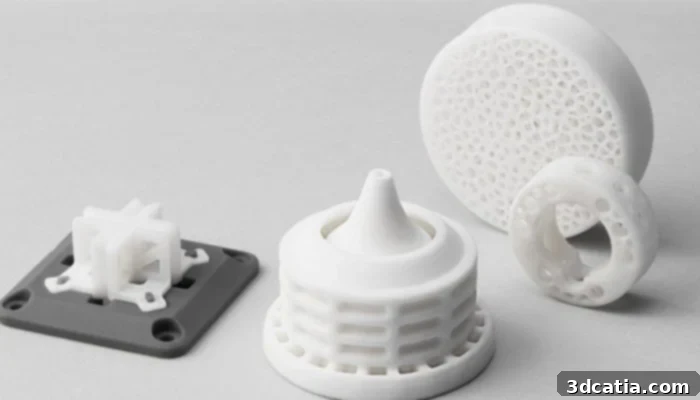
Desktop 3D printers also offer the option of ceramic resins | Credits: Formlabs
Material Deposition or Liquid Deposition Modeling (LDM)
The Material Deposition technique, often referred to as Liquid Deposition Modeling (LDM), has achieved significant popularity and widespread adoption among various manufacturers. This method functions on principles similar to Fused Deposition Modeling (FDM), but it employs specialized extruders adapted for viscous ceramic pastes. The process involves systematically depositing layers of ceramic material, one atop the other, to gradually build the desired part or model. A primary advantage of LDM is its relative cost-effectiveness, largely due to its ability to utilize readily available and affordable materials such as clay and polymer-filled ceramic pastes. This accessibility has made LDM particularly appealing for both artistic and large-scale architectural applications.
The simplicity and versatility of LDM have inspired numerous manufacturers to develop (primarily) desktop machines. These systems have found considerable success, exemplified by products like the ClayXYZ, launched in 2017, and the LUTM V4, introduced to the market in 2018 with a strong emphasis on artistic and creative applications. Furthermore, the Italian company WASP has emerged as a highly renowned innovator in this field, offering advanced ceramic 3D printing solutions capable of producing parts on a remarkably large scale, pushing the boundaries of what is possible with material deposition techniques in ceramics.
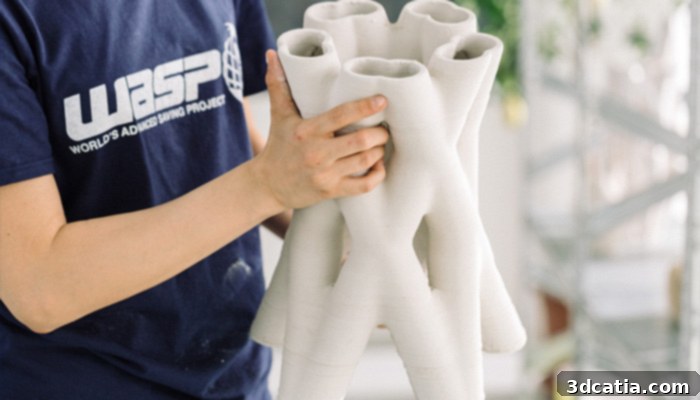
Material deposition technique | Credits: WASP
Nano Particle Jetting ™ (NPJ)
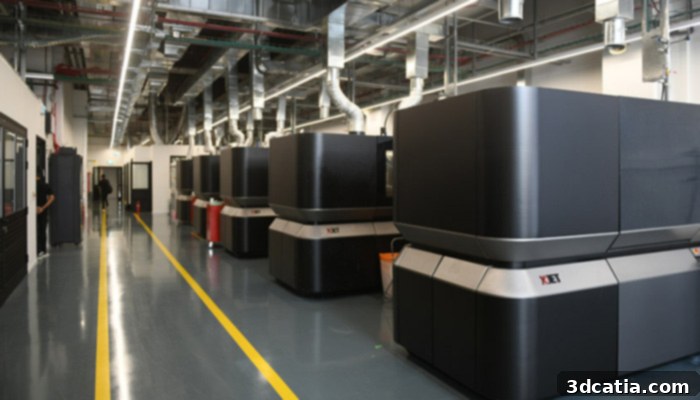
Nano Particle Jetting ™ (NPJ) represents a cutting-edge additive manufacturing technology developed by the Israeli company XJet. This innovation is largely a testament to the extensive experience of its CEO, Hanan Gothait, who previously founded Objet Geometries, the company behind the widely adopted Polyjet technology. After years of intensive research and development, resulting in over 80 patents, XJet officially launched NanoParticle Jetting ™ in 2016. This groundbreaking technology was specifically engineered for both metal and ceramic materials, offering unprecedented precision and material properties. XJet’s initial commercial offerings included the Carmel 1400 and Carmel 700 AM systems, which rapidly set new benchmarks in advanced ceramic and metal 3D printing.
Hanan Gothait elaborated on the core principles of NPJ, stating: “The key to NanoParticle Jetting ™ begins with its unique liquid dispersion methodology. Liquid suspensions containing solid nanoparticles of selected support and construction materials are injected into the manufacturing tray to additively manufacture detailed parts. The liquid suspensions are delivered and installed in sealed cartridges without problem.” He further emphasized the exceptional precision achieved through this method: “The precision of the inkjet printheads plus the use of ultra-thin layers, which create a super sharp Z resolution, enable parts to be extremely and easily neat. This is crucial for 3D-printed ceramics to achieve excellent shape and dimensional tolerance.” This meticulous control over material deposition at the nanoscale allows for the creation of intricate, high-resolution ceramic parts with superior surface finish and dimensional accuracy, making NPJ an ideal solution for complex industrial requirements.
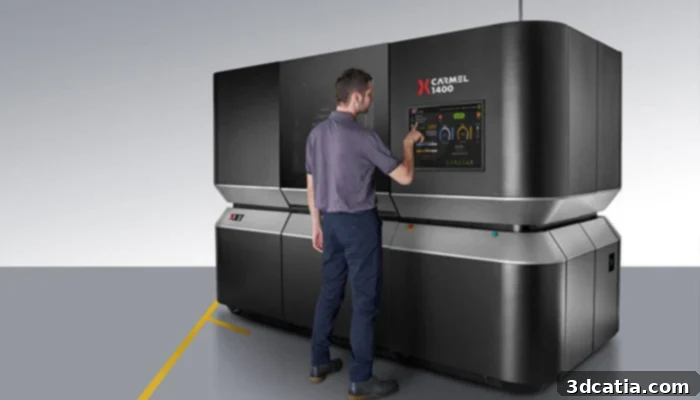
Carmel 1400, a solution developed by the Israeli company | Credits: XJet
The rapid advancements in both technical and material developments within ceramic 3D printing continue unabated. Only a few weeks prior, the Japanese industrial conglomerate Canon publicly announced its proprietary technique for ceramic materials, alongside the introduction of a new material compatible with Selective Laser Sintering (SLS) machines. These ongoing innovations highlight a vibrant and competitive landscape, with expectations that more key players will contribute significantly to the evolution and diversification of ceramic additive manufacturing technologies in the coming years.
The Integration of Ceramic 3D Printing Across Diverse Industries
The increasing integration of technical ceramic materials through 3D printing is poised to deliver profound and long-term benefits across a multitude of industries. Today, numerous startups and established businesses are thriving thanks to the advanced ceramic 3D printing services readily available. Major global players in the additive manufacturing service sector, such as Materialise and Shapeways, offer extensive manufacturing capabilities for these innovative ceramic applications. Additionally, many ceramic 3D printer manufacturers, including 3DCeram and Admatec, provide direct 3D printing services, enabling seamless access to their proprietary technologies. Crucially, even traditional ceramic companies are actively embracing additive manufacturing, recognizing its potential to revolutionize their long-established processes and product offerings.
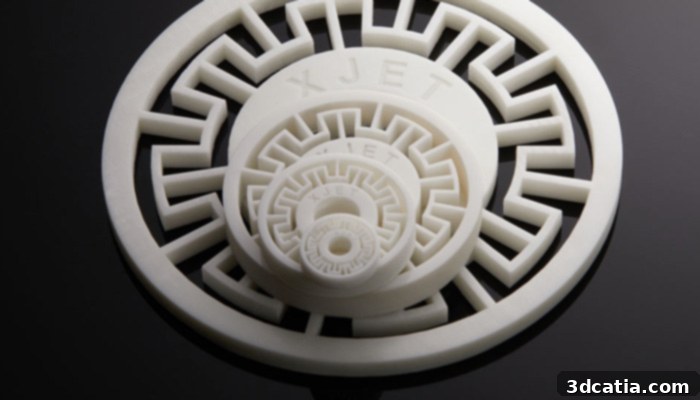
Different developments for the industry have come with ceramic 3D printing | Credits: XJet
Martí Baltà, CEO of Cerámicas Baltà and Protopenedes 3D, a workshop with over 30 years of experience in traditional and artistic ceramics, perfectly articulates this strategic shift: “The need to implement additive technology to the workshop basically responded to three points: open a new economic opportunity, give our customers new manufacturing possibilities and enter a niche market with many possibilities and for which we had ‘in house’ 3 consolidated tools: knowledge of design and digital modeling + ceramic knowledge + ceramic infrastructure.” This statement highlights how additive manufacturing empowers established businesses to innovate, expand their service portfolios, and leverage their existing expertise in novel ways.
For experienced manufacturers like Cerámicas Baltà, with decades of expertise in the field, ceramics are celebrated as an incredibly versatile material, possessing remarkable resistance and an array of advantageous properties that are further enhanced by the precision of 3D printing.
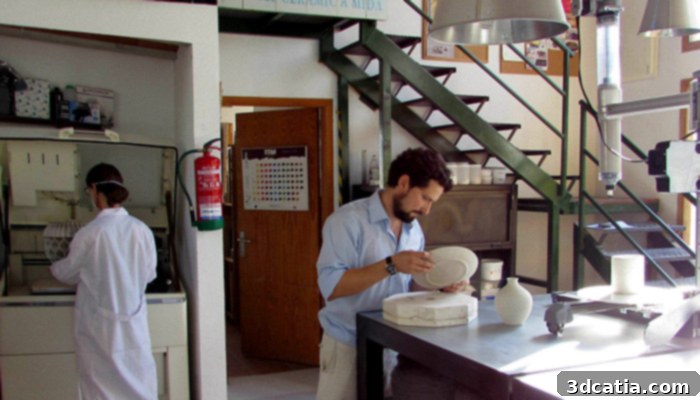
Martí Baltà in the ceramic 3D printing workshop | Credits: Taller Baltà
Baltà continued, emphasizing the material’s intrinsic qualities: “It is a material that once sintered in all cases is inert and ecological; there are mixtures of ceramic materials with great properties in thermal or electrical insulation. And what must never be forgotten, when we talk about ceramic printing we are talking about the final product, not the prototype.” This crucial distinction underscores the shift from mere prototyping to direct digital manufacturing of end-use parts with ceramic 3D printing.
Companies like XJet firmly regard ceramic 3D printing as a robust and legitimate final production method. They have observed in recent years that various industries – notably health, energy, and automotive – which initially adopted additive manufacturing techniques for plastics or metals, are now increasingly developing and integrating ceramic techniques. Hanan Gothait reinforces this outlook: “The technology is expected to gain full acceptance as a valid, necessary and even preferred manufacturing method. Ceramic 3D printing is still in its infancy, but is growing rapidly. The main driving force behind this is the growing need for greater temperature resistance, strength and toughness of parts and components, pushing metals to the limit of their capabilities, where technical ceramics perform extremely well.” This highlights the inherent material advantages of ceramics in pushing the boundaries of performance where other materials reach their limits.
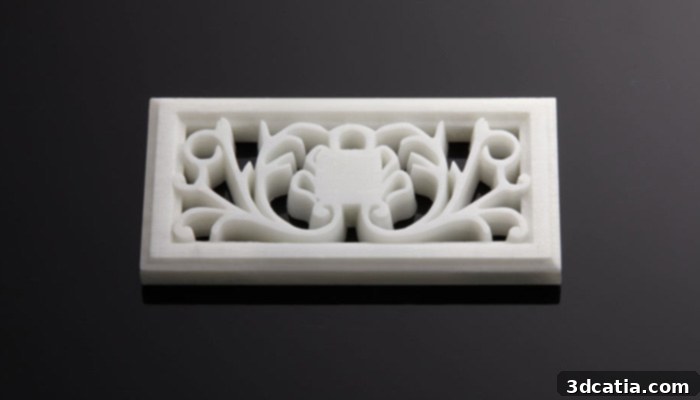
Credits: XJet
What is the Future of Ceramic 3D Printing?
The evolutionary trajectory of additive manufacturing techniques utilizing ceramic materials is undeniable. However, similar to other 3D printing technologies, its adoption pathway varies across different industries. Just as metal 3D printing has found specialized acceptance in sectors like aerospace and automotive due to its unique capabilities, ceramic 3D printing is progressively carving out its own distinct niches. Manufacturers such as 3DCeram anticipate a maturation period of approximately 10 years for this method to become fully integrated and widely adopted across industrial landscapes. Materials play an undeniably key role; while high-performance technical ceramics offer compelling advantages for demanding industrial applications, more traditional ceramics also present significant benefits for artistic, design, and even architectural environments, showcasing the broad spectrum of possibilities.
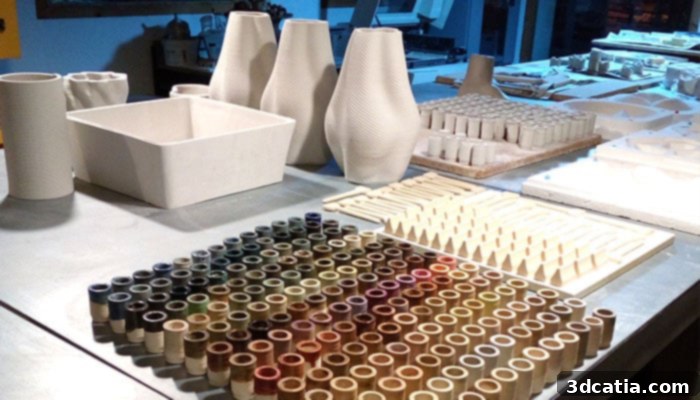
Production in ceramic 3D printing is increasing every day | Credits: Taller Baltà
Martí Baltà, offering his perspective on the industry’s future, states: “In the sector of design and craftsmanship, LDM technology will be an option to be taken into account in almost all workshops of young ceramists, who are already including in their academic studies digital modeling and printing with this technology.” He also projects the impact on other critical sectors, commenting: “In the medical sector, DLP or SLA will be used more and more in the fabrication of implants, and Binder Jetting will have many possibilities to fill the niche for the prosthetic sector.” These insights highlight the diverse application growth across both creative and highly technical domains.
While the proliferation of ceramic 3D printing technologies is an ongoing reality, there are still crucial factors that manufacturers, service providers, and end-users must consider before fully embracing these techniques. As XJet CEO Hanan Gothait points out: “There are some important challenges that must be met to achieve this growth, for example, education programs for ceramic engineers, as well as professionals. An essential step in this progress is the adoption of this technology by the main players in the ceramic market, including manufacturers, service providers and end users. Once this process begins, it will grow like a snowball and turn it into a legitimate and popular technology.” Investing in specialized education and fostering broader industry acceptance are vital steps to unlock the full potential and mainstream adoption of ceramic additive manufacturing.
The formations in 3D ceramic printing will be key to the settlement of the technologies
What are your thoughts on the evolving landscape of ceramic 3D printing? We encourage you to share your insights in a comment below or join the discussion on our Facebook and Twitter pages! Don’t miss out on the latest advancements – remember to sign up for our free weekly Newsletter, delivering all the essential news in 3D printing directly to your inbox!