
3D Printed Toothbrush Grips: Revolutionizing Oral Hygiene Accessibility for All
Brushing one’s teeth is a foundational daily ritual, a cornerstone of personal hygiene deeply ingrained in us from childhood. It’s a routine most people perform without a second thought, yet for millions worldwide, this seemingly simple act presents a significant challenge. Individuals living with conditions that limit movement and dexterity often find the repetitive, precise motions required for effective brushing to be a painful, frustrating, or even impossible task. Medical conditions such as arthritis, carpal tunnel syndrome, tremors, or those resulting from various injuries can severely impair fine motor skills and grip strength. These limitations mean that maintaining proper oral hygiene with traditional toothbrushes is often done with reduced efficacy, leading to potential health complications and a diminished sense of independence.
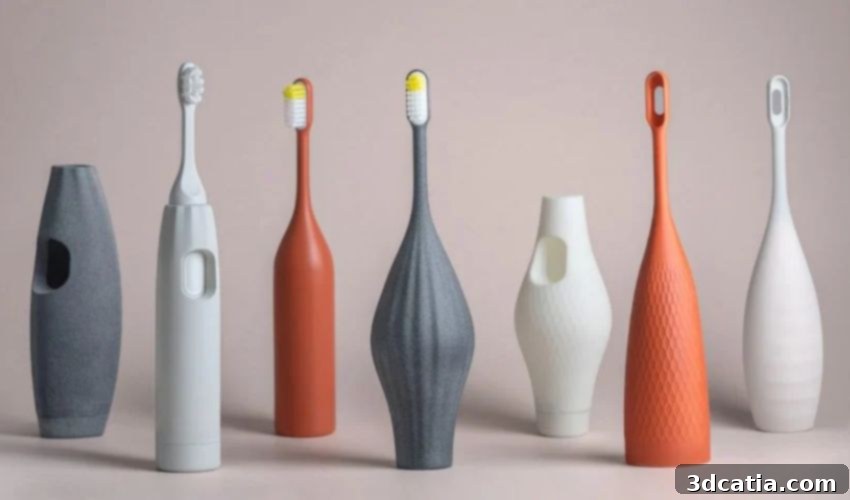
Recognizing this pervasive but often overlooked problem of accessibility in daily self-care, the innovative brand consultancy firm Landor & Fitch has stepped forward with a groundbreaking solution. They have unveiled a pioneering design series of 3D printed toothbrush grips, aptly named ‘Accessories’. This initiative is not just about making a tool easier to hold; it’s about creating truly custom solutions specifically engineered to assist individuals in effectively maneuvering their toothbrushes. By leveraging the power of additive manufacturing, Landor & Fitch aims to transform the oral hygiene experience, making it more comfortable, efficient, and dignified for everyone, regardless of their physical limitations.
The ‘Accessories’ system is ingeniously designed around a user-centric approach, ensuring that each solution is uniquely tailored to the individual’s specific needs. The journey to a personalized toothbrush grip begins with a comprehensive, customer-answered questionnaire. This crucial initial step gathers vital information about the user’s preferences and requirements. The questions are thoughtfully crafted, ranging from practical details like whether the user employs an electric or manual toothbrush, to more personal ergonomic considerations such as the most comfortable object shape to hold. To aid in this selection process, the questionnaire even includes real-world examples, allowing users to visualize and articulate their preferences more accurately. This data forms the bedrock upon which the custom grip is designed, moving beyond a one-size-fits-all model to truly bespoke functionality.
Once the questionnaire responses are processed, advanced algorithms translate this input into precise design parameters for the 3D printing process. This digital blueprint then undergoes a final adjustment phase, ensuring every detail is optimized for the user. The incredible flexibility of 3D printing technology allows for an unparalleled level of customization, extending beyond just the shape and size of the grip to include subtle yet significant details like texture and even color. This means that users don’t just receive a functional aid; they receive a custom-sized and shaped toothbrush grip that feels natural, provides superior control, and is visually appealing. The ability to fine-tune these elements ensures maximum comfort and effectiveness, empowering users to maintain their oral health with newfound ease and confidence.
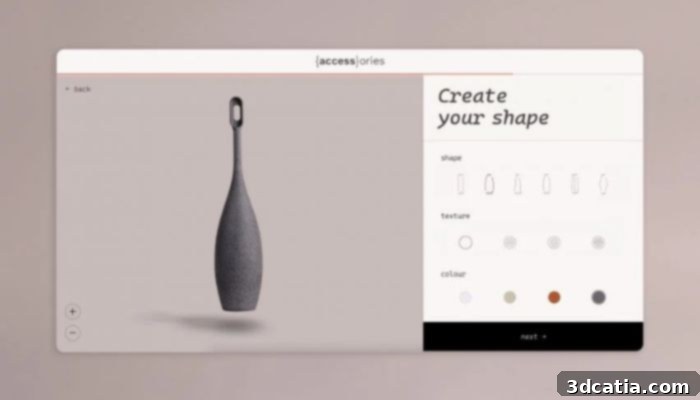
The intuitive questionnaire guides users through choices like electric or manual toothbrushes and comfortable object shapes, complete with real-world examples for better selection.
The true power of the ‘Accessories’ system lies in its remarkable capacity for personalization. In total, the platform is capable of generating an astonishing 142 different design permutations. This vast array of options ensures that virtually every individual’s unique anatomical and dexterity requirements can be met with precision. One of the most compelling advantages of utilizing 3D printing for these parts is the inherent cost-effectiveness. Despite the extensive degree of customization offered, the production costs remain remarkably low. This makes high-quality, personalized assistive devices accessible to a much broader audience, breaking down traditional barriers associated with bespoke manufacturing.
Luc Speisser, Landor & Fitch’s global chief innovation officer, eloquently articulates the profound impact of this innovation: “The Accessories digital platform allows users to personalise their toothbrush handles, providing an efficient but also equally desirable and affordable solution to a daily but often-unseen barrier.” He further emphasizes the moral imperative behind such inclusive design, stating, “We cannot continue to unintentionally exclude the one-billion people living on this planet who are experiencing some form of disability.” This sentiment underscores the project’s core mission: to address a fundamental need for a significant portion of the global population, fostering greater independence and equity in everyday life. By making a product as essential as a toothbrush universally usable, ‘Accessories’ sets a new standard for thoughtful, accessible design.
Driven by a deep commitment to innovation rooted in accessibility and equity, Speisser highlighted a critical aspect of their design methodology: the absolute necessity of including the target customer base directly in the product design process. He passionately advocated for a paradigm shift from “designing *for* them” to “designing *with* them.” According to Speisser, this collaborative approach is paramount to avoiding what he calls “bad design,” especially when it pertains to products for people living with disabilities. “To avoid bad design in general, and even more so when it comes to people living with disabilities, it is critical to recruit a representative group of the people you want to design for. And, in fact, not design for them but design with them. This is the best and fastest way to check if you are on the right track,” he explained.
In line with this philosophy, the dedicated team at Landor & Fitch meticulously organized and conducted a series of hands-on workshops. These workshops brought together individuals with various limitations to their range of motion, grip strength, and dexterity. Participants were actively involved in every step of the prototyping process, invited to mold, test, and provide invaluable feedback on the evolving designs. This iterative and empathetic approach ensured that the ‘Accessories’ grips were not merely theoretical solutions but practical, user-validated tools developed through genuine co-creation. The insights gleaned from these direct interactions were instrumental in refining the designs, guaranteeing that the final product truly met the nuanced needs and preferences of its intended users, fostering a sense of ownership and empowerment among the community it serves.
The culmination of this thoughtful design process and advanced manufacturing technique is an elegantly crafted 3D printed toothbrush grip that marries superior functionality with sophisticated aesthetics. Unlike makeshift solutions improvised with rubber bands or duct tape – crude “hacks” that many testers reported using prior to the ‘Accessories’ toothbrush – this product offers a sleek, modern design. The grips can be either decoratively striking or subtly nondescript, allowing users to choose an appearance that aligns with their personal style and comfort. This attention to aesthetic detail is crucial; it helps to normalize assistive devices, transforming them from visible signs of disability into stylish, integrated components of daily life. The result is not just greater comfort and control, but also a significant boost in dignity and self-esteem for the users, moving beyond mere utility to encompass psychological well-being.
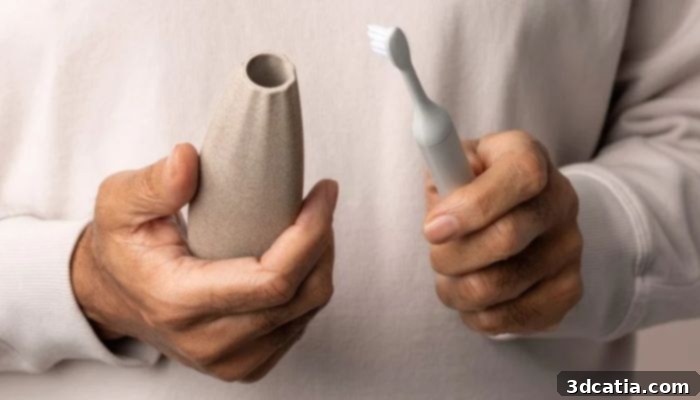
A clear visual demonstration highlighting the ergonomic advantages and custom fit of an Accessories holder compared to the standard, often inadequate, grip of a conventional toothbrush.
The impact of innovative solutions like the ‘Accessories’ 3D printed toothbrush grips extends far beyond the realm of oral hygiene. It serves as a powerful testament to the transformative potential of additive manufacturing when combined with a human-centered, inclusive design philosophy. This approach not only addresses a specific, pervasive problem but also paves the way for a future where personalized assistive technologies are readily available and seamlessly integrated into daily life. Imagine a world where all personal care items, from hairbrushes to eating utensils, can be customized to individual needs, promoting greater independence and improving the quality of life for millions. The ‘Accessories’ project is a significant step towards this more equitable and accessible future, demonstrating how thoughtful innovation can empower individuals and redefine standards of care. To delve deeper into this remarkable product and even design a personalized grip for yourself or a loved one, we encourage you to visit the official Accessories website HERE.
What are your thoughts on the ‘Accessories’ 3D printed toothbrush grips and their potential to enhance accessibility? We’d love to hear your perspectives! Share your comments below or engage with us on our social media platforms: LinkedIn, Facebook, and Twitter. Don’t forget to sign up for our free weekly newsletter here to receive the latest 3D printing news straight to your inbox! You can also find all our compelling videos and interviews on our YouTube channel, offering deeper insights into the world of additive manufacturing.
*All Photo Credits: Accessories