
3D Printing vs. CNC Machining: A Comprehensive Guide to Additive and Subtractive Manufacturing Technologies
In the dynamic world of modern manufacturing, two prominent technologies stand out for producing parts across various industries: 3D printing and CNC machining. While both methods are incredibly versatile and have revolutionized rapid prototyping and production, they operate on fundamentally different principles and excel in distinct applications. 3D printing, an innovative additive manufacturing technique, offers unparalleled design freedom but faces challenges in mass production speed and overall accessibility compared to more established methods. Conversely, CNC machining, a sophisticated subtractive manufacturing process, is a common and highly precise method for creating parts, particularly suited for low-to-mid volume production runs. Understanding the core differences, advantages, and limitations of each is crucial for selecting the most appropriate technology for any given manufacturing task. This detailed comparison aims to illuminate where these powerful technologies are best utilized, helping engineers, designers, and manufacturers make informed decisions.
Subtractive vs. Additive Manufacturing: The Fundamental Distinction
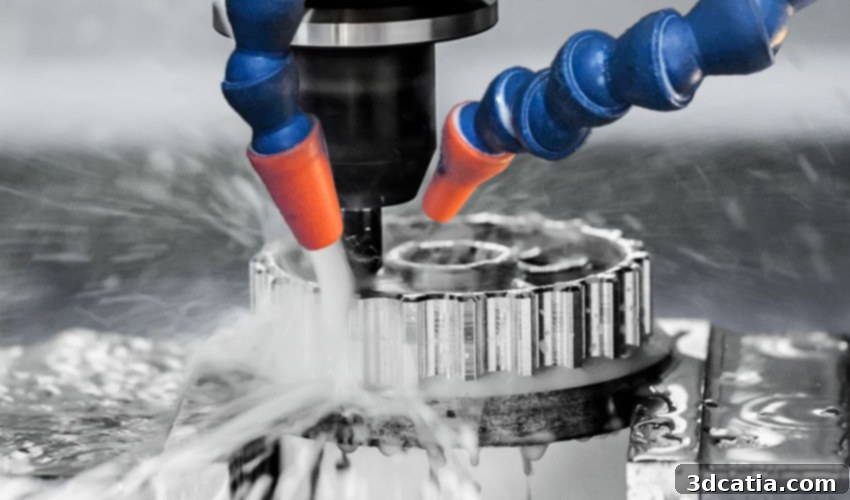
The primary conceptual difference between 3D printing and CNC machining lies in their approach to material handling. 3D printing falls under the umbrella of additive manufacturing, meaning it builds a part layer by layer from raw material. In stark contrast, CNC machining is a subtractive manufacturing process, which begins with a solid block of material—often referred to as a “blank” or “workpiece”—and meticulously removes material to achieve the desired finished geometry. This removal is typically accomplished using a variety of cutting tools and spinning drills, guided by computer numerical control.
CNC machining leverages computer-aided design (CAD) and computer-aided manufacturing (CAM) software to precisely control the movement of its tools. This allows for exceptional dimensional accuracy and repeatability, crucial for parts requiring tight tolerances. Furthermore, CNC technology is compatible with an extensive array of materials, including various grades of wood, metals (such as aluminum, steel, titanium), and a wide range of plastics (like ABS, Nylon, Polycarbonate, PEEK). Its ability to work with robust materials and achieve excellent surface finishes makes it a go-to choice for functional prototypes and end-use parts.
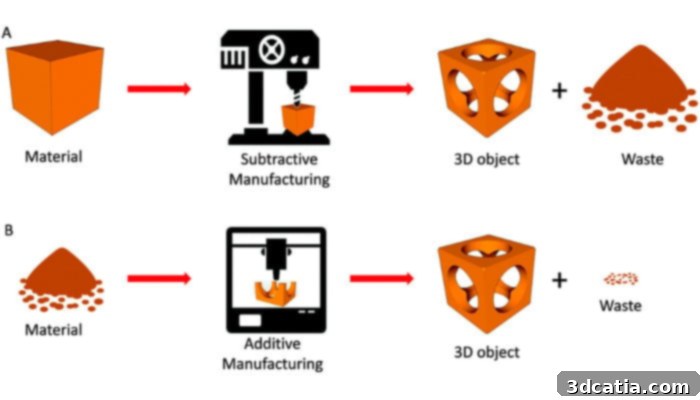
3D printing, or additive manufacturing, creates objects by successively adding material in layers until the entire part is formed. This process can utilize a diverse range of materials and technologies. Common methods include Fused Deposition Modeling (FDM) which uses plastic filaments, Stereolithography (SLA) and Digital Light Processing (DLP) which employ liquid resins, and Selective Laser Sintering (SLS), Direct Metal Laser Sintering (DMLS), or Selective Laser Melting (SLM) which utilize plastic or metal powders. In these processes, a source of energy—such as a laser, UV light, or a heated extruder—selectively solidifies or fuses layers of these materials, building the part from the bottom up. The key advantages of 3D printing include unprecedented freedom of design, allowing for the creation of complex geometries that are impossible or cost-prohibitive with traditional methods. It finds applications across countless sectors, from aerospace to medical, and offers benefits such as high accuracy for intricate details, quicker iteration cycles, and the potential to significantly cut both material waste and the overall weight of parts through optimized designs.
Interestingly, the manufacturing landscape is also seeing the emergence of hybrid machines that ingeniously combine both additive and subtractive manufacturing capabilities within a single system. These innovative machines aim to harness the strengths of both worlds, enabling users to print complex geometries and then precisely finish them using integrated milling tools. A notable example is the ZMorph 2.0 SX, marketed as a multi-functional device that serves as both a CNC mill and a 3D printer, thanks to its interchangeable heads. Similarly, several companies have successfully launched crowdfunding campaigns for “3-in-1” 3D printers, such as Mooz, indicating a growing demand for such versatile, all-in-one manufacturing solutions. These hybrid systems offer potential benefits in terms of workflow efficiency and the ability to produce parts with both intricate internal structures and finely machined external surfaces.
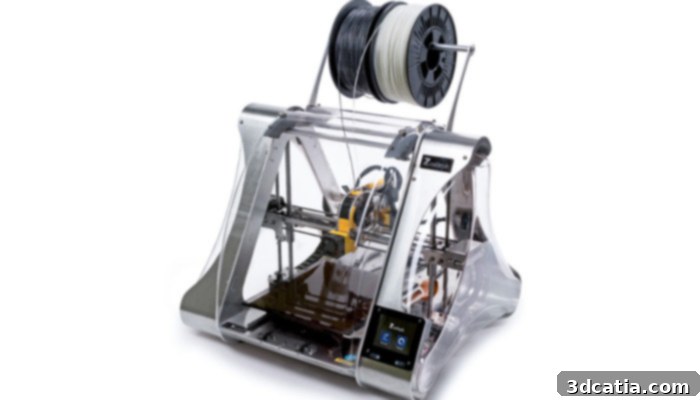
The ZMorph SX 2.0 includes interchangeable CNC and 3D printing heads.
Material Compatibility: A Key Differentiator
Material selection is a critical factor in manufacturing, and both 3D printing and CNC machining boast compatibility with a wide array of materials, including plastics and metals. Traditionally, 3D printing has been more focused on plastics, offering a vast selection of polymers for various applications. However, this landscape is rapidly evolving as manufacturers like 3D Systems, Arcam, Desktop Metal, and Markforged are continuously developing more affordable, accessible, and high-performance methods for 3D printing metals. These advancements are pushing the boundaries of what is possible with additive manufacturing, making metal 3D printing a viable option for an increasing number of industrial applications.
For CNC machining, the most commonly used plastics include engineering-grade thermoplastics such as ABS (Acrylonitrile Butadiene Styrene), Nylon (PA66), Polycarbonate (PC), Acrylic (PMMA), Polypropylene (PP), POM (Acetal), and PEEK (Polyether Ether Ketone). These materials are chosen for their excellent mechanical properties, machinability, and stability. Among metals, aluminum is a perennial favorite in CNC machining, widely utilized by prototyping companies across diverse industries to create high-quality, functional prototypes. Aluminum’s popularity stems from its excellent strength-to-weight ratio, corrosion resistance, recyclability, and ease of machining. Other frequently machined metals include various grades of stainless steel, magnesium alloy, zinc alloy, titanium, and brass, each offering specific properties suited for different industrial requirements.
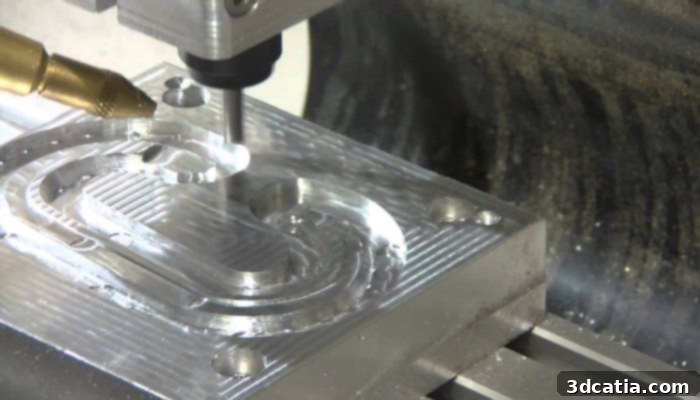
Aluminium is a commonly used metal with CNC due to its good mechanical properties.
In the realm of 3D printing, commonly utilized thermoplastics encompass ABS, PLA (Polylactic Acid), Nylon, and high-performance polymers like ULTEM. Photo-polymers, such as wax, castable resins, or biocompatible resins, are also widely employed, particularly in SLA and DLP processes for fine detail and specialized applications like dental or jewelry manufacturing. Beyond plastics and resins, some niche 3D printers can process a remarkable range of materials, enabling the creation of parts in sand, ceramics, and even living cellular materials for advanced biomedical research. For metal 3D printing, the most common materials include aluminum, stainless steel, titanium, and Inconel. However, it’s crucial to note that printing with metal often requires substantial investment in specialized industrial-grade machines, which can easily cost upwards of $100,000. Conversely, certain unique materials, such as superalloys with complex compositions or highly flexible materials like TPU (Thermoplastic Polyurethane), are challenging or impossible to create with traditional CNC machining and are thus exclusively manufactured using 3D printing or specialized rapid tooling technologies.
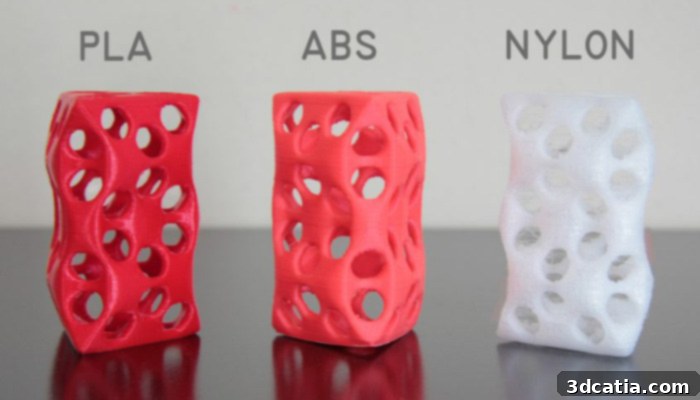
Some plastics available to be 3D printed and CNC milled.
Ease of Use and Operational Requirements
When considering the operational aspects, 3D printing is generally perceived as being simpler to use than CNC machining, particularly for beginners or those seeking automated processes. Once a 3D model (CAD file) is prepared, the operator typically imports it into a slicing software. Here, key parameters are set, such as part orientation, infill density (for FDM), and the generation of support structures if required to prevent part deformation during printing. After these settings are finalized and the print initiates, minimal human supervision is required. The 3D printer can often be left to complete the part unsupervised, making it an ideal solution for continuous operation and reducing labor costs. Post-processing requirements can vary significantly depending on the specific 3D printing technology used; for instance, FDM parts might need support removal, while SLA parts require a UV cure and often extensive cleaning.
In contrast, CNC machining is a far more labor-intensive and skill-dependent process. It demands the expertise of a highly skilled operator throughout various stages. This includes meticulous selection of the appropriate cutting tools from a diverse library, determining optimal rotation speeds (RPM) for the spindle, calculating feed rates, defining the precise cutting path (toolpath generation, often involving G-code programming), and careful repositioning and fixturing of the material blank as different faces or features are machined. The complexity of toolpath generation and the need for constant monitoring to prevent tool breakage or material damage necessitate a high level of technical proficiency. Furthermore, post-processing techniques for CNC parts, such as deburring, surface finishing (polishing, sandblasting), or heat treatment, can also be time-consuming and require additional specialized skills and equipment, contributing to the overall labor intensity.
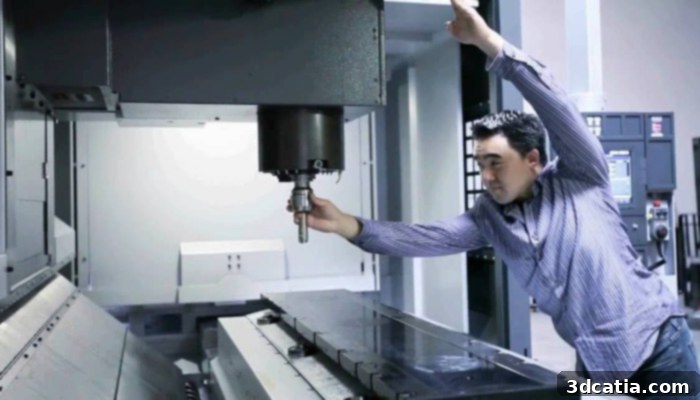
CNC requires an operator whereas 3D printing can be left alone when printing.
Accuracy, Size Limitations, & Geometric Complexity
To provide a meaningful comparison regarding precision, we’ll focus on industrial 3D printing processes such as Selective Laser Sintering (SLS), industrial-grade Fused Deposition Modeling (FDM), and Direct Metal Laser Sintering (DMLS) for metal parts, contrasting them with CNC machining. In terms of overall tolerance and surface finish, CNC machining typically holds a superior position over virtually all 3D printing processes, including even the high-precision DMLS. This is due to the robust mechanical nature of cutting tools and the rigid setup of CNC machines, which allow for extremely tight dimensional control. However, when examining minimum layer thicknesses, the superiority of CNC is not always as profound, especially compared to advanced additive technologies like DMLS which can achieve remarkably fine resolutions. Nonetheless, CNC still often provides a finer surface finish directly off the machine.
Regarding build volume and part size, powder bed fusion 3D printing processes like SLS and DMLS are inherently limited by the physical dimensions of their build chambers. While technologies such as industrial FDM can offer larger build envelopes, they generally cannot compete with the maximum part sizes achievable through large-format CNC machines. Many industrial CNC mills can handle extremely large workpieces, enabling the creation of components that dwarf the capabilities of most 3D printers, making them ideal for large-scale industrial parts.
Where 3D printing truly shines is in its ability to produce parts with extraordinarily high geometric complexity. While some 3D printing technologies require support structures—which are later removed—to fabricate overhangs and intricate features, the additive nature allows for the creation of internal channels, lattice structures, organic shapes, and consolidated assemblies that are impossible or economically unfeasible with traditional subtractive methods. Technologies like SLS and HP’s Multi Jet Fusion are particularly noteworthy for their ability to produce complex, interlocking geometries without the need for any support structures, as the unfused powder acts as its own support medium, further streamlining post-processing.
|
Tolerance (mm) |
Min. Layer Thickness (mm) |
Max. build volume (mm) |
|
|
CNC Milling |
± 0.025 – 0.125 mm |
cutting depth 0.01 mm |
2000 x 800 x 1000 mm |
|
SLS |
± 0.3 mm |
0.7 – 1.0 mm |
300 x 300 x 300 mm |
|
Industrial FDM |
± 0.5 mm |
0.8 – 1.0 mm |
900 x 600 x 900 mm |
|
DMLS |
± 0.1 mm |
0.4 mm |
230 x 150 x 150 mm |
Cost Considerations: Understanding the Economics
The cost effectiveness of 3D printing versus CNC machining is not always straightforward and depends heavily on several variables, including the required quantity of parts, the desired lead time, and the complexity of the design. While, on average, 3D printing might appear cheaper for very small batches, a deeper analysis reveals nuances. For larger production quantities, typically from several tens to hundreds of identical parts, CNC machining often becomes the more economically appropriate choice. This is because the initial setup costs, programming, and tooling for CNC can be amortized over a greater number of units, driving down the per-part cost significantly. For low volumes or one-off prototypes, 3D printing generally offers a lower cost due to minimal setup time and no need for specialized tooling or fixtures.
Furthermore, if rapid prototyping or quick iterations are paramount, 3D printing excels in speed and often offers a more affordable solution for getting prototypes or parts very quickly into hand. This accelerates product development cycles, potentially leading to overall cost savings in the long run. However, several additional factors complicate a direct cost comparison between the two technologies. Material costs vary dramatically; while basic plastic filaments for 3D printing might be inexpensive, specialized high-performance materials like PEEK can cost upwards of $500 per kilogram. Similarly, raw stock materials for CNC range from affordable aluminum to costly exotic alloys. Additionally, the operational costs of machinery, including maintenance, repairs, and the replacement of components like CNC cutting heads or 3D printer nozzles/lasers, must also be factored into the total cost of ownership. Labor costs for skilled CNC operators are often higher than for 3D printing technicians, further influencing the overall budget.
Environmental Friendliness and Waste Reduction
When evaluating the environmental impact, a clear distinction emerges between subtractive and additive manufacturing. Since CNC machining inherently involves cutting material away from an original block, there is an unavoidable generation of waste in the form of chips, shavings, and swarf. These material remnants require subsequent cleaning, collection, and proper disposal or recycling, adding to the environmental footprint and operational overhead. The energy consumption of CNC machines, particularly for powerful spindles and coolant systems, can also be substantial. While many metal chips can be recycled, the process itself is still material-intensive.
In contrast, additive manufacturing, or 3D printing, is generally considered the more environmentally friendly method. By building an object layer by layer from material precisely fed into the machine, it inherently minimizes waste. Material is only used where it is needed, leading to significantly less unused scrap compared to CNC machining. The only significant waste generated by 3D printing typically comes from support structures (if used) and occasional failed prints. Efforts are also being made to improve the sustainability of 3D printing materials, with the development of recycled filaments, biodegradable resins, and more efficient printing processes. This efficient use of material makes 3D printing a more ethical and sustainable choice for reducing waste in manufacturing processes.
Conclusion: Choosing the Right Manufacturing Method
In conclusion, there is no single “perfect” manufacturing technique that universally outperforms the others. Both 3D printing and CNC machining are incredibly competent and valuable technologies, each possessing unique strengths that make them indispensable in modern engineering and production. The most appropriate method for any given project will ultimately depend on a careful evaluation of several key factors: the desired material properties, the geometric complexity of the part, the required manufacturing volume, the available budget, and the desired lead time and accuracy. For projects demanding extremely tight tolerances, superior surface finish, and large production volumes, CNC machining often remains the preferred choice. However, for intricate designs, rapid prototyping, low-volume custom parts, or when material efficiency and design freedom are paramount, 3D printing offers an unparalleled solution.
To ascertain which technology is best suited for your particular job, we highly recommend consulting with local or international manufacturing service providers. Their expertise can provide invaluable advice tailored to your specific needs. If you are considering in-house manufacturing, it is essential to thoroughly assess the capabilities of your existing machinery and align them with the demands of the task at hand. Understanding the nuances of these powerful manufacturing processes empowers you to make strategic decisions that optimize cost, time, and part quality for your projects.
What do you think is the overall better method: 3D printing or CNC? Let us know your thoughts in a comment below or share your insights on our Facebook and Twitter pages! Don’t miss out on the latest advancements in additive manufacturing—sign up for our free weekly Newsletter to get all the news in 3D printing delivered straight to your inbox!