
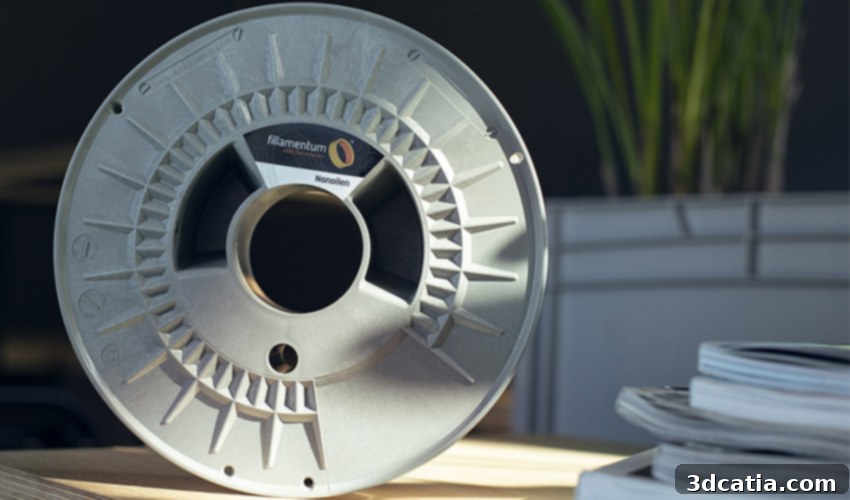
Fillamentum’s NonOilen: Pioneering 100% Biodegradable & Recyclable 3D Printing for a Sustainable Future
The world of additive manufacturing is rapidly evolving, driven not only by technological advancements but also by an increasing global demand for sustainability. As industries worldwide strive to minimize their environmental footprint, the 3D printing sector is actively responding with innovative, eco-conscious solutions. On World Recycling Day, we previously highlighted Bluesint PA12, a groundbreaking polymer developed by Materialise, which enables 3D printing with a remarkable 100% recycled powder. Following this commitment to a greener future, the Czech manufacturer Fillamentum has now unveiled its own significant contribution: NonOilen. This innovative material marks Fillamentum’s first 100% biodegradable filament for 3D printing, representing a pivotal step towards making additive manufacturing inherently more sustainable. This initiative aligns perfectly with a growing trend of projects aimed at drastically limiting the environmental impact of 3D printing on our planet, fostering a future where manufacturing is both advanced and ecologically responsible.
NonOilen stands out due to its unique composition and lifecycle. Crafted from a carefully engineered blend of polylactic acid (PLA) and polyhydroxybutyrate (PHB), this revolutionary filament was developed through a collaborative effort with the esteemed Slovak University of Technology in Bratislava, Slovakia. This scientific partnership has resulted in a material that addresses a critical challenge in plastic waste management. When a product fabricated using NonOilen filament reaches the natural end of its service life, it doesn’t contribute to landfill accumulation for centuries like traditional plastics. Instead, it is designed to fully and efficiently degrade into benign components: water and carbon dioxide. This complete decomposition process ensures that no harmful residues are left behind, offering a truly environmentally responsible end-of-life solution. Furthermore, Fillamentum has integrated a robust recycling option: users can return used NonOilen products to the company for reprocessing, ensuring the material can be effectively reused. According to Fillamentum, a key differentiator of NonOilen is its exceptional ability to retain its superior mechanical properties even after being recycled multiple times, a stark contrast to many other materials that degrade significantly with each recycling cycle. This innovative approach champions the principles of a circular economy, maximizing resource efficiency and minimizing waste.
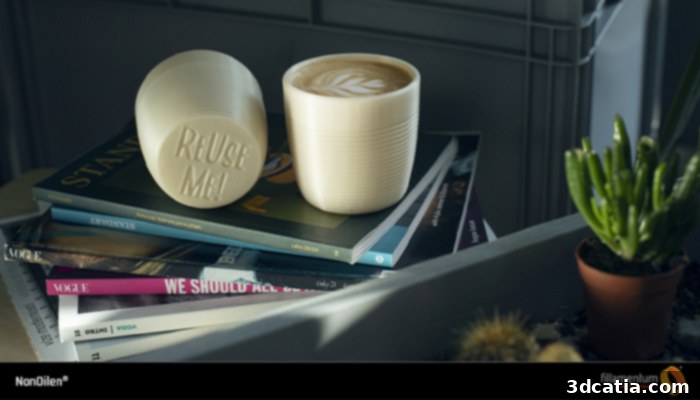
NonOilen is meticulously crafted from a unique blend of PLA and PHB, ensuring optimal biodegradability and performance (photo credits: Fillamentum)
Beyond its remarkable biodegradability, Fillamentum emphasizes another crucial aspect of NonOilen’s environmental credentials: it is made 100% out of polymers derived from renewable resources, meaning it is entirely bio-based. This fundamental characteristic moves NonOilen far beyond merely being a degradable plastic; it positions it as a truly sustainable material from its very origin. By utilizing biomass instead of fossil fuels, NonOilen actively reduces reliance on finite resources and contributes to a lower carbon footprint throughout its production lifecycle. This complete embrace of bio-based materials, coupled with its biodegradable and recyclable nature, firmly establishes NonOilen within the core principles of a circular economy. In a circular economy model, resources are kept in use for as long as possible, extracting the maximum value from them whilst in use, then recovering and regenerating products and materials at the end of each service life. NonOilen exemplifies this ideal, offering a comprehensive solution that addresses both the input (renewable resources) and output (biodegradation/recyclability) sides of the material lifecycle, making it a leading contender for genuinely sustainable manufacturing practices in the 3D printing industry and beyond.
NonOilen’s Revolutionary Properties: Combining Performance with Unprecedented Sustainability for 3D Printing
While its environmental benefits are groundbreaking, NonOilen doesn’t compromise on performance, offering properties highly comparable to traditional, widely-used filaments like PLA, but with significant advantages. According to Fillamentum, this new filament is as straightforward and user-friendly to print with as standard PLA, ensuring a smooth transition for existing 3D printing enthusiasts and professionals. Parts produced with NonOilen boast an exceptionally smooth surface finish, crucial for aesthetic appeal and functional precision in various applications. Furthermore, the filament delivers impressive mechanical characteristics, offering high strength, excellent toughness, and notable hardness – essential qualities for durable and reliable 3D printed objects. Like many PLA-based materials, NonOilen filament is certified safe for contact with food, expanding its potential applications in kitchenware, packaging prototypes, and more. It is also conveniently dishwasher safe, enhancing the practicality and reusability of printed items. The most striking difference between NonOilen and conventional PLA, however, lies in its environmental decomposition. NonOilen can decompose up to three times faster than PLA, a critical factor in reducing long-term environmental burden. Moreover, and perhaps most significantly, Fillamentum confirms that the byproducts resulting from NonOilen’s decomposition process do not contribute to the greenhouse effect, which is largely blamed for accelerating climate change. This makes NonOilen a dramatically more sustainable option compared to numerous other materials on the market, addressing a core environmental concern directly. Despite its rapid decomposition capabilities, it is crucial to note that NonOilen also promises long-term durability for any objects printed with it during their intended lifecycle, ensuring that sustainability doesn’t come at the cost of functional longevity.
This blend of high performance and profound environmental responsibility makes NonOilen a truly versatile material with broad industrial appeal. The filament’s ability to withstand temperatures of up to 110 degrees Celsius further expands its application possibilities, enabling its use in environments that demand greater thermal stability than typical PLA can offer. This enhanced heat resistance makes NonOilen suitable for more demanding applications in various sectors, moving beyond mere prototyping into functional parts. A testament to its industrial viability comes from Fremach, a global supplier of plastic components primarily for the automotive industry, which has rigorously tested NonOilen. Fremach’s positive feedback, indicating that they were thoroughly impressed and “won over by the filament’s properties,” bodes exceptionally well for NonOilen’s future adoption in high-stakes manufacturing environments. This validation from a major industrial player underscores the material’s readiness for large-scale application. Such advancements signal a promising future for both additive manufacturing and global environmental protection. The 3D printing industry has seen a remarkable surge in initiatives aimed at making this transformative technology more eco-friendly, and NonOilen is at the forefront of this movement. By offering a material that is both high-performing and environmentally benign throughout its entire lifecycle, Fillamentum is setting new benchmarks for sustainable innovation in 3D printing. For those interested in exploring this groundbreaking filament further, comprehensive details about NonOilen can be found directly on Fillamentum’s dedicated website HERE.
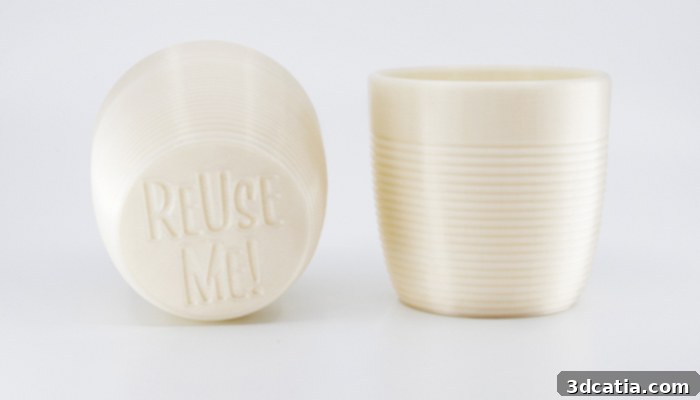
Objects crafted from NonOilen are designed for easy recycling, contributing to a truly circular economy (photo credits: Fillamentum)
What are your thoughts on NonOilen’s potential to revolutionize sustainable 3D printing? Do you believe materials like this will become the new industry standard? We’d love to hear your insights! Let us know in a comment below or join the discussion on our Facebook, Twitter and LinkedIn pages! For the latest news, trends, and innovations in the world of 3D printing, sign up for our free weekly Newsletter here, delivering fresh content straight to your inbox!