
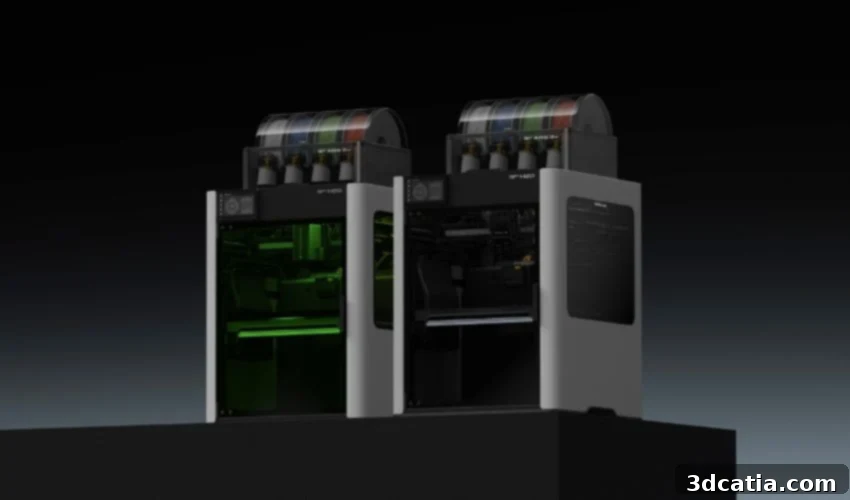
Bambu Lab H2D: The All-in-One 3D Printer, Laser Engraver, and Cutter for Future Personal Manufacturing
Bambu Lab has rapidly ascended as one of the most transformative forces in the commercial 3D printer market. The company’s innovative approach and user-centric designs have cultivated a highly engaged community, eagerly anticipating every new development. This excitement reached a fever pitch following earlier announcements about a new printer series, initially slated for late 2024. After a revised timeline pushed the release to 2025, the wait is finally over: Bambu Lab has officially unveiled its groundbreaking new H2D 3D printer, a device poised to redefine personal fabrication and revolutionize how creators approach DIY projects and small-scale manufacturing.
The journey to the H2D’s release has been marked by high expectations. When Bambu Lab first hinted at a new 3D printer series for 2025, they made a bold promise: “no compromises.” This commitment resonated deeply with the 3D printing community, setting the stage for a product that would not just meet, but exceed current industry benchmarks. Dr. Tao, CEO and co-founder of Bambu Lab, articulated this vision in October 2024, stating, “We are building something that will push the boundaries of what is possible in 3D printing for consumers.” This declaration ignited widespread speculation about the features and capabilities of this mysterious new machine, fueling a sense of eager anticipation that has now culminated in the H2D’s official debut, promising a device that truly delivers on its ambitious claims.
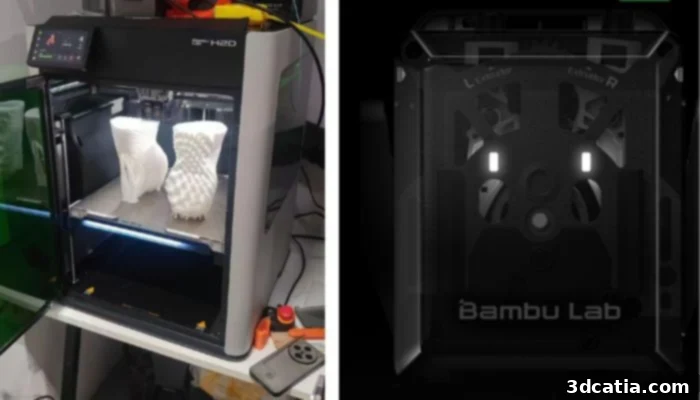
Early glimpses: The leaked image from a Bambu Lab Facebook User Group (left) alongside the official preview of the new H2D printer on the Bambu Lab website (right).
For months following the initial announcement, details remained scarce, intensifying the mystery around Bambu Lab’s next big innovation. It wasn’t until recent weeks that whispers turned into a roar, driven by the emergence of an apparently leaked image across various social media platforms. This single image sent ripples through the 3D printing world, sparking fervent discussions and speculation among enthusiasts. Though Bambu Lab maintained official silence, the community quickly pieced together rumored specifications: a generous print volume of 350 x 320 x 325 mm, a sophisticated dual nozzle system, and an enhanced version of the highly praised Automatic Material System (AMS). It was during this period of intense speculation that the printer gained its unofficial moniker, H2D, which was eventually confirmed. The culmination of this anticipation arrived on March 25th, when Bambu Lab finally lifted the veil, officially releasing the H2D to the global market and affirming many of the eagerly discussed leaks, much to the delight of its dedicated fanbase.
Introducing the Bambu Lab H2D: A Paradigm Shift in Personal Manufacturing
The first official look at the Bambu Lab H2D confirms that the earlier leaks and rumors were remarkably accurate. Indeed, the print volume of 350 x 320 x 325 mm precisely matches the pre-release assumptions, offering ample space for ambitious projects, from large prototypes to batch production of smaller parts. The presence of a dual hotend system and an advanced Automatic Material System (AMS 2) was also confirmed, validating the community’s keen observations regarding enhanced multi-material capabilities. However, one rumor stood out for its audacity: the integration of a laser module. Speculation quickly arose about the H2D’s potential for laser engraving and cutting, capabilities that would push it far beyond the scope of a conventional desktop 3D printer. This bold assumption has now been proven true, marking a significant milestone in personal fabrication technology and setting the H2D apart from anything else on the market.
The H2D transcends the traditional definition of a consumer 3D printer, ushering in a new era of multi-functional manufacturing. Bambu Lab has meticulously engineered this device to be a versatile powerhouse, simultaneously functioning as a high-performance 3D printer for multi-color and multi-material projects, a precision laser cutter, and a detailed laser engraver. This integration is not merely an add-on; it’s a fundamental reimagining of what a personal fabrication tool can achieve, allowing users to transition seamlessly between additive (3D printing) and subtractive (laser cutting/engraving) manufacturing processes within a single, compact machine. The implications for creative freedom and efficiency are profound, empowering hobbyists, designers, educators, and small businesses alike to tackle a broader spectrum of projects without the need to invest in multiple dedicated machines, thereby saving space, time, and cost.
Further enhancing its versatility, the H2D also incorporates a dedicated pen holder, transforming it into a precise drawing and labeling tool. This seemingly simple addition unlocks even more creative possibilities, from crafting intricate greeting cards, custom labels, and personalized stationery to drawing electronic circuits or decorative patterns on various materials. It allows for artistic expression beyond traditional fabrication, blending digital design with physical output. With these diverse functionalities, Bambu Lab positions the H2D as the ultimate all-in-one device for DIY enthusiasts and professionals seeking a comprehensive personal manufacturing solution. The company explicitly challenges users to “rethink personal manufacturing” – a powerful call to action reflected prominently on its website. The H2D is not just a tool; it’s an ecosystem for innovation, designed to streamline complex workflows and inspire a new generation of creators to bring their ideas to life with unprecedented ease and capability.
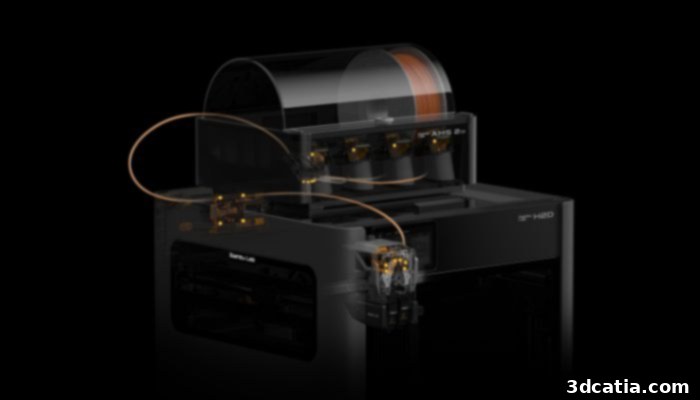
The H2D integrates the sophisticated new AMS 2 system, enhancing material management and multi-color printing capabilities.
Unpacking the H2D’s Advanced Features: A Deep Dive into its Capabilities
Let’s delve into the core functionalities that make the Bambu Lab H2D an unparalleled tool in the personal manufacturing space, starting with its impressive 3D printing prowess. As anticipated, the H2D boasts a generous build volume of 350 x 320 x 325 mm, providing ample room for larger prototypes, functional parts, or multiple smaller components in a single batch, offering greater design freedom than many desktop printers. Speed, a hallmark of Bambu Lab printers, is dramatically elevated here, with an astonishing maximum print speed of up to 1000 mm/s. For sustained, high-quality production, users can expect consistent printing at approximately 600 mm/s, ensuring rapid iteration and efficient project completion without sacrificing precision. The advanced hotend, capable of reaching temperatures up to 350°C, significantly broadens the range of compatible materials. This high-temperature capability means the H2D can effortlessly handle not only standard filaments like PLA and PETG but also engineering-grade materials such as ABS, ASA, Nylon, and Polycarbonate, crucial for robust and demanding applications. The dual nozzle system further enhances its utility, enabling efficient and fast printing with multiple filaments, whether for vibrant multi-color models, complex multi-material parts, or utilizing soluble supports for intricate geometries, greatly simplifying post-processing and expanding design possibilities.
Material management is revolutionized by the introduction of the new Automatic Material System, AMS 2. Building upon the success of its predecessor, AMS 2 is a comprehensive filament handling solution designed to dry, store, and reliably feed up to four different materials concurrently. This system is critical for maintaining optimal filament conditions, preventing moisture absorption that can degrade print quality, and ensuring a seamless multi-material workflow, especially with hygroscopic filaments. Bambu Lab has further refined this technology with the AMS Pro and AMS HT versions. These advanced iterations are equipped with precision servo motors, which not only accelerate the filament feeding process but also provide enhanced reliability and precision, particularly beneficial when working with sensitive or specialized materials, including those requiring higher temperatures or specific handling. The AMS 2 system thus empowers users to experiment with a vast array of colors and material combinations, pushing the boundaries of creative design and functional prototyping while minimizing manual intervention.
Beyond speed and material handling, the H2D integrates cutting-edge features designed to elevate print quality and user experience. A sophisticated bird’s eye view camera, coupled with advanced computer vision algorithms, provides real-time monitoring and intelligent optimization throughout the printing process. This system is capable of automatically verifying material alignment, ensuring precise first-layer adhesion, detecting potential print failures like spaghetti detection and warping, and optimizing material usage through smart path planning. The result is consistently higher-quality prints, significantly reduced material waste, and a more reliable and stress-free printing experience, allowing users to initiate prints with greater confidence and monitor progress remotely with unparalleled insight. This intelligent integration minimizes common pain points in 3D printing, making the H2D a highly autonomous and dependable workhorse for both novice and experienced users.
Now, let’s explore the H2D’s truly novel capabilities: its integrated laser module. This feature transforms the H2D from a specialized 3D printer into a versatile fabrication studio, opening up new avenues for creative expression and functional production. Equipped with both a 10W and a powerful 40W 455nm laser, the device is adept at both precise laser engraving and robust laser cutting. The 10W laser is ideal for detailed engraving and cutting thinner, more delicate materials like paper, cardstock, felt, and thin wood, offering fine precision for intricate designs. Meanwhile, the 40W laser significantly expands its capabilities, enabling the cutting of substantial materials such as 15 mm thick plywood, various acrylics, dense foam, leather, cork, and even certain types of thin metals for marking and engraving. The ability to process 5mm plywood with the 10W and up to 15mm with the 40W laser unlocks a vast array of project possibilities, from custom signage and intricate architectural models to personalized gifts, functional components, and custom apparel, all within a single, integrated machine.
To further enhance its laser capabilities, the H2D includes a specialized rotating unit. This ingenious addition allows users to process cylindrical or conical objects, such as tumblers, pens, decorative bottles, or even certain types of glassware, enabling intricate 360-degree engraving and marking. This expands the device’s application into personalization, product customization, and crafting markets, allowing for truly unique creations. Furthermore, an integrated Air Assist system ensures optimal cooling of the laser path during operation. This crucial feature not only improves the surface quality of cuts and engravings by preventing scorching, charring, and material discoloration but also significantly extends the lifespan of the laser module by efficiently clearing debris and heat. With these advanced functions, the H2D genuinely places the power of multifaceted creation into the hands of the user, making the only limit truly the imagination of the individual.
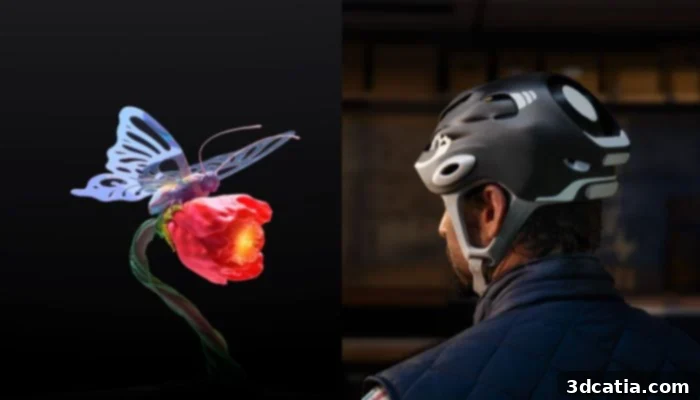
The numerous features of the Bambu Lab H2D open up unprecedented creative possibilities for makers and designers.
Connectivity, Control, and Market Impact of the H2D
Beyond its impressive physical capabilities, the Bambu Lab H2D integrates seamlessly into modern workflows through robust connectivity options. Users can control the device remotely via the cloud, allowing them to initiate prints, monitor progress, manage projects, and receive notifications from virtually anywhere, using any internet-connected device. This flexibility is invaluable for busy professionals, educators, and hobbyists alike, enabling greater efficiency, convenience, and peace of mind. Recognizing the critical importance of data security and user autonomy, Bambu Lab has also ensured full offline functionality. This means users can still control the device, start prints, send files, or carry out firmware updates even without an internet connection, offering complete operational independence and ensuring privacy for sensitive projects. The H2D is expected to be available from June 2025, offering various price categories and versions to cater to a wide range of needs and budgets, making advanced personal manufacturing more accessible and adaptable than ever before.
In essence, with the H2D, Bambu Lab has not merely introduced a new product; it has set an exceptionally high bar for the entire 3D printing and personal fabrication industry. The convergence of high-speed 3D printing, advanced multi-material capabilities, precise laser engraving/cutting functionality, and even a drawing pen holder, all within a single, user-friendly machine, represents a significant leap forward in integrated desktop manufacturing. This innovation challenges conventional boundaries, pushing the envelope of what is expected from personal fabrication tools. Competitors will undoubtedly face pressure to innovate and integrate similar multi-functional capabilities to remain competitive in a rapidly evolving market. The Bambu Lab community, known for its passionate engagement, is sure to be thrilled with the expansive new features, and the initial reactions and creative projects enabled by the H2D are eagerly awaited globally. This device truly embodies Bambu Lab’s philosophy of pushing boundaries and empowering creators. For those eager to explore the future of personal manufacturing, more detailed information about the H2D can be found on the official Bambu Lab website HERE.
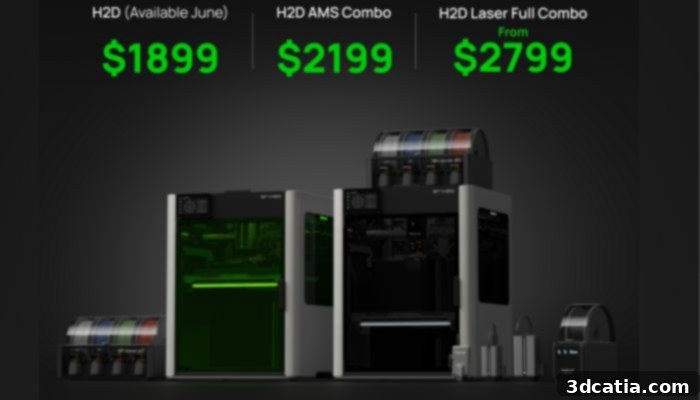
The Bambu Lab H2D will be available in various configurations and price points starting June 2025.
What are your thoughts on the revolutionary new Bambu Lab H2D 3D printer, laser engraver, and cutter? Are you excited about its potential to transform your DIY projects, educational curriculum, or professional workflow? Share your insights and expectations in a comment below or join the vibrant conversation on our LinkedIn, Facebook, and Twitter pages! Don’t miss out on the latest advancements in additive manufacturing – subscribe to our free weekly Newsletter here to get cutting-edge 3D printing news delivered straight to your inbox! You can also find all our compelling videos, tutorials, and expert interviews on our YouTube channel, offering visual guides and deeper dives into the dynamic world of 3D printing and personal fabrication.
*All Photo Credits: Bambu Lab