
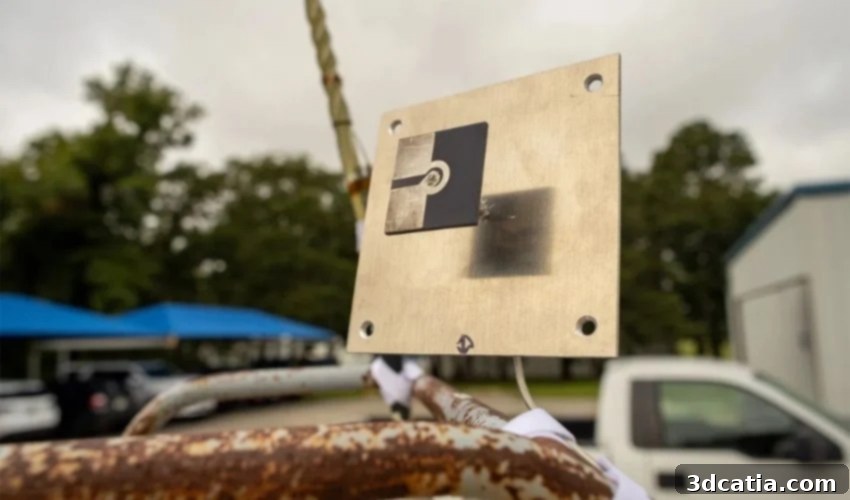
NASA’s Groundbreaking 3D Printed Antennas Revolutionize Space Communication
Additive manufacturing, commonly known as 3D printing, has emerged as a transformative force across various industries, and its impact on the aerospace sector, particularly in telecommunications, is nothing short of revolutionary. This cutting-edge technology empowers engineers to design and produce antennas with unprecedented complexity, superior performance, and innovative material properties. These advanced 3D printed antennas are absolutely critical for modern space missions, serving as the backbone for reliable data transmission and enabling seamless communication pathways between satellites, deep-space probes, and Earth-based control centers. The ability to customize geometries and integrate advanced materials opens up new frontiers for efficiency and functionality in space hardware.
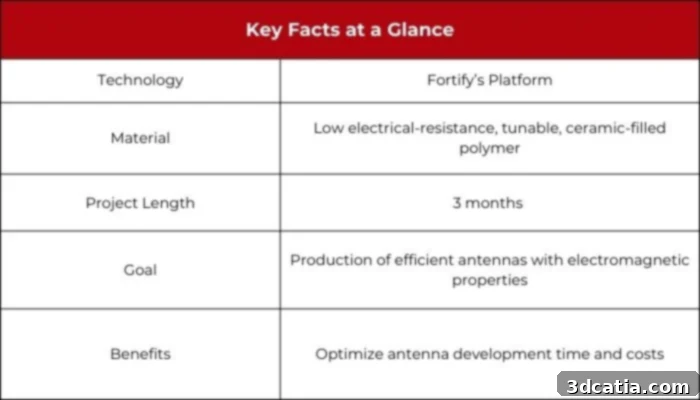
In a significant leap forward for space communication technology, engineers from NASA’s esteemed Near Space Network and the pioneering Electronics 3D Printing group at Goddard Space Flight Center recently achieved a remarkable milestone. They successfully developed and extensively tested a state-of-the-art 3D printed antenna, leveraging the sophisticated technology provided by Fortify. The primary objective of this ambitious project was to demonstrate the viability of low-cost design and manufacturing capabilities for highly efficient antennas that not only meet but exceed stringent industry requirements for space applications. This innovative antenna underwent rigorous evaluation protocols, including critical tests with NASA’s relay satellites, before embarking on a high-altitude journey aboard a weather balloon launched from NASA’s Columbia Scientific Facility in Palestine, Texas. The entire development cycle, from conceptualization to initial testing, was completed in an impressively short span of just three months, marking a pivotal moment in the quest for cost-effective communication equipment for upcoming space exploration endeavors, including future lunar and Martian missions.
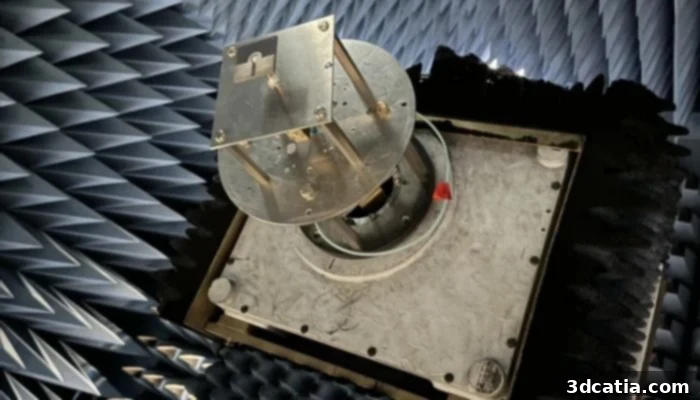
The advanced 3D printed antenna undergoing rigorous evaluation in the electromagnetic anechoic chamber at the Goddard Center (photo credits: NASA/Peter Moschetti).
The journey to developing high-performance 3D printed antennas is fraught with unique challenges, particularly when destined for the unforgiving environment of space. Manufacturing antennas using additive manufacturing techniques is inherently complex, primarily due to the critical need to meticulously integrate materials possessing specific electromagnetic properties while simultaneously ensuring impeccable electrical conductivity essential for robust signal transmission. NASA’s engineers rose to this challenge, meticulously designing an optimized internal and external structure specifically tailored for superior data transmission efficiency. Their approach involved the ingenious use of innovative materials. NASA specifically highlighted the use of a “low electrical resistance, tunable, ceramic-filled polymer material.” This advanced material played a crucial role in enabling precise signal tuning and enhancing overall antenna performance. Following the iterative design and precision 3D printing phases, the antenna underwent initial validation tests with NASA’s sophisticated relay satellites, a prerequisite before its ultimate high-altitude deployment aboard a weather balloon to simulate near-space conditions.
Rigorous Testing for Space-Ready 3D Printed Antenna Efficiency
The successful fabrication of this advanced antenna was made possible through the cutting-edge technology provided by Fortify, a pioneering startup renowned for its specialized equipment in the manufacturing of radio frequency (RF) devices. While the precise model of the 3D printer utilized for this specific project was not disclosed, it is publicly known that Fortify delivered a state-of-the-art Flux One printer to NASA’s Glenn Research Center in August of the previous year. NASA officials emphasized that Fortify’s advanced platform granted their engineers unparalleled control over both the electromagnetic and mechanical properties of the antenna. This precise control was instrumental in accelerating the fabrication process, reducing it to a matter of mere hours, a significant improvement over traditional manufacturing methods. The resulting antenna was identified as a magneto-electric dipole type, characterized by its distinctive doughnut-shaped radiation pattern. This particular radiation characteristic is highly advantageous and widely employed in diverse telecommunications applications due to its optimal signal distribution and coverage.
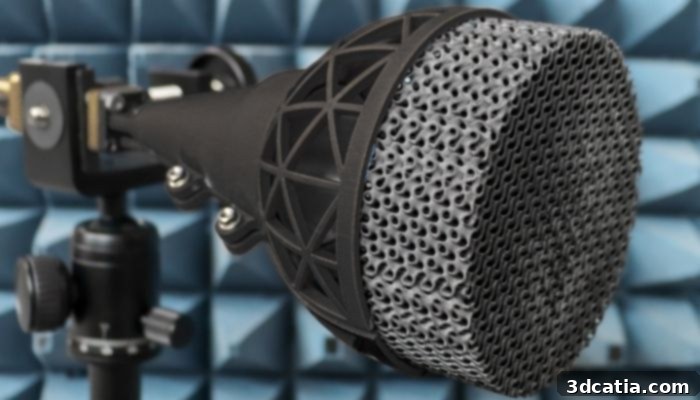
Fortify is also a leader in developing advanced dielectric materials crucial for manufacturing components and devices used in broadband, high-frequency communication, and sophisticated detection systems (photo credits: Fortify).
The comprehensive testing protocol for the 3D printed antenna was meticulously designed to ensure its readiness for the harsh realities of space. As part of the initial validation phase, the antenna was carefully transported to the electromagnetic anechoic chamber located at the Goddard Center in Greenbelt, Maryland. This specialized chamber is a critical facility engineered to completely absorb electromagnetic waves, effectively eliminating any external electromagnetic interference. This controlled environment allowed NASA engineers to conduct an exquisitely accurate and precise evaluation of the antenna’s performance characteristics, measuring parameters such as gain, beamwidth, impedance matching, and radiation patterns without external noise. Understanding these fundamental properties is crucial for predicting how the antenna will behave in real-world space environments.
Following these controlled laboratory tests, the antenna progressed to more dynamic field tests conducted at the Columbia Scientific Balloon Facility in Texas. During these crucial field evaluations, the advanced 3D printed antenna was directly compared against a standard, flight-proven satellite antenna. This direct comparative analysis involved rigorously assessing its performance across a wide range of angles and elevations. This approach helped quantify the improvements offered by the additive manufacturing approach over traditional designs. The goal was not only to match but to potentially surpass the capabilities of existing, more costly communication solutions. The data gathered from these tests provided invaluable insights into the antenna’s directional capabilities and overall signal integrity in a more open environment.
To truly push the boundaries of its capabilities and simulate the extreme conditions of near-space, the antenna was subsequently subjected to an ultimate test: installation on a weather balloon. This balloon was then meticulously raised to an astonishing altitude of 100,000 feet, which translates to just over 30 kilometers above the Earth’s surface. This altitude is well into the stratosphere, where temperatures plunge to extreme lows, atmospheric pressure is negligible, and radiation levels are significantly higher than at sea level – conditions that closely mimic certain aspects of the space environment. The primary objective of this high-altitude test was to unequivocally verify the antenna’s ability to reliably send and receive data under such formidable circumstances. Astonishingly, the 3D printed antenna not only endured these harsh conditions but successfully passed all communication tests, confirming its remarkable viability and robustness for future mission-critical space applications. This success underscores the potential of additive manufacturing to produce resilient components for exploration.
This exemplary application by NASA, powered by cutting-edge 3D printing technology, unequivocally opens up a wealth of new possibilities and innovative avenues for antenna manufacturing across the entire aerospace industry. The inherent benefits of additive manufacturing, such as rapid prototyping, unparalleled design flexibility, and the freedom to experiment with novel materials, empower NASA to develop more efficient, more robust, and highly customized communication systems. These systems can be precisely tailored to the specific demands and unique profiles of individual missions, whether they involve orbiting Earth, exploring distant planets, or enabling complex deep-space scientific endeavors. The ability to iterate quickly and produce bespoke components means future space missions can be equipped with communication arrays perfectly optimized for their unique challenges, ultimately enhancing mission success and expanding our reach into the cosmos.
What are your thoughts on NASA’s pioneering 3D printed antenna technology and its implications for future space exploration? We invite you to share your insights and comments below, or engage with us on our LinkedIn, Facebook, and Twitter pages! Don’t miss out on the latest advancements in additive manufacturing – be sure to sign up for our free weekly Newsletter here, delivering the most recent 3D printing news directly to your inbox! You can also explore all our fascinating videos and interviews on our dedicated YouTube channel.
*Cover Photo Credits: NASA/Peter Moschetti