
3D Printed Bionic Urethra: Revolutionizing Hypospadias Treatment with Regenerative Medicine
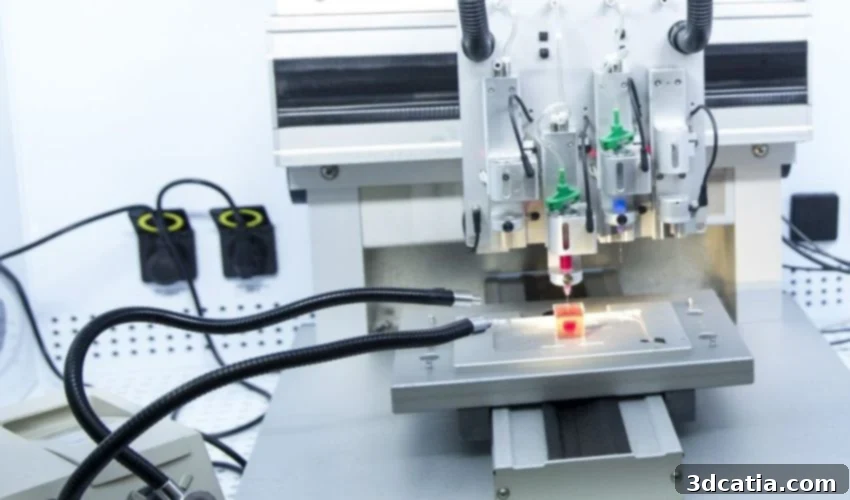
The remarkable advancements in 3D printing technology, also known as additive manufacturing, are increasingly transforming various sectors, with its profound impact on the medical field being particularly noteworthy. This innovative technology is enabling the creation of bespoke medical devices, intricate surgical guides, and even bioprinted tissues, heralding an era of highly personalized and effective healthcare solutions. In a significant stride forward, researchers at Poland’s Łódż University of Technology are at the forefront of developing a groundbreaking solution for infant boys born with hypospadias. This common congenital condition affects the urethral opening, causing it to be mislocated. By harnessing cutting-edge 3D printing capabilities, the team is crafting a “bionic urethra” that promises to revolutionize the treatment landscape for this prevalent urological issue.
Hypospadias, a condition affecting approximately 1 in 250 newborn boys, is characterized by the urethra opening on the underside of the penis rather than at its tip. This abnormality can vary in severity and, if left untreated, can lead to a range of complications, including difficulties with urination, urinary tract infections, challenges with sexual function later in life, and in severe cases, potentially dangerous complications in the upper urinary tract. Consequently, surgical intervention is almost invariably required to correct the anatomical defect and ensure normal urinary and reproductive function. However, despite numerous surgical techniques evolving over decades, the medical community still grapples with the absence of a universally satisfactory or consistently long-term effective solution. Existing methods often involve multiple surgeries, which can be physically and emotionally taxing for young patients and their families, frequently accompanied by risks of complications like urethral strictures, fistulas, scarring, or the need for revision surgeries. Dr. Dorota Bociąg from Łódż University of Technology articulately summarized the current limitations, explaining, “There are almost several hundred different solutions and surgical methods that doctors can use to treat hypospadias. The problem is that none of them is good or effective enough.” This highlights the urgent need for a truly innovative and durable therapeutic approach.

(Photo Credits: Łódż University of Technology)
The dedicated research team at Łódż University of Technology is nearing a significant milestone: the completion of the essential biomaterials needed to print their visionary bionic urethra. This device is meticulously designed to represent a substantial leap beyond existing medical solutions by achieving seamless biological integration with the patient’s body. A core tenet of its advanced design is its capacity to gradually degrade and resorb over time, strategically timed to facilitate the natural regeneration of the child’s own urethral tissue. This innovative approach ensures that the bionic structure maintains full functionality during the crucial healing and tissue growth phases, while progressively allowing the body to replace it with healthy, endogenous tissue. This regenerative strategy is aimed at minimizing rejection risks, chronic inflammation, and the common long-term complications associated with permanent synthetic implants or autologous grafts.
Elaborating on the intricate engineering behind this innovation, Dr. Dorota Bociaga provided insights into the sophisticated, multi-layered composition of the bionic urethra. She stated, “It will consist of three layers, each of them has its own specific task. The layer from which urine flows must be antibacterial and pressure-resistant.” This multi-layered architecture underscores a deep understanding of the physiological demands of the urethra, incorporating functionalities essential for long-term success. Each layer is specifically engineered with carefully selected biocompatible and biodegradable materials to fulfill its unique role, collectively working towards the goal of not just repairing, but regenerating the patient’s own tissue. The aim is for the bionic scaffold to serve as a temporary matrix, enabling the child’s body to progressively assume full function as the synthetic materials dissolve.
The Innovative Design and Biological Integration of the 3D Printed Bionic Urethra
The ingenious core of this revolutionary solution resides in its intelligently designed, multi-layered structure, precisely engineered to emulate the natural urethra’s anatomy and physiology while actively promoting biological integration. The innermost layer, which is in direct contact with urine, is imbued with potent antibacterial properties. This feature is paramount, as postoperative infections are a pervasive challenge in urological surgeries and can severely undermine treatment efficacy and patient recovery. Beyond its crucial antibacterial defense, this inner layer is also meticulously designed to exhibit high pressure resistance, ensuring structural integrity and preventing collapse under the normal physiological pressures exerted during urination. This synergistic combination of features guarantees a safe, sterile, and functional conduit for urine flow, thereby safeguarding the delicate, regenerating tissues beneath.
Encasing this critical inner layer are the outer layers, which serve a sophisticated dual purpose: providing essential mechanical support during the initial healing phase and acting as an advanced scaffold for natural cellular ingrowth and tissue remodeling. These layers are exquisitely engineered to attract and guide the child’s native cells to colonize and progressively remodel the structure, effectively transitioning the synthetic scaffold into living, functional tissue. Dr. Bociaga vividly articulated the ultimate vision for this design: “Our goal is for the bionic coil to be ‘encased’ by the body’s natural cells and grow with the child.” This concept lies at the heart of regenerative medicine – the creation of a temporary bio-mimetic framework that empowers the body’s intrinsic healing mechanisms to repair and rebuild itself. The outer layers are specifically designed to maintain the urethra’s proper shape and structural integrity during the critical initial phases of healing, concurrently protecting the nascent inner tissue as it matures and develops. Dr. Bociaga further clarified, “The outer layers are there to support the inner structure, so it has time to grow. It should also protect the inner layer against the pressure of other body tissues,” emphasizing their indispensable role in providing both structural resilience and shielding against external physiological pressures, all while fostering seamless, long-term tissue integration.
This sophisticated, patient-centric design elegantly leverages the foundational principles of advanced tissue engineering. Here, carefully selected biomaterials are utilized to construct scaffolds that not only promote cell adhesion but also encourage cellular proliferation and differentiation, ultimately leading to the formation of functional urethral tissue. As the child grows and develops, the biodegradable bionic scaffold is intended to gradually resorb or dissolve entirely, leaving behind a fully functional, natural urethra composed solely of the child’s own regenerated cells. This avoids the myriad complications associated with permanent non-degradable implants, such as chronic inflammation, foreign body reactions, mechanical failure, or the need for subsequent surgical interventions to remove or revise the device. Crucially, the ability for the newly formed urethra to grow commensurately with the child is an unparalleled advantage in pediatric applications, ensuring that the repaired structure can adapt harmoniously to the child’s continuous development and physiological changes throughout their lifetime, eliminating the need for repeated surgical adjustments.

Dr. Dorota Bociaga and her team. (Photo Credits: Łódż University of Technology)
The Road Ahead: Preclinical Trials and Future Implications for Pediatric Urology and Regenerative Medicine
Before this groundbreaking 3D printed bionic urethra can progress to human clinical trials, the diligent research team at Łódż University of Technology will embark on a comprehensive and rigorous program of preclinical testing. These crucial studies will be conducted using appropriate animal models, meticulously evaluating the device’s safety profile, its overall efficacy, and its long-term performance characteristics. Key parameters under scrutiny will include biocompatibility—ensuring the scaffold material does not elicit adverse immunological or toxicological reactions within the living system—functional integrity, the optimal rate and pattern of biodegradation, and the extent and quality of natural tissue ingrowth and remodeling. Successful outcomes in these preclinical studies are absolutely paramount, serving as indispensable validation steps that will pave the way for eventual human trials, where the bionic urethra’s transformative potential in treating hypospadias in infant boys can finally be realized.
The successful development and subsequent widespread clinical adoption of this novel bionic urethra approach hold the promise of profoundly transforming hypospadias treatment. It offers a clear path beyond the current limitations, which are often characterized by the need for multiple surgeries, recurrent complications, and significant patient burden. This innovation presents the potential for a more effective, highly durable, and minimally invasive solution that genuinely integrates with and adapts to the child’s developing anatomy. By skillfully facilitating the body’s natural regenerative processes, this technology aims to provide a single, definitive treatment that grows dynamically with the child, thereby minimizing the necessity for future surgical interventions and dramatically enhancing the long-term quality of life for affected individuals and their families. The anticipated reduction in surgical burden, shorter hospital stays, and the alleviation of the significant psychological impact on children would collectively represent an immense and compassionate leap forward in the field of pediatric urology.
Furthermore, the broader implications of this pioneering research extend significantly beyond the specific treatment of hypospadias. The foundational principles, advanced methodologies, and innovative technologies developed for the bionic urethra—particularly the creation of personalized, biodegradable 3D printed scaffolds that actively promote sophisticated tissue regeneration—could unlock similar revolutionary advancements across a multitude of other areas within both pediatric and adult urology. One can envision groundbreaking solutions for complex urethral strictures, bladder augmentation for congenital or acquired conditions, or even the potential for complete organ reconstruction. This versatile methodology could inspire and enable entirely new treatments for other congenital anomalies requiring tubular structures or complex tissue regeneration in diverse organ systems, ranging from cardiovascular applications to gastrointestinal repair and beyond. This project brilliantly exemplifies the incredible synergy and potential of combining cutting-edge additive manufacturing with advanced biomaterials science and the rapidly evolving field of regenerative medicine, heralding an era where patient-specific, biologically integrated, and truly restorative solutions become the new standard of medical care.
The pioneering work being carried out by the dedicated researchers at Poland’s Łódż University of Technology stands as a powerful beacon of hope for thousands of families worldwide who are affected by hypospadias each year. Their unwavering commitment to developing a 3D printed bionic urethra profoundly underscores the transformative power of innovation in medicine and highlights the indispensable role that advanced additive manufacturing plays in shaping the future trajectory of global healthcare. This groundbreaking research is not merely about correcting a congenital birth defect; it is fundamentally about enabling a better, healthier, and more fulfilling future for young boys and unequivocally demonstrating the vast, yet largely untapped, potential of regenerative technologies to heal and restore.