
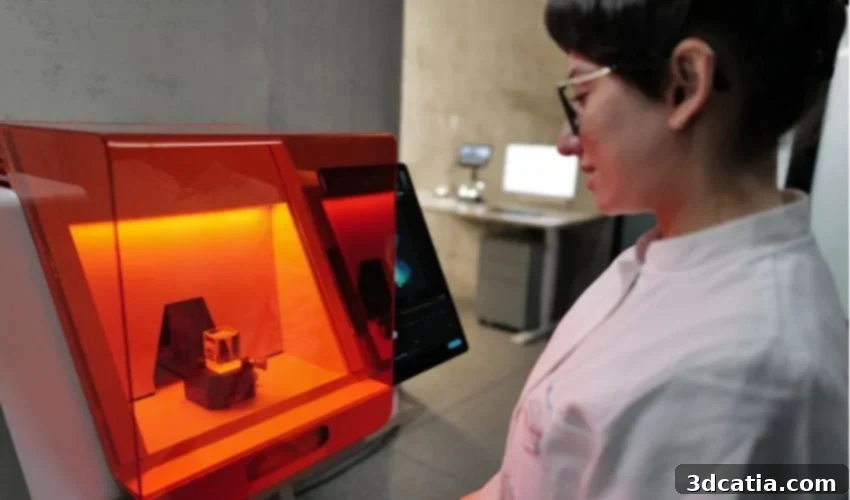
Swarovski and xolo Pioneer Volumetric 3D Printing for Exquisite Glass Crystal: Redefining Luxury with Additive Manufacturing
The world of luxury and high-end design is constantly evolving, driven by an insatiable demand for innovation, personalization, and unparalleled craftsmanship. At the intersection of tradition and cutting-edge technology, a groundbreaking partnership has emerged that promises to redefine how we perceive and create with one of the most cherished materials: glass crystal. Swarovski, the globally recognized leader in precision-cut crystal, has announced a significant collaboration with xolo, a pioneering force in the additive manufacturing space. This alliance is set to leverage xolo’s revolutionary volumetric 3D printing technology to directly produce glass crystal parts, opening up unprecedented possibilities for intricate designs, bespoke creations, and enhanced detail.
For decades, Swarovski has captivated the world with its dazzling jewelry, accessories, and decorative pieces, all meticulously crafted from its signature glass crystal. This commitment to brilliance and precision is now being amplified through the integration of state-of-the-art 3D printing techniques. By joining forces with xolo, Swarovski is not just adopting new manufacturing methods; it is actively shaping the future of luxury production, emphasizing its dedication to innovation and maintaining its position at the forefront of the industry. This partnership signifies a strategic move to blend Swarovski’s rich heritage and design expertise with xolo’s advanced technological capabilities, ushering in a new era of creative freedom and manufacturing efficiency.
The Distinctive Allure of Glass Crystal
At the heart of Swarovski’s legacy is its mastery of crystal glass. This unique material stands apart from conventional glass primarily due to its significant lead content, which enhances its optical properties dramatically. While standard glass compositions rely heavily on silica, the inclusion of lead in crystal glass is what gives it its characteristic brilliance, exceptional transparency, and remarkable clarity. These qualities allow crystal to refract light with unparalleled intensity, creating the dazzling sparkle that has become synonymous with Swarovski.
For centuries, crystal glass has been revered for its aesthetic appeal and its ability to elevate designs. Swarovski has built its empire on harnessing these inherent characteristics, transforming raw crystal into exquisite jewelry, fashionable accessories, elegant watches, and intricate home décor items. The traditional methods of working with crystal glass, while producing stunning results, often involve intricate cutting, molding, and polishing processes that can be labor-intensive, time-consuming, and subject to certain design limitations. The introduction of additive manufacturing, particularly xolo’s advanced approach, offers a pathway to overcome these traditional constraints, enabling the creation of geometries and details previously deemed impossible.
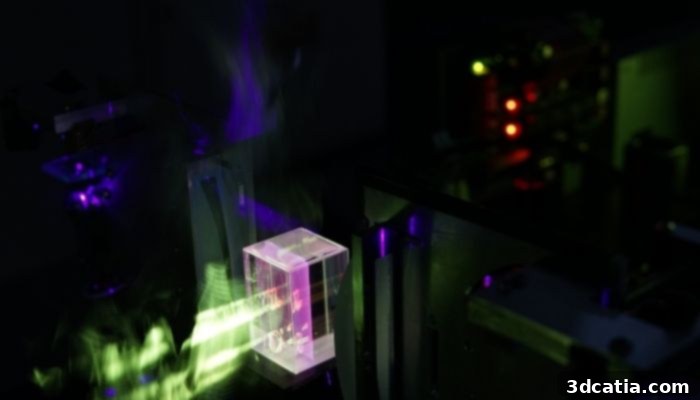
xolo’s 3D printing process is based on xolography, enabling high-resolution crystal manufacturing.
Unveiling Xolography: xolo’s Breakthrough Volumetric 3D Printing
The key to this revolutionary partnership lies in xolo’s proprietary volumetric 3D printing technology, specifically a process known as xolography. Unlike conventional layer-by-layer 3D printing methods, which build objects slice by slice, xolography offers a fundamentally different approach. It utilizes a special light-curing process that works across the entire volume of a resin vat, or at least a significant portion of it, simultaneously. This is achieved by employing different initiators and two distinct types of wavelengths of light to selectively cure the resin within the specified volume.
This innovative technique provides several substantial advantages, making it particularly suitable for producing high-quality crystal components. Firstly, its speed is a game-changer. By curing larger volumes at once, xolography can significantly reduce manufacturing times compared to traditional additive methods. Secondly, the technology excels in achieving an exceptional surface finish, a critical factor for luxury goods where aesthetic perfection is paramount. The volumetric nature of the printing process minimizes visible layer lines, resulting in remarkably smooth and pristine surfaces directly from the printer. Finally, xolography demonstrates impressive compatibility with a wide array of materials, which is crucial for working with specialized formulations like glass crystal resins.
For Swarovski, xolo’s ability to deliver high resolutions and extremely precise details is transformative. It means the potential to realize incredibly intricate designs, sharp edges, and delicate internal structures in glass crystal that would be either impossible or prohibitively expensive to produce with traditional methods. Imagine delicate crystal filigree, custom engravings with unprecedented fidelity, or internal light-guiding structures—all possible through the precision of xolography. This technology empowers designers to push the boundaries of creativity, enabling the direct printing of clear, detailed parts that maintain the inherent brilliance and clarity expected of Swarovski crystal. This advancement is not just about manufacturing; it’s about expanding the artistic lexicon of crystal design.
Transforming Luxury: New Standards and Redefined Functionality
The collaboration between Swarovski and xolo extends beyond mere technological adoption; it aims to establish new benchmarks for material processing and design innovation within the luxury sector. Dirik Radzinski, CEO of xolo, encapsulated the significance of this venture:
“Working alongside a prestigious company like Swarovski is not only an honor but also a tremendous opportunity to showcase the capabilities of Xolography in a new, dynamic field. We are excited to push the boundaries of what’s possible with glass crystal, unlocking new design potential and manufacturing efficiencies.”
Indeed, the long-term vision for this partnership is ambitious: to set new industry standards for glass manufacturing. By leveraging volumetric 3D printing, the aim is to transcend the limitations of conventional production, allowing for the creation of unique, personalized, and exceptionally detailed pieces that were previously unimaginable. This capability is poised to revolutionize not only jewelry design but also broader applications within luxury goods, art, and even functional components where optical clarity and precision are critical. The official press release eloquently states that the overarching goal is to offer “a redefinition of the material’s role in modern design and functionality.” This implies moving beyond purely decorative aspects to exploring crystal’s potential in innovative, possibly functional, contexts.
Wider Implications and the Future of Crystal
Although specific product details remain under wraps, the implications of this partnership are profound and far-reaching. The ability to directly 3D print glass crystal parts will undoubtedly disrupt the jewelry sector, offering unparalleled opportunities for customization and rapid prototyping. Designers will gain newfound freedom to experiment with complex geometries and intricate patterns, accelerating the design cycle from concept to final product. This shift could lead to a surge in bespoke luxury items, catering to a growing consumer demand for personalized and unique expressions of style. Imagine custom-designed crystal elements for haute couture, personalized architectural accents, or even highly specialized optical components.
Beyond jewelry, the innovative potential for 3D printed crystal extends to various industries. The production process for a material prized by sectors as diverse as fashion, interior design, automotive, and even specialized optics could be fundamentally transformed. The enhanced precision and intricate detailing offered by xolography could pave the way for novel applications in sensor technology, medical devices, or high-performance optics where exact light manipulation is essential. Moreover, additive manufacturing inherently offers benefits in terms of sustainability, potentially reducing material waste through precise deposition and enabling on-demand production, which aligns with growing global environmental consciousness.
This collaboration represents a significant leap forward in the application of additive manufacturing for high-value materials. It is a testament to how traditional craftsmanship, embodied by Swarovski, can find new vitality and expanded possibilities through the embrace of cutting-edge technology like xolo’s xolography. As these two innovators work together, they are not just printing crystal; they are sculpting the future of luxury, pushing the boundaries of what is possible, and reimagining the very essence of crystal’s role in our world. This dynamic synergy between heritage and innovation promises exciting developments that will undoubtedly capture the imagination of designers, consumers, and technologists alike.
To delve deeper into xolo’s pioneering technology and explore the broader landscape of volumetric 3D printing, visit the xolo website HERE for more information.
What are your thoughts on this groundbreaking partnership between Swarovski and xolo? How do you envision volumetric 3D printing transforming the world of luxury goods and beyond? Share your insights and predictions in a comment below or join the conversation on our Facebook and Twitter pages! Don’t miss out on the latest advancements and news in the additive manufacturing space; make sure to sign up for our free weekly Newsletter, delivered straight to your inbox!
*All Photo Credits: xolo