
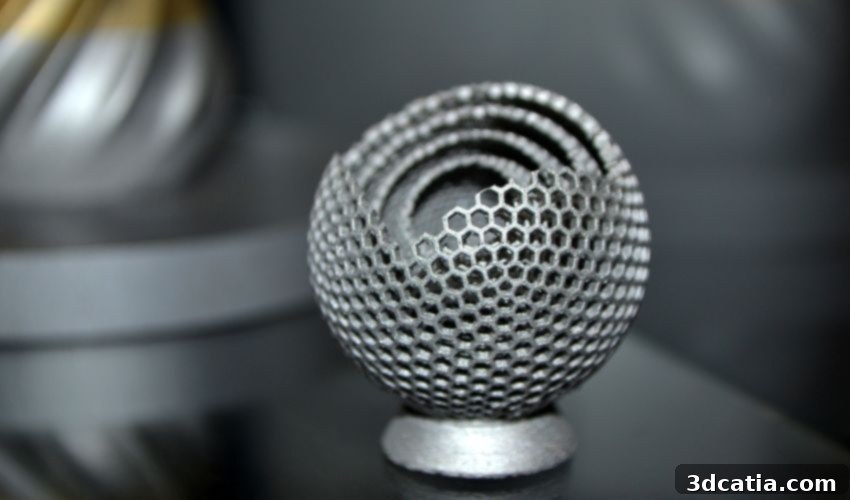
Mastering Design for Additive Manufacturing (DfAM): 10 Essential Benefits for 3D Printing Success
If you’re involved with additive manufacturing, you understand the critical role design plays in creating functional, high-performance parts. Modeling is the fundamental first step in any 3D printing process, and this is where Design for Additive Manufacturing, or DfAM, enters the picture. DfAM is essentially “design for manufacturability” specifically tailored for additive manufacturing. More simply, it encompasses the design methods and tools that optimize parts for creation using 3D printing technologies. By embracing DfAM, users can fully harness the incredible design freedom inherent in additive manufacturing, leading to the creation of superior, more functional components. Despite its profound importance, DfAM is sometimes overlooked or misunderstood within the industry. But why is it so vital? What transformative benefits can it bring to your parts and processes? In this comprehensive guide, we delve into 10 compelling reasons why DfAM is indispensable for anyone serious about achieving success with 3D printing.
#1. Reduced 3D Printing Mistakes and Failures
Printing failures are a significant headache for any user of additive manufacturing technologies. These issues are particularly detrimental in highly industrial processes such as Laser Powder Bed Fusion (LPBF) or Selective Laser Sintering (SLS), which often involve expensive materials like PEEK and PEKK. Even minor mistakes that compromise a part can lead to substantial setbacks in terms of both cost and time. This is precisely where the immense value of DfAM becomes evident. Through careful and deliberate design, DfAM enables users to not only properly orient and support the model within the build volume – critical steps that ensure properties such as isotropy and prevent common issues like warping – but also to select the most appropriate infill patterns and layer settings for a given part. By addressing these factors at the design stage, DfAM significantly reduces the likelihood of print failures, saving valuable resources and accelerating development cycles. It’s a proactive approach that mitigates risks before the printing process even begins, transforming potential errors into successful outcomes.
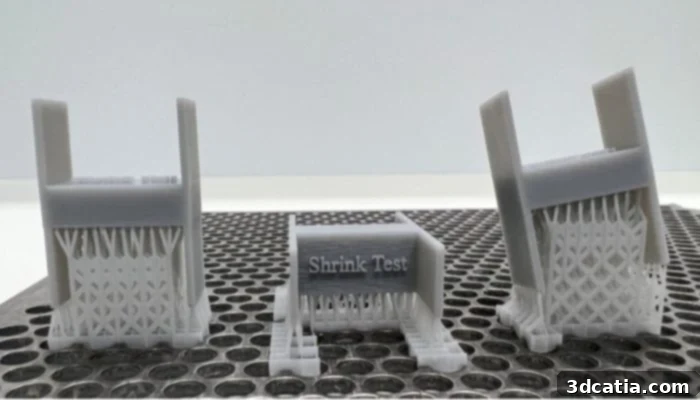
Correct orientation is one of the considerations in DfAM (photo credits: Protolabs)
#2. Faster Printing Times
One of the often-touted core benefits of additive manufacturing is its potential for speed, allowing users to create complex parts in a fraction of the time required by conventional manufacturing methods. However, this speed is not automatically guaranteed; it must be actively pursued and optimized. DfAM provides the tools and methodologies to achieve this by optimizing the design itself. For instance, incorporating advanced geometric features like lattice structures allows designers to maintain crucial part strength and structural integrity while drastically minimizing the overall amount of material needed. Less material means shorter print times. Furthermore, a well-executed DfAM strategy empowers users to minimize or even eliminate the need for extensive support structures, which, as discussed in detail later, not only reduces material consumption but also significantly cuts down on the total print duration. By simplifying the geometry and reducing unnecessary material, DfAM ensures that the inherent speed advantage of 3D printing is fully realized, leading to quicker prototyping and faster production cycles.
#3. Enabling More Complex Designs
A fundamental advantage of 3D printing over traditional subtractive manufacturing is that increasing the complexity of a design typically does not add to the difficulty or cost of the manufacturing process. This paradigm shift is fully leveraged by DfAM, enabling designers to create significantly more intricate and sophisticated geometries than would ever be feasible with conventional design rules and production methods. Through specialized design software, engineers can develop parts with highly complex internal channels, organic shapes, and interwoven structures, especially critical for applications in industries like medical and aerospace where metal parts often require extreme precision and intricate features. This unparalleled ability to produce complex forms is where the true freedom offered by 3D printing shines, allowing for innovation previously constrained by manufacturing limitations. DfAM provides the framework to think beyond traditional constraints, fostering a new era of design possibilities and unlocking performance benefits that simpler geometries cannot achieve.
#4. Optimizing the Weight-Performance Ratio
Building on the ability to create complex designs, DfAM allows users to fully leverage advanced design software to optimize every aspect of a part’s performance. A frequently cited reason for the adoption of 3D printing in demanding sectors such as aerospace and automotive is its capability to produce parts that are substantially lighter while simultaneously maintaining or even enhancing their strength, rigidity, and other critical properties. This results in a superior weight-performance ratio, a factor that can lead to significant improvements in fuel efficiency, speed, or overall vehicle performance. DfAM facilitates this through various techniques, notably by integrating lattice structures, utilizing topological optimization, and employing generative design. These sophisticated computational methods are specifically engineered to optimize and generate part geometries that use the absolute minimum material required to meet defined performance constraints, such as structural integrity, stiffness, or heat transfer. While such intricately designed parts would often be prohibitively complex or impossible to manufacture using traditional methods, 3D printing, guided by DfAM principles, makes them a tangible reality, pushing the boundaries of engineering innovation.
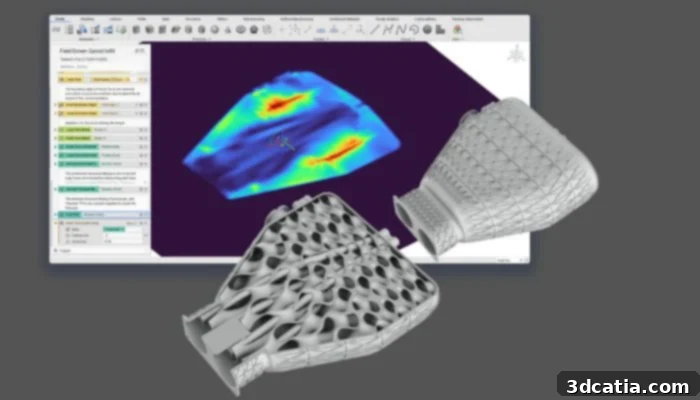
One of the ways that DfAM can be used is with topological optimization (photo credits: nTop)
#5. Minimizing Support Structures
For many in 3D printing, support structures are viewed as a necessary evil. While they are undeniably crucial for preventing deformation, warping, and ensuring geometric accuracy during the printing process, they also come with significant drawbacks. Supports consume additional material, impacting both the overall cost of a part and the total print time. Moreover, their presence often necessitates more extensive post-processing, adding to the time and labor required, and can even affect the final aesthetic and surface finish of the printed part. This is precisely where DfAM offers a powerful solution. Through the careful application of DfAM principles, such as strategically reducing overhang angles, optimizing part orientation within the build platform, or intelligently choosing infill settings, designers can significantly minimize the quantity and complexity of support structures required. By designing parts with the print process in mind, DfAM transforms supports from a design afterthought into an integrated consideration, leading to cleaner prints, reduced material waste, and more efficient production workflows.
#6. Reducing Overall Post-Processing
Following directly from the previous point, another critical reason why DfAM is so impactful is its ability to substantially reduce the overall post-processing effort and time. A primary contributor to this reduction is the optimization of support structures. By designing parts to require fewer or simpler supports, less time is spent on their removal, a task that can be tedious, labor-intensive, and sometimes damaging to the part. However, DfAM’s influence extends beyond just support removal. By carefully orienting the part within the build volume and selecting appropriate layer height settings – both fundamental considerations within DfAM – common issues like rough surface finishes, visible layer lines, or dimensional inaccuracies can be proactively addressed even before the printing process commences. Neglecting these design considerations often results in a prolonged and costly post-processing phase, involving extensive sanding, polishing, or additional machining. Embracing DfAM, therefore, translates directly into a more streamlined, efficient, and cost-effective production workflow, delivering higher quality parts with less manual intervention.
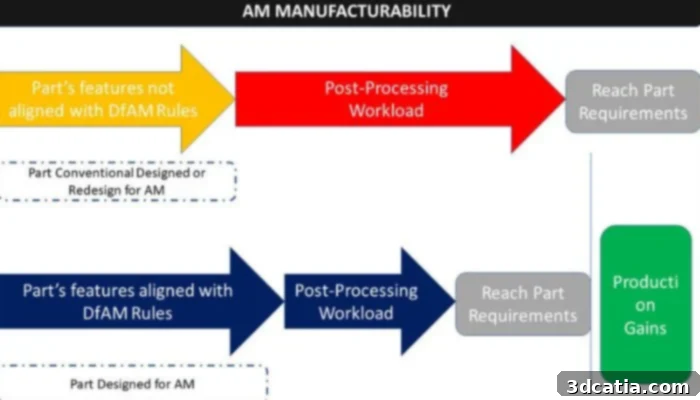
#7. Enabling Part Consolidation
Part consolidation stands out as a compelling reason for the growing adoption of additive manufacturing, particularly within advanced industries like aerospace and automotive. This revolutionary capability allows designers, guided by DfAM principles, to combine multiple individual components of an assembly into a single, more complex, and often more efficient part. A prime example of this is seen in the Czinger 21C hypercar, where the manufacturer, Divergent 3D, famously claimed to have consolidated thousands of individual parts into just a few hundred. This drastic reduction in part count directly translated into significantly lower vehicle weight, enhanced structural integrity, and improved overall performance. Such a high degree of consolidation is uniquely achievable through the design freedom offered by 3D printing and can only be fully realized by understanding and rigorously applying the rules of DfAM. Beyond weight savings, part consolidation also reduces assembly time, minimizes inventory requirements, simplifies supply chains, and can improve reliability by eliminating numerous fasteners and connection points that could otherwise fail.
#8. Increased Scalability and Mass Production Potential
While it’s true that not all 3D printing technologies are equally suited for mass production or large-scale scalability, for certain processes such as Selective Laser Sintering (SLS), Direct Metal Laser Sintering (DMLS), resin 3D printing (SLA/DLP), and binder jetting, DfAM plays an absolutely critical role in enabling and optimizing high-volume manufacturing. Through a deep understanding and application of DfAM principles, designers can maximize the number of parts placed within a single build volume, often by intelligently nesting or stacking geometries. This meticulous arrangement not only increases throughput per print job but also significantly reduces the cost per part, making additive manufacturing economically viable for higher production volumes. By effectively leveraging DfAM, users can overcome one of the major historical criticisms leveled against 3D printing: its perceived lack of suitability for mass production. Industries producing custom goods, such as dental aligners, hearing aids, and specialized medical implants, have already demonstrated the power of DfAM in achieving large-scale, cost-effective production.
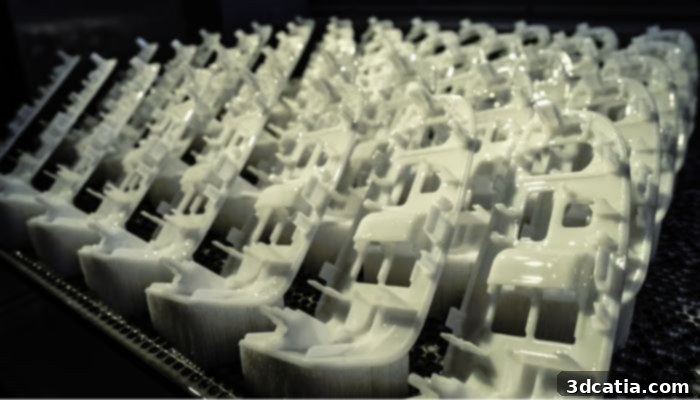
Stacked 3D printed parts made using resin 3D printing (photo credits: 3D Systems)
#9. Comprehensive Cost Optimization
The ability to create complex geometries and lightweight parts is a compelling reason for DfAM’s importance, but these benefits would be diminished if the associated costs were prohibitively high. Fortunately, DfAM has repeatedly demonstrated its capacity to significantly reduce overall manufacturing costs for additively manufactured parts. As highlighted by The Barnes Group in 2020, an astonishing 86% of the cost of a part in additive manufacturing is driven by its design – a principle that has been validated time and again. It is through intelligent design choices, guided by DfAM, that material usage can be minimized while critical strength and performance properties are maintained, directly impacting the material cost, which is often a major component of AM expenses. Furthermore, DfAM can reduce print failures, decrease post-processing time and labor, and improve build volume utilization, all of which contribute to a lower unit cost. It’s crucial to remember that in 3D printing, more complex designs do not necessarily equate to more expensive parts; in many cases, especially with optimal DfAM implementation, a more complex, optimized design can actually be far more cost-effective to produce than a simpler, unoptimized one, considering material, time, and labor efficiencies.
#10. Optimization Based on Specific 3D Printing Technology
Last, but certainly not least, DfAM is essential because it empowers users to optimize a part’s design based on the specific additive manufacturing technology being employed. There are seven primary families of 3D printing technologies, encompassing an even greater number of individual processes, each with distinct characteristics, strengths, and limitations. It’s imperative to acknowledge and design for these significant differences. For example, when designing for powder-bed fusion technologies (like SLS or LPBF), parts often need to integrate ‘escape holes’ to ensure that un-sintered powder trapped within hollow sections can be easily removed during post-processing. This is a critical design consideration that would be irrelevant for FDM or resin 3D printing. Conversely, in Fused Deposition Modeling (FDM), anisotropy – where mechanical properties vary depending on the print direction – is a common concern. DfAM can help mitigate this by guiding optimal part orientation and feature design to improve isotropy where necessary, ensuring consistent mechanical performance. By understanding and applying technology-specific DfAM rules, designers can maximize the success rate, functional performance, and cost-efficiency of parts produced with any given 3D printing method, truly unlocking the full potential of additive manufacturing.
What are your thoughts on these 10 reasons why DfAM is so crucial for successful 3D printing? Do you already integrate DfAM principles when designing parts for additive manufacturing? We invite you to share your insights in the comments section below or engage with us on our LinkedIn, Facebook, and Twitter pages! Don’t forget to subscribe to our free weekly newsletter here to receive the latest 3D printing news directly in your inbox. You can also discover all our informative videos on our dedicated YouTube channel.