
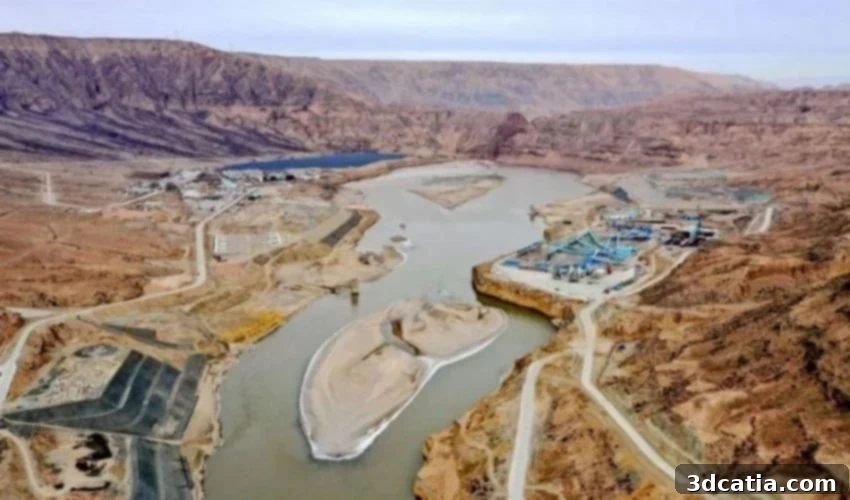
China Pioneers Automated Infrastructure: The World’s Largest AI-Driven 3D Printed Dam on the Tibetan Plateau
China has long been recognized globally for its relentless pursuit of innovation and its rapid adoption of cutting-edge technologies. This reputation is set to be further cemented with a groundbreaking announcement: the East Asian powerhouse is embarking on an ambitious project to construct a massive dam on the remote Tibetan Plateau, leveraging the dual power of additive manufacturing and artificial intelligence. What truly distinguishes this endeavor is not just its scale or technological sophistication, but the astonishing fact that the entire construction process will be carried out without the involvement of any human workers on-site. This monumental undertaking, slated for completion within the next two years, is poised to become the world’s largest 3D robot printing project, pushing the boundaries of what is conceivable in modern infrastructure development.
This pioneering 3D printed dam stands out in multiple critical aspects. Its distinction stems not only from the revolutionary construction methodology but also from the challenging and unique environment in which it is being realized. While China has previously demonstrated its prowess in large-scale additive manufacturing projects, these initiatives have historically relied on the invaluable support and expertise of skilled human laborers. Notable examples include the construction of the world’s largest 3D-printed pavilion and the nation’s first retractable 3D-printed bridge, both impressive feats completed within China. However, this dam project marks a profound shift, with Chinese manufacturers establishing an entirely new paradigm for dam construction by completely eliminating the need for human presence in the immediate vicinity of the build. It powerfully demonstrates the immense potential unlocked when the transformative capabilities of additive manufacturing are seamlessly integrated with the intelligence and precision of artificial intelligence within the field of construction.
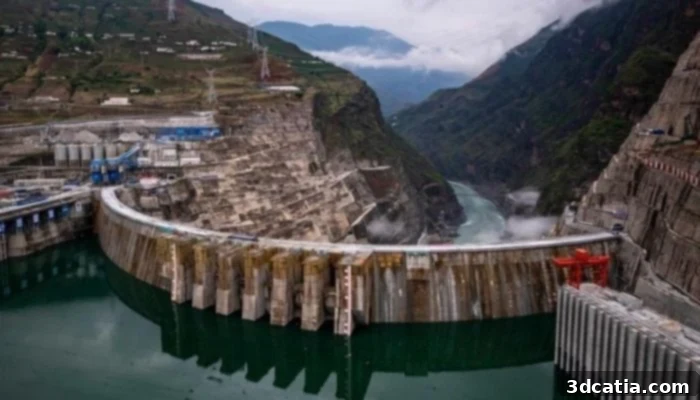
The Yangqu Dam is estimated to achieve a total size of approximately 355 feet upon completion, representing a monumental engineering achievement (photo credits: Xinhua).
The Yangqu Dam: A Blueprint for the Future of Automated Hydropower
The ambitious project, spearheaded by the Science and Technology Department of Tsinghua University, is meticulously focused on building the Yangqu Dam on the high-altitude Tibetan Plateau. This advanced construction methodology involves depositing material layer by layer, a hallmark of additive manufacturing, to form the robust structure of the dam. Upon its anticipated completion within a two-year timeframe, the Yangqu Dam will serve a crucial function: supplying water to the Yangqu Hydropower Plant. This plant is projected to generate an astonishing 5 billion kWh of electricity annually, providing a vital and sustainable power source to China’s populous Henan province. In tangible terms, this means that the 3D-printed dam will directly contribute to securing the electricity supply for an estimated 100 million people, significantly enhancing energy stability and quality of life across the region.
Beyond its impressive generation capacity, the project also champions environmental sustainability. The generated electricity will be transmitted through a purpose-built high-voltage transmission line, spanning approximately 4920 feet. This dedicated infrastructure is specifically designed for the efficient transmission of green energy, underscoring China’s commitment to reducing its carbon footprint and promoting sustainable development. Liu Tianyue, one of the lead scientists driving this innovative project, eloquently articulated the core motivation behind such a radical approach, stating their aspiration to “free people from heavy, repetitive and dangerous jobs.” This vision not only addresses the inherent risks associated with traditional large-scale construction but also paves the way for a future where human ingenuity is directed towards oversight and innovation, rather than arduous manual labor.
Technological Prowess: AI and Robotic 3D Printing at Unprecedented Scale
According to the experts at Tsinghua University, the Yangqu hydroelectric power plant is expected to reach an impressive height of approximately 520 feet upon its successful completion. This remarkable dimension would officially designate it as the largest robotic 3D printing facility in the world, far surpassing the current record holder—a two-story office building located in Dubai. This achievement underscores the significant leap forward in large-scale additive manufacturing capabilities, demonstrating that this technology is no longer confined to smaller architectural projects but can handle infrastructure on an unprecedented scale.
While the scale and ambition of the Yangqu Dam project are openly shared, specific details regarding the proprietary additive manufacturing processes and technologies employed remain closely guarded by the scientists involved. This strategic reticence is common in highly competitive and rapidly evolving technological fields, as intellectual property and unique methodologies often provide a significant competitive advantage. However, what has been confirmed is the revolutionary integration of artificial intelligence into every facet of the construction workflow. Earthmoving and material handling are entirely automated, with essential heavy machinery such as excavators, trucks, bulldozers, and rollers operating autonomously. These vehicles perform their tasks without any human operators, their movements and actions precisely orchestrated and controlled by advanced artificial intelligence systems. This AI-driven automation not only ensures unparalleled precision and consistency but also guarantees safety in an environment that would be hazardous for human workers.
The choice of the Tibetan Plateau as the construction site further amplifies the significance of this project. Known for its extreme altitude, harsh weather conditions, and challenging logistical access, the plateau presents formidable obstacles for traditional construction methods. The deployment of AI and robotic 3D printing effectively mitigates many of these challenges, allowing for construction in environments previously deemed too difficult or dangerous for sustained human presence. This highlights additive manufacturing’s potential to unlock development in remote and extreme locations globally, making critical infrastructure accessible where it was once impossible.
Broader Implications for Global Construction and Innovation
This project is more than just a dam; it’s a living laboratory for the future of infrastructure. It showcases how the fusion of Additive Manufacturing in Construction (AMiC) and Artificial Intelligence in Construction (AIiC) can redefine traditional paradigms. AMiC offers inherent advantages such as accelerated construction timelines, reduced material waste through optimized design and precise deposition, and greater design freedom for complex geometries, leading to potentially stronger and more efficient structures. When combined with AIiC, these benefits are amplified. AI can optimize material mixtures, predict structural integrity, manage complex logistical sequences for autonomous vehicles, and continuously monitor quality control, minimizing errors and ensuring robust construction outcomes. The ability to iterate and adapt designs in real-time, guided by AI, could drastically improve efficiency and resilience.
China’s consistent investment in such ambitious projects underscores its strategic vision to lead the world in advanced manufacturing and AI application. The success of the Yangqu Dam will not only provide immense power generation capacity but also serve as a global benchmark, encouraging other nations and construction firms to explore similar automated and digitally driven approaches. It signals a shift from labor-intensive construction towards knowledge-intensive and technology-intensive processes, promising a future where infrastructure is built faster, safer, and with greater environmental responsibility. The ethical implications of fully automated construction, particularly regarding employment shifts, are also part of this ongoing conversation, though the immediate benefits in terms of worker safety and efficiency in hazardous environments are undeniable.
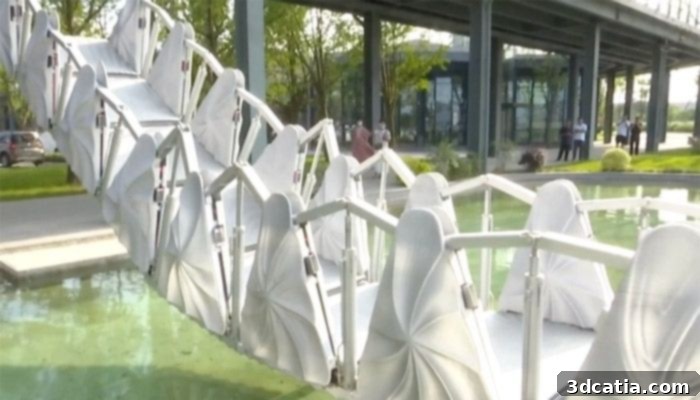
China’s track record includes other impressive 3D printed structures, such as this highly successful retractable bridge, highlighting their expertise.
Join the Conversation: Your Thoughts on Automated Construction
What are your thoughts on this revolutionary 3D printed dam project in China? Do you believe fully automated construction represents the inevitable future of infrastructure development, or are there challenges that need further consideration? Will your company be inspired to explore opportunities in large-scale robotic 3D printing and AI-driven construction? We are eager to hear your perspectives on this fascinating leap forward in engineering and technology.
Let us know what you think in a comment below, or engage with us on our social media channels! You can find us on LinkedIn, Facebook, and Twitter. Don’t miss out on the latest advancements and news from the world of 3D printing and additive manufacturing; remember to sign up for our free weekly Newsletter here, delivering the most important headlines straight to your inbox! For a visual exploration of these incredible innovations, be sure to check out all our compelling videos on our YouTube channel. Your insights are invaluable as we explore the future of manufacturing and construction together.