
Septem: Pioneering Sustainable 3D Printed Jewelry and Accessories in Global Fashion
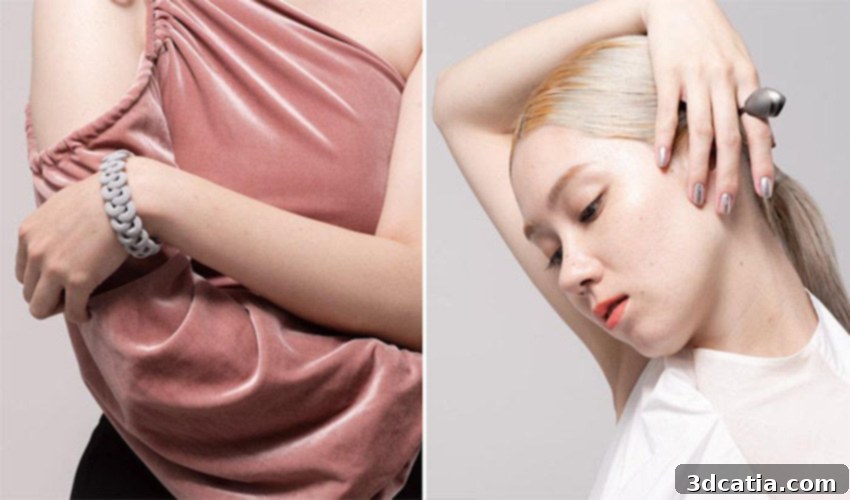
The landscape of design, particularly within the dynamic world of fashion, has been irrevocably transformed by the advent of 3D printing technology. This revolutionary manufacturing method offers an almost boundless freedom of design, allowing creators to bring intricate, imaginative, and previously impossible forms to life. Fashion designers, ever at the forefront of innovation and aesthetic exploration, are among the most enthusiastic adopters, seizing the opportunity that additive manufacturing presents to craft an endless variety of shapes and styles. We’ve seen groundbreaking applications, such as the 3D printed Proximity Dress, ingeniously designed to create a physical barrier when someone approaches the wearer too closely – a concept particularly pertinent in our recent global health landscape. Today, our focus turns to Septem, an inspiring Japanese online platform that stands at the intersection of cutting-edge technology and exquisite artistry. Septem curates and sells a diverse collection of fully 3D printed jewelry and accessories, showcasing the innovative works of talented designers from every corner of the globe.
The integration of additive manufacturing into the fashion industry is not a new phenomenon; it has steadily evolved and gained prominence for well over a decade. What initially began as an experimental frontier has matured into a powerful tool, not just for aesthetic exploration but also for significant gains in efficiency and operational sustainability. The inherent versatility of 3D printing empowers designers with unparalleled creative freedom, allowing them to conceptualize and execute designs that defy traditional manufacturing limitations. Beyond the artistic realm, it offers substantial practical advantages. Designers can dramatically reduce the time and effort typically spent on labor-intensive processes like cutting, soldering, and assembling individual elements. By simply 3D printing entire, intricate pieces in a single production run, many of the most time-consuming and costly steps of conventional jewelry-making are bypassed altogether. This streamlining of the production workflow accelerates the design-to-market cycle, reduces manual error, and allows for quicker iteration and customization, proving that innovation can be both beautiful and highly practical.
Septem was founded in 2019 in Tokyo by the visionary Akiko Ide, with a clear mission to revolutionize the jewelry and accessories market. In the relatively short period since its inception, the company has demonstrated remarkable growth and established itself as a significant player in the digital fashion space. Septem has rapidly expanded its reach, successfully commercializing the works of a burgeoning community of well-established and emerging designers from diverse international locales, including creative hubs like Australia, Italy, and Sweden, with recent additions from the United States further broadening its global tapestry of talent. The operational model adopted by Septem is a testament to its forward-thinking approach: designers are only required to submit their digital STL files, rather than physical products. Upon receiving these digital blueprints, Septem leverages its network to 3D print the accessories locally and strictly on-demand. This innovative “design-first, print-second” approach fundamentally transforms the supply chain, eliminating the need for international imports of finished goods and, crucially, eradicating the costs and environmental impact associated with maintaining large physical inventories. The result is a highly efficient, cost-effective, and environmentally conscious business model that benefits both designers and consumers.
At the very heart of Septem’s philosophy lies a profound commitment to sustainability and ethical production. The company’s long-term vision is squarely focused on significantly reducing waste and mitigating environmental pollution, a stark contrast to the often wasteful practices of traditional mass manufacturing. By meticulously avoiding inventory stocking, thereby preventing the mass production of items that may not sell, and consequently eliminating mass disposal, Septem actively champions a circular economy model. Akiko Ide has consistently emphasized that the company’s ambition is to be as environmentally sustainable as possible, making the choice of 3D printing technology a foundational pillar of its operations. The inherent nature of additive manufacturing, particularly when coupled with Septem’s local and on-demand production strategy, leads to a dramatic reduction in environmental impact. This approach ensures that only the precise amount of material required for each piece is used, drastically cutting down on material waste. Furthermore, by printing everything locally, the carbon emissions typically associated with long-distance transportation of goods are virtually eliminated. Unlike many traditional manufacturing processes, 3D printing requires no excessive water consumption, further cementing Septem’s position as a leader in eco-conscious fashion accessories. This commitment to sustainability is not merely a marketing claim but is deeply embedded in every facet of Septem’s innovative business structure.
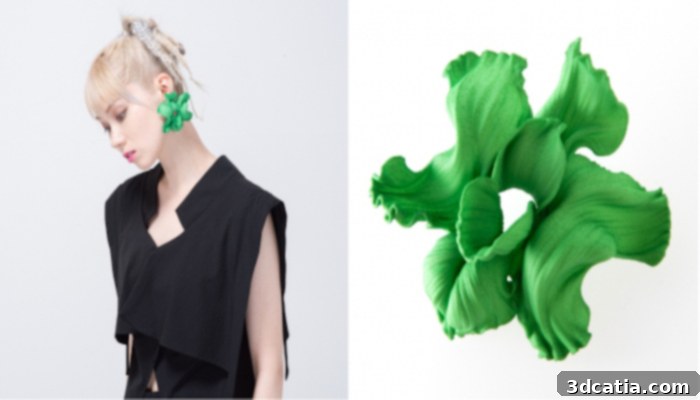
Orchid Flower earring 3D printed from nylon (Image credits: Septem Design Studio)
Septem’s success also stems from its ability to cultivate a thriving global community of designers, offering them a unique platform to showcase their creativity and reach an international audience without the burdens of traditional production. This global network allows for an incredible diversity of aesthetic styles, cultural influences, and artistic visions to converge, resulting in a constantly evolving and refreshingly original collection of jewelry and accessories. By abstracting the manufacturing process, Septem empowers designers to focus purely on their craft and innovative concepts, knowing that their digital files will be transformed into high-quality physical products through advanced 3D printing techniques. This democratization of high-tech manufacturing opens doors for independent artists and small design studios worldwide, granting them access to sophisticated production capabilities that might otherwise be out of reach. It fosters a collaborative environment where geographical boundaries become irrelevant, and the universal language of design takes precedence.
Among the most recent and captivating additions to Septem’s curated collection are the exquisite designs by Lada Legina. This talented California-based designer is renowned for her deep commitment to environmental responsibility, typically creating stunning jewelry pieces from biodegradable and recyclable materials such as repurposed coffee grounds or algae. Her philosophy centers on producing affordable, beautiful accessories that carry no environmental footprint, offering a stark alternative to the devastating impact of traditional fast fashion production – an industry widely recognized as one of the world’s most significant polluters. However, in an effort to truly maximize the intricate detail and vibrant potential of Legina’s unique designs through the precision of 3D printing, Septem made a strategic material substitution. While respecting Legina’s original sustainable ethos, Septem opted to 3D print her pieces using durable polymers like nylon and acrylic, which are among its most frequently utilized materials alongside high-performance titanium. This choice allows for unparalleled geometric complexity, exceptional surface finish, and a wide spectrum of colors that might be challenging to achieve with Legina’s original organic composites within a 3D printing framework. Nylon, known for its strength, flexibility, and lightweight properties, is ideal for durable wearables. Acrylic offers excellent optical clarity and can be colored vibrantly, while titanium provides superior strength-to-weight ratio and hypoallergenic properties, ensuring both aesthetic brilliance and long-lasting wearability. This thoughtful adaptation ensures that the integrity of Legina’s artistic vision is preserved, while leveraging the full capabilities of additive manufacturing for a superior final product that remains aligned with Septem’s overarching sustainability goals through its on-demand and localized production.
The future of fashion and accessories is undoubtedly intertwining more deeply with advanced manufacturing technologies like 3D printing. Platforms such as Septem are not just selling products; they are actively shaping the narrative of what sustainable, innovative, and accessible design can be. They demonstrate how technology can empower individual creators, democratize production, and significantly reduce the environmental impact of an industry traditionally known for its resource intensity. As consumers become increasingly conscious of their ecological footprint, the appeal of ethically produced, unique, and customizable accessories will only grow. 3D printed jewelry, with its ability to offer bespoke designs and rapid innovation, is perfectly positioned to meet this evolving demand, ushering in an era of personalized and responsible consumption. This paradigm shift signifies a departure from mass-produced uniformity towards a celebration of individual expression and thoughtful craftsmanship.
We’d love to hear your thoughts on this fascinating development! Would you wear 3D printed accessories, and what excites you most about their potential? Share your insights and opinions in a comment below or connect with us on our Facebook and Twitter pages! And don’t forget to sign up for our free weekly Newsletter to receive all the latest news on progress, cutting-edge research, and more inspiring entrepreneurs in the world of 3D printing, delivered straight to your inbox!