
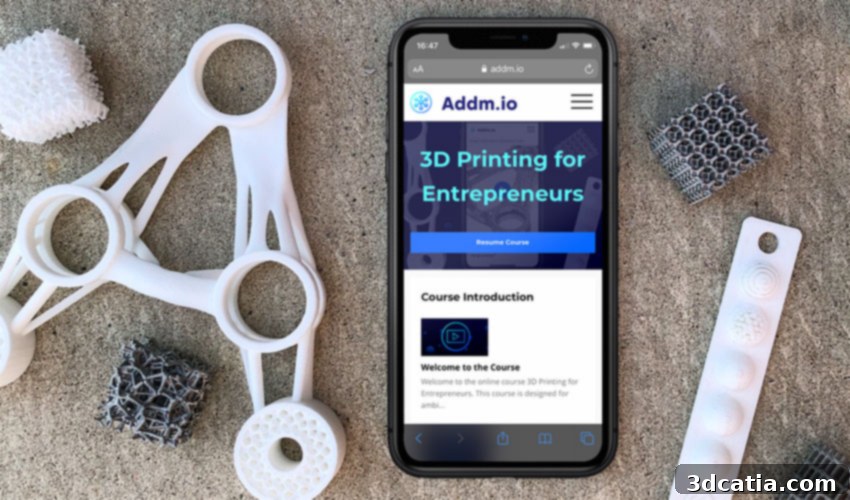
Empowering Innovation: How Addmio Makes 3D Printing Accessible Through Online Courses
As 3D printing, or additive manufacturing (AM), continues its transformative integration into businesses and industries worldwide, it remains a technology that can be challenging to fully comprehend and leverage. Entering this dynamic market demands a unique blend of specific skills, encompassing everything from material science and equipment operation to advanced design principles. Recognizing this growing need, numerous universities and private companies have launched various 3D printing training programs, aiming to equip professionals with the necessary knowledge. However, the accessibility and practicality of these educational offerings often vary widely. It was precisely to address this gap that Addmio was founded. This innovative startup is dedicated to demystifying additive manufacturing, making it truly accessible to everyone through an intuitive and comprehensive online platform. Addmio provides a diverse range of practical courses, enabling individuals to acquire the essential skills needed to confidently embark on their 3D printing journey. We recently had the opportunity to speak with its visionary founder, Robin Huizing, to gain deeper insights into the mechanics and mission of this groundbreaking solution.
Meet the Founder: Robin Huizing’s Journey in Additive Manufacturing
“My name is Robin Huizing, and I’ve been deeply immersed in the 3D printing industry for the past five years, working and living in Eindhoven, the Netherlands,” Robin began, outlining his personal connection to the technology. His journey into the world of additive manufacturing started during his Industrial Design studies, specifically during an internship at a design studio in Amsterdam. “One of my initial assignments there was to redesign a lighting fixture, specifically optimized for 3D printing. It proved to be a fascinating challenge. I recall spending considerable time rethinking the design, consciously trying to break free from the traditional constraints inherent in processes like injection molding.”
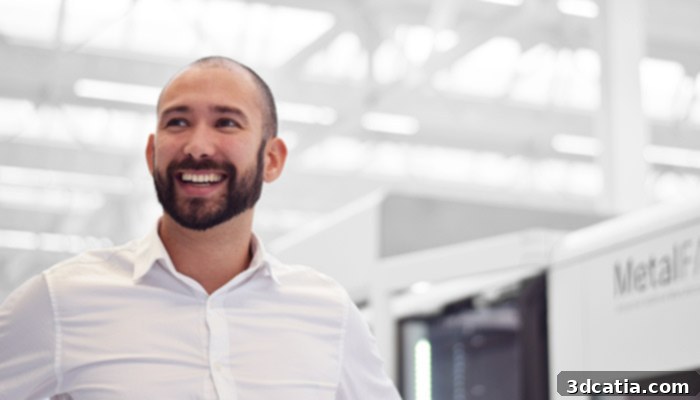
Robin Huizing, founder of Addmio, passionate about making 3D printing education accessible.
Once the design was meticulously finalized, Robin placed an order with Shapeways, a prominent 3D printing marketplace. “They delivered the part within a week, and it cost around twenty euros. I was absolutely blown away,” he recounted with evident enthusiasm. The component he had designed was not merely aesthetic; it was a complex technical part, featuring seamlessly integrated snap fits and precisely engineered screw threads, all produced in a single print run. “The material was strong, flexible sintered nylon powder, and what truly impressed me was that this was a single, end-use part, ready for immediate application. Even better, it could be directly listed and sold in their online marketplace with a healthy markup. This experience completely revolutionized my understanding of design processes and supply chains.” So profound was his impression that he decided to visit Shapeways directly and apply for a job. After graduating, he was hired as a 3D printing engineer, an experience where he truly “made his hands dirty.” Over his tenure, he worked across every production team within the facility, meticulously preparing, 3D printing, and cleaning more than 10,000 models, gaining invaluable hands-on experience that would shape his future endeavors.
After several enriching years at Shapeways, Robin felt ready for a new professional challenge. He observed the significant growth and development in metal 3D printing, or metal AM, noting its rapid evolution from purely prototyping applications towards robust end-use parts. His ambition led him to target Additive Industries, one of the youngest and most forward-thinking companies in the metal 3D printing sector. “Additive Industries was, in many respects, the antithesis of Shapeways,” Robin explained, highlighting the contrast. “While Shapeways had a vibrant, creative tech startup vibe, Additive Industries operated at the high-end of the market, dealing with extremely complex technologies and systems, all within a high-paced, demanding environment. This experience further broadened my perspective on the vast potential and intricate challenges of additive manufacturing, particularly within industrial contexts.” These diverse experiences laid the groundwork for his eventual pivot towards education.
The Genesis of Addmio: Bridging the Knowledge Gap in Additive Manufacturing
“Throughout my career, particularly when training personnel at large companies, one observation consistently surprised me,” Robin shared. “Despite the rapid advancements in 3D printing technology, there remained a significant number of professionals who didn’t fully grasp its nuances, or more importantly, weren’t maximizing all its inherent advantages.” He identified a substantial and growing chasm between the accelerating pace of 3D printing technologies becoming faster and more accessible, and the persistent lack of comprehensive, high-quality, and affordable educational resources. “I realized the profound impact I could make if I dedicated myself solely to education in this field,” Robin stated. This realization ignited the concept for Addmio. He embarked on developing a platform that would be entirely digital and highly scalable, ensuring that valuable knowledge could reach a global audience without geographical or logistical barriers. “My goal with Addmio was simple yet ambitious: to make 3D printing truly accessible for everyone, from beginners to experienced professionals looking to deepen their expertise.”
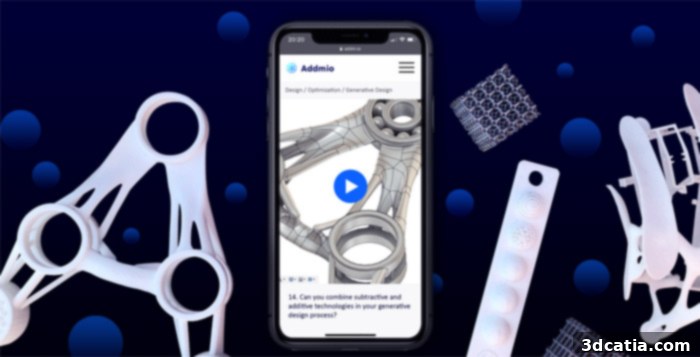
Addmio’s core mission: making 3D printing accessible to everyone through tailored online education.
Addmio’s Course Offerings: Practical Learning for Specific Audiences
“At this moment, our primary focus is on the intensive development of our inaugural course, titled ‘3D Printing for Entrepreneurs’,” Robin explained, detailing Addmio’s current strategic direction. “One aspect that is critically important to me is defining a very clear and specific audience for each course. I’ve personally taken a number of 3D printing courses over the years, and a recurring observation was how excessively general most of them were.” He elaborated on his philosophy: “It might sound a bit cliché, but if you develop a course – or indeed, any product – with the intention of appealing to everyone, you often end up developing it for no one at all. Specificity ensures relevance and impact.”
Consequently, Addmio is meticulously crafting its initial course specifically for **entrepreneurs**. “As an entrepreneur myself, I have a clear vision for how I would want such a course to be structured and what content would be most valuable,” Robin affirmed. “We are deliberately avoiding endless hours delving into highly technical details that, while interesting, are often not directly relevant to a business owner’s immediate needs. For entrepreneurs, time is arguably their most valuable asset. Therefore, every single minute of this course is designed to add tangible value, focusing intensely on subjects that are surprisingly difficult to find online but are absolutely crucial for successfully integrating and applying 3D printing within a viable business model.”
The course is structured around three main pillars. The first critical topic explored is **applications**. “In any business context, the intended application must unequivocally justify the investment in, and ongoing use of, a 3D printer,” Robin emphasized. This section guides entrepreneurs through identifying compelling use cases that offer genuine value. The second crucial subject is **design**, specifically “design for 3D printing,” or Design for Additive Manufacturing (DfAM). “A well-executed design, optimized for 3D printing, frequently transforms a speculative business idea into a resounding success,” he noted. “Conversely, simply trying to 3D print standard parts without redesigning them often leads to poor business outcomes.” When objects are engineered specifically for additive manufacturing, they consistently exhibit superior characteristics: they are often significantly lighter, comprise fewer individual components, and demonstrate enhanced performance metrics. Furthermore, in many cases, this specialized approach leads to considerably lower lead times and reduced overall production costs. The third vital element is **monetization**. “It is paramount to establish a robust business model that can consistently generate revenue, whether in the short or long term,” Robin stressed. “The chosen business model must align not only with your entrepreneurial ambitions but, even more importantly, with your unique skills and passions.” While the “3D Printing for Entrepreneurs” course is just the beginning, Addmio plans to expand its curriculum significantly. “More courses will certainly follow, though the exact sequence is still being finalized. Our current plan is to develop three to four new courses annually, covering a diverse range of topics within additive manufacturing.”
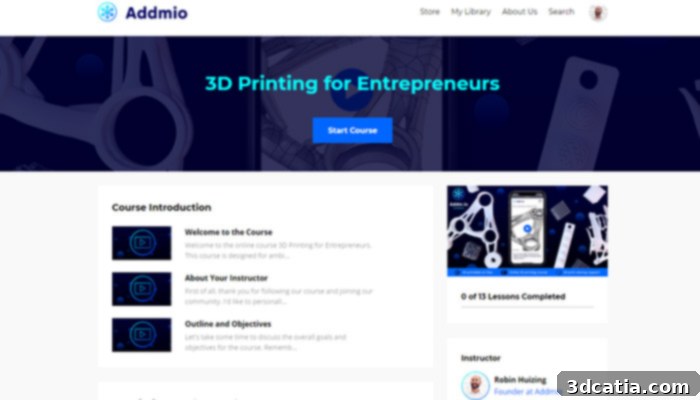
The “3D Printing for Entrepreneurs” course focuses on practical applications, design, and monetization strategies.
Minimal Requirements, Maximum Flexibility: Who Can Join Addmio Courses?
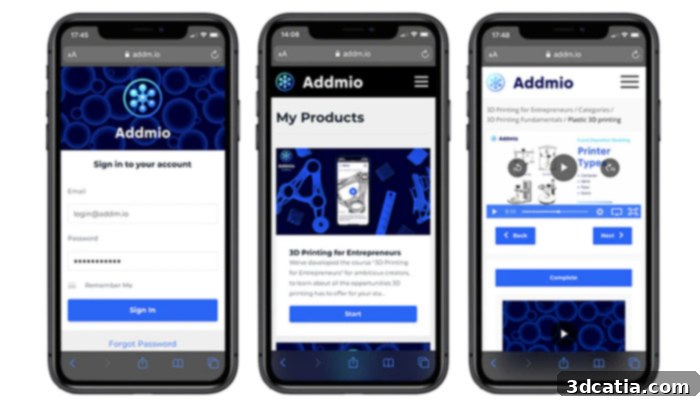
“That’s an excellent question, and the answer is that there are almost no prerequisites at all,” Robin stated, highlighting the inclusive nature of Addmio’s educational offerings. “While a general interest in 3D printing and technology is certainly helpful, it is by no means mandatory to get started. Recognizing that our audience will include complete novices, a comprehensive 3D printing crash course for beginners will be an integral part of every single course we develop.” He elaborated on the core value proposition: “The most substantial portion of our courses is dedicated to teaching those invaluable insights and practical knowledge that are exceedingly difficult to uncover online—the kind of wisdom you only acquire through direct, hands-on experience in the field. This means our courses are equally valuable for individuals who already possess some experience with 3D printing, as they will learn advanced, nuanced concepts often overlooked in more general training.” From a technical perspective, the requirements are equally minimal: “The only things you need to follow any Addmio course are a compatible device and a reliable internet connection. Our platform is entirely browser-based, seamlessly integrating short, digestible video lessons with small, practical assessments.” The entire learning experience has been thoughtfully designed with the realities of busy professionals in mind. “This flexible structure allows you to undertake the course anywhere, at any time, and crucially, entirely at your own pace, fitting seamlessly into your existing schedule.”
Addressing the Educational Challenges in the Additive Manufacturing Market
“Through extensive research, I’ve observed that the vast majority of current educational content available for additive manufacturing is primarily offered by two distinct groups,” Robin explained, delving into the existing landscape and its limitations. “The first group comprises traditional educational institutions. I am personally a strong proponent of MOOCs (Massive Open Online Courses) and applaud the positive trend towards openly and freely shared education, recognizing its immense potential to improve learning in underserved communities globally.”
However, he pointed out a significant drawback: “On the other hand, large research institutions and universities typically create educational content that is fundamentally very theoretical in nature and often requires multiple months or even weeks of dedicated study to consume. 3D printing, to begin with, is a broad collection of diverse technologies, each possessing its own unique process parameters and specific design requirements. In such a complex field, it becomes all too easy to construct an incredibly extensive course that covers a multitude of topics which a student might never practically utilize in their real-world applications. Compounding this, it’s also quite common for these institutions to charge students thousands of euros for a single course or entire program, creating a significant financial barrier.”
“The second significant group providing education is the industry itself,” Robin continued. “This includes prominent machine manufacturers, material suppliers, and specialized service bureaus. These companies logically develop educational content primarily to inform and empower their existing and potential customers. This approach makes perfect business sense, but in practical terms, it often means that the content is narrowly focused on their specific technology, proprietary system, or unique material offering. While these courses undeniably offer very valuable, in-depth information if you are already a customer of that particular vendor, they rarely equip you with the holistic understanding needed to evaluate the broader additive manufacturing landscape or make unbiased decisions.” He added, “Furthermore, machine manufacturers, material suppliers, and service bureaus are, at their core, businesses with their own operational demands. Resources are always finite, and in the majority of cases, education, while important, typically does not hold the highest priority on their strategic agenda, limiting the scope and depth of their public offerings.” Addmio aims to fill this void by providing unbiased, practical, and broadly applicable education.
Final Thoughts from Robin Huizing: Addmio’s Vision for a Smarter Future
“I founded Addmio with a singular, clear objective: to educate as many individuals as possible about the incredible potential of 3D printing,” Robin concluded. “By achieving this, we believe we can empower creators, innovators, and entrepreneurs across the globe to develop better, smarter, and ultimately, more sustainable products and services.” He shared an exciting update: “Our Kickstarter campaign for our first course, ‘3D Printing for Entrepreneurs,’ is currently live. We are incredibly pleased to announce that we successfully reached our funding goal within the first few hours of launch! Despite this early success, there is still a valuable opportunity for you to support our ongoing development efforts and to pre-order the course with a significant discount, ensuring you’re among the first to gain this essential knowledge.”
What are your thoughts on Addmio’s mission and approach to 3D printing education? We invite you to share your comments below or engage with us on our Facebook and Twitter pages! Don’t forget to sign up for our free weekly Newsletter to stay updated on all the latest developments in additive manufacturing!