
Revolutionizing Neonatal Care: Custom 3D Printed Breathing Masks for Premature Babies
Every year, an estimated 15 million babies are born prematurely worldwide, according to the World Health Organization. A birth is classified as premature when it occurs before 37 weeks of pregnancy. This early arrival often leads to a range of significant health complications for newborns, with respiratory distress being one of the most critical. Premature infants’ lungs are not fully developed or functional until they reach full term, making breathing an immense challenge. Recognizing this pressing need, a team of dedicated medical students at Western University of Health Sciences (WesternU) in Pomona, California, embarked on an innovative project: using 3D printing technology to design and produce prototype breathing masks specifically tailored for premature babies. This groundbreaking initiative was sparked by the students’ observation of a notable lack of adequately fitting and gentle respiratory tools within existing neonatal care units.
The current gold standard for supporting premature newborns at risk of respiratory distress is Continuous Positive Airway Pressure (CPAP) combined with surfactant therapy. Surfactant, a crucial thick and foamy fluid naturally produced in the lungs, plays a vital role in preventing the tiny air sacs (alveoli) from collapsing. By keeping these alveoli open, surfactant significantly facilitates the baby’s ability to breathe and maintain proper oxygen levels. While highly effective, traditional CPAP delivery often relies on conventional nasal tip masks. These masks, unfortunately, can pose a significant risk of causing trauma and discomfort to the incredibly delicate skin and nasal structures of very low birth weight premature infants, sometimes leading to pressure sores or even long-term nasal deformities. This vulnerability underscores the urgent need for gentler, more precisely fitted respiratory solutions in neonatal intensive care.
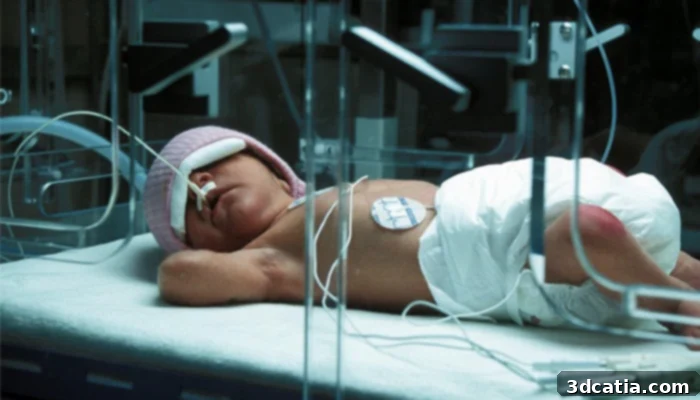
Premature baby in incubator (photo credits: Inserm)
Addressing Neonatal Challenges with Additive Manufacturing
The journey to develop these innovative breathing masks began with a deep understanding of the unique anatomical and physiological challenges faced by premature infants. Traditional medical devices are often mass-produced in standard sizes, which rarely account for the subtle yet significant variations in the facial features of tiny newborns. This lack of precise fit can compromise the effectiveness of respiratory support, lead to air leaks, and, most importantly, cause skin irritation or injury. The students at WesternU, under expert guidance, recognized that 3D printing offered an unparalleled opportunity for true personalization, allowing for devices that conform perfectly to each infant’s individual anatomy.
3D Printed Masks Designed for Premature Babies: A Tailored Solution
To overcome the inherent limitations of standard masks, these specially designed 3D printed CPAP masks are meticulously crafted to achieve a perfect fit over a premature baby’s delicate nose. This bespoke approach significantly reduces the potential for trauma and discomfort often associated with ill-fitting conventional masks. By minimizing points of pressure and ensuring an optimal seal, these custom devices are considered a less dangerous alternative for premature newborns battling respiratory distress and related pulmonary conditions. While these masks are primarily intended for infants who possess a sufficient level of independent breathing, they play a crucial supportive role. They consistently deliver a gentle, positive air pressure into the baby’s nasal passages, effectively aiding their fragile lungs to remain open and preventing episodes of apnea – particularly vital during periods of sleep when breathing can be most irregular.
The Innovative Process at WesternU: From Scan to Solution
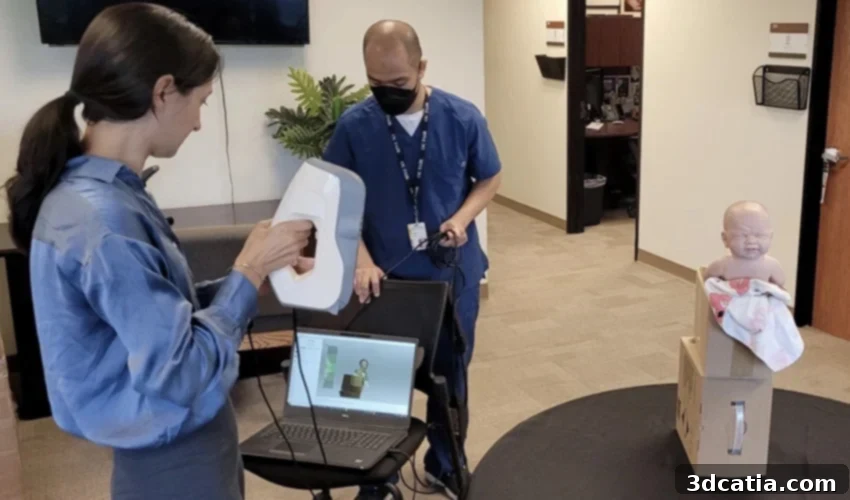
The development process spearheaded by the WesternU students highlights a comprehensive application of additive manufacturing principles in medical device prototyping. The initial phase involved creating highly accurate 3D models of infant mannequins. These detailed digital representations served as the foundational blueprint for designing the prototype breathing masks. The use of mannequins allowed for safe and ethical experimentation, simulating the complex facial contours of premature infants without any risk to actual patients. Following the precise design phase, the masks are then brought to life through 3D printing using a specialized flexible UV-cured resin. This particular material choice is critical; its inherent flexibility ensures patient comfort, while its ability to form a solid, yet adaptable, base is instrumental in minimizing air leaks around the nasal area, thereby maximizing the efficacy of the CPAP delivery. Although the specific 3D printer utilized by the students was not disclosed by the university, the project’s success underscores the versatility and precision offered by modern additive manufacturing technologies.
The entire project is expertly guided by Gary Wisser, a distinguished educational 3D visualization specialist at WesternU’s Center for Excellence in Teaching and Learning (CETL). Wisser’s vision extended beyond merely creating a device; he aimed to empower students with cutting-edge skills and a problem-solving mindset. Under his direction, students were tasked with the intricate process of scanning the tiny, delicate facial features of infant mannequins. This step was crucial for generating an exceptionally accurate 3D rendering, ensuring that the final mask designs would offer an unparalleled custom fit. This hands-on experience not only honed their technical abilities in 3D scanning and modeling but also provided them with invaluable insights into anatomical precision required for medical device development.
Impact and Future of Personalized Medical Devices
Gary Wisser eloquently summarized the profound educational and practical benefits of this endeavor: “It’s always great to be able to create prototypes with students who are trying to develop solutions to problems they discover in the real world. If I can help the student turn a problem into a solution at such an early stage in their career, I think they can look at hurdles as opportunities. Now, 3D scanning, printing, and visualizations can be added to the toolkits they’ll use to serve future patients.” This statement perfectly encapsulates the transformative potential of such projects. By engaging students in real-world challenges and equipping them with advanced technologies like 3D scanning and printing, WesternU is not just developing innovative medical devices but also nurturing a new generation of healthcare professionals who are adept at leveraging technology for patient-centric solutions. This approach encourages critical thinking, innovation, and an entrepreneurial spirit within the medical field.
The implications of this project extend far beyond the WesternU campus. The success in developing custom-fit 3D printed CPAP masks for premature infants opens new avenues for personalized medicine. Imagine a future where critical medical devices, from prosthetics to surgical guides, are routinely custom-manufactured to suit individual patient needs, significantly improving outcomes and reducing complications. This shift towards patient-specific solutions, powered by additive manufacturing, promises to redefine how healthcare is delivered, making it more precise, effective, and humane. The cost-effectiveness and rapid prototyping capabilities of 3D printing also suggest that these personalized solutions could become more accessible, democratizing access to cutting-edge medical care.
Furthermore, this project exemplifies the power of interdisciplinary collaboration. It bridges the gap between engineering, design, and medicine, fostering an environment where technological advancements directly address clinical needs. Such synergies are vital for accelerating innovation in healthcare. As 3D printing technology continues to evolve, we can anticipate even more sophisticated materials and faster, more affordable printing processes, further expanding its application in neonatal care and beyond. The ability to quickly iterate designs, test prototypes, and produce a final, perfectly tailored product is a game-changer for conditions requiring highly specialized and individualized interventions.
We invite you to learn more about this remarkable work. The full research article is available for those interested in a deeper dive into the methodology and findings. You can access it HERE.
What are your thoughts on this inspiring project to create 3D printed masks for enhancing the care of premature babies? We’d love to hear your insights! Share your comments below or connect with us on our LinkedIn, Facebook, and Twitter pages! Don’t forget to sign up for our free weekly Newsletter here to receive the latest 3D printing news directly in your inbox! You can also explore all our videos on our YouTube channel.
*Cover Photo Credits: Western University of Health Sciences