
Revolutionizing Regenerative Medicine: The World’s First Successful 3D Bioprinted Trachea Transplant
The rapid advancements in 3D printing continue to transform the medical landscape, unveiling previously unimaginable possibilities beyond the scope of traditional methodologies. Additive manufacturing, particularly valued for its profound capacity to customize medical solutions, offers a myriad of benefits. These advantages are especially evident in personalized medical interventions, where patient-specific requirements drive innovation. From groundbreaking research dedicated to optimizing materials for 3D printed implants to the development of sophisticated oral stents that significantly enhance cancer treatment outcomes, the practical applications of this technology are nothing short of impressive and continue to expand at an astonishing pace.
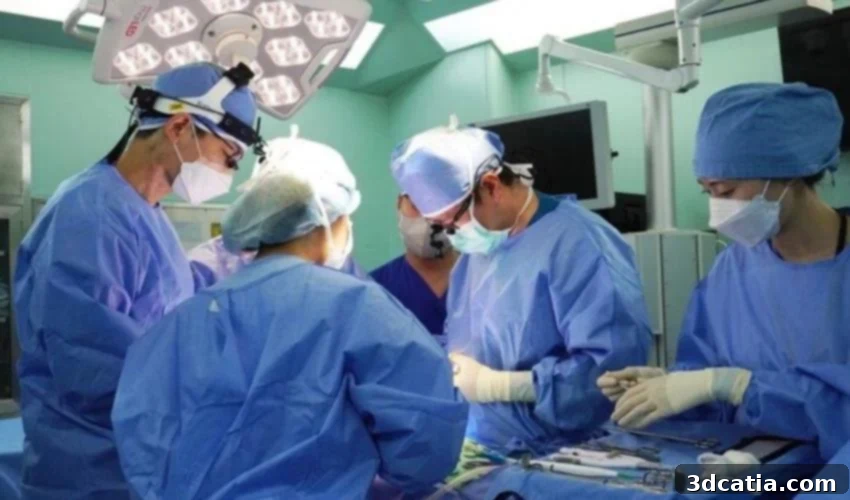
In a monumental collaborative effort, scientists, doctors, and engineers from Seoul St. Mary’s Hospital of the Catholic University of Korea and Gachon University achieved a historic medical first. They successfully conducted the world’s inaugural study involving the fabrication and transplantation of a custom-made 3D bioprinted trachea. This pioneering surgical procedure represents a monumental leap forward in regenerative medicine, offering unprecedented hope and a new lease on life to a woman in her fifties. The patient had previously undergone thyroid cancer surgery, which unfortunately resulted in a significant and life-altering partial loss of her trachea, a condition that severely compromised her respiratory function and quality of life. This landmark event underscores the immense potential of bioprinting in addressing complex anatomical challenges.
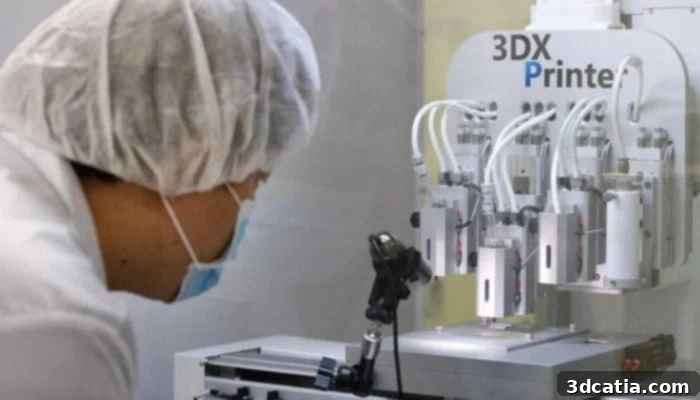
The 3D print of the artificial windpipe. (Photo Credits: T&R Biofab)
The intricate transplantation of this groundbreaking 3D-printed trachea, meticulously crafted through advanced bioprinting techniques, was expertly performed by Professor Kim Seong-won and his dedicated team at the Catholic University College of Medicine. A comprehensive follow-up examination, meticulously conducted six months post-surgery, unequivocally confirmed the procedure’s resounding success. Crucially, not only had the bioprinted tracheal tube fully integrated and healed within the patient’s body, but perhaps even more remarkably, new blood vessels had actively developed within the transplanted tissue. This vital vascularization is a critical indicator of long-term viability and successful tissue regeneration, signifying that the implant was thriving and integrating naturally.
This unprecedented breakthrough holds immense potential, extending far beyond individuals suffering from thyroid cancer. It offers a beacon of hope for a vast array of patients afflicted by congenital anomalies of the airway, severe organ defects, or significant tracheal injuries resulting from trauma or disease. For decades, conventional treatment methods following thyroid cancer surgery, particularly those aimed at tracheal reconstruction, have been notoriously complex, fraught with high risks, and often yielded unsatisfactory outcomes. These traditional approaches have consistently struggled to restore the trachea to its original functional and anatomical state, leaving many patients with lifelong complications. In stark contrast, the bioprinting procedure employed in this study represents the culmination of extensive and rigorous research, a journey that spans over two decades, with foundational work commencing as early as 2004. This long-term commitment to scientific inquiry has now delivered a transformative solution to a persistent medical challenge.
Crafting the Future: Process and Materials Behind the 3D Printed Trachea
The intricate process behind the creation of the transplanted 3D-printed trachea in this pioneering study centered on sophisticated bioprinting techniques. This cutting-edge method involved the meticulous use of a specialized bio-ink, ingeniously derived from a combination of adult nasal stem cells and cartilage cells, carefully sourced from other patients. These living cells were precisely mixed into a printable bio-ink formulation, which was then accurately deposited layer-by-layer by a 3D bioprinter to construct an artificial organ perfectly suited for patient transplantation. A testament to sustainable innovation, human tissue remnants from common surgical procedures, such as nasal septum surgery, were repurposed for the study, providing valuable biological material. This approach resulted in a bioprinted trachea primarily composed of a functional mucous membrane and supportive cartilage, designed to mimic the natural structure and function of the human windpipe. Furthermore, to provide essential initial structural integrity and support during the early stages of integration and healing, the 3D printed trachea also incorporated polycaprolactone (PCL), a biodegradable and biocompatible polymer, which provides a scaffolding until the natural cells can fully take over.
The specialized bioprinter instrumental in this groundbreaking study, uniquely adept at 3D printing complex hollow tubular structures like the trachea, was developed and provided by the renowned biomedical engineering firm T&R Biofab. This innovative company played a pivotal role, not only in supplying the advanced machinery but also in meticulously tailoring the device’s specifications to meet the specific anatomical needs of the patient and designing it for optimal performance within the surgical environment of Seoul St. Mary Hospital. Looking ahead, there are promising prospects for expanding the production capabilities of this advanced bioprinter, which could significantly broaden its utilization by other medical institutions and researchers worldwide. This expansion would democratize access to this transformative technology, accelerating further advancements in regenerative medicine. Reflecting on this monumental achievement, Professor Kim Seong-won articulated the profound significance of the breakthrough:
“The success of this transplant marks the world’s first clinical trial success story of artificial human organ transplantation, meticulously developed by applying bioprinting precision engineering technology that 3D prints adult stem cells from living human beings. It has irrevocably laid the foundational groundwork for developing patient-specific 3D bio-printing artificial organ transplantation technology and is poised to play a major, transformative role in developing advanced biopharmaceuticals for various intractable diseases, offering new hope where conventional treatments fall short.”
While acknowledging the transformative potential, Dr. Paulo Marinho, the esteemed Head of Scientific Strategy at T&R Biofab, maintains a balanced perspective. He notes that while it remains premature to unequivocally declare 3D bioprinting as the definitive, all-encompassing solution to the persistent and critical global shortage of transplant organs, there is indeed considerable optimism. Dr. Marinho highlights its profound potential to partially address this pressing issue, especially for specific organs or indications where current transplantation options are severely limited. Crucially, he emphasizes that this technology holds immense promise in effectively bridging the existing gap between conventional medical devices, which offer limited biological integration, and the complexities of full organ transplants. This means bioprinting can create sophisticated, living implants that are more biologically compatible and functional than inert devices, yet perhaps less complex or resource-intensive than whole-organ replacement, thereby opening new avenues for treatment.
The Future of Organ Regeneration and Personalized Healthcare
The successful transplantation of a 3D bioprinted trachea marks a pivotal moment in the journey towards fully realizing personalized healthcare and regenerative medicine. This achievement demonstrates that complex human organs, with their intricate cellular structures and vascular networks, can indeed be engineered and successfully integrated into the human body. This opens doors not only for tracheal reconstruction but also sets a precedent for other tubular and structurally complex organs. The ability to use a patient’s own cells, or carefully matched donor cells, significantly reduces the risk of immune rejection, a persistent challenge in traditional organ transplantation. Moreover, the capacity to create patient-specific implants means a perfect anatomical fit, which translates to superior functional outcomes and a reduced need for revision surgeries.
Looking beyond the immediate success, the implications of this study are profound. It propels forward the field of tissue engineering, validating methodologies that combine biocompatible scaffolds with living cells to create functional tissues. The progress made in bio-ink development, particularly the use of adult nasal stem cells, points towards more accessible and less invasive methods for harvesting patient-specific cells for bioprinting. As the technology matures, we can anticipate a future where a broader range of tissues and organs, from blood vessels to cartilage and even more complex structures, can be custom-printed on demand. This shift could drastically reduce waiting lists for transplants, offer solutions for untreatable conditions, and dramatically improve the quality of life for millions globally. However, the path forward will require continued research into long-term durability, large-scale production, regulatory approvals, and ethical considerations surrounding bioprinted living tissues.
What are your thoughts on the groundbreaking development and application of artificial organs, such as this remarkable 3D printed trachea? We encourage you to share your insights in a comment below or join the conversation on our LinkedIn, Facebook, and Twitter pages! Don’t miss out on the latest innovations – be sure to sign up for our free weekly newsletter here, delivering the freshest 3D printing news directly to your inbox! Additionally, you can explore all our compelling videos on our YouTube channel for more in-depth content.
*Cover Photo Credits: PharmNews