
Weekly 3D Printing & Additive Manufacturing Digest: Legislation, Industry Shifts, and Breakthrough Innovations
Welcome to this week’s comprehensive 3DExpress digest, where we delve into the most impactful developments shaping the additive manufacturing landscape. This edition features a crucial legislative debate brewing in New York regarding background checks for 3D printer purchases, a move with significant implications for the industry and hobbyists alike. We also explore a strategic partnership designed to stabilize Forward AM’s presence in North America amidst recent restructuring. Further advancing technological frontiers, researchers have unveiled an innovative 3D scanning method for real-time bridge damage tracking, while LEHVOSS introduces a new suite of high-performance materials. Capping off our news, engineers are pushing the boundaries of food science by developing novel materials that intricately mimic the texture of meat muscle and fat for advanced food production. Join us for an insightful read into these pivotal advancements and discussions shaping the future of 3D printing.
New York Bill Proposes Background Checks for 3D Printer Purchases
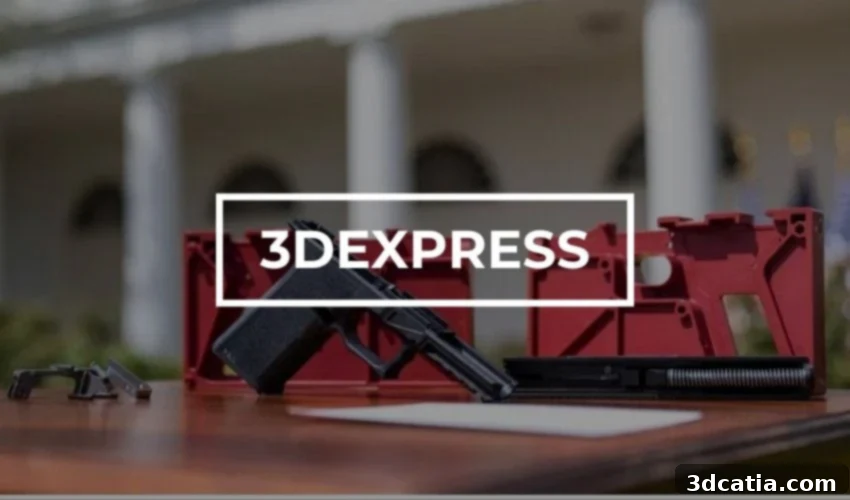
The debate surrounding “ghost guns”—unmarked, untraceable firearms that pose a significant challenge to law enforcement—has intensified globally, bringing 3D printing technology under renewed scrutiny. Following a series of high-profile incidents, including cases involving individuals like Luigi Mangione, the ability to manufacture such weapons using 3D printers has become a central point of concern for police departments and policymakers. In response to these growing anxieties, New York State Senator Jenifer Rajkumar has reintroduced Assembly Bill A2228 for the upcoming 2025–2026 Legislative Session. This proposed legislation aims to mandate a criminal background check for any individual purchasing a 3D printer deemed “capable of making guns.”
This proposal has ignited considerable controversy. Proponents of the bill argue it is a necessary step to enhance public safety by curbing the proliferation of untraceable firearms and providing law enforcement with better tools to track illegal weapons. They emphasize the urgent need for new regulatory frameworks to address the evolving nature of gun manufacturing. However, the bill faces strong criticism from various sectors. 3D printer manufacturers and the wider additive manufacturing community have voiced concerns that the bill’s broad language and general tone would place an undue burden on all interested in 3D printing. This includes a rapidly expanding number of educational institutions, small businesses, and hobbyists who utilize these machines for legitimate, non-firearm-related purposes. Critics argue that such regulation could stifle innovation, restrict access to a versatile technology, and disadvantage New York’s growing 3D printing industry. The challenge lies in balancing the imperative of public safety with the desire to foster technological advancement and ensure accessibility for legitimate users. The legislative process for Assembly Bill A2228 will undoubtedly be closely watched, as its outcome could significantly impact 3D printer sales and the accessibility of additive manufacturing technology throughout New York State, potentially setting a precedent for other regions grappling with similar issues.

Photo Credits: Office of the New York State Attorney General
Forward AM Forges Strategic Partnership with RP America for North American Market Continuity
The year 2024 proved to be a period of significant transition and turbulence for Forward AM, a prominent supplier of 3D printing materials. Mid-year, the company embarked on a new chapter, separating from its parent company BASF through a strategic buy-out to operate as an independent brand. While this move promised greater agility and focused growth, the latter part of the year presented unforeseen challenges, leading the company to file for insolvency and initiate a comprehensive restructuring process. In an effort to ensure stability and continued service to its crucial customer base, Forward AM has now announced a pivotal partnership with RP America.
RP America, a well-established sales and service provider, has a proven track record within the additive manufacturing (AM) sector. This collaboration is specifically designed to guarantee the uninterrupted availability of Forward AM’s extensive range of 3D printing solutions and materials across the vital North American market, encompassing the USA, Canada, and Mexico. For Forward AM, this partnership is a critical step in navigating its current restructuring, providing a robust distribution and support network at a time when maintaining market presence is paramount. For RP America, it signifies an expansion of its portfolio with high-quality, specialized AM materials, strengthening its position as a key player in the region’s additive manufacturing ecosystem. This strategic alliance underscores the dynamic nature of the 3D printing industry, where market consolidation, brand independence, and strategic partnerships are increasingly essential for overcoming challenges and ensuring long-term operational success and customer satisfaction.
Photo Credits: Forward AM
Revolutionizing Infrastructure Inspection: 3D Scanning for Bridge Damage Detection
Bridges, vital arteries of transportation found worldwide, are complex structures predominantly supported by steel girders. Over decades of service, these critical components are susceptible to wear and tear, corrosion, and structural deterioration, which can lead to catastrophic failures if not detected and addressed promptly. The collapse of a bridge not only carries immense financial costs but, more importantly, poses extreme dangers, often resulting in fatalities. To proactively mitigate these risks and enhance public safety, researchers from Technische Universität Dresden in Germany and the University of Massachusetts Amherst in the USA have collaboratively developed a groundbreaking method for bridge inspection utilizing advanced 3D scanning technology.
Their innovative approach leverages the power of the Artec Leo 3D scanner to capture highly detailed and precise data of bridge structures. This method marks a significant departure from traditional inspection techniques, which are often time-consuming, less comprehensive, and prone to human error. Simos Gerasimidis, an Associate Professor at the University of Massachusetts Amherst, eloquently highlights the transformative efficiency of this new system. He explains that corrosion, a primary threat to bridge integrity, typically affects the support beams located beneath the bridge deck. Traditional inspection methods often require laborious manual measurements and repeated repositioning of equipment, making the process slow and cumbersome. In contrast, the handheld, versatile, and user-friendly Artec Leo scanner allows inspectors to quickly maneuver around complex geometries, capturing vast amounts of data in a fraction of the time. “With Leo, you’re gathering (at least) hundreds of thousands of points in five minutes. Using traditional methods, you capture one point in three minutes. So, if you measure efficiency by time per data captured, it’s in a different universe,” Gerasimidis states, underscoring the unprecedented speed and data richness.
Beyond mere data acquisition, the research team has taken this innovation a step further. The meticulously scanned 3D data is fed into sophisticated analysis software, enabling engineers to design and simulate various overload scenarios. This simulation data, in turn, serves as crucial training material for an artificial intelligence (AI) system. The AI is trained to instantly assess a bridge component’s ability to sustain different loads, providing rapid and accurate evaluations of structural integrity. This integration of 3D scanning with AI-driven analytics creates a powerful tool for predictive maintenance, allowing authorities to identify potential weaknesses much earlier and respond with targeted repairs before they escalate into critical issues. This forward-thinking approach promises to revolutionize how bridges and other critical infrastructure are monitored, making them safer, more resilient, and ultimately extending their operational lifespans while optimizing maintenance costs.
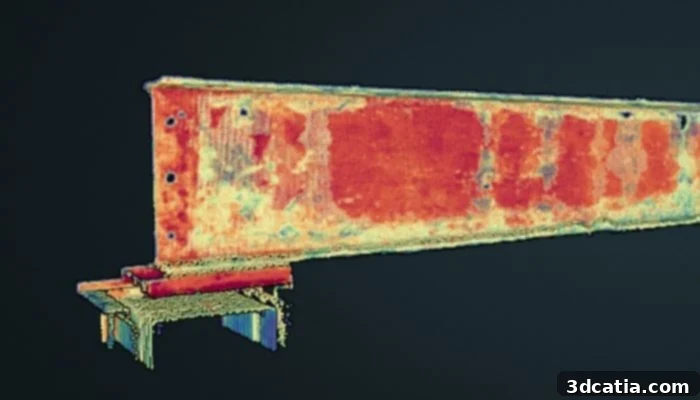
Researchers are able to analyze the strength of bridge girders more quickly (photo credits: Artec 3D)
LEHVOSS Expands Additive Manufacturing Portfolio with New LUVOPRINT High-Performance Materials
LEHVOSS, a renowned chemist and developer of advanced polymer solutions, has recently unveiled an exciting expansion to its product line with the launch of LUVOPRINT, a new range of high-performance materials. These innovative materials, available in pellet form, are specifically engineered to meet the demanding requirements of additive manufacturing (AM) across various industrial sectors. The LUVOPRINT series is poised to become an invaluable resource for creating robust molds, intricate components, and precision jigs, catering to industries where performance, durability, and reliability are paramount.
The group has meticulously developed four distinct types of polymers within the LUVOPRINT range, each offering unique properties tailored for specific applications:
- ECO PC/ABS: This polymer blend is celebrated for its excellent dimensional stability and ease of printability. It provides a balanced combination of mechanical strength, heat resistance, and good aesthetics, making it suitable for functional prototypes and end-use parts requiring precision and consistency.
- ECO PA6: Offering outstanding resistance to abrasion, wear, and impact, ECO PA6 is an ideal choice for applications subjected to high mechanical stress and friction. Its robust properties make it perfect for components that need to withstand harsh operating conditions and provide long-term performance.
- ECO PPS: This specialized polymer is distinguished by its flame-retardant characteristics and superior chemical resistance. For industries requiring materials that can perform reliably in challenging chemical environments or where fire safety is a critical concern, ECO PPS provides a high-performance solution. You can find more information about flame-retardant materials for 3D printing here.
- PESU: Also possessing excellent flame-retardant properties, PESU stands out for its very high thermal stability and exceptional mechanical resistance. This material is designed for high-temperature applications and parts requiring superior structural integrity under demanding conditions.
LEHVOSS’s strategic objective with the LUVOPRINT range is to actively promote the broader adoption of additive manufacturing in industrial settings. By offering materials that ensure good reproducibility and consistent quality, the group aims to facilitate the transition from prototyping to mass production using AM technologies. The availability of these materials in pellet form further expands their versatility, allowing for use in various additive manufacturing processes such as fused deposition modeling (FDM) with granulate extrusion systems, thereby broadening their industrial appeal. The official presentation of these innovative granules is scheduled to take place at the prestigious JEC trade show, commencing on March 4, where industry professionals will have the opportunity to explore their capabilities firsthand. This introduction signifies a crucial step in providing the advanced material solutions necessary to unlock the full potential of industrial additive manufacturing.
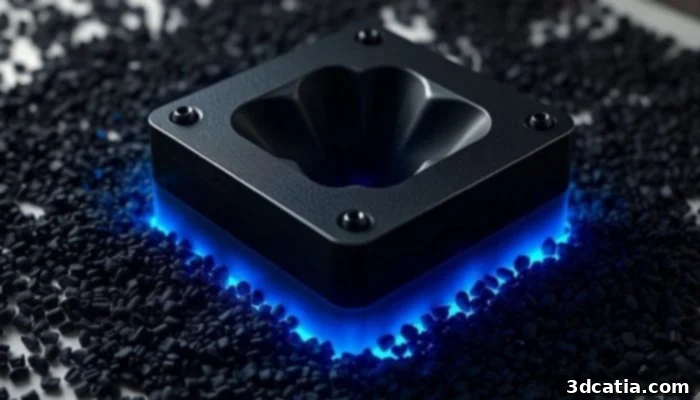
Photo Credits: LEHVOSS
Innovating Food Science: New Metamaterials Replicate Meat Muscle and Fat Textures
The quest to create truly convincing meat analogues that accurately replicate the complex texture and mouthfeel of traditional animal protein has been a significant challenge for the food industry. While 3D printing has shown promise in this area, it often struggles with achieving the intricate fibrous structures of muscle and the distinct marbling of fat required for complex cuts like steaks and chops. Addressing this very challenge, a dedicated team of engineers from the Hebrew University of Jerusalem has pioneered a revolutionary technology capable of producing meat analogues that precisely mimic the structural properties of muscle and fat.
Drawing upon advanced principles of materials science, these engineers have successfully engineered two novel metamaterials. One of these innovative materials is designed to reproduce the characteristic fibrous texture of muscle tissue, providing the chewiness and structural integrity consumers expect from meat. The second metamaterial is crafted to replicate the unique characteristics of animal fat, including its melt profile and contribution to flavor and juiciness. Unlike many current 3D printing methods, which can be limited in their ability to create such intricate macrostructures with the desired scalability, this new technology employs a process akin to injection molding. This manufacturing approach allows for the efficient production of complex cuts, such as full-sized steaks and chops, with a level of precision and consistency previously difficult to achieve in alternative protein development.
The adoption of an injection molding-like process offers several critical advantages. Primarily, it significantly improves scalability and drastically reduces production costs compared to conventional 3D printing techniques for food. This makes alternative protein products more affordable and accessible to a wider consumer base, which is crucial for their broader acceptance and market penetration. Furthermore, this innovative technology directly addresses and overcomes many of the inherent obstacles associated with imitating the intricate texture and composition of traditional meat, an area where current 3D printing approaches often fall short in terms of realism and sensory experience. By offering a more affordable, sustainable, and texturally accurate solution to traditional meat production, these advances hold the potential to profoundly transform the food industry. They promise to make alternative proteins not only more economically viable but also more appealing and better accepted by consumers, thereby contributing significantly to mitigating the environmental impact of conventional livestock farming and fostering a more sustainable global food system.
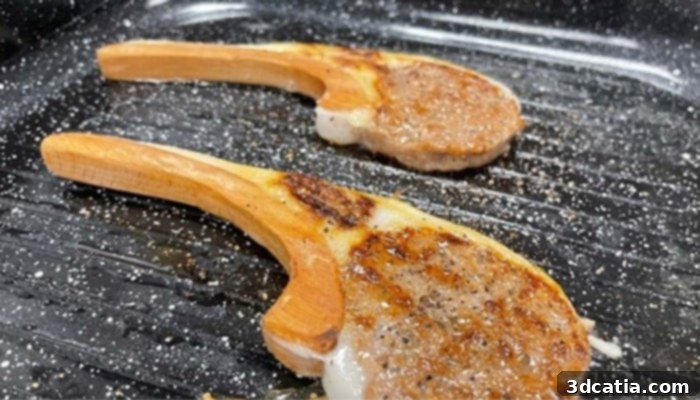
Photo Credits: Hebrew University of Jerusalem
This week’s 3DExpress has covered a wide array of significant developments, from legislative actions potentially impacting the accessibility of 3D printers to groundbreaking advancements in material science for both industrial and food applications. What are your thoughts on New York’s proposed bill requiring background checks for 3D printer purchases? Do you believe such measures are justified for public safety, or do they pose an unnecessary burden on innovation and legitimate users? We invite you to share your perspectives in the comments section below or engage with us on our LinkedIn, Facebook, and Twitter pages! Don’t forget to sign up for our free weekly Newsletter here to receive the latest 3D printing news directly in your inbox. You can also explore all our insightful videos on our YouTube channel for more in-depth content.