
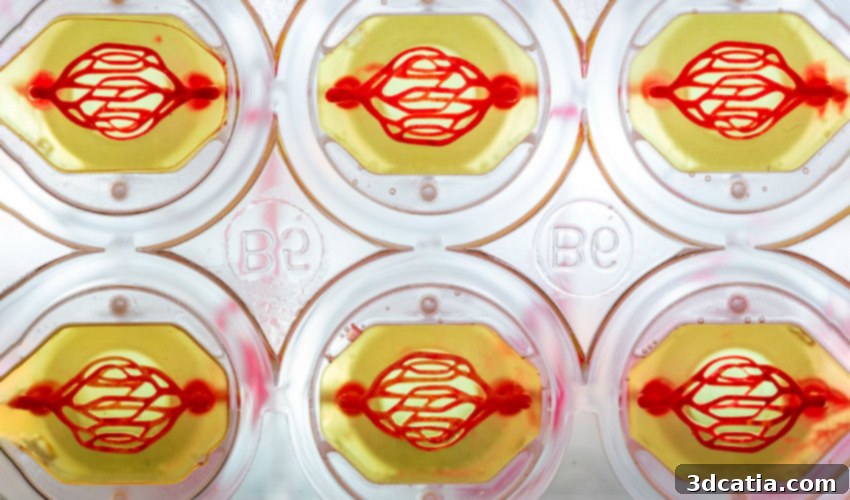
Systemic Bio: Pioneering 3D Bioprinting for Advanced Drug Discovery and Regenerative Medicine
The groundbreaking advancements in 3D bioprinting are opening up unprecedented opportunities in medicine, extending its impact far beyond regenerative medicine into critical areas like drug discovery and development. At the forefront of this revolution is Systemic Bio, a prominent subsidiary of 3D Systems. This innovative company is making significant strides in creating functional, vascularized human tissues using cutting-edge, high-precision 3D bioprinting techniques. Systemic Bio’s core mission is to fundamentally transform the entire lifecycle of medical treatments—from initial design and rigorous testing to comprehensive optimization. By seamlessly integrating highly relevant human data into sophisticated predictive models, they aim to dramatically accelerate the development of new, more effective drugs. We had the privilege of speaking with Taci Pereira, the visionary CEO of Systemic Bio, to delve deeper into their revolutionary platform, explore the immense potential of additive manufacturing in therapeutic development, and understand their forward-looking vision for the future of tissue-based, 3D-printed medicine.
An Introduction to Taci Pereira and Her Journey in 3D Printing
My name is Taci Pereira, and I hail from Curitiba, Brazil. My journey into bioengineering began at the age of 18 when I moved to the United States to study at Harvard University. My primary motivation was a profound desire to contribute meaningfully to the development of novel cancer treatments and to empower doctors worldwide to reach and assist more patients effectively. It was at Harvard that I was first introduced to the fascinating field of tissue engineering through the pioneering work of Professor David Mooney. I was captivated by the immense potential of biomaterials and tissue engineering, recognizing their applications across various domains—from regenerative medicine and advanced drug delivery systems to the creation of superior models of human physiology and pathology for research.

Taci Pereira (Right)
This burgeoning interest naturally led me to join Allevi, a nascent bioprinting company, as a junior bioengineer. During my time there, I dedicated countless hours in the lab, meticulously learning and mastering the use of extrusion-based 3D printers. This hands-on experience allowed me to create an astonishing array of tissues, ranging from intricate bone structures to complex tumor models. Being part of a small, agile team meant I embraced a multitude of roles, spanning research and development, marketing initiatives, customer support, and operational management. Today, Allevi has grown significantly, boasting over 500 clients across the globe and being featured in more than 100 scientific publications. My dedication and expertise saw me rise to the position of Chief Scientific Officer three years later, where I played a pivotal role in guiding the company towards its successful acquisition by 3D Systems.
Following the acquisition, I continued my leadership role within the newly formed 3D Systems division. This transition provided an invaluable opportunity to work with industrial-grade 3D bioprinting technology, gain deep insights into the operations of a public company, and explore innovative modalities such as light-based printing. Approximately a year later, this journey culminated in the exciting launch of Systemic Bio, a testament to continued innovation in the field.
Understanding Systemic Bio: Genesis and Mission
Systemic Bio operates as a dedicated subsidiary of 3D Systems, established with a clear and ambitious objective: to leverage 3D Systems’ advanced industrial bioprinting technology specifically for breakthroughs in drug discovery and development. While 3D bioprinting is frequently associated with future applications in regenerative medicine or the creation of implantable tissues, its immediate potential in enhancing how we study diseases and formulate new therapies, through the meticulous testing of functional human tissue models, is truly immense.
The conceptualization of Systemic Bio began to solidify around 2018. During this period, I keenly observed the rapid rise of AI and machine learning within the biotechnology sector, particularly noting the impactful work of companies like Insitro. I held immense admiration for Daphne Koller’s contributions and diligently followed the evolving applications of computational tools in biological research. However, a significant gap became apparent to me: the efficacy of AI models is inherently limited by the quality and relevance of the data they are trained on. If we continue to rely predominantly on preclinical models that frequently fail to accurately predict human outcomes, AI will, unfortunately, only serve to accelerate these failures. While this might save time in the short term, it critically fails to address the underlying problem of preclinical irrelevance.
It was this critical insight that sparked the idea of developing an in silico platform. This platform would be powered by human-relevant data meticulously derived from 3D bioprinted tissues. To bring this vision to fruition, a scalable and highly reproducible bioprinting technology was indispensable—a technology that, at the time, simply did not exist in the required industrial capacity. Through the strategic acquisition of Allevi, I gained invaluable access to 3D Systems’ decades of accumulated experience and expertise in high-throughput additive manufacturing. This pivotal development paved the way for the establishment of Systemic Bio in August 2022, backed by an initial funding round of $15 million. Our overarching goal is to produce large-scale bioprinted tissues consistently and to generate robust, human-centric data that facilitates superior decision-making throughout the drug development pipeline, ultimately leading to more successful and safer therapeutic interventions.
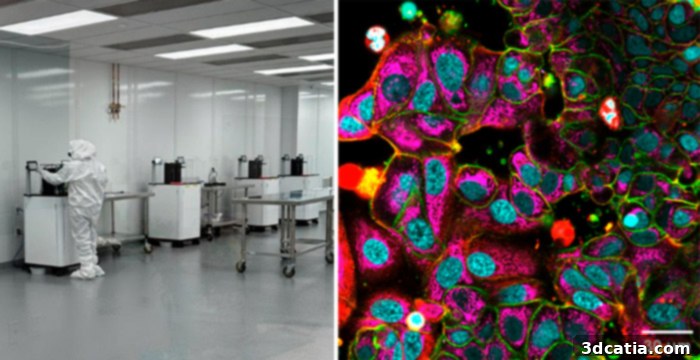
Systemic Bio’s Cutting-Edge 3D Bioprinting Technology
At Systemic Bio, we leverage industrial-grade, light-based bioprinting technology, an innovation meticulously developed by 3D Systems. This advanced methodology empowers us to precisely create vascularized hydrogel structures. These structures are characterized by their exceptional resolution and superior performance, mimicking the intricate complexity of natural human tissues. Each scaffold’s quality is stringently controlled through rigorous processes. Subsequently, these scaffolds are meticulously functionalized and carefully seeded with specific cell types, enabling them to accurately model various human tissues. Our sophisticated platform boasts the capability to produce thousands of consistent tissue models every month. This high-volume production is seamlessly integrated within a comprehensive quality management system, ensuring reliability and reproducibility. This robust framework not only supports our extensive internal research and development initiatives but also underpins our crucial partnerships with leading pharmaceutical companies, providing them with unparalleled tools for drug testing and discovery.
Advantages of Additive Manufacturing for Drug Discovery and Development
Additive manufacturing presents several compelling advantages that are profoundly impacting drug discovery. Firstly, this technology enables the precise creation of biomimetic structures. These structures feature complex, nature-inspired geometries that are virtually impossible to achieve using conventional manufacturing methods. This capability allows for more physiologically relevant tissue models. Secondly, the landscape of drug discovery is incredibly diverse, involving a vast array of mechanisms of action and intricate disease models. In this context, the inherent flexibility of additive manufacturing is absolutely essential, allowing for adaptation to diverse research needs. Finally, additive manufacturing provides unparalleled ease in adjusting models and cell types. Researchers can simply update a digital design file without needing to modify the physical hardware, significantly streamlining the experimental process.
This inherent modularity makes our system exceptionally cost-effective and highly customizable, which is critical for meeting the evolving demands of pharmaceutical research. When compared to traditional manufacturing techniques, such as injection molding, additive manufacturing facilitates much faster iteration cycles and rapid prototyping. This accelerated development is invaluable for optimizing tissue models to achieve the highest possible accuracy and predictive power. While the benefits are clear, the primary challenge today lies in ensuring absolute consistency and reproducibility at scale. This is precisely one of the core problems that Systemic Bio is dedicated to solving through our innovative approaches and rigorous quality controls, ensuring that our bioprinted tissues provide reliable and actionable data for drug development.
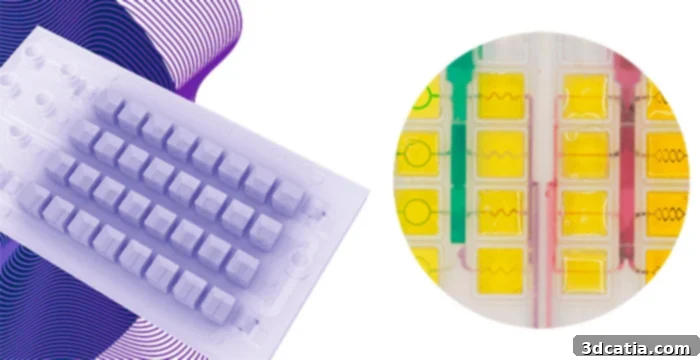
The Future of 3D Printing in the Medical Field
Bioprinting is positioned to fundamentally revolutionize medicine in a multitude of profound ways. In the near term, we are witnessing the dawn of the era of tissue therapy—a novel class of treatments where, rather than attempting to design and construct an entire complex organ, we can precisely bioprint functional tissue constructs. These constructs are specifically engineered to enhance or actively support existing organ function. Such tissues are not only significantly easier to produce but can also be meticulously tailored for highly specific medical applications. Furthermore, they hold immense promise as advanced drug delivery systems, offering targeted and controlled release mechanisms for therapeutic agents.
At Systemic Bio, our ambitious overarching goal is to bioprint millions of highly functional, vascularized tissues. These tissues will then serve as the foundational building blocks for generating sophisticated computational models of human organs and entire physiological systems. These rigorously validated tissues will form the bedrock of vast, comprehensive datasets—essentially, libraries containing diverse therapeutic modalities meticulously tested across a wide spectrum of tissue types and intricate biological contexts. By meticulously labeling each tissue response with crucial therapy attributes, such as its structural composition, precise dosage, and specific mechanism of action, we can effectively train advanced AI and machine learning models. These intelligent models will then be capable of accurately predicting both the safety and efficacy of new drugs across numerous critical use cases, including assessments of liver toxicity, cardiac safety, or the response of tumors to various treatments.
Imagine a future where a new therapy can be introduced into this predictive system, and almost instantaneously, you can obtain a detailed, organ-by-organ safety profile, alongside highly specific disease-efficacy predictions—all meticulously derived from robust, human-relevant data. This visionary future is precisely what we are diligently working towards at Systemic Bio. Our unwavering commitment is to create human-based predictive models that possess the power to dramatically accelerate the entire drug development process and substantially mitigate drug-related risks, ultimately bringing safer and more effective medicines to patients faster.
In the longer term, the field of bioprinting continues its pursuit of its most ambitious and transformative goal: the bioprinting of fully functional, transplantable organs. We are finally entering an era where several critical factors are converging and aligning harmoniously. These include the advent of industrial-scale bioprinting capabilities, significant advancements in automation technologies, and crucial regulatory support from bodies like the FDA for exploring and validating alternatives to traditional animal testing. Achieving this visionary future demands an unyielding focus on reproducibility, scalability, and clinically meaningful validation. If we succeed in these endeavors, bioprinting will not merely serve as a complementary tool in medicine; it will fundamentally redefine the very essence of medical practice and patient care.

The Systemic Bio team
Final Thoughts and Advice for Our Readers
My key message for our readers is to embrace patience, as progress in this field undeniably takes time. Nearly a decade ago, when I first started working in bioprinting, there was already considerable talk about the imminent possibility of printing entire organs within a five to ten-year timeframe. While it is true that we are significantly closer to that reality today, it is important to acknowledge that biotechnology operates on a distinctly different timescale compared to other industries. Progress, though real and impactful, is often gradual, complex, and requires persistent effort.
We must balance ambition with realism. Our collective focus should be on creating robust technologies that demonstrably work, and crucially, on generating valuable, reproducible data that will systematically bring us closer to achieving these ambitious long-term goals. The promises held by bioprinting are truly enormous and inspiring, but the realization of these promises hinges upon unwavering perseverance, rigorous scientific methodology, and a deep, unwavering commitment to solving the right, fundamental problems that advance the field incrementally and effectively.
We invite you to share your thoughts on Systemic Bio! Please let us know what you think in a comment below or connect with us on our LinkedIn or Facebook pages. Additionally, don’t miss out on the latest 3D printing news by signing up for our free weekly Newsletter, delivered directly to your inbox. You can also explore all our insightful videos on our YouTube channel. Interested in more news and updates on medical and dental 3D printing? Visit our dedicated page HERE for comprehensive coverage.
*Photo Credits: Systemic Bio