
Unlocking Innovation: Top 5 3D Printing Videos Showcasing Additive Manufacturing’s Transformative Power
Welcome to our weekly dive into the fascinating world of 3D printing, where we bring you the most compelling videos illustrating how additive manufacturing is not just shaping, but actively revolutionizing our society. This week, we’ve curated a selection of the TOP 5 videos that highlight groundbreaking applications, expert insights, and the sheer ingenuity enabled by this incredible technology. From preserving cultural heritage with modern techniques to reimagining global supply chains and pushing the boundaries of engineering, these stories underscore the profound impact of 3D printing across diverse industries.
As we explore these remarkable developments, you’ll witness how companies and individuals are leveraging 3D printing to achieve unprecedented levels of customization, efficiency, and innovation. These videos offer a glimpse into the future of manufacturing, demonstrating how additive processes are making the impossible possible. We invite you to sit back, explore these captivating insights, and consider the immense potential of this transformative field. For even more engaging 3D printing content and deep dives into additive manufacturing trends, be sure to visit and subscribe to our YouTube channel. We hope you find these features inspiring and enjoy a fantastic Sunday!
Top 1: London Bronze Casting Company and the Power of Additive Manufacturing
The ‘Green Man’ project stands as a magnificent testament to the fusion of traditional craftsmanship and cutting-edge 3D printing technology. This ambitious undertaking aimed to commemorate the historical foundry operations in Deptford, London, at the very site where the majestic statue now proudly resides. Central to its creation was a partnership between the esteemed London Bronze Casting Company, renowned for its dedication to research, innovation, and the artisanal craft of bronze work, and Voxeljet, a global leader in industrial 3D printing solutions. Voxeljet brought their extensive additive manufacturing expertise to the forefront, playing a pivotal role in realizing the intricate form of the statue, which is based on a foundry worker affectionately known as ‘Bill’.
The journey began with the digital design of ‘Bill,’ a complex form that would have traditionally required extensive manual sculpting and mold-making, a process that is both time-consuming and labor-intensive. Instead, the precise form was printed using a state-of-the-art Voxeljet VX1000 PPB printer. This industrial-grade binder jetting system is celebrated for its ability to produce large-scale, highly detailed molds and patterns with exceptional accuracy. Once the 3D-printed components were complete, they were meticulously processed at the London Bronze Casting Company. Here, their master craftsmen utilized these advanced patterns to cast the final bronze statue, which stands an impressive 2.2 meters tall and weighs a substantial 200 kilograms. This collaboration beautifully illustrates how additive manufacturing streamlines complex design realization, accelerates production timelines, and opens new avenues for artistic expression while honoring historical legacies. The integration of 3D printing into the bronze casting workflow not only enhanced precision and efficiency but also demonstrated how modern technology can empower traditional arts to achieve new heights. Discover the intricate details of this remarkable project and its innovative methodology in the video below!
Top 2: How 3D Printing is Radically Disrupting the Global Supply Chain
In a truly insightful presentation, Nora Toure, a distinguished expert in additive manufacturing since 2010, explores the transformative potential of 3D printing in reshaping and optimizing global supply chains. Nora Toure is widely recognized and celebrated within the industry, having received multiple accolades for her pioneering contributions to the 3D printing sector. Furthermore, in 2014, she founded Women in 3D Printing, an influential organization dedicated to promoting and supporting women leaders in the additive manufacturing space, fostering diversity and innovation.
The video delves into how 3D printing stands as a profoundly disruptive technology, fundamentally challenging conventional manufacturing methods and the established paradigms of product creation and distribution. Traditionally, supply chains have relied on centralized production, often in distant locations, leading to lengthy shipping times, high inventory costs, and significant environmental footprints. Nora highlights how 3D printing solutions offer a paradigm shift towards a more distributed and localized manufacturing model. By enabling on-demand production closer to the point of consumption, 3D printing dramatically reduces transportation needs, thereby lowering logistics costs, minimizing lead times, and decreasing carbon emissions. This localized approach also enhances supply chain resilience, making it less vulnerable to geopolitical disruptions, natural disasters, or global crises.
Moreover, the ability of 3D printing to facilitate rapid prototyping and mass customization means that companies can respond to market demands with unprecedented agility. It allows for the production of highly specialized parts and custom products without the need for expensive tooling or large minimum order quantities, driving innovation and consumer satisfaction. This move towards digital manufacturing and localized production doesn’t just optimize existing processes; it redefines how goods are made, distributed, and consumed, heralding an era of smarter, more sustainable, and more responsive supply chains. Dive into Nora Toure’s expert analysis to understand in greater detail how this technology is set to fundamentally alter global commerce and industry. The future of manufacturing is here, and it’s distributed.
Top 3: 3D Printing at the Heart of University Innovation and Personal Impact
Joe Kastner, a dedicated master’s degree student in industrial engineering at the University of Minnesota Duluth, exemplifies how academic research and personal commitment can drive impactful applications of 3D printing. As part of his advanced studies, Joe has invaluable access to a suite of Fused Deposition Modeling (FDM) printers, enabling him to bring complex ideas from concept to tangible reality with remarkable speed and efficiency. These printers are indispensable tools in his academic journey, allowing him to rapidly iterate designs, test various functional prototypes, and validate components for larger-scale engineering projects.
The accessibility of FDM technology empowers Joe to obtain functional prototypes in a mere 8 to 9 hours. This rapid turnaround is critical for the iterative design process inherent in engineering, allowing him to quickly assess the viability of his designs, identify potential flaws, and implement necessary modifications without significant delays or expenses. This ability to ‘fail fast and learn faster’ is a cornerstone of modern product development and academic research, directly contributing to more robust and effective final designs. Beyond his theoretical and large-scale project work, Joe’s commitment to leveraging 3D printing for tangible, humanitarian impact is truly inspiring.
In a poignant demonstration of 3D printing’s potential, Joe utilized these machines to create a custom thumb prosthesis for a carpenter who had tragically lost his thumb in a work accident. This bespoke medical device was designed to significantly improve the carpenter’s quality of life, restoring functionality and independence that would be difficult or impossible to achieve with off-the-shelf solutions. The ability to customize prosthetics precisely to an individual’s anatomy, ensuring comfort, fit, and aesthetic appeal, showcases the profound benefits of additive manufacturing in healthcare. This project highlights not only the versatility of FDM 3D printers but also the compassionate application of technology to address real-world challenges, making a direct and meaningful difference in people’s lives. University environments, like Joe’s at Minnesota Duluth, are crucial incubators for such innovations, fostering the next generation of engineers who understand how to harness advanced manufacturing for both academic excellence and societal good. Watch the video to learn more about Joe’s fascinating work and the university’s commitment to cutting-edge research.
Top 4: Additive Manufacturing Soars into the Aerospace Industry
The aerospace industry, with its stringent demands for precision, performance, and reliability, has found a powerful ally in metal additive manufacturing. Aerojet Rocketdyne, a global leader in propulsion systems and advanced defense solutions, has made significant strategic investments in metal additive manufacturing solutions to revolutionize the production of critical aerospace components. Among their advanced arsenal is a state-of-the-art 3D M2 Cusing printer from Concept Laser, a renowned pioneer in metal laser melting technology. This sophisticated machine is pivotal in enabling Aerojet Rocketdyne to produce parts that were previously considered impossible or prohibitively expensive to manufacture using traditional methods.
Thanks to the capabilities of the M2 Cusing printer, Aerojet Rocketdyne can now create complex aerospace components much faster than conventional manufacturing processes allow, significantly reducing development cycles and accelerating time-to-market for new propulsion systems. Concurrently, this technology dramatically lowers production costs by minimizing material waste, reducing the need for extensive post-processing, and consolidating multiple parts into single, integrated geometries. The M2 Cusing employs a laser to selectively melt fine metal powders, layer by layer, building components with exceptional strength, intricate internal structures, and optimized designs.
These 3D-printed metal components are engineered to resist extreme environmental conditions, a critical requirement for space exploration and high-performance aeronautics. Whether enduring the frigid vacuum of space, operating within the intense heat and pressure of a rocket engine during takeoff, or withstanding the rigors of atmospheric flight, these parts demonstrate unparalleled durability and performance. Metal additive manufacturing allows for the creation of lightweight designs with optimized geometries that enhance efficiency and thrust-to-weight ratios, crucial factors for rockets and spacecraft. This not only contributes to the overall efficiency and safety of aerospace vehicles but also opens up new design possibilities for future generations of propulsion systems and structures. The investment by Aerojet Rocketdyne underscores the aerospace industry’s growing confidence in additive manufacturing as a cornerstone for future innovation and competitive advantage. Witness the future of flight and space exploration being built, layer by layer, in the video below.
Top 5: Decathlon and the Democratization of Sport through 3D Printing
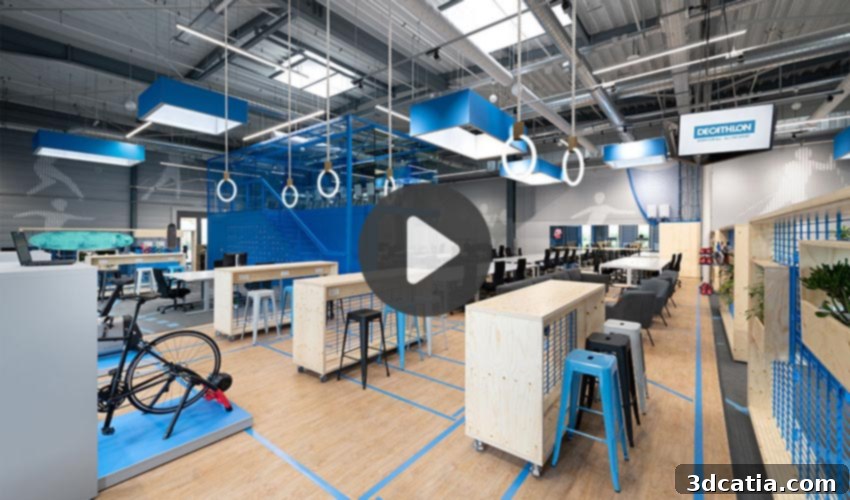
In a compelling discussion, Luis Rodriguez from Pro talks engages with Kevin Penvern, a Prototype Engineer at Decathlon, to shed light on how the global sports retailer is strategically leveraging desktop 3D printing to enhance its product development and achieve its mission of making sport accessible to everyone. Decathlon, known for its commitment to innovation and affordability, has embraced additive manufacturing as a key enabler for faster, more efficient, and more creative product design processes.
The video highlights a pivotal shift in Decathlon’s approach to prototyping: bringing the entire process in-house. This strategic move has empowered their engineers and designers, like Kevin, to gain full control over their workflow. Previously, outsourcing prototypes often involved longer lead times, higher costs, and less flexibility for iterative changes. With in-house desktop 3D printing, engineers can now generate multiple design iterations and functional prototypes within hours or a few days, directly at their workstations. This dramatically accelerates the design cycle, allowing for rapid testing, immediate feedback, and quick refinements, leading to superior product outcomes in a fraction of the time.
This seamless integration of additive manufacturing into Decathlon’s development process means that innovative ideas can be transformed from digital concepts into physical objects almost instantaneously. This agility fosters a culture of continuous experimentation and improvement, enabling the creation of custom components, ergonomic designs, and specialized sports equipment that cater to a wide array of athletic needs and preferences. From testing new shoe sole patterns to optimizing bicycle components or developing unique accessories for various sports, 3D printing offers unparalleled versatility. The ability to quickly produce prototypes and small-batch production runs also allows Decathlon to explore new market opportunities and deliver highly specialized products more efficiently. Kevin Penvern’s insights reveal how Decathlon continues to explore the expansive field of additive manufacturing for new opportunities, ensuring that their dedication to innovation consistently translates into making sports more enjoyable, accessible, and inclusive for their vast customer base worldwide. Discover how this leading sports brand is championing digital fabrication in the pursuit of athletic excellence and universal access. Watch the video for the full discussion!
Join the Conversation on 3D Printing’s Future!
We hope you thoroughly enjoyed this week’s captivating TOP 5 VIDEOS, showcasing the incredible breadth and depth of innovation within the 3D printing and additive manufacturing landscape. From preserving history with modern technology and revolutionizing industrial supply chains to empowering university students and driving aerospace advancements, these examples truly underscore the transformative power of 3D printing across every sector.
What were your favorite videos, and which application of additive manufacturing do you find most exciting? We’d love to hear your thoughts and insights! Please don’t hesitate to share your comments below or engage with us directly on our vibrant Facebook and Twitter pages. Your feedback is invaluable as we continue to explore the cutting edge of this dynamic industry.
To ensure you never miss out on the latest breakthroughs, expert analyses, and trending news in the 3D printing world, make sure to sign up for our free weekly Newsletter. Delivered straight to your inbox, it’s your essential guide to staying updated on all things additive manufacturing. Thank you for joining us on this journey through innovation!