
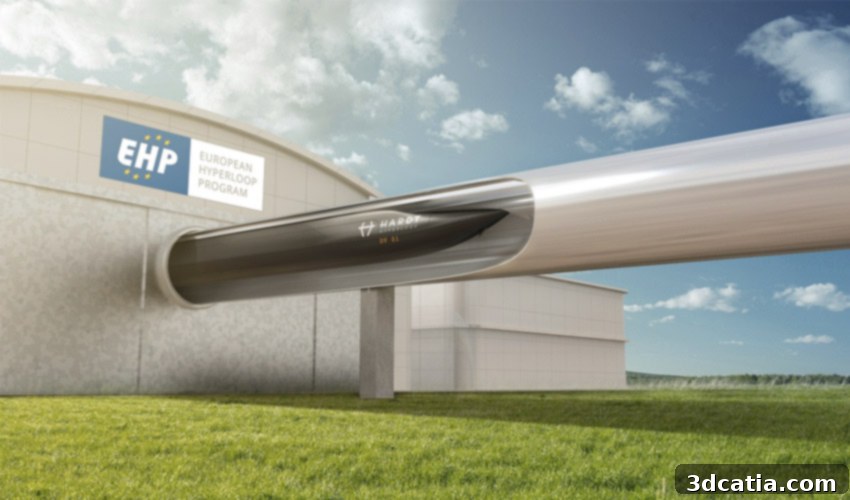
European Hyperloop Week: Pioneering the Future of High-Speed Transport with 3D Printing Innovation
The ambitious vision of the Hyperloop project continues to capture the imagination of engineers, innovators, and the public alike. Envisioned as a revolutionary mode of transport, Hyperloop proposes a network of large, near-vacuum tubes through which specialized capsules can travel at extraordinary speeds. This ground-breaking initiative, originally proposed by forward-thinking companies like Tesla and SpaceX, aims to redefine both passenger and cargo transport by achieving velocities of up to 1,200 km/h. Such speeds could drastically cut travel times, making global connectivity faster and more efficient than ever before. Many experts are already hailing the Hyperloop as the “fifth mode of transport,” recognizing its potential to sit alongside road, rail, air, and sea travel, but with unparalleled speed and sustainability. To accelerate its development and bring this futuristic concept closer to reality, a myriad of initiatives have emerged, fostering innovation and collaboration across various sectors. Among the most prominent of these is the European Hyperloop Week (EHW), an academic competition designed to challenge universities and research teams to develop and test their Hyperloop prototypes.
The EHW serves as a crucial platform for merging diverse engineering disciplines. The innovative proposals showcased at the event integrate sophisticated techniques typically found in the aerospace and railroad sectors, and, significantly, harness the transformative power of additive manufacturing – more commonly known as 3D printing. This convergence of technologies underscores the complex interdisciplinary approach required to bring Hyperloop to fruition. The event itself brings together a unique blend of academic rigor and professional industry insights, creating an environment ripe for innovation and knowledge exchange.
The European Hyperloop Week, held annually, convened in person between July 19 and 25 in Valencia, Spain, for a recent edition. Its overarching mission is twofold: first, to emphasize the urgent need for creating truly sustainable modes of transport that minimize environmental impact; and second, to foster indispensable collaboration among institutions to drive the technological development of Hyperloop. The event skillfully combines the competitive energy of student design contests with the collaborative atmosphere of a professional conference. This dual format allows cutting-edge research, recent advancements, and the most innovative proposals to be shared and critically evaluated among a global network of industry experts, academics, and aspiring engineers. The prestige of the competition is evident in its participant roster, with 27 projects selected to compete from some of the world’s most renowned universities, including the Massachusetts Institute of Technology (MIT), the University of Edinburgh, and ETH Zurich. Each team brings its unique perspective and engineering prowess, pushing the boundaries of what’s possible in high-speed transport. One particularly noteworthy project emerged from a strategic agreement between Sicnova, a leader in 3D printing solutions, and the Asociación Colegio de Orfanos de Ferroviarios (CHF), an association with a rich history in railway-related innovation.
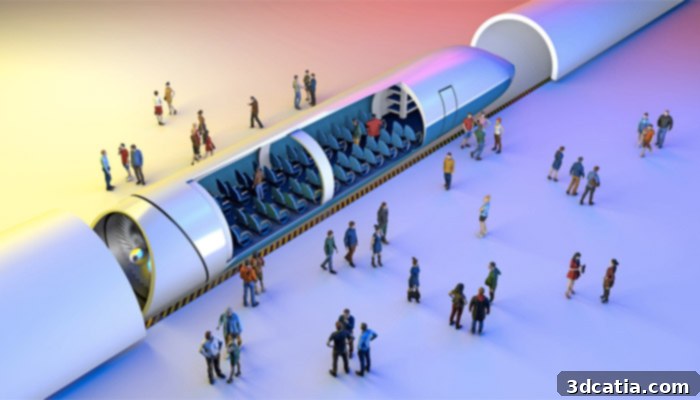
The so-called fifth mode of transport, Hyperloop, has immense potential on a global scale to revolutionize how people and goods move.
3D Printing: A Game Changer at the European Hyperloop Week
Additive manufacturing, or 3D printing, stands as a cornerstone technology for the rapid prototyping and iterative design essential for Hyperloop development. Its ability to create complex geometries, optimize material usage, and significantly reduce lead times makes it invaluable for projects requiring swift innovation and precision. The signing of the collaboration between Sicnova and CHF specifically targeted the transfer of crucial hardware and 3D printing materials to support the meticulous development of a new capsule concept for the Hyperloop. This partnership exemplifies how industrial expertise and advanced manufacturing technologies are being leveraged to empower academic and research initiatives.
A key component of this agreement was the provision of the Epsilon W50 3D printer, a state-of-the-art machine from the renowned manufacturer BCN3D Technologies. This advanced solution operates on molten material deposition technology, a robust and versatile 3D printing process. What truly sets the Epsilon W50 apart is its professional IDEX (Independent Dual Extrusion) technology. This feature allows for the simultaneous printing of two different materials or colors, or for printing with soluble support structures, which is critical for creating highly complex prototypes with intricate internal geometries. Furthermore, the Epsilon W50 is engineered to work seamlessly with industrial-grade technical materials, offering the durability and performance necessary for demanding engineering applications like Hyperloop capsule prototypes. Complementing the hardware, the agreement also included a generous supply of high-quality plastic filaments. These materials are essential for conducting a multitude of conceptual tests and creating functional models, enabling the CHF association to transform its visionary designs into tangible prototypes. Throughout this challenging development process, Sicnova stands as a steadfast partner, providing invaluable technical support and specialized training services, all certified by BCN3D, ensuring the CHF team has the resources and expertise needed to succeed.
The CHF Association’s Innovative Capsule Prototype
The CHF Association’s Hyperloop capsule concept, meticulously guided by technical mentor Mario Rocíes, represents a significant stride in prototype development. The team has engineered and manufactured a capsule structure predominantly from bidirectional carbon fiber. This choice of material is not arbitrary; carbon fiber is prized in advanced engineering for its exceptional strength-to-weight ratio, which is absolutely critical for high-speed applications where minimizing mass is paramount to efficiency and performance. The prototype, weighing a mere 165 kg, is a testament to lightweight structural design and advanced material science. It has been precisely designed to achieve an impressive operational speed of 500 km/h, showcasing the team’s ambition and technical prowess. Equally crucial is its braking capability: the capsule is engineered to decelerate and come to a complete stop in an astonishing 17 seconds. This combination of high speed and rapid, controlled braking presents immense engineering challenges, requiring sophisticated aerodynamics, propulsion, and braking systems that the team has painstakingly developed.
Through such dedicated efforts, the European Hyperloop Week effectively fulfills its primary objective: to rigorously test research teams from across the globe, encouraging them to develop their most innovative concepts and ideas. This competitive environment is a powerful catalyst for driving Hyperloop technological innovation forward at an accelerated pace. The EHW not only provides a platform for showcasing these groundbreaking prototypes but also instills a spirit of healthy competition that pushes teams to refine their designs, optimize performance, and explore novel solutions to complex engineering problems. Once all prototypes are presented and thoroughly evaluated, prizes are awarded to the projects that demonstrate exceptional merit. These awards are based on several key factors that are critical for the long-term viability and impact of Hyperloop technology, including scalability (the ease with which the solution can be expanded), its potential impact on society, the degree of innovation it embodies, and its overall efficiency in terms of energy consumption and performance. Further details regarding the event, its mission, and future iterations can be found by visiting the official EHW website here.
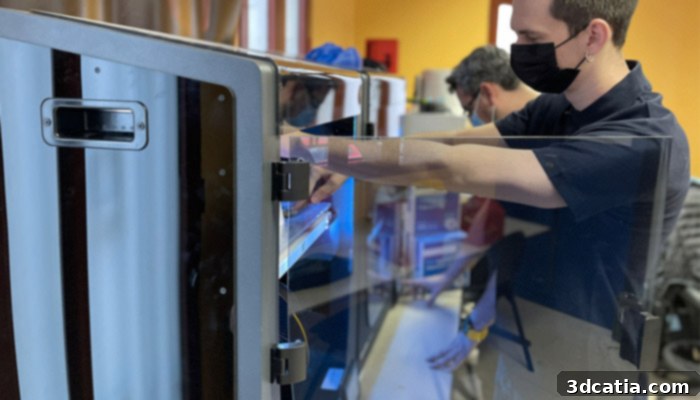
Credits: Sicnova
Beyond the Competition: The Broader Impact and Future of Hyperloop
The European Hyperloop Week is more than just a competition; it is a vital engine for fostering the next generation of engineers and innovators who will shape the future of transportation. By providing a tangible goal and a supportive, yet competitive, environment, EHW encourages students and researchers to think critically, solve complex problems, and collaborate on a global scale. The insights gained and the technologies developed at events like these contribute directly to accelerating the journey towards sustainable, ultra-high-speed travel. The integration of advanced manufacturing techniques like 3D printing is not just a trend but a fundamental shift in how complex engineering challenges are approached, enabling quicker iterations and more sophisticated designs. As Hyperloop technology matures, its potential to connect distant cities, reduce carbon emissions from air and road travel, and redefine logistics for goods transport becomes increasingly clear.
If you are interested in the critical role of additive manufacturing (AM) across various high-tech sectors, particularly in the aerospace industry, don’t miss out on upcoming virtual events such as ADDITIV Aerospace! You can register for free HERE to stay informed about the latest advancements and applications. We encourage you to share your thoughts on the European Hyperloop Week and the future of Hyperloop technology. What do you envision for this revolutionary mode of transport? Let us know your opinions in a comment below or connect with us on our Facebook, Twitter, and LinkedIn pages! For all the latest news, breakthroughs, and insights in the world of 3D printing, be sure to sign up for our free weekly Newsletter here, delivered straight to your inbox.
* Cover photo credits: European Commission