
The Revolution Inside: How 3D Printing is Transforming Automotive Interiors and Driving Customization
The automotive interior has evolved from a mere functional space into a crucial extension of the driver’s lifestyle and personality. Modern motorists seek not just comfort and practicality, but also a distinctive style and a highly personalized experience within their vehicles. While some drivers prioritize performance and efficiency above all else, an increasing number value an interior that truly stands out – from the intricate details of the dashboard and seating to the tactile feel of the gearshift lever and customizable accessories. To meet this growing demand for luxury, personalization, and innovative design, car manufacturers are increasingly turning to advanced manufacturing techniques. Among these, additive manufacturing, commonly known as 3D printing, has emerged as a game-changer. This transformative technology not only enables unparalleled levels of personalization and the creation of highly complex geometries but also facilitates rapid prototyping and sustainable production practices. From bespoke headrests and revamped dashboards to innovative storage solutions and luxurious accents, 3D printing is fundamentally reshaping the design and functionality of automotive interiors. Let’s explore some compelling applications where this technology is already making a significant impact across the automotive sector.
Alpine Integrates Advanced 3D Printed Parts into Its Electric Vehicle
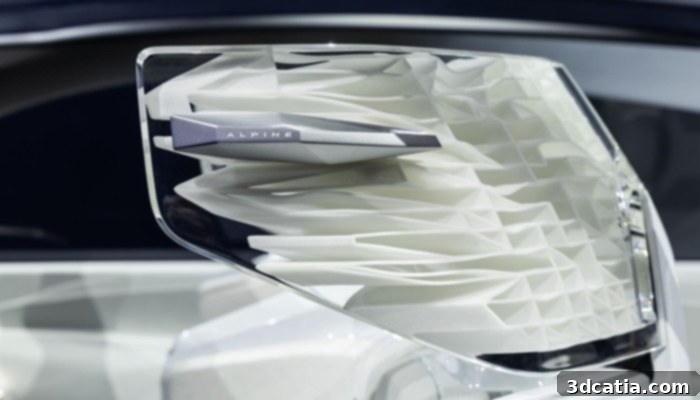
Following a successful collaboration on customized accessories for the Peugeot 308, French 3D printing service provider ERPRO has announced an exciting new partnership with the prestigious Alpine brand. This latest venture spotlights the A390_β, Alpine’s groundbreaking first all-electric sports vehicle. This innovative model showcases several meticulously 3D printed components, expertly produced using Selective Laser Sintering (SLS) technology. For the manufacturing process, Alpine chose Pebax® Rnew®, a high-performance bio-based elastomer developed by Arkema. This selection underscores Alpine’s steadfast commitment to both sustainability and the adoption of cutting-edge material technologies. A striking design element of these 3D printed parts is their unique transparent coating, which evokes the mesmerizing appearance of ice blocks – a detail that beautifully reflects the brand’s inspiration from natural forms. This development is a testament to Alpine’s continuous drive to integrate innovative, eco-friendly, and high-performance solutions into its vehicles, effectively blending sophisticated design, advanced technology, and environmental responsibility.
Credit: ERPRO
Luxurious 18-karat Gold 3D Printed Elements in the Bentley Batur
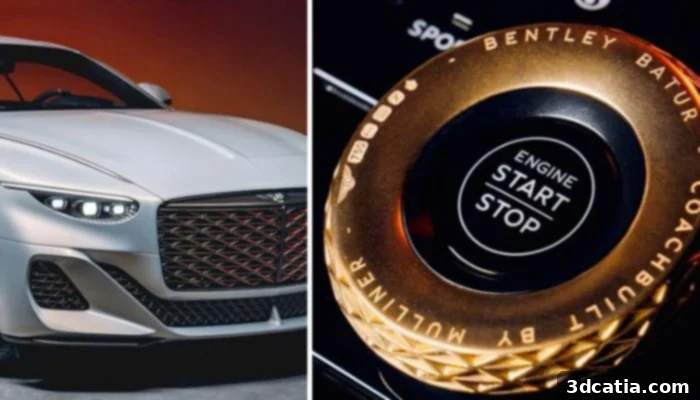
In 2022, the renowned British automaker Bentley Motors Ltd captivated the automotive world with the unveiling of the Bentley Batur, a masterpiece named after a picturesque lake on Indonesia’s Bali island. Hailed as one of the most powerful Bentleys ever conceived, this limited-edition grand tourer is powered by a meticulously hand-assembled 6.0-liter W12 engine with twin turbochargers, unleashing over 740 horsepower. Beyond its formidable performance, what truly set the Batur apart was its pioneering integration of 3D printing into its luxurious design. The vehicle features exquisite 18-karat gold organ stops for the ventilation system, while its distinctive exhaust finishers were precisely 3D printed in titanium. These applications dramatically illustrate how additive manufacturing is not merely a production method but a key enabler for shaping bespoke, high-end automotive craftsmanship. With an ultra-exclusive production run of only 18 units, the Batur offers an unprecedented degree of personalization to its discerning buyers. As Bentley proudly articulated, “From the main exterior paint to the surface finish of the air vents, and literally everything in between, each customer will specify even the tiniest of details.” This unparalleled level of customization, made possible by 3D printing, signifies a broader industry shift towards entirely bespoke design and manufacturing in the luxury automotive segment.
Credits: Bentley Motors Ltd
The Cadillac Celestiq: A Masterclass in 3D Printing Integration with 115 Custom Parts
The 2024 Cadillac Celestiq stands as a remarkable testament to the transformative power of 3D printing in automotive design, boasting an astonishing 115 3D printed parts within its luxurious interior. This grand sedan elevates personalization to an art form, with key components like the metal steering wheel, window switches, elegant door handles, and intricate console decorations all benefiting from additive manufacturing. The 3D printed steering wheel in the Celestiq, for instance, offers buyers the option of custom coatings, unique finishes, and even personalized engraving, allowing for an unprecedented level of individual expression. Beyond aesthetics, 3D printing also enhances safety, with critical features such as the seat belt buckles also being produced through this advanced method. These extensive applications of 3D printing in the Celestiq open up vast pathways for customization, a recurring theme among ultra-luxury vehicles. With a starting price point in the mid-$300,000s, the Celestiq positions itself far above many of Cadillac’s other models, offering buyers exclusive access to a personal Cadillac design concierge. This bespoke service allows customers to meticulously choose and specify unique materials and finishes, ensuring their Cadillac is truly a reflection of their individual taste and vision.
Ford Integrated Tether System (FITS): Empowering Driver Customization with 3D Printing
Are you a proud owner of a Ford Maverick with an interest in 3D printing? Ford has engineered the perfect solution to unlock your vehicle’s customization potential! In 2022, Ford introduced its innovative Ford Integrated Tether System (FITS) within the Ford Maverick® pickup. This ingenious system features a series of strategically placed slots at the rear of the center console and within the under-seat storage bins. These slots act as universal attachment points, making the vehicle incredibly compatible with a wide array of accessories, thereby empowering users to personalize their car’s interior like never before. While Ford offers its own range of pre-made accessories, the true brilliance of FITS lies in its open-source philosophy: owners are encouraged to design and produce their own custom accessories using their personal 3D printers, or through a professional 3D printing service provider. The possibilities for enhancing practicality and aesthetics are virtually limitless, whether it’s creating custom cup holders, phone mounts, storage dividers, or unique organizers. Ford even goes a step further by providing the necessary 3D printable files, transforming the Maverick into a true “maker’s dream” and fostering a community of creative customization among its owners.
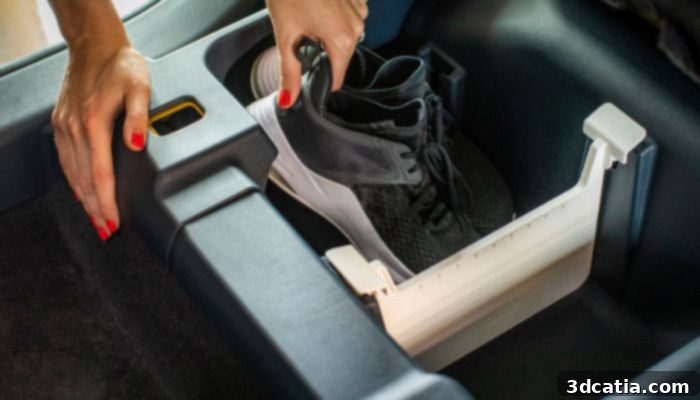
A bin divider, one of the possible accessories that Ford Maverick owners could 3D print and place in their car (photo credits: Ford)
Lamborghini Sián FKP 37: Rapid Prototyping and Production with 3D Printing
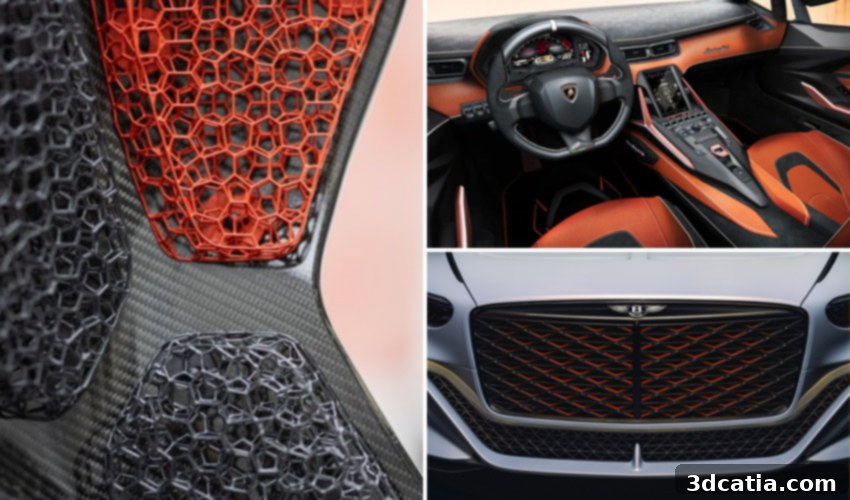
Among the elite automotive brands leveraging additive manufacturing to design and produce their cutting-edge vehicles, the renowned luxury brand Lamborghini stands out. The groundbreaking Sián FKP 37, Lamborghini’s pioneering hybrid car, was the first model to feature customizable 3D printed interior parts, showcasing the technology’s potential for both exclusivity and speed. Specifically, this ultra-exclusive vehicle incorporated center and side dashboard vents that were meticulously produced using 3D printing techniques. With only 60 units of this top-of-the-line hybrid model ever produced, each equipped with these unique vents, 3D printing proved indispensable for bespoke manufacturing. One of the most significant advantages demonstrated in this application was the unparalleled speed of production: 3D printing enabled Lamborghini to transition from the initial design concept to the final, installed part in the car in an astonishingly short timeframe of just two weeks. This rapid turnaround is simply unimaginable with conventional manufacturing methods, highlighting how additive manufacturing provides critical agility and efficiency for limited-edition, high-performance vehicles where every detail and every second count.
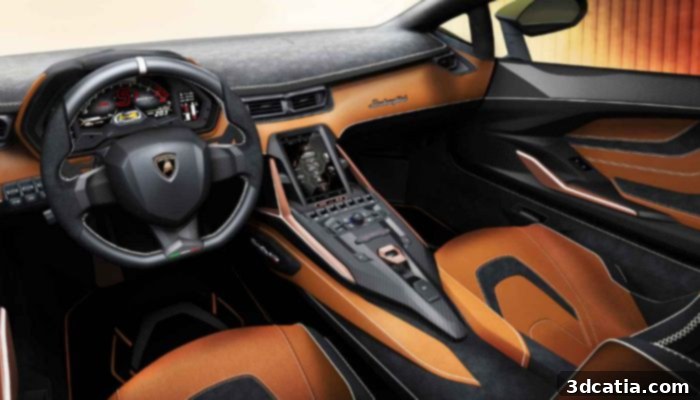
Credits: Lamborghini
The Maserati GranTurismo Fuoriserie One Off Luce: Sustainable and Stylish 3D Printed Headrests
For the stunning new interior of the Maserati GranTurismo Fuoriserie One Off Luce, 3D printed decorative elements were chosen to create a harmonious blend of technological innovation, bespoke design, and environmental consciousness. Unveiled at Milan Design Week, this model’s interior was meticulously crafted by Maserati’s team to push the boundaries of luxury and sustainability. 3D printing played a pivotal role in enabling advanced design solutions, allowing for intricate details and complex forms that would be challenging to achieve with traditional methods. Furthermore, the use of ECONYL® nylon, a revolutionary yarn derived from recycled plastic materials such as discarded fishing nets and textile scraps, significantly reduced the car’s environmental impact. A highlight inside the Maserati GranTurismo One Off Luce is the iconic Trident logo, which was precisely 3D printed directly onto the sand-colored headrests using Stratasys’ J850 Tech Style solution. This innovative technique allowed for the customization of fabrics with exclusive textures and intricate details, elevating the car’s bespoke appeal. The overarching theme of the sea and sustainability is beautifully woven into the interior design, featuring a monochromatic design in a single shade of blue for the interior furniture elements. This striking blue perfectly contrasts with the sand-colored seats, evoking the colors of the ocean from which the recycled materials were sourced. The captivating blue interior seamlessly integrates with the car’s mirrored chrome exterior, creating a cohesive aesthetic that instantly suggests a futuristic, minimalist, and environmentally conscious design philosophy.
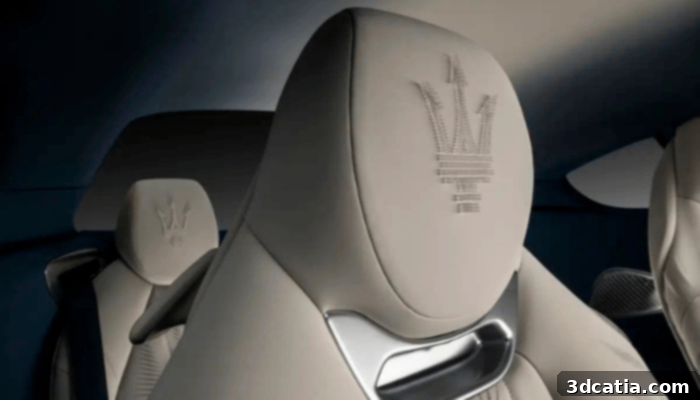
Credits: Maserati
The MINI Electric Pacesetter: 3D Printing for Performance and Personalization
The MINI Electric Pacesetter, an pioneering vehicle serving as the first electric safety car for Formula E, exemplifies the powerful synergy between innovative electric mobility and the advanced customization capabilities afforded by 3D printing. This dynamic model, drawing inspiration from the MINI Cooper SE and meticulously designed in collaboration with BMW and the FIA, truly distinguishes itself through its strategic integration of 3D printed components. A notable application includes the interchangeable and customizable pads on its sports seats. These pads are not only designed to adapt precisely to the driver’s physique and preferences, ensuring optimal comfort and support, but they do so without compromising the stringent safety standards required for a high-performance racing environment. Furthermore, the Pacesetter’s aggressively aerodynamic design incorporates elements crafted from recycled carbon, such as its distinctive fairings and the prominent rear spoiler. This commitment to sustainable materials, combined with additive manufacturing, highlights a forward-thinking approach to both performance and environmental responsibility. Launched in 2021, this innovative safety car fulfilled the critical function of leading the peloton and slowing down race traffic in the event of track incidents, showcasing 3D printing’s role in critical, performance-driven automotive applications.
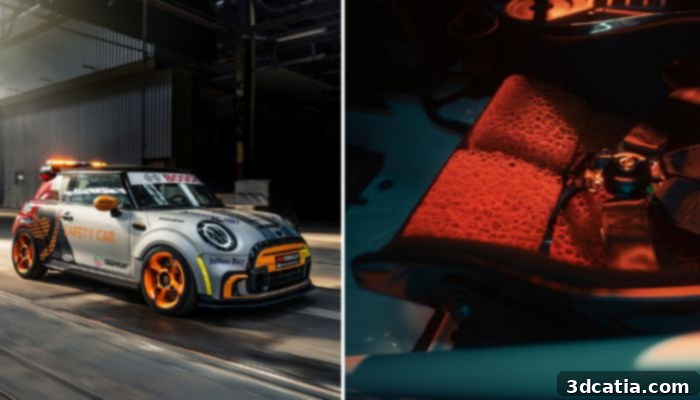
Credits: BMW Group
Oechsler Car Seats for the TECHART GTstreet R Flyweight: Enhancing Racing Performance with 3D Printing
For professional circuit racing, the driver’s seat is far more than just a place to sit; it’s a critical component that directly influences performance, comfort, and safety. This vital dimension was emphatically highlighted by TECHART in their exclusive GTstreet R Flyweight model, an ultra-limited racing car with only 19 units, based on the formidable Porsche 911 Turbo S. To achieve an unparalleled level of driver experience, TECHART partnered with Oechsler, a specialist in advanced manufacturing, to completely redesign the vehicle’s seating. The ambitious goal was to offer both extreme personalization and a superior level of performance optimized for the race track. The innovative solution came in the form of 3D printed seat cushions. These advanced cushions were manufactured using Multi Jet Fusion (MJF) technology and Thermoplastic Polyurethane (TPU), incorporating intricate lattice structures. These sophisticated structures not only contribute to significant weight reduction – a crucial factor in racing – but also drastically improve ventilation within the seat, enhancing driver comfort during intense sessions. Furthermore, the cushioning properties are considerably enhanced, providing superior support and impact absorption. Thanks to the precise control offered by 3D printing, pressure points are effectively reduced, seat temperature can be lowered by an impressive 3 to 5°C, and the seats can “breathe” better, culminating in a vastly improved and more focused driving experience. An additional benefit is the rapid assembly of these 3D printed cushions, allowing for easy and quick interchangeability between different race cars without difficulty, offering unparalleled flexibility for racing teams.
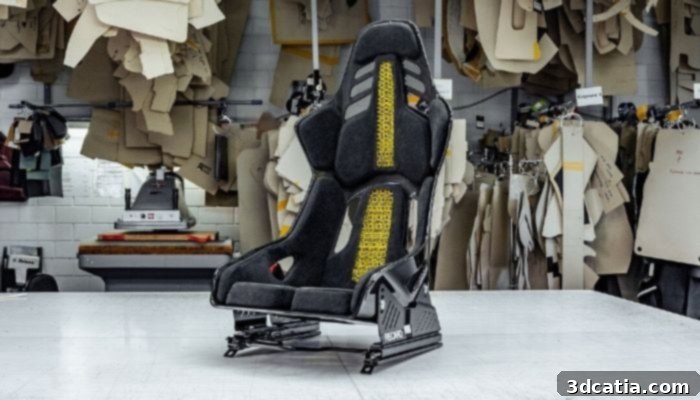
Race car seat with 3D-printed cushions (credits: TECHART)
Innovative 3D Printing for Peugeot’s Interior Accessories
To enhance the functionality and aesthetics of the Peugeot 308 (and similar models like the 208), a groundbreaking range of innovative 3D printed accessories has been developed through a strategic collaboration involving Peugeot, HP, Mäder, and the Erpro Group. This forward-thinking collection includes practical holders for glasses, secure mounts for phones, and versatile storage boxes, all meticulously crafted from a specially formulated Thermoplastic Polyurethane (TPU). This unique material, developed in partnership with BASF and HP, is engineered to meet the rigorous demands of the automotive sector, offering exceptional flexibility, remarkable durability, and superior impact absorption. Beyond their robust physical properties, these accessories are designed to boast an impeccable finish and precise detailing, showcasing a modern, technological approach to automotive interior design that seamlessly combines practicality with sophisticated aesthetics. This initiative highlights how 3D printing is enabling car manufacturers to offer more customized, durable, and visually appealing interior solutions for their mass-market vehicles, significantly improving the user experience for everyday drivers.
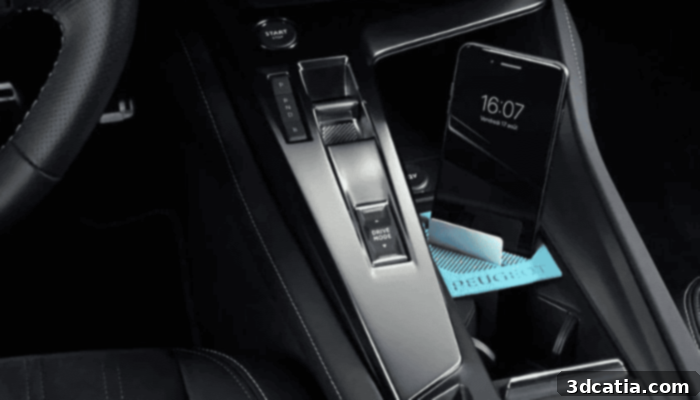
Credits: Peugeot
Porsche’s 3D Printed Bodyform Full Bucket Seat: Tailored Performance
Since February 2022, Porsche has been offering an exceptional level of customization for its drivers with tailor-made Bodyform full bucket seats. These innovative seats are available for various Boxster, Cayman, and 911 models as part of the exclusive Performance Parts program, which can be conveniently selected directly within the Porsche Car Configurator. A key innovation lies in the fact that significant parts of the cushion and backrest surfaces are produced using advanced 3D printing techniques, enabling truly individual customization that conforms precisely to the customer’s body contours. The seats are engineered through a sophisticated combination of materials: a lightweight base support made of expanded polypropylene (EPP) is paired with a highly breathable comfort layer composed of 3D printed polyurethane material. This unique construction provides not only superior ergonomic support but also enhanced airflow, contributing to driver comfort during spirited driving. Furthermore, the 3D printed full-shell seat is available in three distinct degrees of firmness, allowing for precise adaptation to different customer needs and driving preferences. Another significant advantage of these advanced seats is their impressive weight reduction – they are approximately 8% lighter than traditional bucket seats, contributing to improved vehicle dynamics. Critically, these full bucket seats are not exclusively for new vehicle orders; they can also be retrofitted to models that have already been delivered, offering existing Porsche owners the opportunity to upgrade their driving experience with this cutting-edge customization.
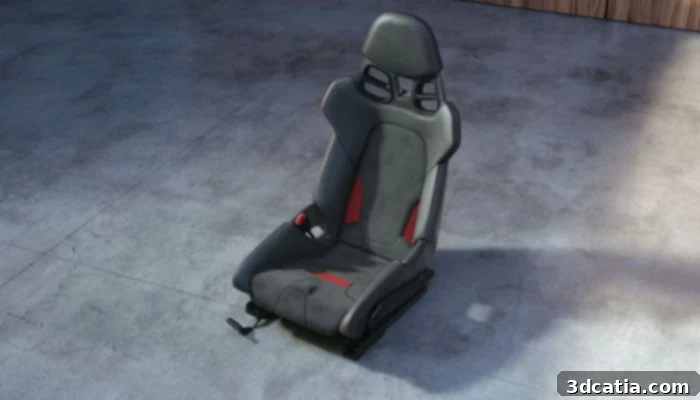
Credits: Porsche
LUNAZ’s Range Rover Safari: Revitalizing Classics with 3D Printing
LUNAZ, a pioneering company dedicated to restoring and electrifying iconic classic car models while enhancing their features, is at the forefront of integrating modern technology into automotive heritage. For its stunning electric Range Rover Safari, the LUNAZ team strategically embraced 3D printing to significantly improve both the functionality and aesthetic appeal of the interior, all while meticulously preserving the authentic identity of the original, beloved model from the last century. In this particular vehicle, the spartan dashboard and basic interior of the original version were thoughtfully replaced with a new, larger, and more modern central console, expertly fabricated using 3D printing. This complex component, the culmination of two years of intensive research and development by the design team, is set to become a signature feature in all future electric Range Rovers produced by the LUNAZ brand. Embracing the principles of a circular economy, which prioritizes recovery and reuse, the precise 3D scanning of original vehicle components plays a crucial role in LUNAZ’s restoration process. This scanning capability enables the creation of highly accurate CAD models, ensuring precise technical reproduction of the original parts and allowing for the correction of any historical defects or design improvements. LUNAZ offers an extensive array of customizable interior options, featuring premium materials such as luxurious vegan leather and exquisite fine woods, alongside meticulously crafted textile upholstery that pays homage to the original Range Rover Classic interior, creating a perfect blend of heritage and future-forward design.
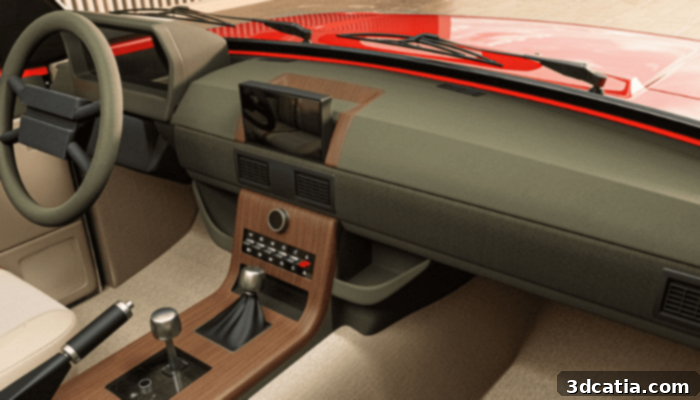
Credits: LUNAZ
3D Printed Interior Accessories for the Renault 5 E-Tech: Smart Storage Solutions
Renault has been a proactive adopter of 3D printing technology for several years, leveraging its capabilities to address a diverse range of needs, from rapid prototyping and the manufacture of specialized tools to the production of final, consumer-ready parts. With the highly anticipated Renault 5 E-Tech, 3D printing now seamlessly integrates into the passenger compartment, enhancing both functionality and personalization. The vehicle features a collection of customizable storage accessories, meticulously designed to optimize the central space within the car’s interior. These elements are available in a vibrant array of patterns and colors, allowing owners to infuse their vehicle with a touch of personal style. By combining practicality with appealing aesthetics, these 3D printed accessories not only improve the user experience by offering intelligent storage solutions but also elevate the overall design language of the interior. If the Renault 5 E-Tech achieves its expected success and resonates with consumers, this strategic integration of additive manufacturing could very well pave the way for an even more significant role for 3D printing in Renault’s future production strategies, signifying a broader adoption of this versatile technology in mainstream electric vehicles.
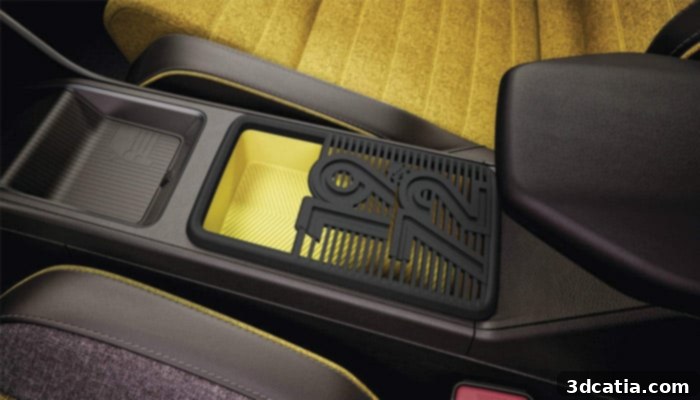
Credits: Renault
As we’ve explored through these diverse examples, from ultra-luxury vehicles like Bentley and Cadillac to mainstream models like Ford and Renault, 3D printing is unequivocally transforming the landscape of automotive interior design. This revolutionary technology offers unprecedented freedom in design, enabling the creation of complex geometries, lightweight structures, and highly customized components that were once impossible or prohibitively expensive to produce. Beyond aesthetic enhancements and personalized touches, additive manufacturing is also driving significant advancements in functionality, comfort, and even sustainability within the automotive sector. The ability to rapidly prototype, iterate designs, and produce on-demand parts for limited editions or individualized customization underscores its value across the entire spectrum of vehicle manufacturing. As material science and 3D printing technologies continue to evolve, we can anticipate even more innovative and integral applications in future car interiors, making every journey a uniquely tailored and enhanced experience. What are your thoughts on the integration of 3D printed parts into car interiors? Share your opinions in a comment below or connect with us on our LinkedIn, Facebook, and Twitter pages! For those interested in more automotive 3D printing applications, click here. Don’t forget to sign up for our free weekly Newsletter here to get the latest 3D printing news delivered straight to your inbox! You can also find all our compelling videos on our YouTube channel.