
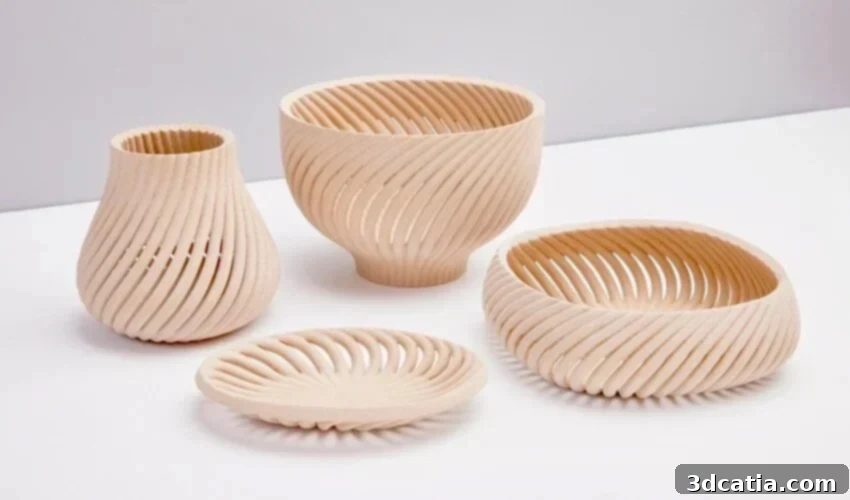
The Future is Wood: Exploring Sustainable Innovations in 3D Printing
When discussing the vast and rapidly expanding field of additive manufacturing, our thoughts often gravitate towards traditional materials like plastics or metals. However, the landscape of 3D printable materials has undergone a remarkable transformation, broadening significantly over recent years. Today, it’s possible to fabricate components from an astonishing array of substances, ranging from intricate ceramics and edible food items to delicate, stem cell-laden hydrogels. Within this diverse and innovative spectrum, wood has emerged as a particularly exciting and increasingly viable material. Thanks to advancements in additive manufacturing processes, including filament extrusion and sophisticated powder bed methods, wood 3D printing is experiencing a surge in popularity, offering a unique blend of natural aesthetics and digital precision.
The imperative for sustainable practices has never been more critical, especially concerning our planet’s natural resources. A sobering report published in the prestigious journal Nature highlights a distressing reality: humanity has already been responsible for the loss of a staggering 54% of the total number of trees on Earth. Deforestation represents an existential threat, impacting climate stability, biodiversity, and ecosystem health. Consequently, it has become absolutely crucial to fundamentally rethink our approach to wood consumption and material resource management. This is where additive manufacturing, particularly wood 3D printing, presents a powerful solution. As a production technique, it inherently minimizes waste by only utilizing the necessary material for each object. Furthermore, it excels in designing and fabricating objects from recycled or reclaimed materials. This capability opens the door to a truly circular economy for wood: we could 3D print parts from recycled wood, and when those parts reach the end of their useful life, they could be transformed back into raw material, ready to embark on a new production cycle. This model offers a sustainable pathway, significantly reducing reliance on virgin timber and mitigating the devastating effects of deforestation.
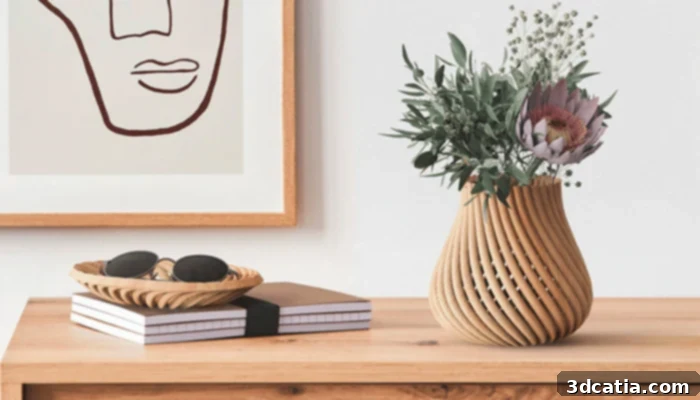
3D printing of wood allows to create original decorative pieces (photo credits: Fortus)
Extrusion Wood 3D Printing: Crafting with Filaments
One of the most accessible and widely adopted methods for 3D printing wood involves the use of extrusion-based technologies, specifically by feeding specialized filaments into a printer. It’s important to understand that these “wood” filaments are not composed of 100% natural wood. Instead, they are meticulously engineered composites, typically containing a blend of approximately 30-40% wood fiber and 60-70% polymer, which acts as the crucial binding agent. This polymer component, often PLA (Polylactic Acid) or ABS (Acrylonitrile Butadiene Styrene), provides the necessary structural integrity, melt flow properties, and adhesion for the extrusion process. An intriguing and highly desirable aspect of working with these wood-filled filaments is the ability to manipulate their aesthetic properties by adjusting the extrusion temperature. By varying the heat applied by the printer’s nozzle, users can generate a spectrum of different colors and finishes within the same print. Specifically, if the extruder reaches higher temperatures, the wood fibers undergo a slight pyrolysis or “burning” effect, causing them to darken and produce richer, more profound tones in the final pieces, mimicking naturally aged or scorched wood. However, this artistic control comes with a critical safety caveat: wood filament, due to its organic components, is inherently more flammable than standard thermoplastics. If the nozzle temperature is excessively high and the filament is not extruded swiftly enough, there’s a risk of the material scorching, clogging the nozzle, or even catching fire. Therefore, prudent printer settings, adequate ventilation, and constant supervision are highly recommended when working with these materials.
The primary and most compelling advantage of using wood filament for 3D printing lies in its remarkable ability to emulate the sensory experience of real wood. Printed objects not only look like wood, but they also possess a distinct tactile quality and, perhaps most delightfully, emit a subtle, natural woody scent. Beyond these appealing aesthetic qualities, the versatility extends to post-processing: printed pieces can be easily painted, stained, cut, carved, and sanded, allowing for an even more realistic and refined finish that can be tailored to specific design requirements. This makes it an ideal choice for decorative applications and artistic projects. However, it’s also crucial to acknowledge certain notable drawbacks. Wood filament is generally considered a more delicate material compared to standard thermoplastics like pure PLA or ABS. The embedded wood fibers can reduce the overall flexibility and strength of the composite, making printed parts more susceptible to breakage, especially when subjected to stress or impact. Furthermore, wood composites can be more sensitive to moisture absorption and prone to warping during the printing process if not managed correctly, requiring careful calibration of print settings such as bed temperature and cooling.
Given its characteristics, wood filament is typically not the material of choice for industrial-grade, high-strength functional components. Instead, its primary appeal and application base reside firmly within the “maker world,” among hobbyists, designers, artists, and educators. Here, it is widely embraced for creative pursuits, prototype development, and, most prominently, the creation of unique decorative objects. Some of the most significant applications of wood 3D printing using extrusion methods include intricate interior design elements, bespoke architectural models, detailed carpentry and joinery prototypes, educational models, custom art pieces, and even prop fabrication. The ability to rapidly iterate and customize designs with the aesthetic of wood is highly valued in these sectors. Several major manufacturers have established themselves as leaders in producing high-quality wood filaments, offering a range of wood types and finishes. These include reputable names such as Polymaker, Filamentum, Colorfabb, and FormFutura, among others, each contributing to the growing accessibility and quality of wood 3D printing materials.
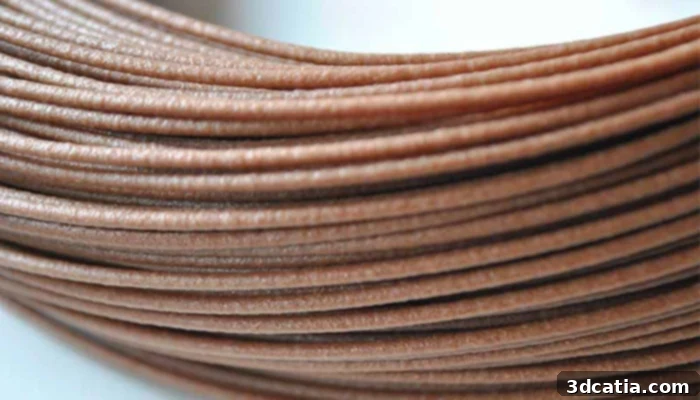
Wood fiber filaments are more fragile than standard thermoplastics
Advanced Wood Fabrication: Utilizing Powder Bed Processes
Beyond filament extrusion, another advanced and increasingly sophisticated pathway for the creation of intricate wooden parts leverages powder bed additive manufacturing technologies. In these methods, instead of a polymer-bound filament, a very fine, granular brown powder serves as the base material. This powder is typically composed of recycled wood chips, sawdust, or wood flour, providing the final printed object with a distinct sandy, granular surface appearance that closely mimics natural, unfinished wood. Among the various powder bed technologies, binder jetting stands out as one of the most relevant and transformative in the realm of wood 3D printing. It offers a level of complexity and material utilization that goes beyond what extrusion methods can achieve. In this cutting-edge field, Desktop Metal (DM) has emerged as a prominent leader. Through a strategic partnership with Forust, Desktop Metal has unlocked a world of unprecedented possibilities for additive wood manufacturing, propelling the industry forward. Their innovative “Shop System Forust Edition” has been specifically designed to make industrial-grade Binder Jetting for wood 3D printing accessible to a significantly wider audience, from small businesses to large-scale manufacturers.
The “Shop System Forust Edition” is a groundbreaking platform capable of 3D printing fully functional, end-use wood parts, all created from 100% recycled wood waste. The underlying manufacturing technology employs a sophisticated process where sawdust particles, typically a byproduct of traditional woodworking, are selectively bound together by a proprietary liquid binding agent. This process is precisely controlled by a computer, directing an industrial printhead to jet the binder onto successive layers of the wood powder. The result is a layer-by-layer fabrication system that produces complex, waste-free wood parts in configurations that are exceedingly difficult, if not impossible, to achieve with conventional, subtractive wood-based methods like carving or milling. This allows for intricate internal geometries, custom textures, and highly complex designs without the material waste typically associated with subtractive techniques. While the initial investment and operational cost of this advanced binder jetting technology will inherently be much higher than that of desktop filament extrusion methods, the benefits often justify the expenditure. Critically, the end result yields a significantly higher surface quality, greater material density, and superior mechanical properties compared to parts created by FFF (Fused Filament Fabrication).
In addition to being a model of wood manufacturing that is intrinsically more sustainable due to its use of recycled materials and waste-free production, this technology also addresses and solves a multitude of design and manufacturing challenges. Its applications span a vast spectrum, from the meticulous and delicate work of historical restorations, where exact replicas of intricate wooden elements can be faithfully reproduced, to the creation of bespoke luxury products requiring unparalleled precision and unique aesthetics. Furthermore, it opens up avenues for entirely new product categories and designs that were previously unimaginable with traditional natural wood materials, allowing designers to push the boundaries of creativity. Since binder jetting is a digital fabrication process, it democratizes access to complex wood creation. Users without extensive traditional woodworking skills or access to specialized tools can still design and produce sophisticated wood components, thereby broadening the appeal and applicability of wood 3D printing across various industries and creative fields. This accessibility for non-woodworking professionals truly empowers innovation and customisation, fostering new talent and ideas in wood-based design and manufacturing.
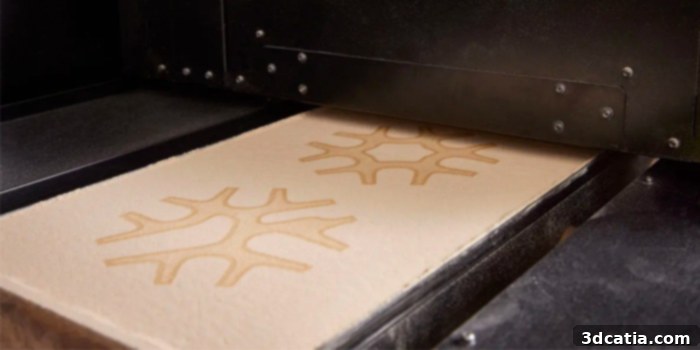
Binder Jetting allows for the creation of high quality wood parts (photo credits: Desktop Metal / Forust)
The advent and rapid evolution of wood 3D printing represent a significant leap forward in both additive manufacturing and sustainable resource management. Whether through accessible filament extrusion or advanced powder bed technologies, the ability to digitally fabricate wood components from recycled materials offers unprecedented design freedom, reduced waste, and a path towards a more eco-conscious future. It’s a technology that blends the timeless appeal of wood with the precision and innovation of digital manufacturing. What are your thoughts on wood 3D printing? Have you experimented with it in your projects or are you considering its potential? Let us know your experiences and opinions in a comment below or engage with our community on our LinkedIn, Facebook, and Twitter pages! Don’t forget to sign up for our free weekly Newsletter here to receive the latest 3D printing news straight to your inbox! You can also find all our insightful videos and demonstrations on our YouTube channel. Join the conversation and explore the fascinating world of additive manufacturing!
*Cover Photo Credits: Forust