
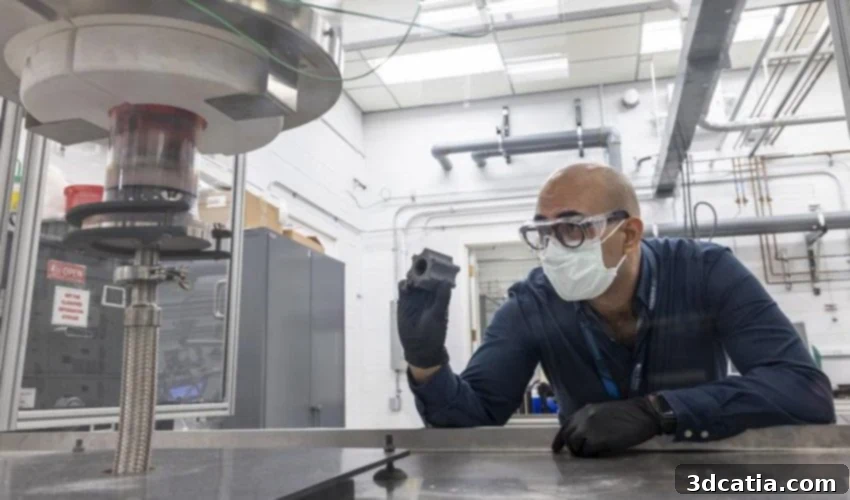
Pioneering Next-Gen Nuclear Reactors: USNC, ORNL Leverage Additive Manufacturing for Enhanced Component Design
The global energy landscape is rapidly evolving, driven by an urgent demand for clean, reliable, and sustainable power sources. Nuclear energy, particularly through the development of advanced reactor designs, is emerging as a critical component in this future energy mix. Leading the charge in this innovative sector is the Ultra Safe Nuclear Corporation (USNC), a prominent U.S. company specializing in cutting-edge nuclear energy solutions. In a landmark collaboration poised to transform the manufacturing of nuclear reactor components, USNC has officially partnered with Oak Ridge National Laboratory (ORNL). This strategic alliance is set to harness ORNL’s pioneering additive manufacturing expertise, specifically focusing on binder jetting technology. The goal is to design and fabricate essential components for next-generation nuclear reactors using advanced refractory materials, renowned for their exceptional resilience to extreme temperatures, radiation, and degradation. This integration of sophisticated manufacturing techniques and high-performance materials promises to enable the rapid, cost-effective creation of complex geometries, ultimately accelerating the deployment of safer and more efficient nuclear power systems.
USNC has made significant strides with its proprietary thermal and electrical reactor, known as the Micro Modular Reactor (MMR). This innovative design represents a substantial advancement in the application of nuclear fission principles for commercial energy production. Currently undergoing rigorous approval processes in both the United States and Canada, the MMR is positioned to be among the first commercially operational reactors of its type. To expedite the development and market readiness of its advanced nuclear products, USNC is strategically integrating additive manufacturing into its production pipeline. The capabilities offered by ORNL are particularly valuable, given the laboratory’s long-standing reputation as a major proponent and leader in applying advanced 3D technologies for the nuclear industry. ORNL’s notable contributions include spearheading the “Transformational Challenge Reactor Demonstration” (TCR) program, an ambitious initiative dedicated to envisioning and developing more efficient and resilient energy systems, fundamentally driven by additive manufacturing innovations. This synergistic partnership between USNC’s visionary reactor designs and ORNL’s cutting-edge manufacturing prowess is expected to unlock unprecedented possibilities for nuclear energy production and deployment globally.

The Micro Modular Reactor (photo credits: USNC), benefiting from advanced manufacturing techniques.
Revolutionizing Component Fabrication with Binder Jetting and Advanced Materials
For years, USNC has relied on silicon carbide as a primary material for its reactor core components. This ceramic material is highly prized for its exceptional resistance to the extremely high temperatures and intense radiation environments inherent in nuclear applications. However, the conventional machining of silicon carbide, particularly when attempting to create intricate and complex geometries, presents substantial engineering hurdles. Traditional subtractive manufacturing methods involve extensive milling, grinding, and specialized tooling, which are often time-consuming, costly, and inherently limited in their ability to produce highly optimized, complex internal structures. These limitations frequently necessitate design compromises or lead to prohibitively expensive production processes, hindering innovation in reactor design.
The new partnership with ORNL marks a significant departure from these traditional manufacturing constraints, ushering in a new era for nuclear component production. By embracing additive manufacturing, specifically a binder jetting process combined with chemical vapor infiltration (CVI), USNC is set to overcome these long-standing challenges. Binder jetting offers unparalleled design freedom, enabling the creation of components with highly complex internal structures and optimized geometries that would be impossible or economically unviable to achieve with conventional methods. Following the binder jetting process, where a liquid binder selectively joins powder particles, chemical vapor infiltration (CVI) is utilized to densify the green parts. This CVI process involves exposing the porous component to a gaseous precursor that infiltrates the pores and deposits a solid material, thereby enhancing the component’s mechanical strength, thermal stability, and overall integrity under the extreme operating conditions of a nuclear reactor. This innovative two-step approach strategically leverages the unique advantages of both technologies, yielding components with superior properties and intricate designs.
A key aspect of this collaboration is the compatibility of ORNL’s advanced 3D printing method with a diverse range of refractory materials. These specialized materials, which include certain high-performance alloys and ceramics, are engineered to resist extreme temperatures, corrosive environments, and intense radiation fields without significant structural degradation. Their strategic integration into nuclear reactor components is paramount for significantly enhancing operational safety, extending the operational lifespan of reactors, and substantially improving overall performance metrics. Kurt Terrani, Executive Vice President of USNC, succinctly captured the revolutionary potential of this additive manufacturing approach. He stated, “This is the holy grail of additive, that you can do things faster, that are in geometries that were previously very difficult or impossible with conventional manufacturing methods.” This powerful statement underscores the transformative impact that additive manufacturing is expected to have, not only on the speed and cost-efficiency of production but also on fundamentally expanding the design possibilities for next-generation nuclear technology. While specific components targeted for 3D printing are currently undisclosed, the implications for critical reactor core design, advanced fuel assembly manufacturing, and resilient structural elements are undeniably profound and far-reaching.
Strategic Proximity: USNC’s Investment in Oak Ridge and Future Outlook
USNC’s unwavering commitment to this advanced manufacturing paradigm is further underscored by its concrete plans to establish a new pilot fuel fabrication facility. This state-of-the-art facility is strategically slated for development within the technology park immediately adjacent to the prestigious Oak Ridge National Laboratory campus. This deliberate co-location serves as irrefutable evidence of USNC’s profound confidence in the extensive benefits offered by additive manufacturing and the unparalleled expertise residing within ORNL. Placing the facility in such close geographical proximity ensures a truly seamless integration of cutting-edge research, agile development processes, and efficient manufacturing operations. This fosters an environment of accelerated innovation, streamlined knowledge exchange, and collaborative synergy, creating a powerful hub for nuclear technology advancement.
Francesco Venneri, CEO of USNC, articulated the paramount importance of this geographical and intellectual proximity. He stated, “Proximity to the lab and its world-class scientists and facilities allow us easy access to expertise in reactor core technologies and additive manufacturing, as well as the latest in radiation, fuels and materials research, all of which benefit USNC’s commitment to bring safe, reliable and secure nuclear energy to world markets.” This comprehensive statement encapsulates the multifaceted advantages derived from the partnership: direct and immediate access to leading experts in reactor physics, materials science, and advanced manufacturing; utilization of cutting-edge research facilities for rapid prototyping, testing, and validation; and a collaborative ecosystem highly conducive to breakthrough discoveries and rapid technological iteration. This strategic alignment will dramatically accelerate USNC’s overarching mission to deliver exceptionally secure, reliable, and inherently safe nuclear energy solutions to global markets, effectively addressing the escalating demand for clean, consistent power and contributing significantly to global energy security.
The Broader Impact: Advancing Nuclear Energy Through Innovation
The synergistic collaboration between USNC and ORNL transcends a mere engineering advancement; it represents a pivotal and transformative moment for the entire nuclear energy sector. By leveraging the full potential of binder jetting and advanced refractory materials, these organizations are not only adeptly solving complex manufacturing challenges but are also actively opening entirely new avenues for fundamental design philosophies of future nuclear reactors. This innovative approach promises a cascade of benefits, including significantly enhanced safety features, markedly improved operational efficiency, and a substantial reduction in both the cost and lead times typically associated with intricate component fabrication. The newfound ability to rapidly prototype, rigorously test, and iteratively refine complex designs means that next-generation reactors, such as USNC’s pioneering MMR, can transition from conceptualization to commercial deployment with unprecedented speed. This accelerated timeline is crucial for effectively addressing urgent global energy needs and achieving ambitious climate change mitigation goals.
Furthermore, the strategic utilization of these robust and resilient refractory materials ensures that critical components can endure the exceptionally harsh operating conditions within a nuclear reactor for extended durations. This inherent durability directly contributes to significantly extended reactor lifecycles and a substantial reduction in maintenance requirements, thereby improving the economic viability and operational efficiency of nuclear power plants. This profound innovation further positions nuclear energy as an even more attractive and indispensable option for a sustainable energy future, offering a consistent, high-density, and carbon-free power source that can complement intermittent renewables. The foundational work being meticulously conducted at Oak Ridge National Laboratory, particularly through visionary programs like the Transformational Challenge Reactor (TCR), is actively creating the essential framework for how nuclear technology will evolve and thrive in the 21st century and beyond. This exemplary partnership vividly illustrates how deep cross-institutional collaboration and the strategic deployment of advanced manufacturing technologies are absolutely critical enablers for global energy security, economic prosperity, and responsible environmental stewardship.
The unwavering commitment to producing exceptionally safe, highly reliable, and cost-effective nuclear power lies at the core of USNC’s operational philosophy. The judicious adoption of advanced additive manufacturing processes, particularly binder jetting, empowers engineers with unparalleled precise control over material properties and geometric accuracy, even at a microscopic level. This extraordinary level of control is absolutely paramount for nuclear applications, where component integrity, predictable performance, and long-term reliability are non-negotiable prerequisites. It significantly minimizes manufacturing defects, enhances material density and uniformity, and facilitates the creation of components with intricately optimized thermal and mechanical properties. This not only profoundly bolsters the inherent safety profile of the Micro Modular Reactor (MMR) but also significantly enhances its operational efficiency, potentially leading to higher power output from a smaller physical footprint—an inherent and critical advantage of advanced modular reactor designs.
In summary, the strategic partnership between Ultra Safe Nuclear Corporation and Oak Ridge National Laboratory stands as a powerful testament to the transformative power of additive manufacturing when applied to critical, high-stakes industries. Their collaborative endeavor to leverage cutting-edge binder jetting technology and advanced refractory materials for the fabrication of next-generation nuclear reactor components is far more than an incremental technological improvement; it represents a fundamental re-imagining of how nuclear technology can be innovated, developed, and deployed. This forward-thinking collaboration is poised to dramatically accelerate the commercialization of innovative reactor designs like the MMR, thereby contributing profoundly to the realization of a cleaner, more sustainable, and energy-secure future for nations worldwide.
For more comprehensive and detailed insights into this groundbreaking initiative, we encourage you to find further information HERE. We warmly invite your valuable thoughts and perspectives on this exciting and impactful application of binder jetting and refractory materials in the creation of next-generation nuclear power solutions. Please feel free to share your comments and engage in the conversation below, or connect with us on our vibrant social media platforms, including Linkedin, Facebook, and Twitter! To stay at the forefront of the latest advancements in 3D printing and related technologies, don’t forget to sign up for our free weekly Newsletter here, ensuring the most up-to-date news is delivered directly to your inbox! Additionally, you can explore all our insightful and engaging videos on our dedicated YouTube channel.
*Cover Photo Credits: Carlos Jones/ORNL, U.S. Dept. of Energy