
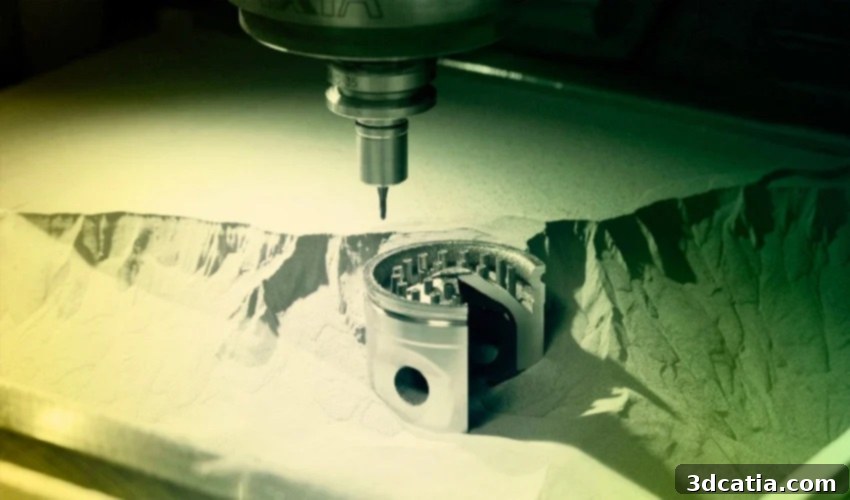
The Future of Manufacturing: Optimizing Production with Hybrid Additive and Subtractive Processes
In recent years, the revolutionary combination of additive manufacturing (AM) and subtractive manufacturing (SM) has profoundly impacted global industrial landscapes. This innovative approach, often termed “hybrid manufacturing,” leverages the distinct strengths of both production methods to create final parts with unprecedented complexity, precision, and efficiency. Thanks to rapid technological advancements, a diverse range of industries, from aerospace and automotive to medical and tooling, are increasingly adopting hybrid solutions to overcome traditional manufacturing limitations. While additive and subtractive processes inherently differ in their fundamental approach to material manipulation, their complementary application unlocks a synergistic potential that delivers superior results. Understanding the intricate mechanics and strategic implementation of these technologies is paramount for any company looking to integrate them effectively into their production chain. To shed light on this evolving domain, we engaged with three distinguished experts from the manufacturing industry. They generously shared their valuable insights and practical advice on how to optimally integrate additive and subtractive manufacturing into modern production workflows, ensuring maximum benefit and efficiency.
Leading our expert panel is Peter Genovese, a highly experienced 3D printing applications engineer at SolidCAM Additive. With nearly a decade of dedicated work in additive technologies, Peter applies his extensive professional background to guide various manufacturing environments on how best to incorporate additive processes. Next, we have Elena Lopez, who serves as the head of the additive manufacturing department at Fraunhofer IWS. Her expertise extends further as an adjunct professor of additive manufacturing, and she actively contributes to the global advancement of women in the field as the Regional Director for Europe for Women in 3D Printing. Concluding our expert lineup is Brian Kristaponis, the accomplished General Manager of the Hybrid Division within Phillips, a renowned provider of cutting-edge manufacturing solutions and new technologies across a wide array of markets. These experts bring a wealth of knowledge from different facets of the industry, offering a comprehensive perspective on the integration and future of hybrid manufacturing.
- Peter Genovese
- Elena López
- Brian Kristaponis
Understanding the Characteristics of Additive and Subtractive Manufacturing
Before delving into the intricacies of implementing hybrid production, it is crucial to establish a clear understanding of the fundamental differences and unique characteristics of additive and subtractive manufacturing methods. Additive manufacturing, widely known as 3D printing, operates on a principle of building parts layer by layer until the desired geometry is fully formed. This process often begins with a digital 3D model, which is then sliced into thin layers, with material deposited or fused selectively according to each layer’s specifications. Within the expansive family of 3D printing technologies, we encounter various approaches, each with its distinct advantages and applications: material extrusion (e.g., FDM for thermoplastics), material jetting (depositing droplets of material), binder jetting (using a liquid binder to join powder particles), vat photopolymerization (e.g., SLA, DLP for resins), powder bed fusion (e.g., SLS, SLM/DMLS for polymers and metals), Directed Energy Deposition (DED) (melting material as it’s deposited), and sheet lamination (bonding and cutting thin sheets). Additive processes excel in creating complex geometries, internal structures, custom parts, and often lead to reduced material waste for specific applications.
In stark contrast, subtractive manufacturing involves the creation of parts by meticulously removing material from a larger block, billet, or workpiece until the final shape is achieved. These processes typically begin with a solid piece of material and utilize various tools to cut, drill, mill, or grind away excess material. Key subtractive processes encompass: CNC machining (including versatile operations like milling, turning, drilling, boring, and grinding), precision laser cutting, electrical discharge machining (EDM) for intricate shapes in hard materials, and high-pressure water jet cutting for a wide range of materials. Subtractive methods are renowned for their exceptional precision, superior surface finishes, ability to work with a broad spectrum of traditional engineering materials, and high material removal rates. However, they can be limited by tool access and often generate significant material waste in the form of chips or offcuts, especially for highly complex parts.
Both manufacturing processes, in isolation, possess inherent strengths and specific limitations. A thorough understanding of these individual characteristics is essential for discerning which method, or combination thereof, is most appropriate for a given application. This critical evaluation paves the way for appreciating the profound benefits a company can achieve by strategically combining these two powerful technologies. As SolidCAM expert Peter Genovese eloquently explains, “One of the main advantages of this kind of hybrid manufacturing is the ability to use 3D printing to first print a very complex, organic geometry that would otherwise be impossible or cost-prohibitive to produce solely with subtractive machining. Then, subtractive machining is used to attain the high levels of dimensional accuracy and tight tolerance required on critical features of the part.” This perfectly encapsulates the essence of hybrid manufacturing: it harnesses additive capabilities for geometric freedom and intricate features, followed by subtractive processes for precise finishing, surface quality, and adherence to stringent tolerances. By integrating the best attributes of both additive and subtractive manufacturing into a single machine or a streamlined workflow, hybrid production becomes faster, more cost-effective, and exceptionally capable of creating high-performance final parts for even the most demanding industries, such as aerospace, medical device manufacturing, and high-performance tooling.
Expanding on the holistic advantages of the integrated process, Brian Kristaponis highlights several key benefits: “A hybrid process can reduce the amount of starting material needed, which in turn can reduce the cycle time to create a near net shape. It can enable internal geometries, reduce the need for specific sizes of starting material, and lower overall tooling costs by eliminating rough machining processes.” This multi-faceted advantage underscores the efficiency gains across the entire production lifecycle. By building a near-net shape additively, the amount of material that needs to be removed subtractively is significantly reduced, leading to less waste and shorter machining times. The capability to produce intricate internal channels or lightweight lattice structures—traditionally impossible with pure subtractive methods—is a game-changer for designing functionally optimized parts. Furthermore, hybrid approaches minimize the need for diverse raw material stock and can dramatically cut down on specialized tooling expenses by streamlining or eliminating initial roughing operations. Beyond new part creation, hybrid manufacturing also excels in part repair and modification, where material can be added to a worn component and then precisely machined back to specification, extending the lifespan of valuable assets. It is therefore crucial to choose the most appropriate additive and subtractive processes to maximize the benefits for each specific application, considering factors like material, part complexity, and required tolerances.
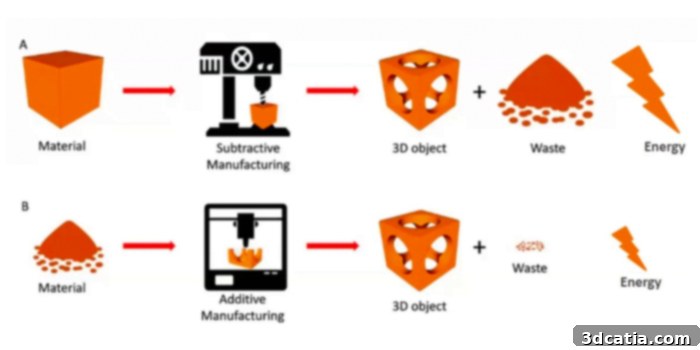
A. Subtractive manufacturing process / B. Additive manufacturing process.
Delving deeper into the additive side, it’s evident that each 3D printing technology possesses distinct characteristics that will profoundly influence its suitability as a complement to subtractive manufacturing. Elena Lopez emphasizes this crucial point, explaining, “Not all additive manufacturing technologies are suitable for improving the scalability of parts or making repairs in a convenient way.” This statement highlights the necessity for careful selection, as the success of a hybrid approach heavily relies on matching the right additive process with the specific requirements of the part and its intended application. Key considerations in this selection include: the inherent resolution and tolerance capabilities of the chosen additive process, the range of materials compatible with the technology, and the specific post-processing requirements the parts will demand. For instance, metal DED processes are highly effective for large-scale repairs or adding features to existing components, while powder bed fusion might be preferred for complex, intricate internal geometries. Conversely, processes like material extrusion might be suitable for quickly building prototypes that will later be precisely machined. The nuances of post-processing, in particular, play a pivotal role and will be explored in greater detail below, as they are integral to achieving the desired final part quality and functionality in a hybrid workflow.
Hybrid Manufacturing: Beyond the Core Process – Design and Post-Processing
Beyond the fundamental manufacturing processes themselves, a successful hybrid manufacturing strategy necessitates a comprehensive understanding of other critical aspects within the entire production chain. Specifically, the initial design phase and the final post-processing stage hold immense importance in the context of hybrid manufacturing. A detailed grasp of the functions and interdependencies of both these processes empowers companies to fully capitalize on the combined strengths of additive and subtractive production, ultimately leading to the creation of truly optimal and high-performance final parts. Neglecting either of these stages can significantly undermine the potential benefits of a hybrid approach, highlighting the need for an integrated and holistic perspective from conception to completion.
The design phase is arguably the most influential stage, directly dictating the feasibility and efficiency of the subsequent manufacturing processes. Both Elena Lopez and Peter Genovese concur that when additive and subtractive manufacturing are considered in isolation, they inherently encounter more significant design limitations. Lopez elaborates, “Not all designs can be processed on a CNC machine. Especially complex internal structures may not be the most reasonable approach.” Traditional CNC machining struggles with features that require complex toolpaths, deep internal cavities, or intricate organic shapes, often demanding multiple setups and specialized tooling. Genovese further reinforces this, stating, “Generally, with CNC machining, as design complexity increases, the difficulty of machining that part also increases. With additive on the other hand, there are many cases where an increase in part complexity doesn’t result in more complex fabrication.” Additive manufacturing liberates designers from these constraints, allowing for the creation of intricate lattice structures, internal cooling channels, and topology-optimized geometries that significantly reduce weight and enhance performance without adding manufacturing complexity or cost. This design freedom is a core advantage that AM brings to the hybrid table.
Brian Kristaponis provides a concluding perspective on the transformative power of the design process in hybrid manufacturing: “The complexity of the internal features lends itself very well to a hybrid process. With a hybrid, you can repeat deposition and machining throughout the process. This allows us to produce parts with high-quality machined internal features that would not be possible with a strictly additive manufacturing or CNC process.” This unique ability to alternate between adding and removing material within a single machine setup is a hallmark of truly integrated hybrid systems. It means designers are no longer constrained by the limitations of a single manufacturing method; instead, they can freely devise parts based purely on performance requirements. This iterative deposit-and-machine capability unlocks the creation of sophisticated internal passageways, sealed internal components, and complex assemblies that can be built and refined layer by layer, leading to superior functionality and innovative product designs that were previously unimaginable. This shift fundamentally changes the paradigm of design, moving from manufacturing-constrained design to performance-driven design.
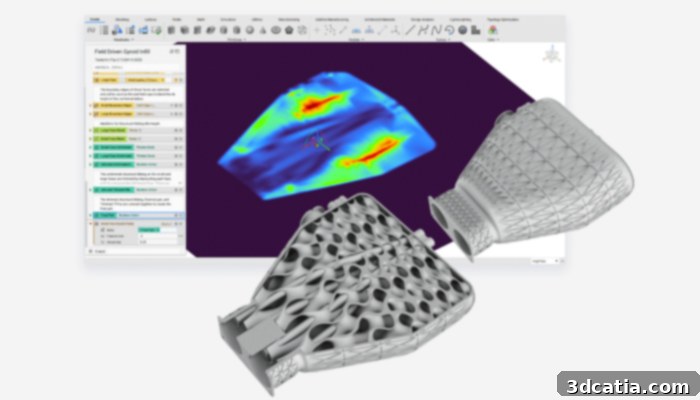
Design is an important phase in hybrid manufacturing (photo credits: nTopology)
On the other side of the production spectrum lies post-processing, a step that is fundamental in nearly all manufacturing processes. Its primary purpose is to enhance the surface finish of parts, ensure dimensional accuracy, and, in many cases, reinforce their mechanical properties to meet the rigorous demands of specific applications. In the realm of hybrid manufacturing, all three experts unequivocally agree that post-processing is a crucial consideration, not merely as a final step once the part is obtained, but as an integral element to be planned even before the manufacturing begins. The type and extent of post-processing to be implemented must be carefully factored into the initial design of the model, as the morphology and dimensions of the part could significantly vary to accommodate these subsequent operations. Lopez elaborates on this, explaining, “The expected surface roughness, depending on the hybrid processes used, may differ from that of a simple 3D printing process. If subtractive technologies are used, the amount of material to be removed must be taken into account in the design and processing routes.” This means designers must account for “machining stock” – additional material that will be removed during the subtractive finishing step – right from the initial CAD model.
Genovese strongly agrees on this point, further emphasizing the importance of part tolerances: “One thing to remember is that you can often print shapes that you can’t machine. If you need to post-machine the part to achieve critical tolerances, make sure you can access those locations after the part is printed with those more traditional subtractive techniques.” This highlights a critical design challenge: while additive manufacturing offers unparalleled geometric freedom, the subsequent subtractive operations still require tool access. Designers must strategically plan for clearances and access points to ensure that milling cutters, drills, or grinding wheels can reach the surfaces that require precise finishing. Finally, Brian Kristaponis addresses the practicalities of post-processing, concluding, “Ideally, you want to produce a near net shape with uniform amounts of material in all directions. This makes the machining process more predictable and allows machining time to be reduced, as semi-finishing machining operations can be reduced or omitted.” This last point is particularly insightful because it underscores the importance of process control and consistency in the additive phase. If the additively produced part is consistently underbuilt or exhibits non-uniform material deposition, it can lead to significant problems during machining. Re-depositing material to compensate for an underbuilt area is not always feasible or accurate, potentially causing the part to fail to meet critical tolerances and rendering it unusable. Therefore, achieving a reliable near-net shape from the additive process is paramount for a smooth, predictable, and efficient hybrid workflow.
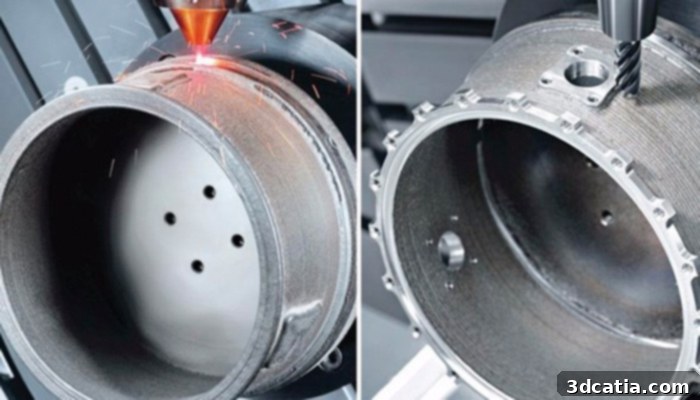
In hybrid manufacturing, post-processing is used to obtain the desired surface finish. With metal technologies, it is done by techniques such as CNC machining
Expert Perspectives and Practical Advice for Hybrid Implementation
Implementing hybrid manufacturing can be a complex yet rewarding journey. Our experts offer invaluable advice for those looking to embark on or optimize their hybrid production ventures, emphasizing strategic planning, skill development, and leveraging the right technological tools.
“Reach out to someone who has already been down this road and help guide you on your own journey. The world of additive manufacturing and CNC machining is incredibly broad. Just knowing what options are out there, let alone how to leverage those options together, is a very difficult task. Finding consultants or companies in industries similar to yours that have had success with hybrid manufacturing are excellent resources to help you sift through all the options.” – Peter Genovese
“You have to carefully analyze the intended use case and evaluate what is most important to them. Adding CNC machining technologies requires hiring or training an expert in these other technologies. The hybrid manufacturing solution may not be the most cost-effective, but it can add flexibility for future applications.” – Elena Lopez
“With hybrid machines using CNC machines as the motion control system, you need a CAM software solution that supports both technologies equally. As more machines enter the market, software companies will devote more resources to making it easier and faster to program these machines and achieve seamless integration between additive and subtractive.” – Brian Kristaponis
The collective wisdom from Peter, Elena, and Brian underscores several critical takeaways. Peter Genovese stresses the importance of mentorship and external expertise. Given the vast and rapidly evolving landscape of both additive and subtractive technologies, navigating the myriad options and understanding how to effectively combine them can be daunting. Seeking guidance from consultants or companies with proven hybrid manufacturing success can dramatically shorten the learning curve and prevent costly missteps, allowing newcomers to make informed decisions tailored to their specific needs and industry context.
Elena Lopez’s advice centers on strategic assessment and skill development. A rigorous analysis of the specific use case is paramount to determine if hybrid manufacturing is truly the optimal solution. While it offers unparalleled flexibility and capabilities for certain applications, it’s not always the most cost-effective choice for every production scenario. Furthermore, integrating advanced CNC machining with additive processes demands a specialized skill set. Companies must be prepared to either invest in hiring experts with cross-functional knowledge or commit to comprehensive training programs for their existing workforce. This foresight ensures that the investment in hybrid technology is matched by the human capital necessary to operate and optimize it effectively, ultimately enhancing future application flexibility and innovation capacity.
Finally, Brian Kristaponis highlights the indispensable role of advanced software in facilitating seamless hybrid operations. For hybrid machines that leverage the precision and control of CNC systems as their foundation, a robust Computer-Aided Manufacturing (CAM) software solution capable of natively supporting both additive deposition and subtractive machining operations is non-negotiable. This integrated software approach is crucial for efficient programming, accurate toolpath generation for both processes, and effective process control, minimizing errors and maximizing throughput. As the hybrid manufacturing market continues its growth trajectory, the industry can anticipate further advancements in CAM software, with developers dedicating more resources to intuitive interfaces and streamlined workflows, thereby making these powerful machines more accessible and easier to program for a broader range of users. These insights collectively emphasize that successful hybrid manufacturing is not just about the hardware; it’s an intricate dance between strategic planning, expert knowledge, and sophisticated software integration.
What are your thoughts on the transformative potential of combining additive and subtractive manufacturing in modern production? We invite you to share your insights in a comment below or engage with us on ourLinkedIn,Facebook, andTwitter pages! Don’t forget to sign up for our free weeklyNewsletter here to receive the latest 3D printing news directly in your inbox! You can also find all our informative videos on ourYouTube channel.
*Cover Photo Credits: Cenit