
Weekly Roundup: Discover the Most Impactful 3D Printing Innovations Across Key Sectors
The world of 3D printing is constantly evolving, pushing the boundaries of what’s possible in manufacturing and design. This week, we’ve curated a selection of the most captivating videos that showcase how additive manufacturing is not just changing production but revolutionizing entire industries. From groundbreaking developments in medical science and advanced automotive applications to cultural preservation and even culinary arts, 3D printing technology has truly infiltrated a diverse array of sectors. These innovations highlight the versatility and immense potential of additive manufacturing, offering unprecedented levels of customization, efficiency, and material innovation. Staying abreast of these advancements is key to understanding the future of manufacturing and technology. Dive into our hand-picked selection to keep pace with the latest incredible innovations that are shaping our world. For even more fascinating insights and demonstrations, remember to visit our YouTube channel. We trust you’ll find these showcases inspiring and enjoy your read!
Top 1: Pioner’s Revolutionary 3D-Printed Motorboat Takes to the Seas
Pioner, a renowned Norwegian company founded in 1959, has long been synonymous with high-quality and durable boats. Building on their rich legacy, Pioner is now venturing into the exciting realm of 3D printing, exploring its vast possibilities to innovate marine craftsmanship. In a significant collaborative effort with the esteemed Research Institute of Sweden (RISE), Pioner has successfully developed and launched a fully 3D-printed iteration of their popular 4.2-meter long Pioner 14 Active Darkline model. This project represents a monumental step forward in the application of additive manufacturing for large-scale, functional products.
The grand launch of this innovative motorboat took place on December 16th in Gothenburg, an event that marked a pivotal moment for both Pioner and the broader marine industry. There was an understandable degree of anticipation and curiosity surrounding its performance, especially since prior testing had been confined to controlled pool environments. However, the 3D-printed vessel quickly proved its mettle, demonstrating remarkable seaworthiness and resilience in actual outdoor conditions. This success underscores the potential for 3D printing to create robust, reliable, and performance-ready marine vessels. The ability to prototype and produce such a substantial structure through additive manufacturing opens doors for custom designs, reduced material waste, and potentially faster production cycles in the future. This achievement positions Pioner at the forefront of marine innovation, showcasing how traditional industries can leverage advanced technologies to create sustainable and cutting-edge products.
Top 2: The Digital Revolution in Dental Labs with Additive Manufacturing
The dental industry stands as one of the most significant beneficiaries of 3D printing technology, undergoing a profound digital transformation. In the latest installment of Carbon’s insightful “Ask an Additive Expert” video series, the spotlight shines brightly on the burgeoning applications of 3D printing within dentistry. This particular episode is expertly hosted by Jamie Stover, a Certified Dental Technician (CDT) and Carbon’s Senior Manager of Lab Applications, bringing a wealth of practical experience and technical knowledge to the discussion.
Stover delves deep into the diverse and impactful applications of 3D printing in the dental sector, illustrating how these technologies have rapidly evolved and become indispensable tools. She elaborates on how additive manufacturing is revolutionizing the creation of various dental prosthetics, including highly accurate crowns, bridges, and dentures. Beyond these traditional applications, the episode explores the role of 3D printing in producing clear aligners, surgical guides for implant procedures, and precise dental models for diagnostics and treatment planning. The integration of digital workflows, from intraoral scanning to CAD/CAM software and finally 3D printing, has significantly enhanced accuracy, reduced lead times, and improved patient outcomes.
The discussion extends to the immense benefits that dental laboratories have reaped by embracing these digital workflows, emphasizing greater efficiency, cost-effectiveness, and the ability to offer highly customized solutions. Stover also provides a glimpse into the future, outlining what dental professionals and patients can expect from the continuous advancement of 3D printing in dentistry. This includes the development of new biocompatible materials, faster printing technologies, and increasingly complex and personalized dental devices, further solidifying 3D printing’s role as a cornerstone of modern dental care.
Top 3: Pioneering Bio-Printing – The First Full-Size 3D Print of a Human Heart
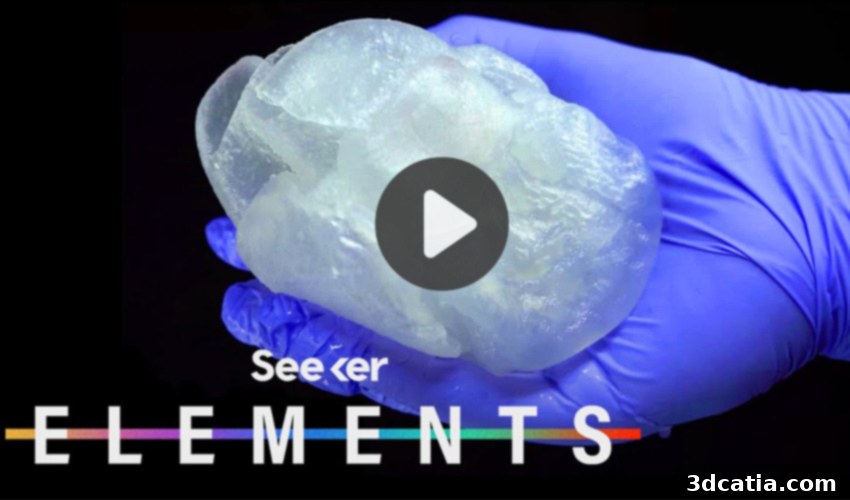
In a monumental leap for medical science and bio-engineering, a dedicated team of researchers at Carnegie Mellon University in Pittsburgh has achieved a groundbreaking feat: the successful 3D printing of a full-size, anatomically accurate human heart. This remarkable achievement was made possible through an innovative printing process they developed called FRESH (Freeform Reversible Embedding of Suspended Hydrogels). This sophisticated technique addresses one of the fundamental challenges in bio-printing soft, intricate tissues – preventing their collapse during the printing process.
The FRESH method utilizes a specialized material known as alginate, a biocompatible hydrogel, to meticulously reproduce the soft and elastic appearance of the heart’s delicate organ tissue. This stands in stark contrast to traditional anatomical models, which are often crafted from rigid or impenetrable materials such as plastic. The ability to create a model that so closely mimics the texture and pliability of a real heart organ offers unparalleled advantages for medical professionals. Surgeons can now practice complex procedures on a realistic, haptic model, refining their skills and gaining invaluable experience before operating on actual patients, thereby significantly enhancing surgical precision and safety.
This pioneering accomplishment is merely the beginning of what could be a profound revolution in medicine. Looking ahead, it is entirely conceivable that similar bio-printed models could be used for advanced drug testing, providing more accurate physiological responses than animal models or cell cultures. Such advancements could accelerate drug discovery and minimize adverse effects. The ultimate vision, though still a distant goal, is the potential for these bio-printed organs to one day serve as viable alternatives for organ transplants, addressing the critical shortage of donor organs. While significant challenges remain, particularly in achieving full functionality, vascularization, and cell viability, the FRESH technology represents a monumental stride towards a future where personalized medicine and regenerative therapies are within reach. The video provides further intricate details about this groundbreaking research project and its far-reaching implications.
Top 4: Factum Arte’s 3D-Printed Masterpieces: Preserving Cultural Heritage
Factum Arte, an esteemed company with studios strategically located in Madrid, Milan, and London, is at the forefront of cultural artifact conservation through the innovative application of new technologies. Their mission transcends mere replication; it’s about creating exceptionally accurate facsimiles that play a crucial role in the preservation, study, and accessibility of priceless masterpieces. The featured video offers a compelling glimpse into Factum Arte’s extraordinary capabilities, showcasing how they utilize 3D printing to produce astonishingly precise replicas of iconic artworks.
The process involves meticulous high-resolution 3D scanning, which captures every minute detail of the original artifact, including the subtle undulations of a painting’s surface, the texture of an ancient sculpture, or the intricate relief of historical objects. Factum Arte primarily leverages Canon Production Printing’s state-of-the-art Elevated Printing Technology for the actual 3D printing phase. This specialized technology allows them to reconstruct not just the visual aspect but also the fine surface texture of paintings and other 2.5D objects with an unparalleled level of fidelity. The result is a replica that is virtually indistinguishable from the original in terms of its physical form and tactile qualities.
These high-fidelity facsimiles serve multiple critical purposes. They enable museums and galleries to display fragile originals in controlled environments while providing robust, high-quality replicas for public exhibition, allowing more people to experience these treasures up close without risking damage to the authentic pieces. Moreover, these 3D-printed masterpieces are invaluable tools for art historians and conservators, facilitating detailed study and analysis without direct handling of the original. They can also be used for educational purposes, offering students and researchers tactile interaction with historical objects. Factum Arte’s work exemplifies how cutting-edge 3D printing technology is a powerful ally in the ongoing effort to preserve and share our global cultural heritage for generations to come. The video below offers a more in-depth exploration of their remarkable work and the intricate processes involved.
Top 5: The Evolving Landscape of 3D Printed Food Technology
The 3D printed food market, while still in its nascent stages of commercial success, has been a hotbed of continuous innovation and bold experimentation for some time. This intriguing sector attracts a diverse range of players, from agile startups brimming with novel ideas to established culinary giants eager to explore its potential. Many new companies have emerged, hoping to carve out a niche in this futuristic culinary space, while numerous existing food corporations have begun to embrace the technology. Noteworthy examples include KFC, which made headlines for attempting to bio-print chicken nuggets using a combination of plant-based materials and chicken cells, and its formidable rival, McDonald’s, which has also shown interest in additively manufacturing burgers. These high-profile forays underscore the serious industry interest, despite the challenges.
However, despite the considerable investment and groundbreaking research, 3D printed food has yet to achieve widespread commercial success or mainstream consumer adoption. The hurdles are numerous and complex, encompassing everything from achieving desirable textures and authentic flavors to optimizing printing speed, ensuring cost-effectiveness, and navigating consumer perceptions. The promise of food 3D printing lies in its potential for personalization, allowing for customized nutritional content, unique shapes, and tailored textures to meet individual dietary needs or preferences. It also holds implications for sustainability, enabling the use of alternative protein sources and potentially reducing food waste through precise ingredient deposition.
Various additive manufacturing techniques are being explored for food, primarily extrusion-based methods that involve pushing edible pastes or gels through a nozzle layer by layer. This allows for intricate designs in items like chocolates, pastas, and pastries. Beyond novelty, researchers are exploring applications such as creating food for astronauts, patients with specific dietary restrictions (e.g., dysphagia), or for senior care, where visually appealing yet easy-to-consume meals are crucial. The video embedded below offers a comprehensive explanation of the processes involved in additive food manufacturing, alongside a balanced discussion of the compelling arguments for its development and the significant challenges that still need to be overcome before it becomes a staple on our dinner tables.
This week’s collection of top 5 videos truly highlights the incredible breadth and depth of innovation occurring within the 3D printing industry. From the robust applications in marine engineering and the meticulous precision demanded by dental prosthetics, to the life-saving potential of bio-printed organs and the cultural preservation efforts enabled by advanced replication, alongside the intriguing future of personalized food – 3D printing continues to reshape our world in unexpected and profound ways. Each advancement underscores the technology’s remarkable versatility and its capacity to address complex challenges across diverse sectors. Which of these groundbreaking applications captured your imagination the most? We’d love to hear your thoughts! Share your favorite video or let us know what you found most fascinating in a comment below. You can also engage with us on our Facebook and Twitter pages to join the conversation. And to ensure you never miss out on the latest developments and exciting news in the rapidly evolving 3D industry, remember to sign up for our free weekly Newsletter, delivered straight to your inbox!